
New Additions
Network Acoustics origin Hybrid Power Supply
(Powering the main Router)
Summary
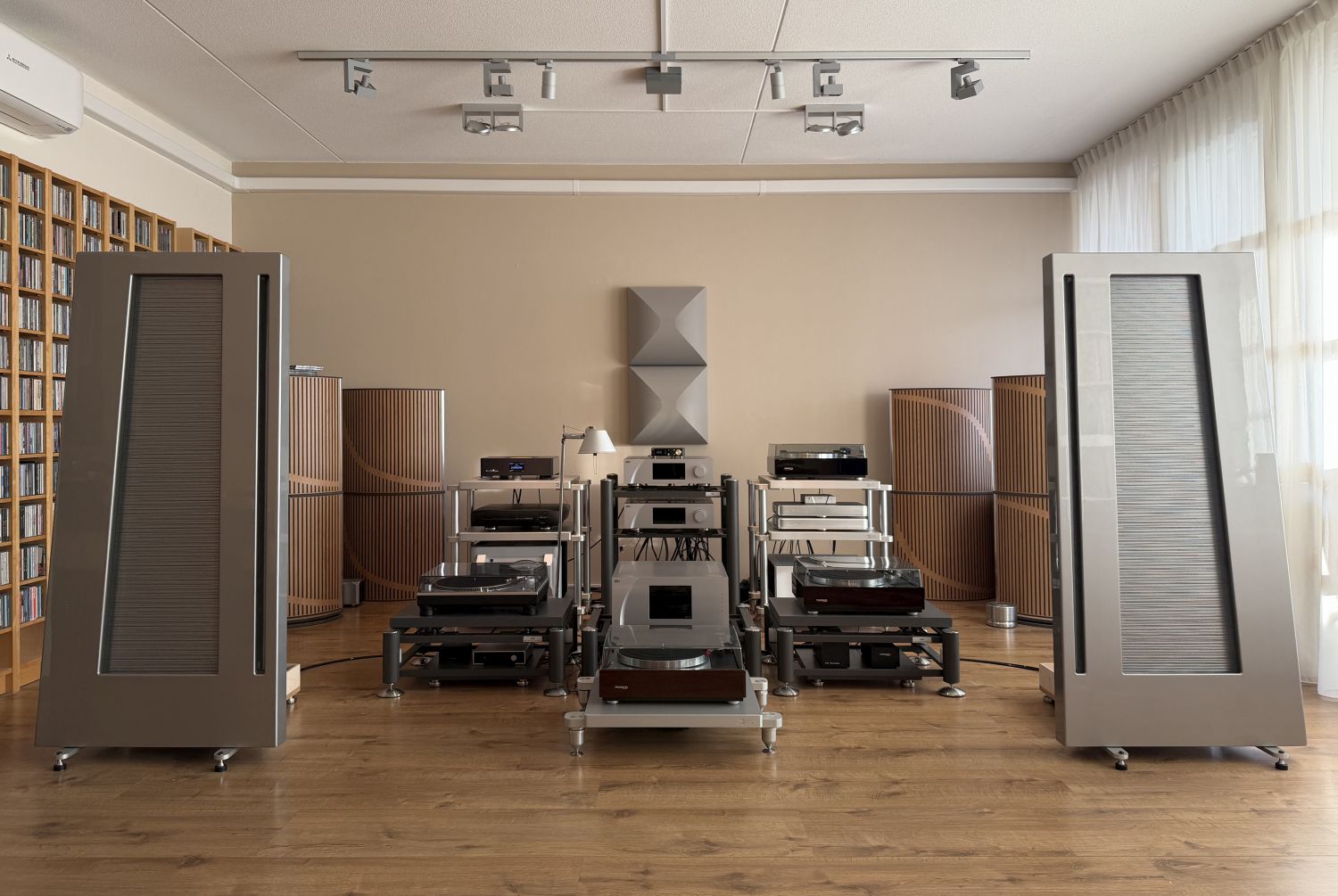
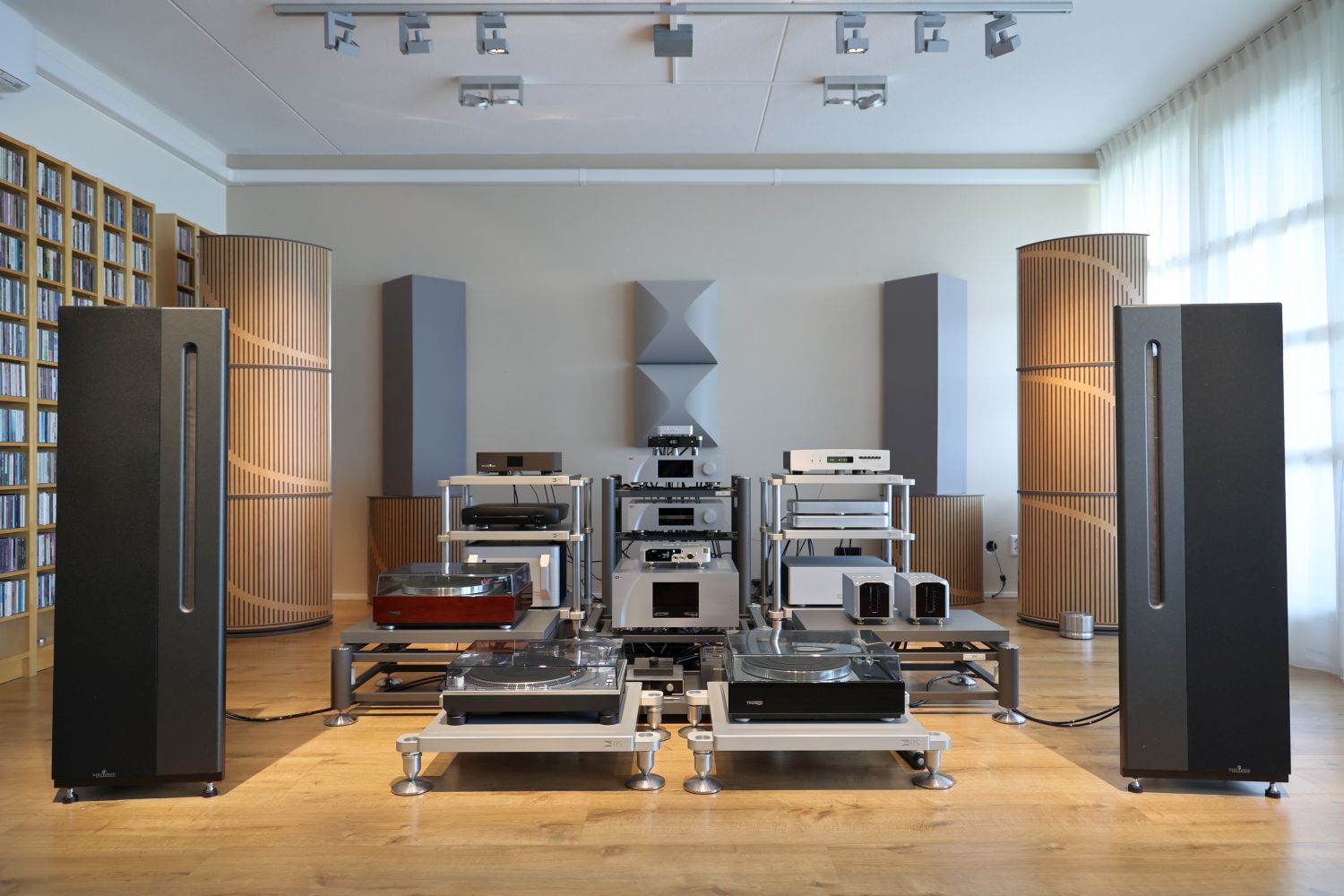
This is an overview of the Main System and its operational components as of February 2026.
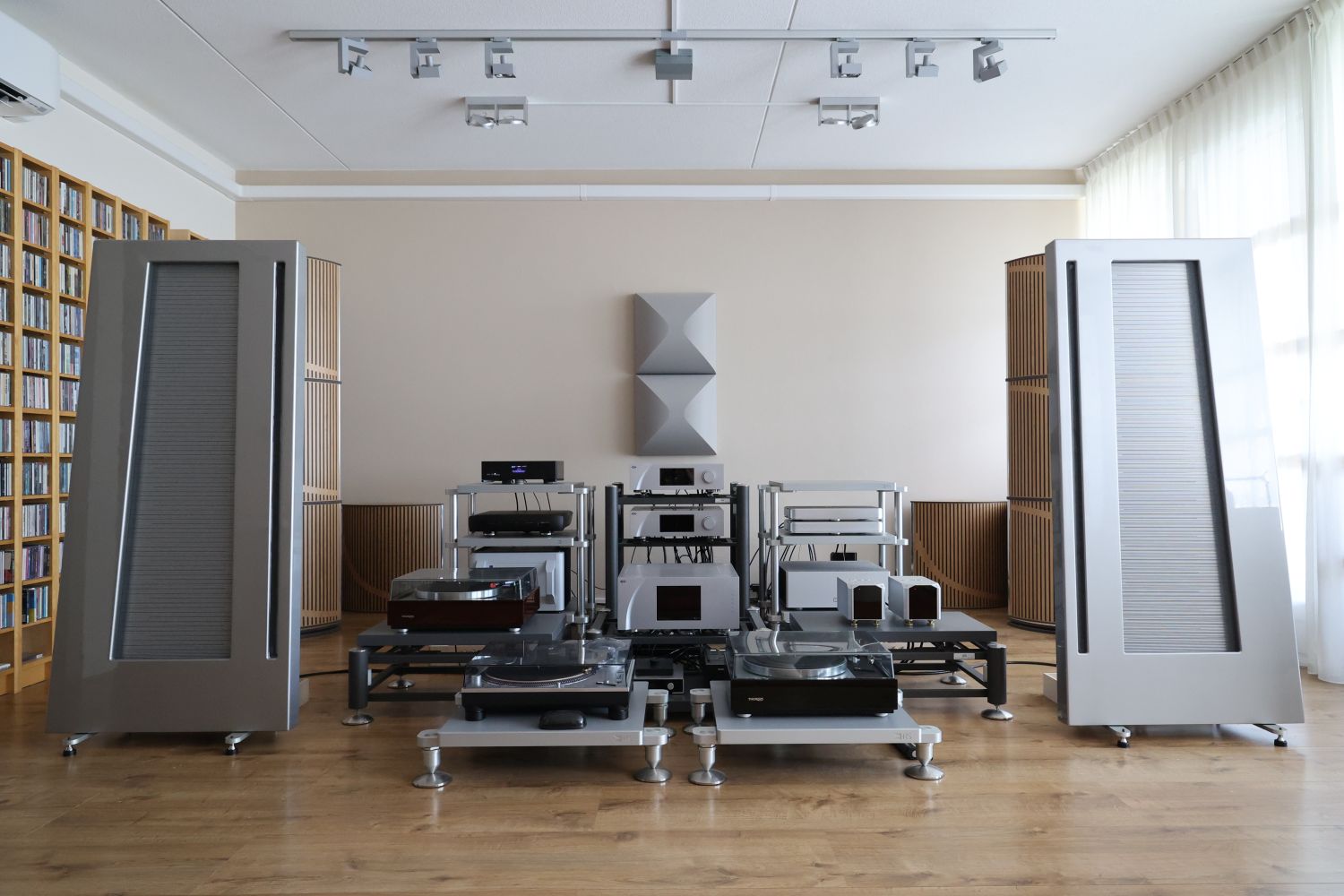
The main system is always assembled and is used for most private listening and reviews. This system consists of the CH Precision C1.2 DAC, L1 preamp, A1.5 power amp, Antipodes Oladra, Grimm MU1, and Taiko Audio Extreme music servers, and Refoiled Apogee Duetta Signature speakers with the latest-generation Graz DSB-KLM woofer foils and KLM7 MRTW foils, installed in August 2025.
Loudspeakers
The Apogee Duetta Signature ribbon speakers are permanently set up. They were refurbished and fitted with the latest-generation Graz DSB-KLM woofer foils and KLM7 MRTW foils in August 2025.
Digital Sources
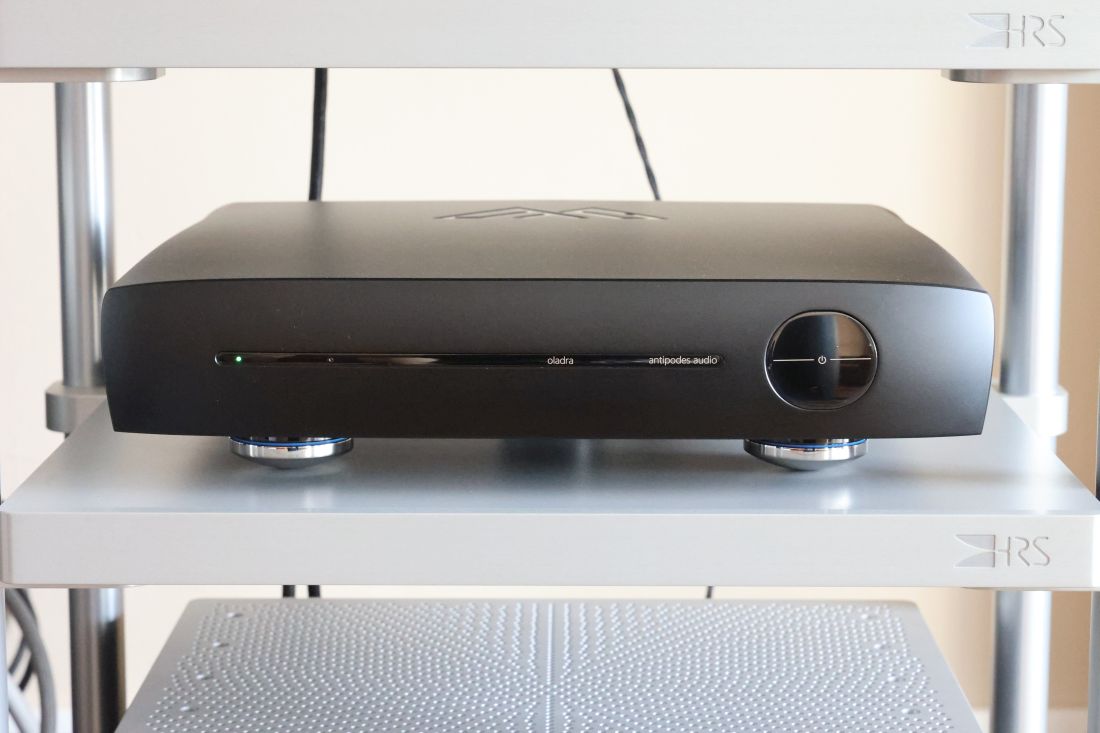
Above: Antipodes Oladra Music Server
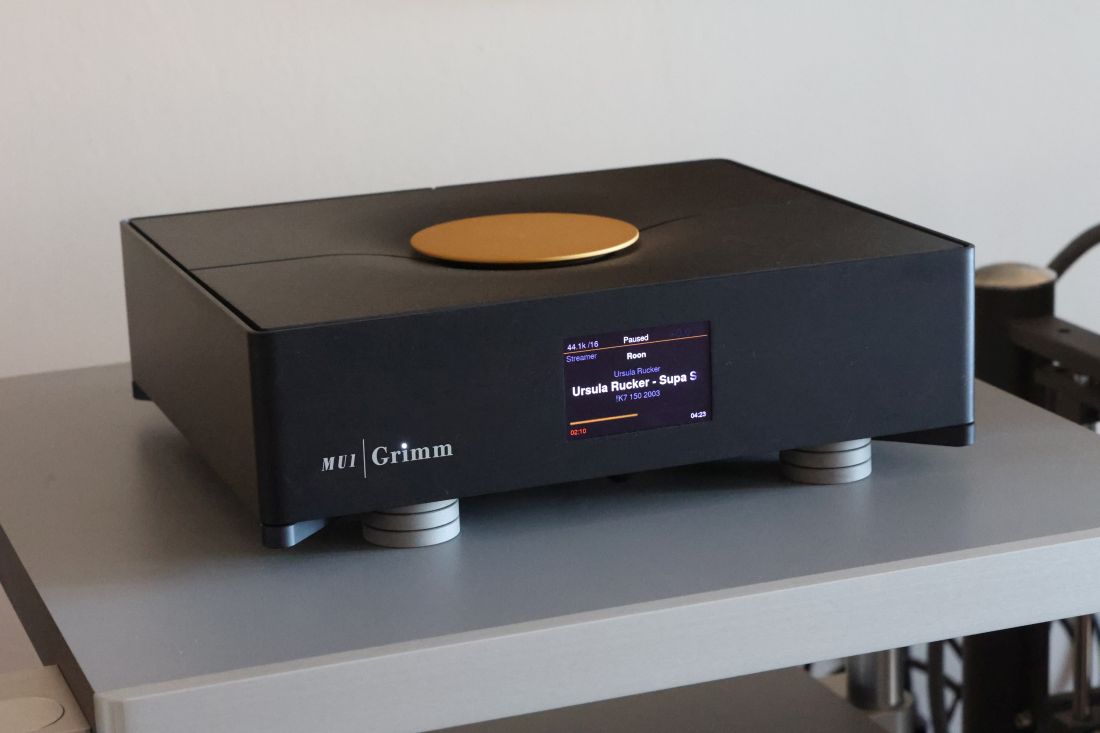
Above: Grimm MU1 Music Server
Analog Sources
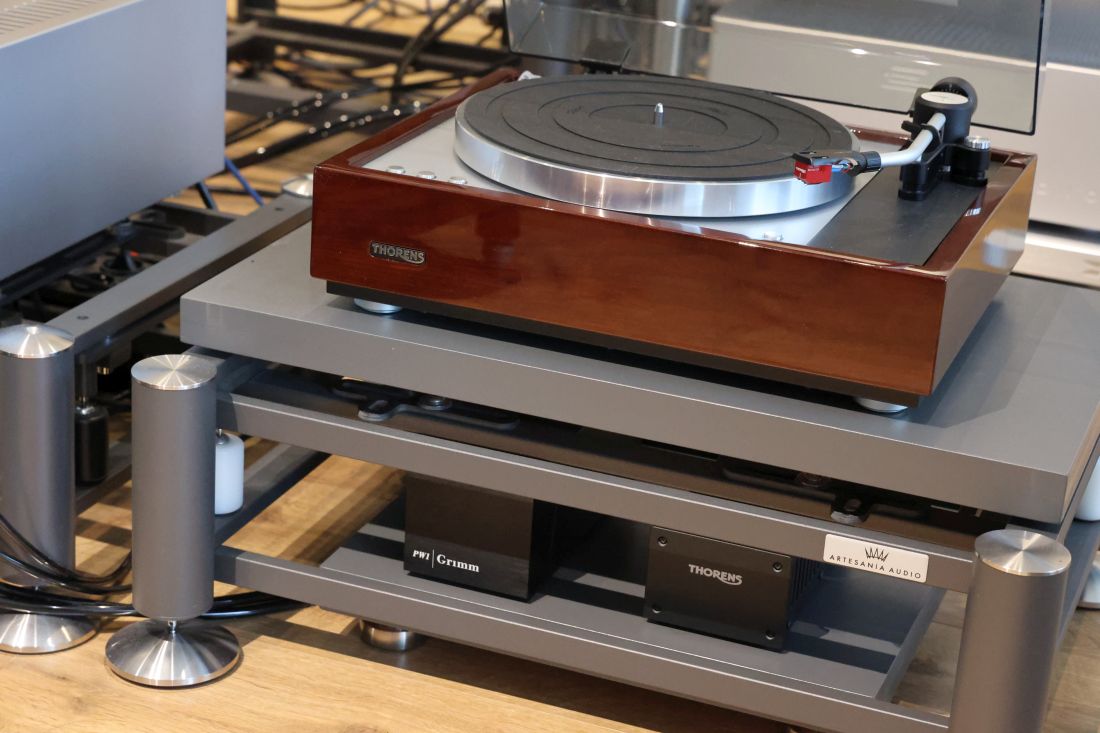
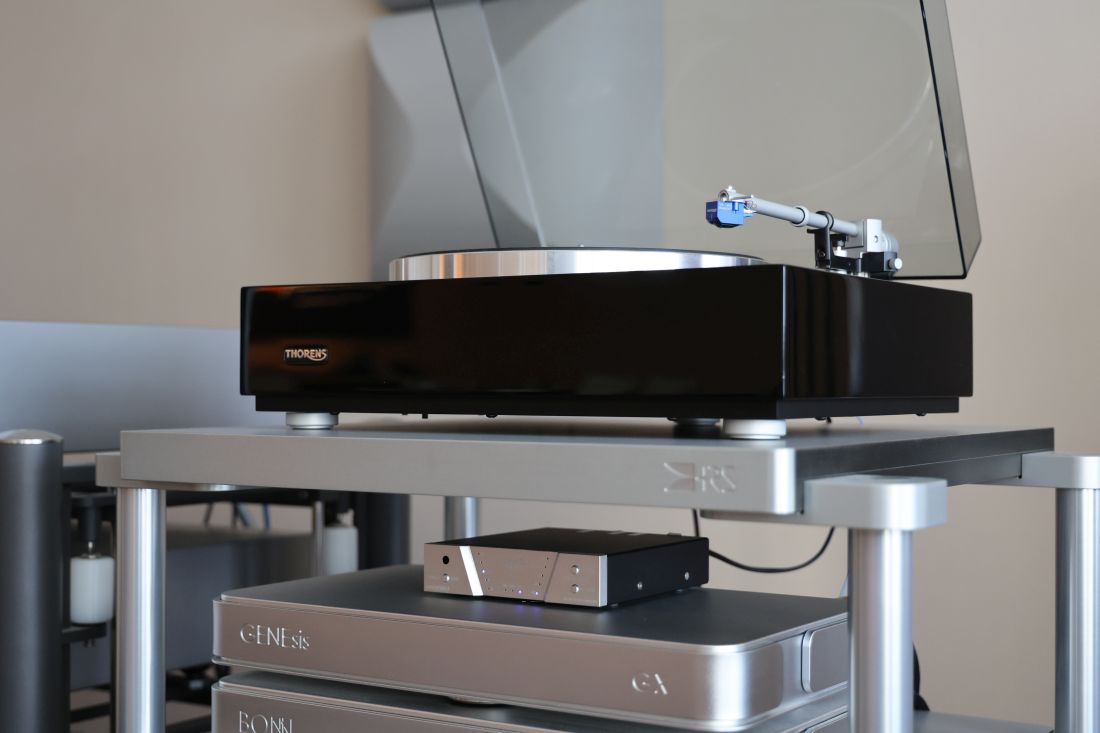
Above: Thorens TD1601 with TP160 Tonearm and TAS1600 MC cartridge and Grimm Audio PW1 Phono Stage
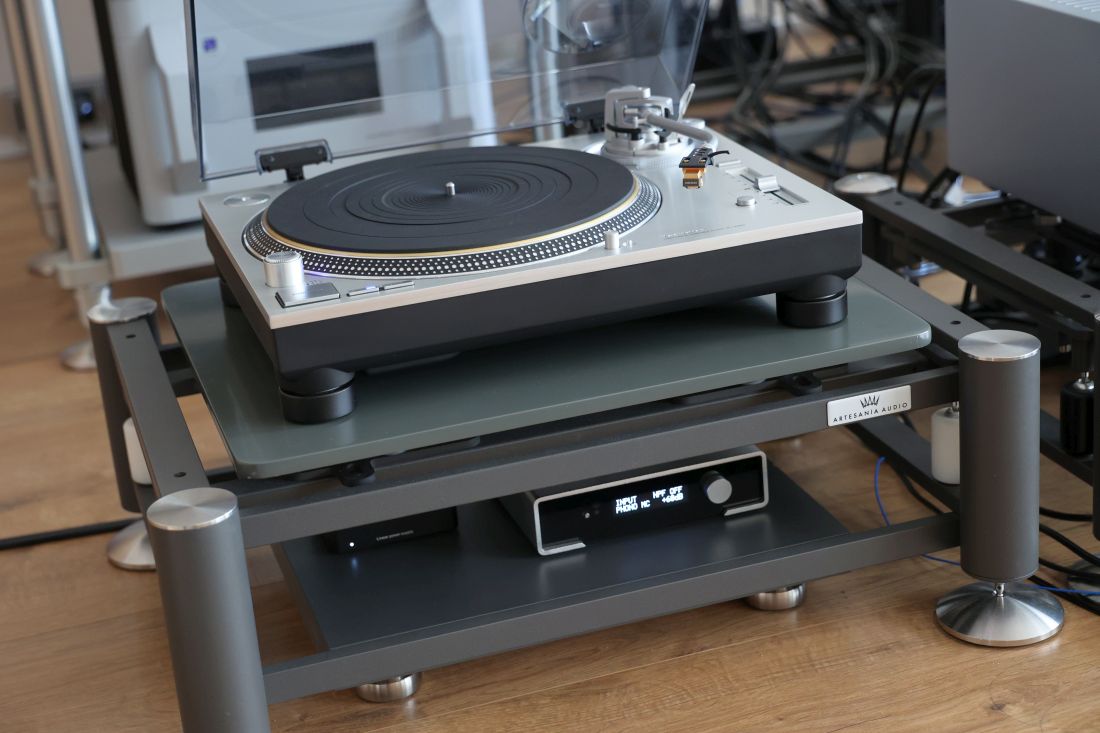
Above: Thorens TD1601 with TP92 Tonearm and TAS1500 MC cartridge and Manunta EVO Phono 3
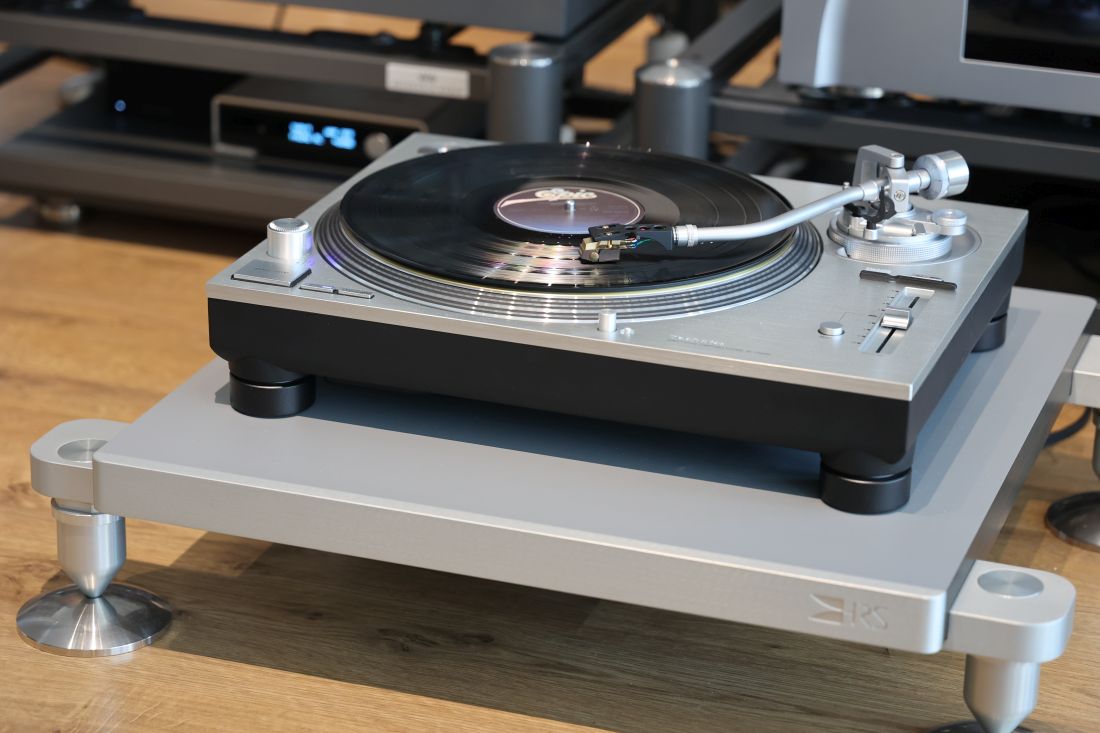
Above and below: Technics SL-1200G with Audio Technica AT-VM750SH MM cartridge and M2Tech Nash phono stage
Racks and Platforms
All CH Precision components are placed on an Artesania Exoteryc rack with Carbon Fiber Linear Arms. All digital sources are placed on two HRS EXR racks. Review components will be assessed on a vacant spot in one of the HRS EXR racks or on an Artesania KSH2 Krion shelf coupled via Artesania Carbon Fiber Linear arms to an Artesania Aire Floor Platform. In essence, the Aire is a lower Exoteryc rack, and it sounds identical. All racks have Artesania discs as floor interfaces, Panzerholz for Artesania, and Carbon Fiber for HRS.
Cables
The main digital AES/EBU interlink is the Network Acoustics muon2 Balanced Digital Cable. All analog interlinks are Driade Flow Link Reference 808, both balanced and unbalanced. The speaker cables are the Driade Flow Reference 808.
Power
The power for this system is delivered by a dedicated run of solid-core installation wire, sourced in the Breaker Box from a Siemens Sitor Cylindric Fuse Cartridge and ending in three GigaWatt G-044 single Schuko Wall Sockets behind the audio system. For the Network Switch, Music Servers, and some temporary equipment, I use two power distributors that started life as Pawalle TP-80s but are used only for the enclosures, stripped of all internals and everything replaced with selected wiring and components. The rest of the system is powered directly from a PS Audio Power Plant P20 power generator.
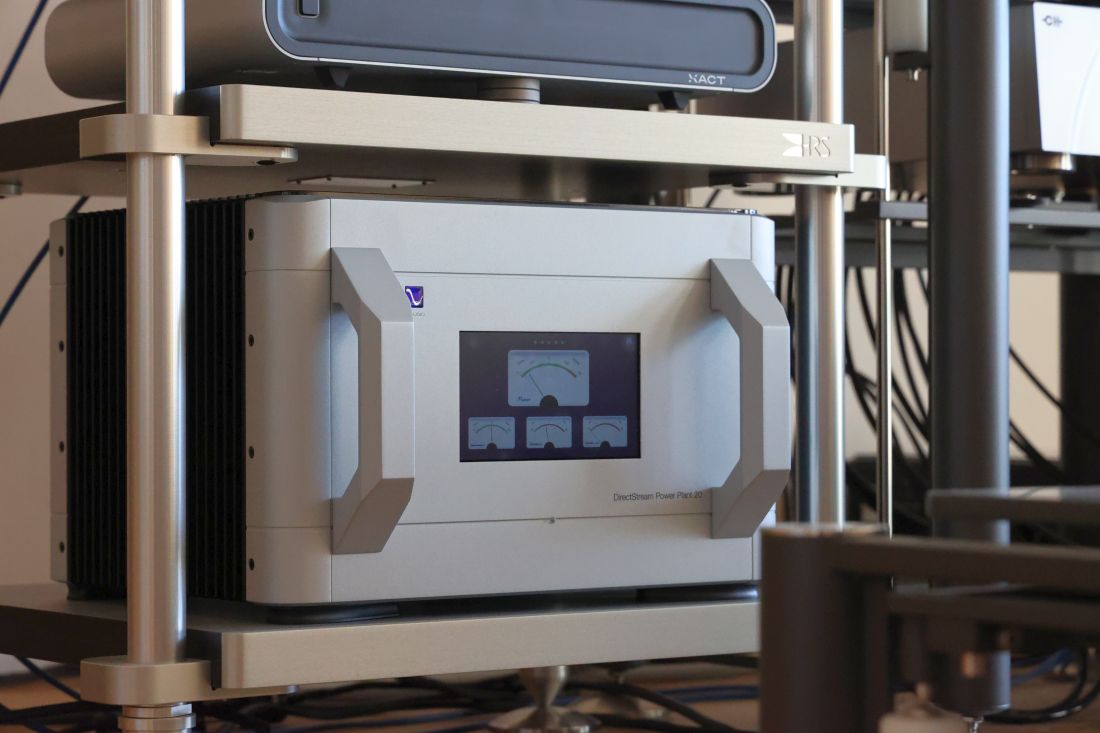
Above: PS Audio P20 Power Plant (a Power Regenerator, not a filter), powering the entire system except for the Network Switch and Music Servers.
Power Cables
The power cables are a mix of brands and OEM home-made specimens. The GigaWatt LC-2 EVO is permanently used with the CH C1.2 DAC, and the GigaWatt LC-2 EVO is permanently used with the CH L1 preamp. The CH A1.5 power amp is the only component still using a Belden 19364 power cable. The Network Switches and specific temporary digital components are powered using home-made cables based on Block CUL 500 Enameled solid core copper in PTFE tubing with OEM Rhodium schuko and Oyaide 004 IEC. The other permanent components are powered using home-made cables consisting of OEM tinned litze in PTFE dielectric with OEM Rhodium-plated schuko and Oyaide 004 IEC. Review components are assessed using the best cables for the given product.
Network
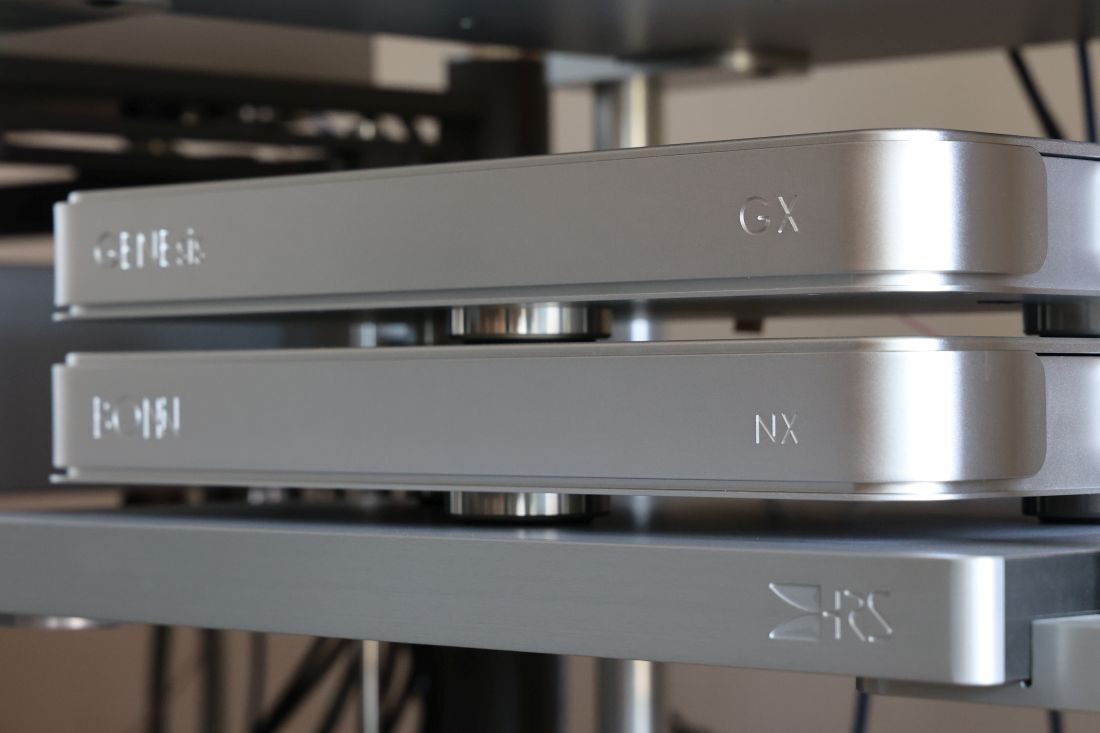
Above: Silent Angel Bonn NX Network Switch and Genesis GX Clock
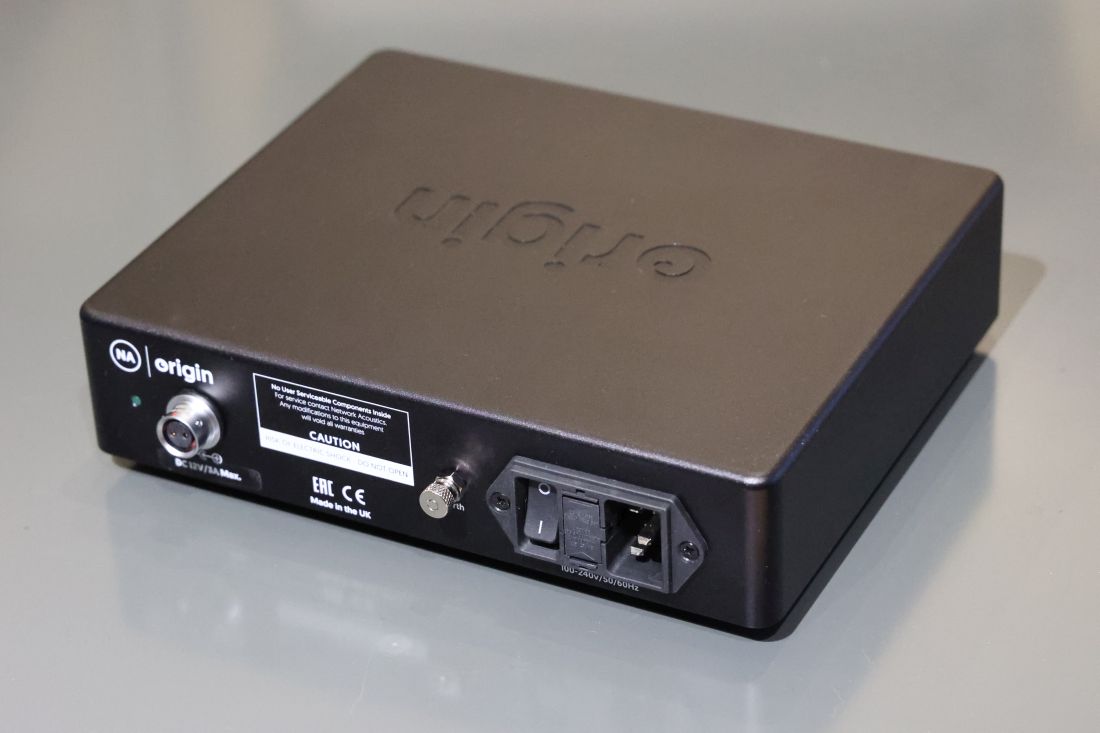
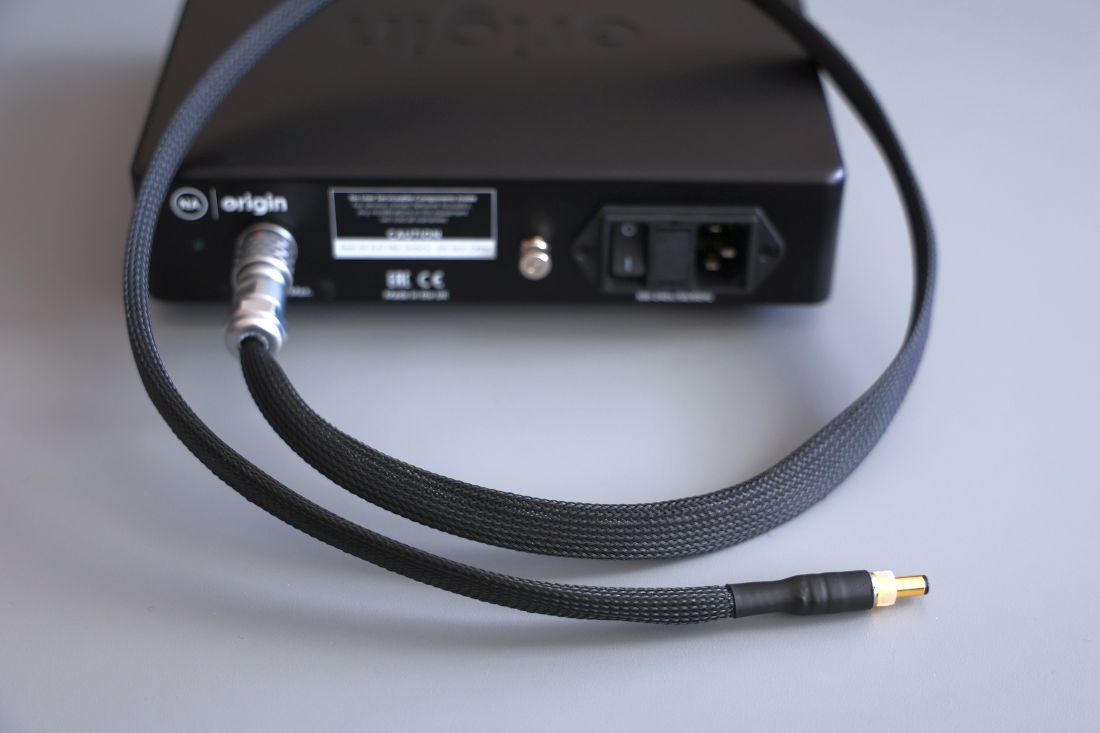
Above: Network Acoustics origin Power Supply (for the main Router)
Room Impressions
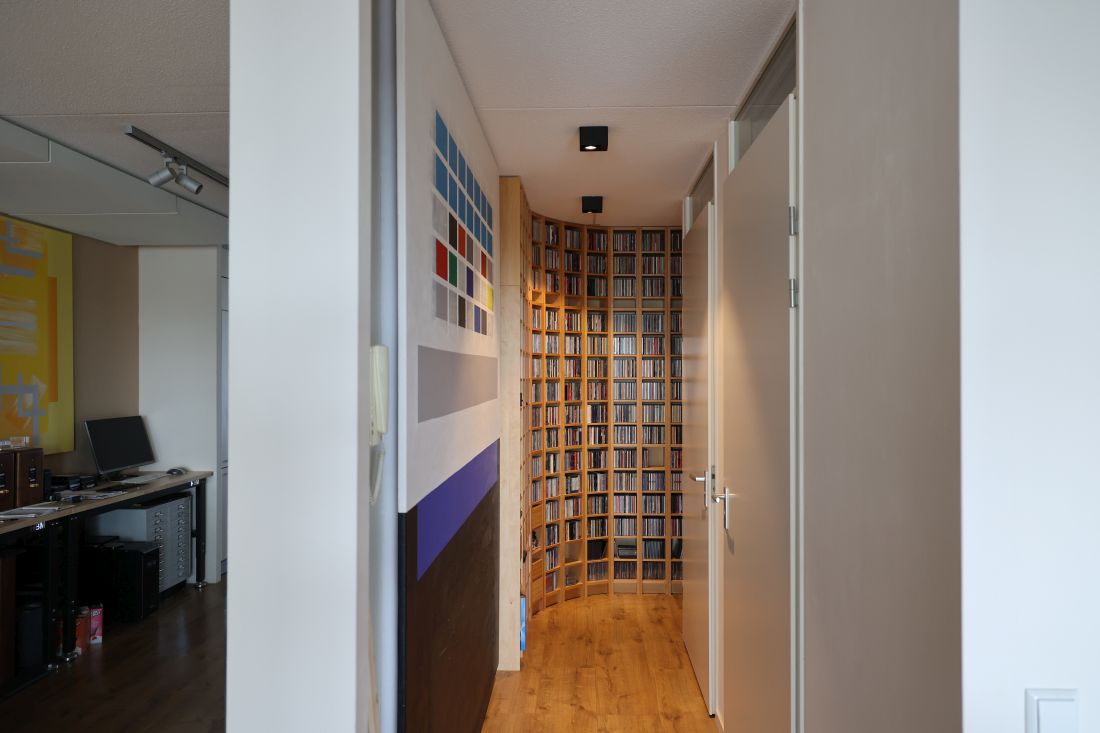
Above: Curved CD racks conceal cornered wall-stiffening bars and a bass trap in the hallway.
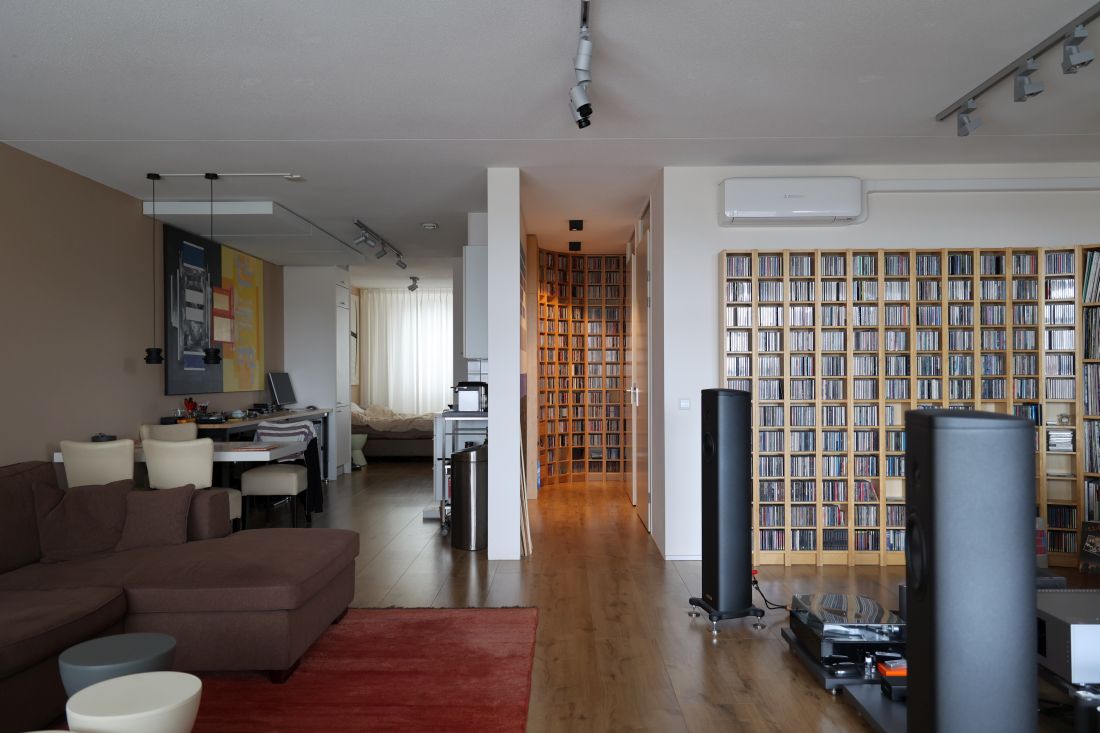
Above: Left side of the room
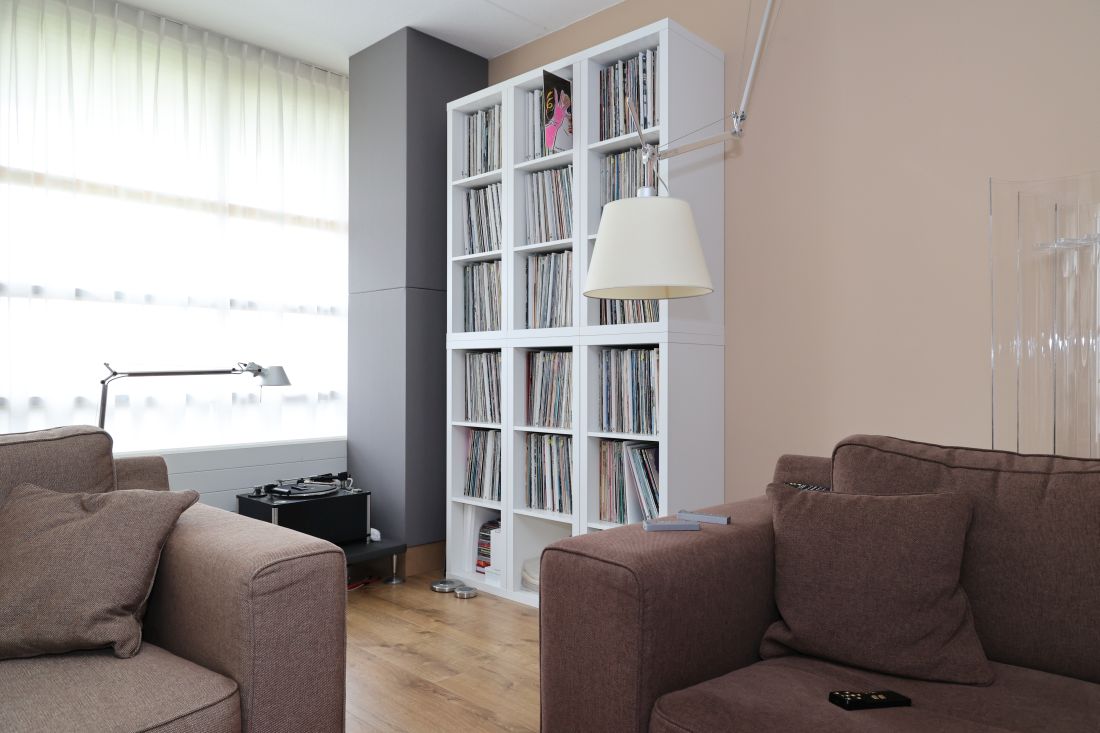
Above: R.T.F.S Big Block Bass Traps in the rear corner
Steel-reinforced ed much of the right speaker’s low output and ed very annoying phase
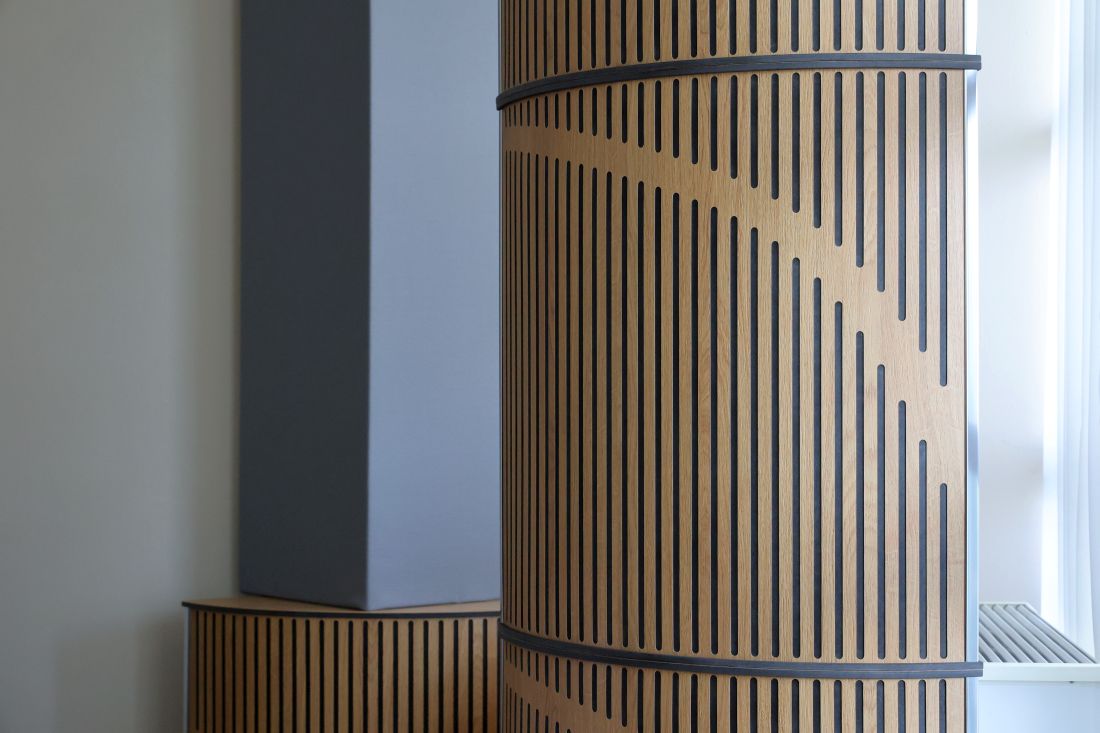
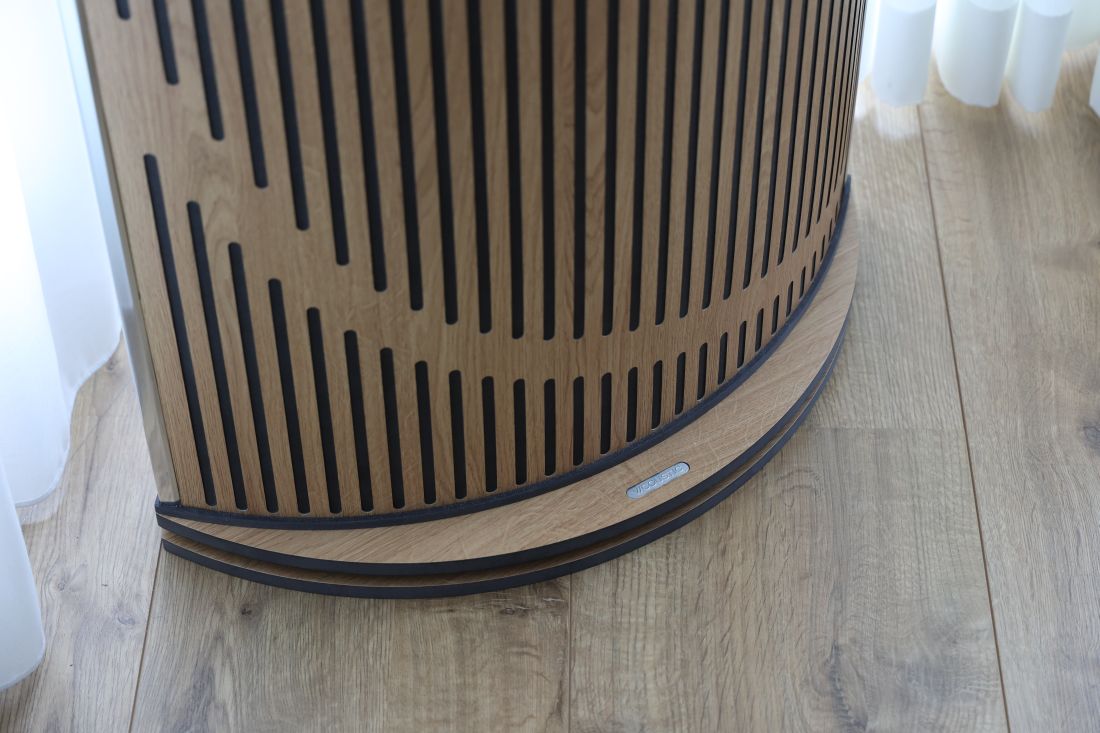
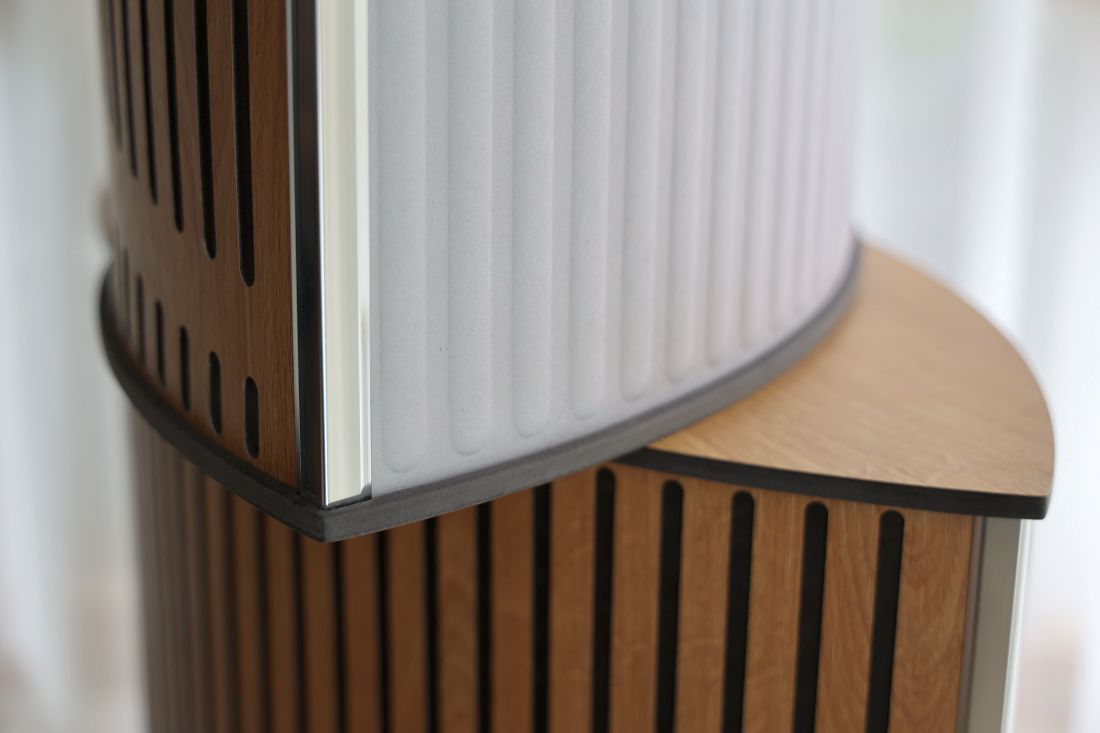
Above and below: Vicoustic VicTotem Diffuser/Bass Trap
Main System Components
This list contains only the currently operational components in the Main System. For a complete list of all HFA Reference Equipment, cables, and accessories, see Associated Equipment.
Loudspeakers
Apogee Duetta Signature (with latest-gen Graz DSB-KLM woofer foils and KLM7 MRTW foils installed August 2025)
Pre Amplifier
Power Amplifier
Phono Stage
Grimm Audio PW1
M2Tech Nash
Manunta EVO Phono 3
Turntables
Thorens TD1601 (with TP-92 tonearm)
Thorens TD1601 (with TP-160 tonearm)
Technics SL-1200G
Cartridges/Stylii
Thorens TAS1600
Thorens TAS1500
Goldring Ethos SE
Record Cleaning Machine
CD Player / Transport
DAC
Music Server
Network Player / Renderer / Streaming Endpoint
Interlinks
Driade Flow Link Reference 808 RCA and XLR
Loudspeaker Cables
Digital Cables
Network Acoustics muon2 Balanced Digital Cable
Mogami 3080 Neglex
Silent Angel Bastei coax
USB Cables
Network Switch
Silent Angel Bonn NX + Genesis GX Clock
Ethernet Cables
ValueLine OEM CAT6 cables
Audio Group Power Installation
Siemens Sitor Cylindric Fuse Cartridge (standard silver-plated fuse and solid silver rod)
Standard unshielded 2,5mm solid core copper installation wire for main group
3x GigaWatt G-044 Schuko Wall Socket
Power Distributors
3x Pawalle TP-80 (very heavily modded, not recommended in standard form)
Power Conditioning
PS Audio PowerPlant P20
The P20 provides regenerated power for the entire system except for the Network Switch and Music Servers. Power Cable used between wall outlet and P20: Home-made cable with double runs of Block CUL 500 1,5 mm Enameled solid core copper in PTFE tubing with OEM Rhodium schuko and Oyaide 004 IEC.
Power Cables
GigaWatt PowerSync ULTRA
GigaWatt LC-2 EVO
Belden 19364 with Bals schuko and Oyaide C004 IEC connectors
Home-made Block CUL 500 1,5 mm Enameled solid core copper in PTFE tubing with OEM Rhodium schuko and Oyaide 004 IEC. This cable provides a similar sonic signature to the standard “VD” solid-core installation wire in my walls, but is cleaner, tighter, more precise, and more refined.
Home-made OEM tinned litze in PTFE dielectric with OEM Rhodium-plated schuko and Oyaide 004 IEC.
Power Supply
Network Acoustics origin Hybrid Power Supply
Equipment Support
Ansuz Darkz T2
Artesania Exoteryc Audiorack
Artesania Carbon Fiber Linear Arm Upgrade
Artesania Panzerholz Floor Interface Discs
Artesania Carbon Fiber Floor Interface Discs
Artesania Aire Floor Platform
Artesania KSH2 Krion shelves
Finite Elemente Cerapuc
HRS EXR Audio Stand
HRS EXR Floor Stands
Stillpoints Ultra SS V2
Room Treatment
R.T.F.S. SiRRAH
R.T.F.S. Ceiling Carreau
R.T.F.S. Big Block
R.T.F.S. Ceiling Vane
Vicoustic VicTotem
Steel-reinforced Hardwood Stiffening Bars glued onto the windows
See Also
Associated Equipment
All current HFA Reference Equipment, cables, and accessories.
HFA Audio Setup Snapshots
All Snapshot summaries of operational components in HFA Systems for a specific timeframe
HFA Audio Setup History
In-depth overview of how the HFA systems have developed over the years
HFA Awards page
Ranking Order of all reviewed components and their appointed Awards


Hi, I am moving into a new apartment and am thinking about re cabling my in-wall power cables and upgrading the breaker box. Is it possible if you could a bit more details on the Siemens Sitor Cylindric Fuse Cartridge and its fuse which you use in the breaker box? Thanks.
I use the Siemens Sitor Cylindric Fuse Cartridge with the standard silver-plated fuse and solid silver rod. I opted for this configuration to achieve the most neutral sound. This combination sounds fast, articulate, crisp, and very linear. It may at first sound somewhat lean, or, to some ears, “boring” compared to the GigaWatt Circuit Breaker that has more character and warmth, but in the end, I value neutrality above all.
Thanks Christiaan.
Good to hear. I am thinking about opting this route as well as I have all tubes equipment and linearity and neutrality might be better suited in the upstream for me. Would you know which brand of in-wall power cables you are using? I am thinking of simple solid core copper cables without shielding.
Kindest
Phil
Hi Phil, I installed new uninterrupted wire. I used the same type as is normally installed in Dutch homes: 2,5 mm2 solid-core conductors with individual PVC insulation. We call it “VD installatiedraad”. You should be able to find it searching for solid-core installation wire. I chose this because I like the robust sound of this wire and prefer it over the relatively sweeter sound of litz wire.
Hi Christian
Im looking at the Vicoustic Totem
can you describe your experience with them
The VicTotem surpassed my expectations. Purchased primarily for its function as a reflector/diffuser, it also proved very good at reducing bass resonances and particularly the decay, tightening the bass and increasing articulation, while being better than other solutions at retaining the perceived PRaT, speed, and dynamic expression.
So my plan was more cornerposition as you use it
have you tried closer to the corner?
I tried all kinds of positions. Like any velocity-based absorber, you need to place them where the velocity (air speed, NOT air pressure) is greatest. This is usually not directly in corners (where the speed is low because it changes direction after hitting the wall) but with some space behind them. The distance from the wall affects the frequency where it dampens most. That said, they still asorb some bass when placed flat against the wall, but at higher frequencies. I use four pillars in different positions to treat different issues. Thus, there is no single ideal optimal placement. I can’t get any further into the specifics, but basically, I would recommend playing a range of test tones while incrementally moving the VicTotems to find the best positions for your room.
That gives sense
Thanks for feedback
Hallo Again Christiaan
after look at the sirrah you use i was interested
I have a question about the Sirrah diffussor/asorbers
between the speakers on wall behind
how many would you guess would be a good start ? i mean you only have 2
i thougth of 12psc so thats seems crazy ?
the wall is 5,15 wide
room is 6.25 long so 32m2
Hi Tom, I’m happy to elaborate, but better to do that under the actual SIRRAH review. If you repost under one of the following, I will resond there.
https://www.hifi-advice.com/blog/review/accessories-reviews/tuning-tweaks-reviews/rtfs-part1/
https://www.hifi-advice.com/blog/review/accessories-reviews/tuning-tweaks-reviews/rtfs-part2/
Hello again Christiaan
Exiting stuff on the way :
Vicoustic totem towers 2psc
RTFS Sirrah 12psc
looking forward to play with it and hope for very good results
Nice!
wow. amazing.
Cool thanks Christiaan. Let me look it up.
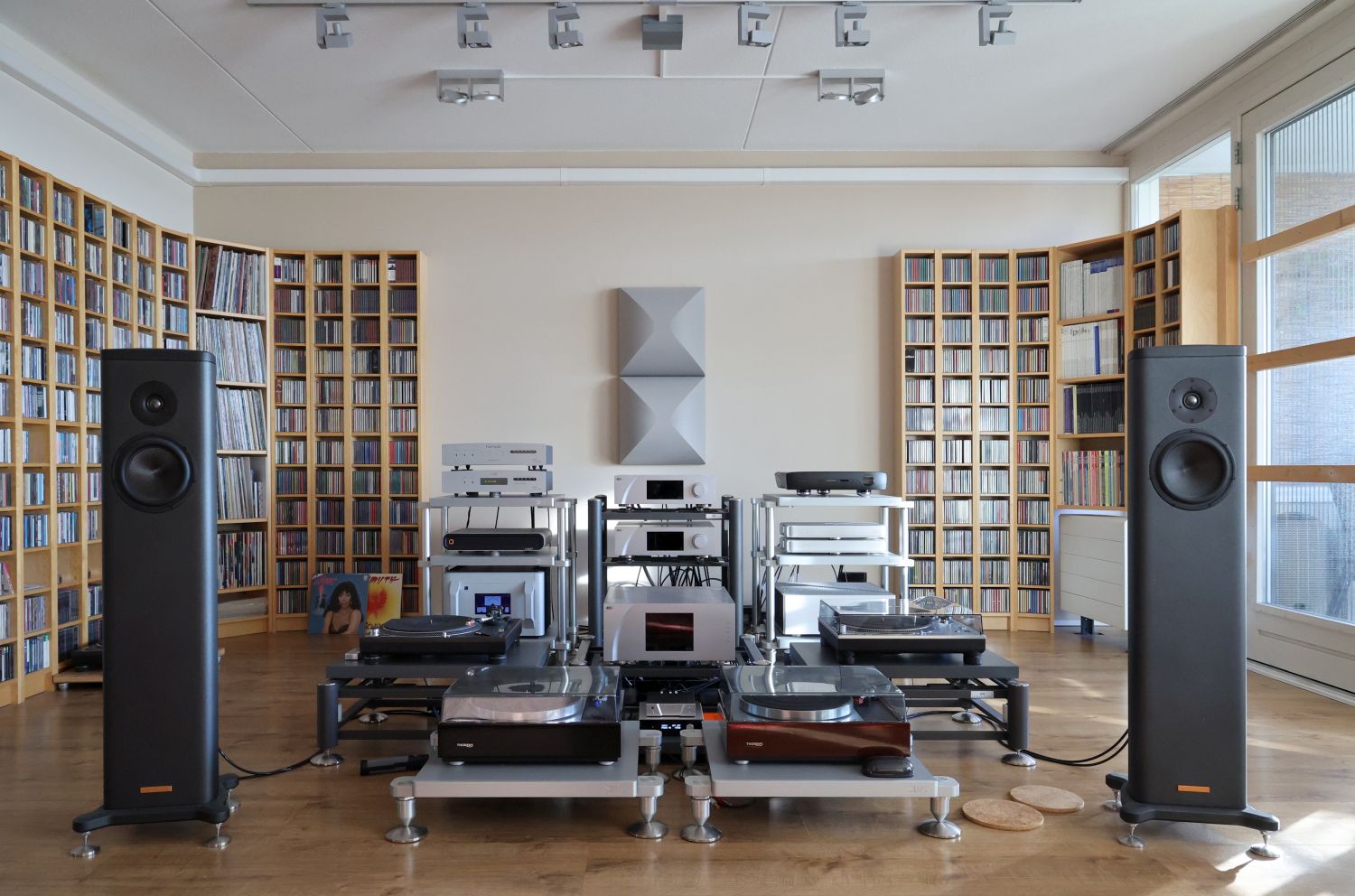
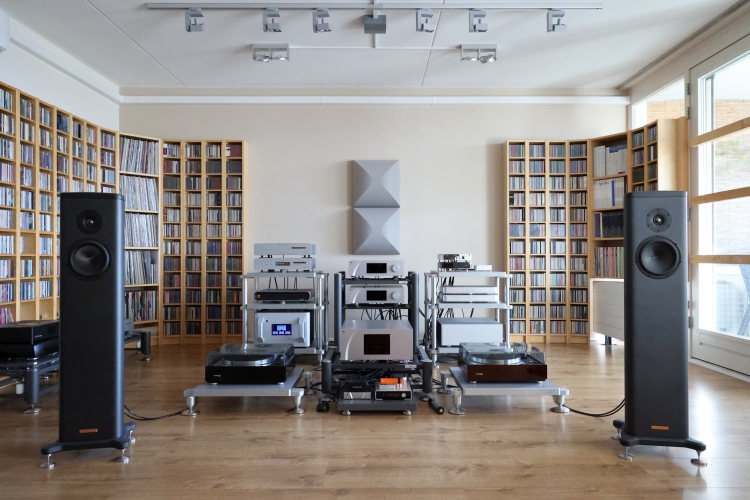
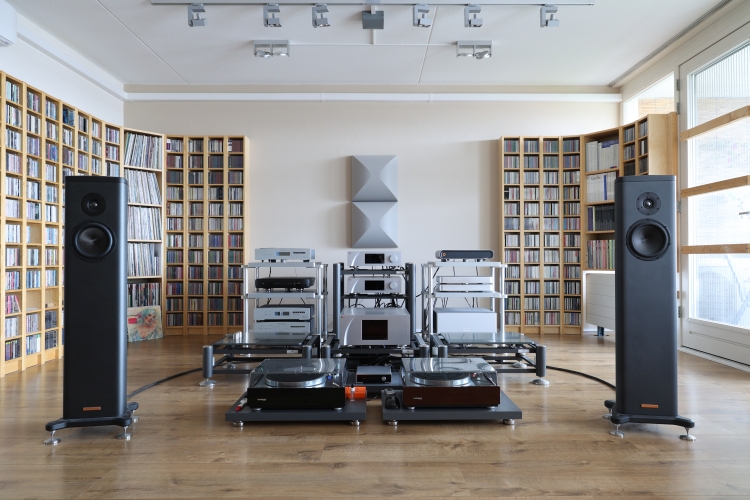
Reading that you now have the Apogees permanently installed does that mean you sold your Magico’s ?
Indeed. I kept them side by side for quite some time to make sure I would not regret it, but at some point, I found that I consistently preferred the Duettas. Thus, I sold the Magicos to a good friend who enjoys them thoroughly.
What is the reason that you don’t use higher end Ethernet cables? I find that they do make some difference. Looking at all the other network optimization I’m surprised to see just a simple Ethernet cable.
I have heard quite a few high-end ethernet cables and also reviewed several (see this link), and they do indeed make a difference. I find that they typically provide a smoother, warmer, more relaxed sound than good-quality standard cables, which is not what I am looking for in my system. Of the available standard cables, I picked the ones that sounded most neutral, solid, and well-defined.
Interesting. I do agree with you that on many occasions they make the sound slower. However, I found the opposite on Shunyata Theta and Alpha (the rest I haven’t tried). I improves PRaT and dynamics. Perhaps it’s a brand you want to check out.
In many ways I share your pursuit for directness, punchiness and neutrality. I am curious to whether you tried the BlueJeans Cat6a cable? It is not a hifi cable but very solid performer for the very affordable price. It has that “live” feeling that a lot of hifi ethernet cables lose in my opinion. Easy to try out for the price of 20-30 euro’s.
Perhaps your situation is also different than for most of us since your switch is of such a high level that the cable afterwards has less impact than when using a more affordable switch?
Hi Dries, I have not heard the BlueJeans Cat6a cable but will keep it in mind. In my experience, switches have a large influence themselves, but the network cables always still make a difference, regardless of switch quality or cost.
Hi Christiaan,
Which power cable and connectors are you using on your PS Audio Power Plant P20?
From wall outlet to the P20, I use a home-made cable consisting of Block CUL 500 Enameled solid core copper in PTFE tubing with OEM Rhodium schuko and Oyaide 004 IEC.
Which thickness is the cable as I noticed they have multiple versions of this cable.
What is the reason mostly to use this cable over some other (high end) cables? My experience is that the first cable to the power distribution is the most important power cable in the system.
I updated the info in the article. BTW 2 mm sounds fuller while 1,5 sounds tighter and crisper. I like the latter.
Hi Christiaan,
I can’t find anywhere online where to buy the following items:
Block CUL 500 Enameled solid core copper in PTFE tubing w. OEM Rhodium schuko and Oyaide C004
OEM tinned litze in PTFE dielectric with OEM Rhodium-plated schuko and Oyaide C004.
Oyaide I know but the rest of the parts I can’t find.
Could you provide some sources to where you bought this in the Netherlands?
These are home-made cables. They work for my situation under certain circumstances, but they are not intended to be made by others. Because they are not retail products that I reviewed, I also don’t want to dive too deeply into this. That said, Block Cul 500 wire can be purchased at Reichelt. PTFE tubing can be purchased from various stores, I used the PTFE Tube Shop. The other cable (tinned litze in PTFE) is based on OEM wire (tinned litze with PTFE dielectric) that is also used an ingredient for a commercial cable manufacturer that I cannot disclose. The manufacturer gifted me a few meters of these bare wires to facilitate my experiments, but I do not know the brand or type of this wire. If you’re interested, I recommend buying various wires and doing some experiments for yourself.
Thanks!