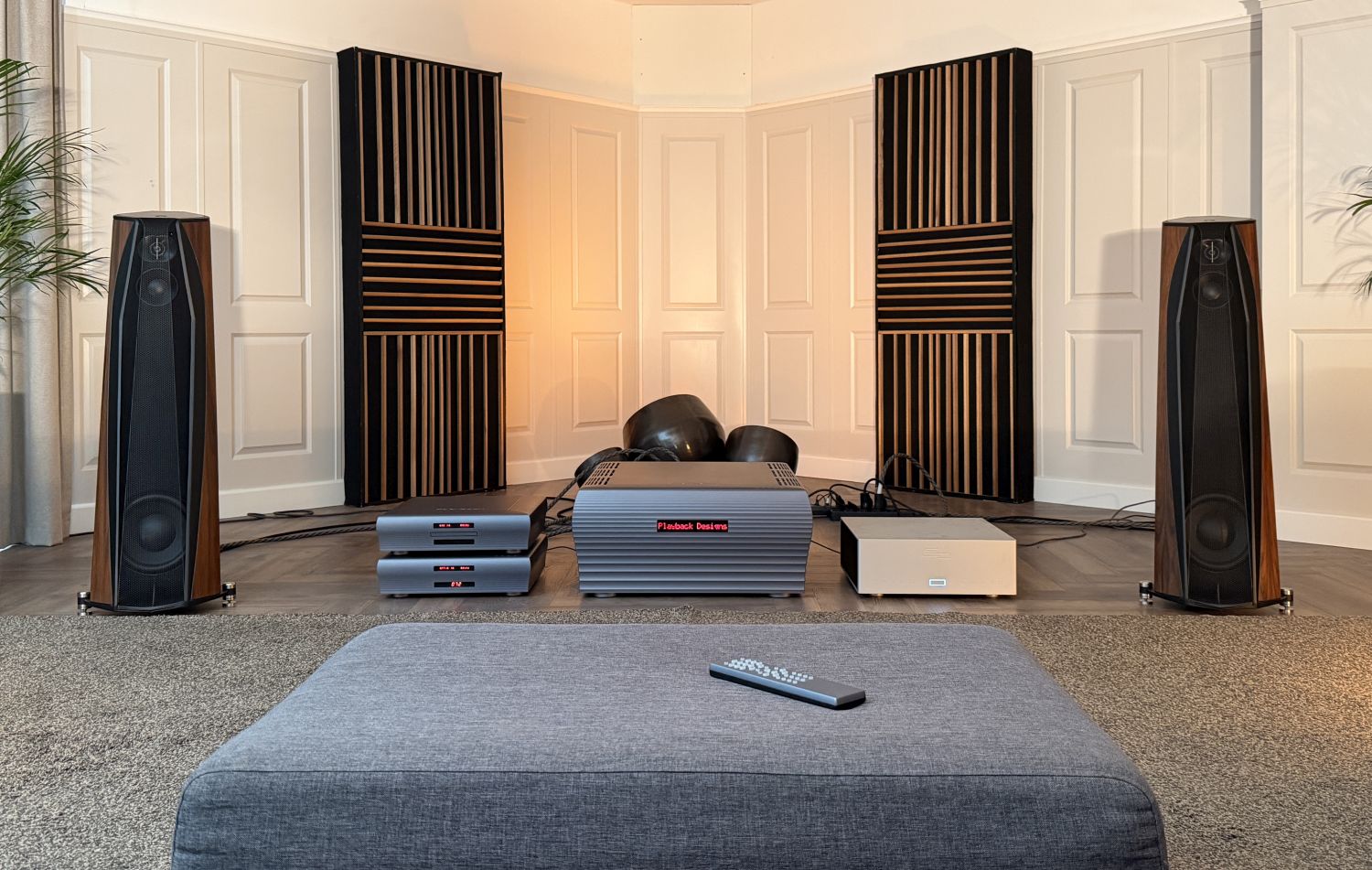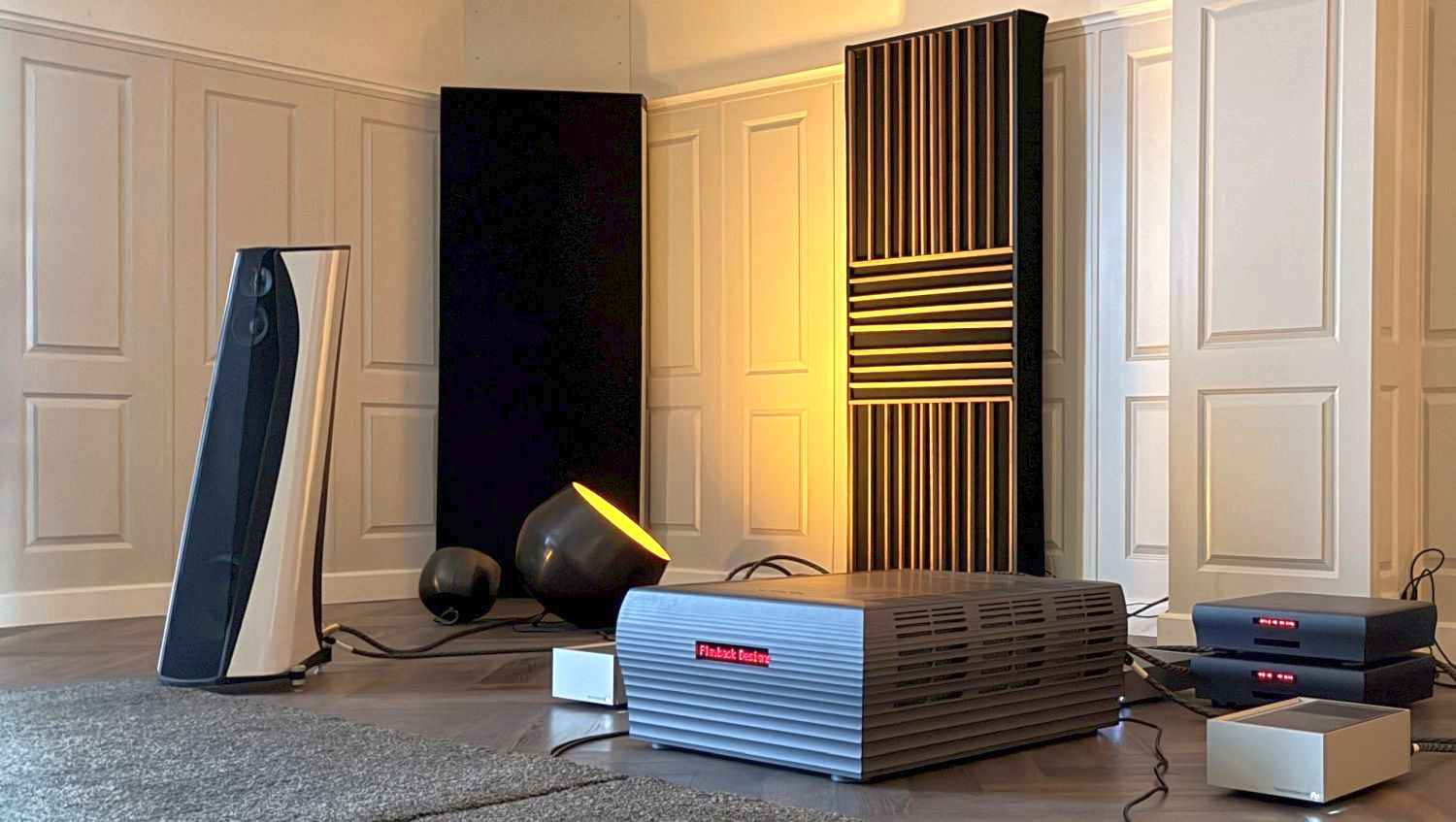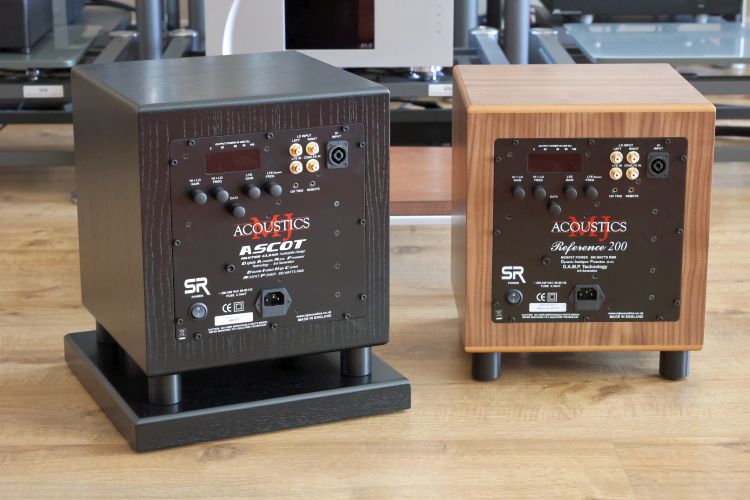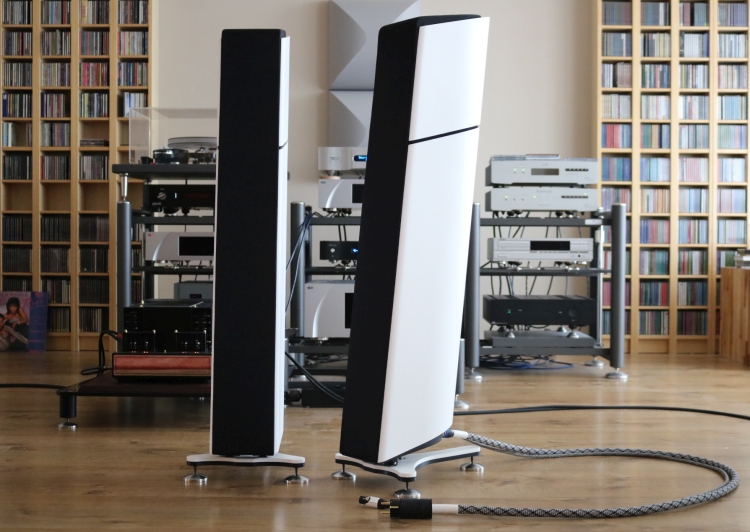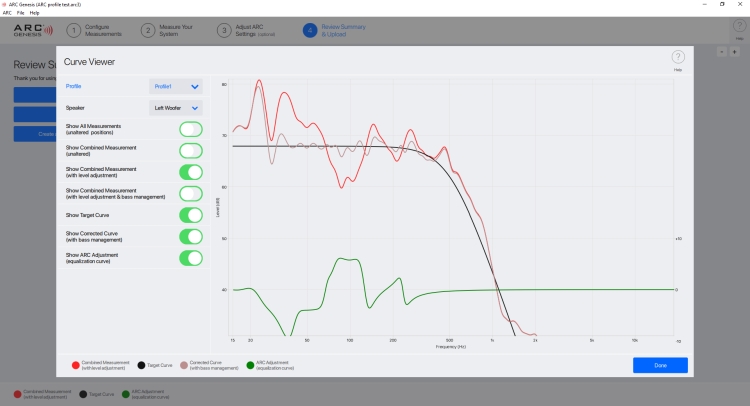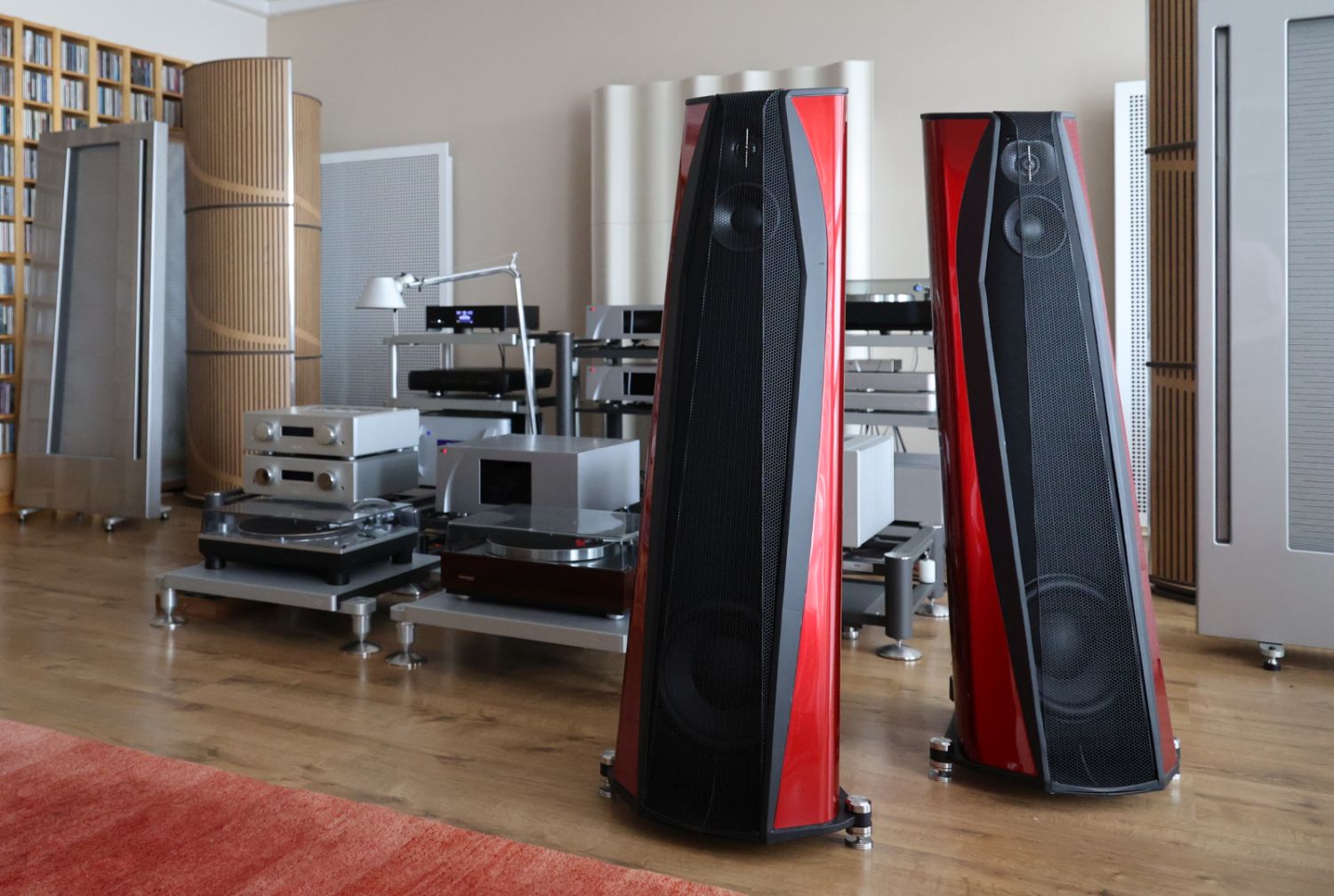
At this point, the Ensiums had scored maximum points for their technical abilities. In this room, I never heard better bass, control, or dynamics. However, there was an element of leanness and over-control to the sound. This was because, while very accurate, the upper bass and lower midrange were quite lean. I tried to address this with ARPEC, but while it was easy to achieve a fuller sound, this also made the bass sound less precise than I preferred, and it did not address the lower midrange. I knew that the leanness in the bass was caused by a null in my room (a point where out-of-phase reflections cancel certain frequencies that is near-impossible to compensate for electronically), and that the eventual solution would be to move the listening couch back to its old “dynamic speaker” position, closer to the rear wall. However, I wasn’t ready to give in just yet. Rather than moving the listening couch closer to the back wall, I moved the speakers further back. This was always a no-go in this room, as the area behind the speakers always added significant coloration to the sound. But this time, that was not the case. Even without ARPEC adjustments, the speakers behaved remarkably linearly. This confirms the manufacturer’s claim that the Ensiums behave a lot more like closed-cabinet speakers than ported ones. It was definitely clear that the Ensium’s 19Hz port interacts much less with my room than, for example, the multi-ported Wilson Watt/Puppy 8 I used previously, although I can’t exclude the positive influence of the Mass Spring Bass Absorber panels in this context.
Adding ARPEC to the mix went far beyond dotting the i’s: the system proved indispensable, enabling me to finely tune the bass to match the midrange perfectly at any given position.
The Room Size and Placement dials allow very precise compensation for speaker positioning and room size. Essentially, the two rotary dials control the balance between dryness and flow, mimicking a closed cabinet, a ported one, or anything in between, depending on the adjustments. As such, the system is elementary in shaping the speakers’ character. At the flick of a dial, it allowed me to easily compensate for excess fullness or a lack of body, as required at any position. At a certain point, the Ensiums were closer to the rear wall than any speakers had ever been, and thanks to ARPEC, I could still make them sound cleaner and more neutral than any passive speaker.
Still, although the sound was now smooth, pleasant, well-balanced, and forgiving, the performance had also lost some of the sparkly communication and immediacy that had impressed me so thoroughly in the initial setup. So, now, it was finally time to move the couch back to the standard position for dynamic speakers.
With the couch back in its old position, I was immediately rewarded with glorious and amazingly deep bass, right down to a trouser-flapping 20Hz! The speakers are even specified to start at 16Hz, but I do not have test tones that low, and I’m not even sure if my digital equipment would reproduce them. But, sure enough, 20Hz was there, in its full glory, shaking the room! Until now, I had never heard such low frequencies in my room, not even with large subwoofers, but the Ensiums do it effortlessly!
As I moved the speakers closer to the listening position, a few inches at a time, I could hear the communicative qualities increase while the bass remained deep and powerful. At certain intervals, the bass became leaner as the room’s boundary reinforcement diminished, and each time, this was easily compensated for by readjusting the ARPEC dials. With passive speakers, placement is always a compromise between ideal bass and precise imaging. But with ARPEC, I was able to pull the speakers a little closer to achieve spectacular clarity and perfect imaging, while the slightly leaner bass at those positions was easily rebalanced by turning up the Placement dial. In their final positions, they ended up very close to where Ivo and Paul had placed them, which was also very close to where the Magicos and other dynamic speakers always worked best. Now, the puzzle pieces fell right into place, and the speakers sounded technically superb, as well as lyrical and emotionally engaging.
The Ensiums sound wide-open, lively, articulate, and hugely expressive across the entire frequency range. They excel at delivering highly realistic percussion, piano, and vocals. Honestly, their transient response is unlike anything I’ve heard from any speaker that isn’t a horn. Vocals are projected a little higher than with the Magico S1 MkIIs or most stand-mounted speakers, but that does not bother me at all; it is just an observation, though I know some listeners are very specific about this aspect.
They are not bright on top, and neither is the treble lean or white-ish, as can be the case with certain hard domes and ribbon tweeters. They do have a very fast, highly energetic upper midrange and treble, providing a positively communicative sound. Their openness and immediacy can, however, be a two-edged sword. These speakers do not rose-tint anything, and this lays bare any edge or rawness elsewhere in the system or in the recording.
Aequo Audio has considered this, and the Ensium allows adjusting the speaker tilt by raising or lowering the rear spike. This allows fine-tuning the driver alignment depending on listening height and distance. Simultaneously, the balance between forward/lively and laidback/smooth can be adjusted in the same manner to some extent. In my case, a little more backward tilting restored the balance and provided a fuller lower midrange with friendlier treble.
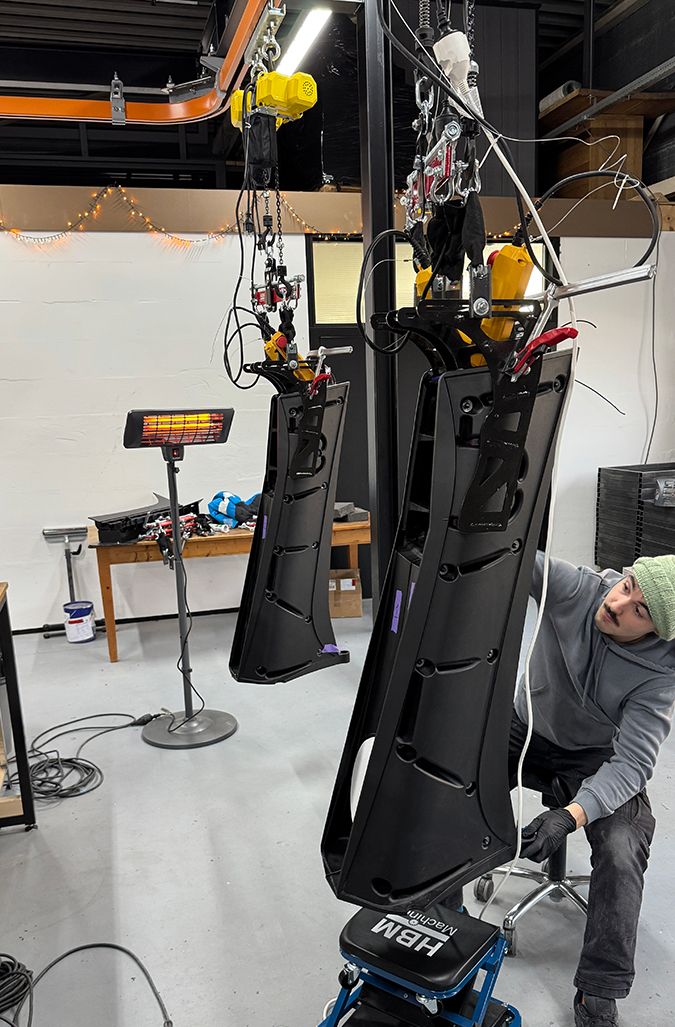
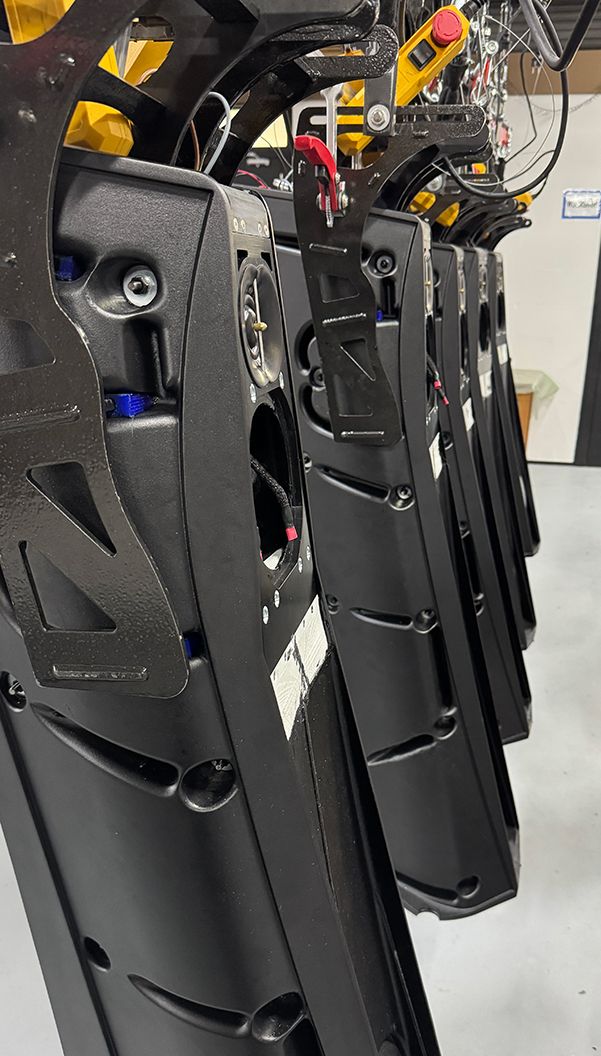
Above and below: Ensium production line
It is expected that a large three-way speaker will not sound as pure, cohesive, communicative, or as invisible as a small two-way monitor speaker. Indeed, if you are after the cohesion and maximum point-source behavior of a very good small monitor, then the Ensium might not be the ideal choice. However, the Ensium is among the very best when it comes to imaging and soundstaging, and thanks to clever design and the super-dense, uniformly damped Diluvite nanocast cabinet material, the Ensium is actually among the sonically most invisible speakers I have heard! Further, the Ensium sounds amazingly pure, incredibly communicative, and its three drivers are clearly well-integrated into a whole. The treble and midrange literally sound as though they come from a single driver, and there’s never a feeling that the active bass section is leading a separate life. Honestly, I’ve never achieved a level of coherence with separate subwoofers as good as this, despite my best efforts.
However, I do hear a very slight difference in tonality between the midrange/treble and the bass. Or rather, the midrange is so utterly pure, clean, and open that the bass has comparatively slightly more character. Don’t get me wrong, the bass, in and of itself, is super-agile, extremely well-controlled, and actually sounds faster, cleaner, and more accurate than pretty much all passive speakers I’ve used. So, the bass is not at fault, and I really am nitpicking here, but the comparatively even cleaner midrange offsets it. On the other hand, even though these speakers sure have analytical qualities, this slight bit of character prevents them from sounding cool or clinical.
The Ensium’s bass performance and integration become even more impressive when compared to other speakers with active bass systems. I waxed lyrical about hybrid Martin Logans in the recent past, commenting on the coherence of their active bass sections relative to older Martin Logan designs, but in retrospect, my experience with those speakers reinforces the case for Aequo Audio and the analog ARPEC system. Although the ESL 11 and ESL 15 had magnificent bass that was coupled almost seamlessly to the electrostatic foils, there was a considerable difference in character between the dynamic woofer and the electrostatic foil. After being initially wowed, this aspect started bothering me over time. When I later added a pair of Magico S1 MkII’s, they were so much more coherent that they soon became my primary speakers. But listening to the Aequo Audio Ensium speakers now, with my ears fine-tuned for bass precision and coherence, it’s clear that the Ensiums’ bass sections do an amazing job.
Because speakers are such a personal choice and so pivotal in their room interaction, I am usually eager to return to my own speakers after a review. The Ensium, however, is something else. Not only do they work every bit as well in my room as the Apogee ribbon speakers or the Magicos, they actually outperform them in a number of aspects, and they produce the best bass I have heard in this room, period!
Tellingly, for partially active speakers with such extensive adjustability, the Ensium makes it easy to forget about its adjustments, and they do not incur the desire to keep tweaking them. Rather, they invite the listener to shift attention from analytical mode to simply enjoying the music. The dynamics, control, and bass power are absolutely awesome, and they put a huge grin on your face. But the speakers are not just powerhouses; they also excel with their agility and effortlessly respond to subtle shifts in speed and dynamic behavior. The sound projects entirely freely in all directions and does not stick to the cabinets. Moreover, their spaciousness is present in all listening positions, not just in the sweet spot, but throughout the listening area. Even when seated on the side, I can still hear vocals stably focused between the speakers. Such properties make it easy to enjoy the speakers anywhere in the room, and not just for the person sitting in the sweet spot.
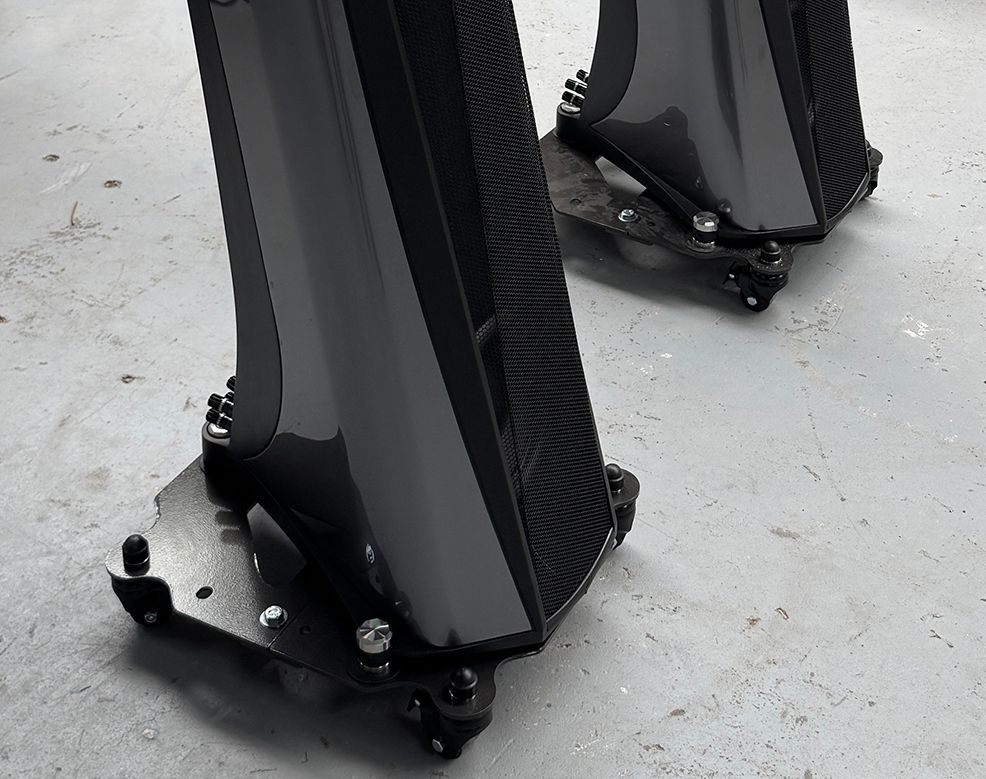
Above: To enable easy transport, unloading, and positioning, the speakers are delivered in cleverly constructed flight cases, pre-mounted on heavy-duty metal carts, ready to roll out of the cases and into position. Once the ideal positions are found, the carts can be removed.
Speaker Cables
For this review, I predominantly used Driade Flow Reference 808 speaker cables, the same as I use with the Magicos and Apogees. I love these cables for their blend of extreme resolution, airy refinement, low coloration, and flow, but they are slightly lean and don’t add any smoothness or warmth. The SMR Cable Technologies Vanish 334 is marketed as neither adding nor taking away anything, but compared to the Driade, it sounds fuller, smoother, and more relaxed. As it turns out, the Ensium responds well to the SMR cable, providing more voluptuous bass, a creamier midrange, and smoother, slightly darker treble. While I prefer the Driade cables for their more articulate bass and crisper overall sound, there was no denying that the SMR cable adds more charm and sweetness while remaining highly resolving. As mentioned, the SMR cables are still very neutral, so, if desired, the Ensiums can still be tweaked to sound warmer, fuller, or darker with other cables.
Amplifiers
A major advantage of the Ensium’s active bass is that the speakers are compatible with all amplifiers. This contrasts starkly with low-impedance passive speakers that place heavy demands on an amplifier’s power and stability. Maintaining purity is one of the most challenging aspects when increasing an amplifier’s power. The more transistors and complexity you add, the more likely it is that this complexity becomes audible. This explains why very powerful Class A or AB amplifiers with exceptional purity are invariably very expensive. Conversely, superb low- to medium-power amplifiers can be found much more easily and at much friendlier price points.
The Ensium’s revealing nature means you’ll hear the amplifier’s quality, but it does not need to be very powerful at all. The bass section always has enough power, and the 8-Ohm input is hugely amplifier-friendly. One could even consider a good integrated amplifier, whether transistor- or tube-based, and, regardless of its sonic signature, it will drive the Ensiums well.
Alas, I did not have an integrated amplifier at hand, but I did hear the Playback Designs SPA-8 and Westminster Labs Rei power amplifiers with the Ensiums when I visited the Aequo Audio showroom. From that experience, I know that differences in character between amplifiers are still very audible.
During the Ensium review, the AVM SA 8.3 power amplifier was also delivered for a separate review. This is a very powerful amplifier, which is not required for the Ensiums. Nevertheless, it worked wonderfully! This amplifier has a tube input stage, combined with MOSFETs for the power output stage. Interestingly, this amplifier is a bit more “solid-state” in its behavior than the CH, with rock-solid stability and control, while also offering a smooth sound with a slightly creamier midrange. The ultimate resolution and refinement are slightly lower than with the CH, but the fuller bass, extra body, and subtle charm work really well with the Ensiums.
Next: Fully Active Ensium, Speaker Context, Value, and Conclusion