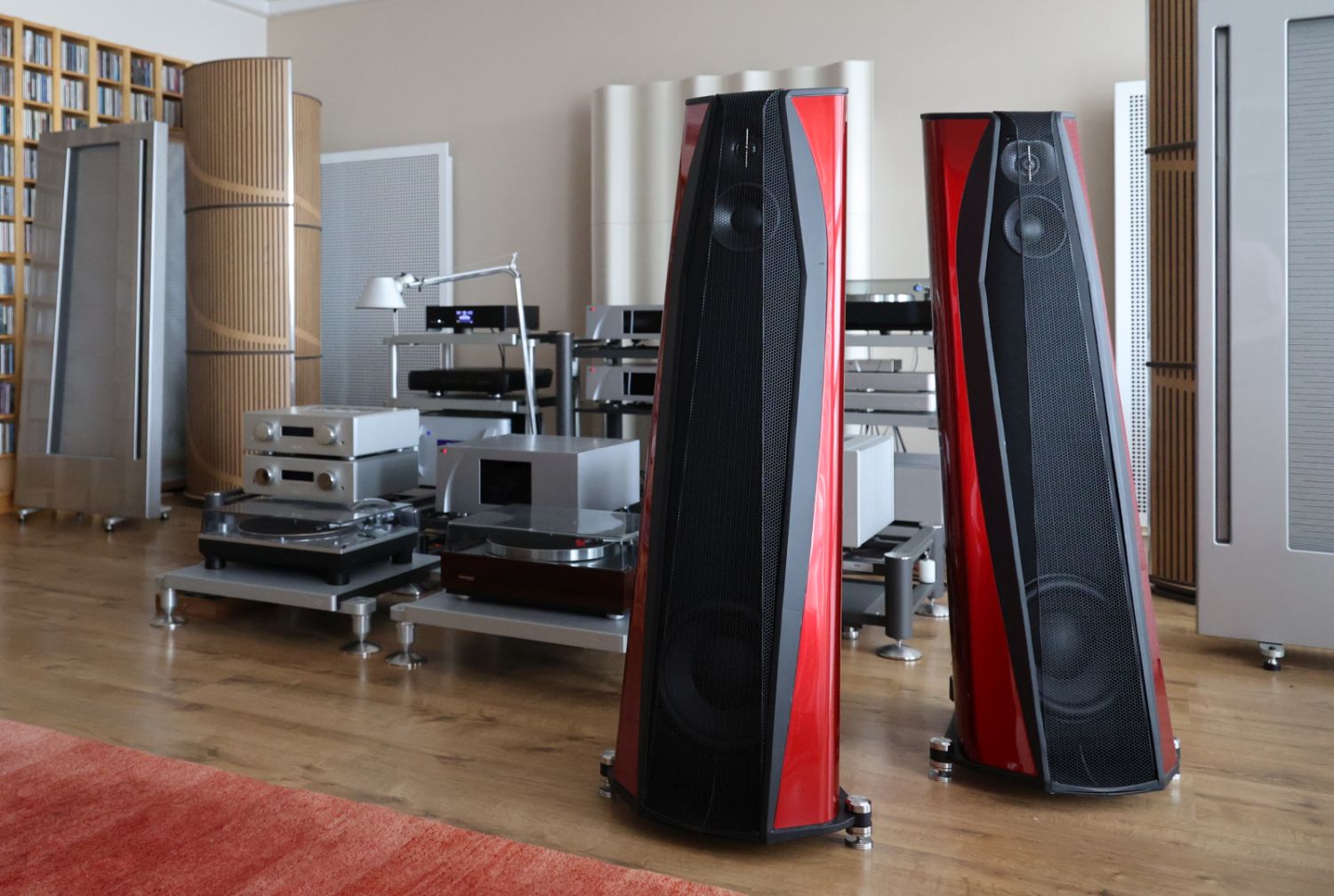
The tweeter used in the Ensium is faster than the one in the Stilla and identical to the one in the Ensis. Aequo Audio deliberately chose a soft-dome tweeter rather than typical high-end speaker membranes made of synthetic diamond or beryllium. The idea behind the application of beryllium tweeters is to enable unflexed ‘pistonic’ movement, with the main resonant breakups pushed above the audible frequency range. Yet, every resonance has harmonic artifacts beyond the frequency bandwidth, compromising stiffness at the cost of damping and producing an unrealistic spark rather than musical realism.
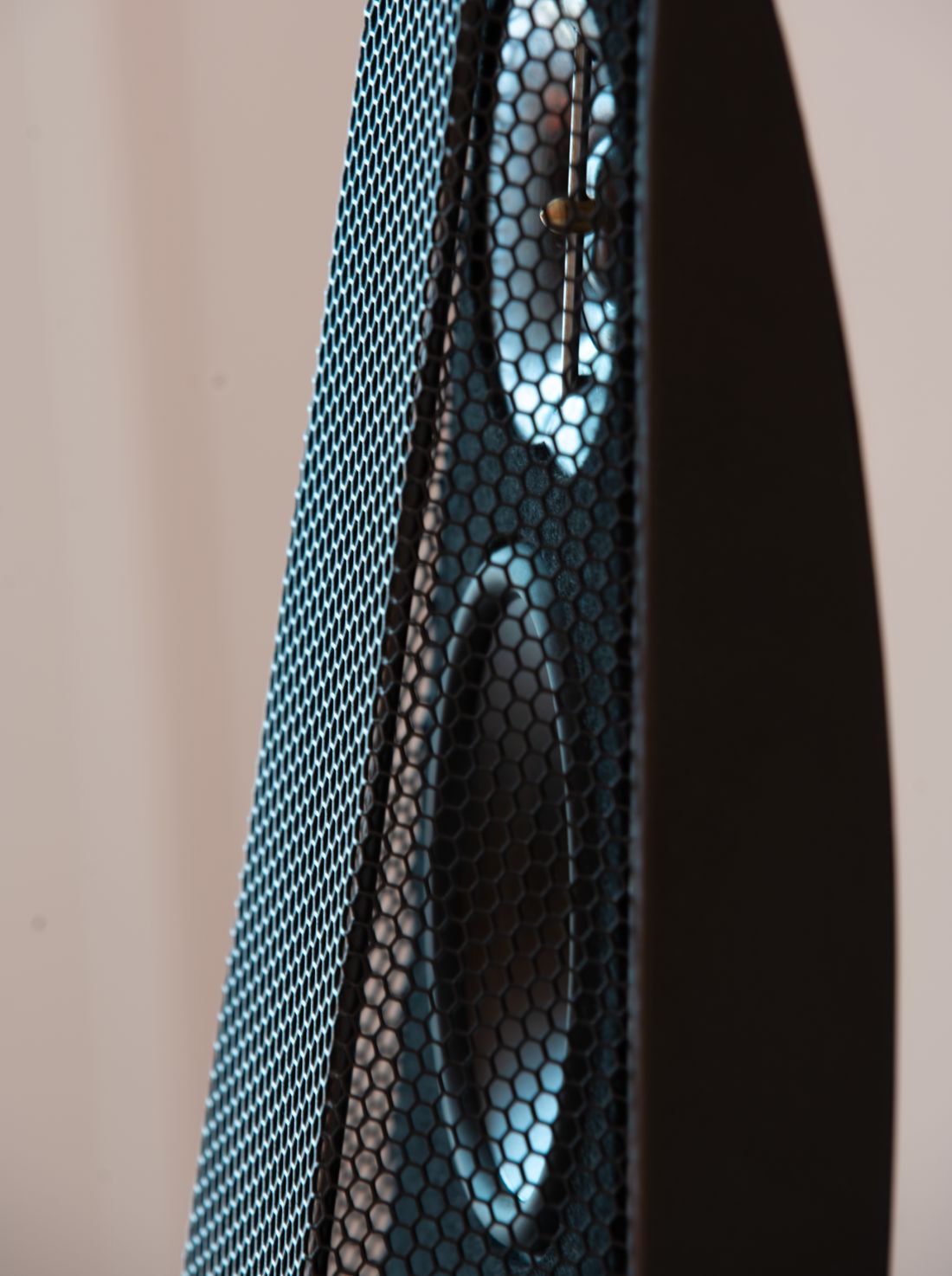
Despite using a woven textile rather than exotic materials, the EHDL (Enhanced Horizontal Dispersion Lens) tweeter is anything but standard. While the tweeter has a flexible surround, its acoustic center is fixed in place by an aluminum dispersion cone on a carbon fiber rod to eliminate membrane resonances and other high-frequency irregularities. The aluminum cone also serves as a controlled vertical/horizontal dispersion lens, enabling an ultimate holographic 3D soundstage and imaging. It solves the problems of top-octave response irregularities and simultaneously addresses the non-pistonic drawbacks commonly encountered by soft-dome tweeters, without introducing the harshness of hard domes.
Additional Characteristics
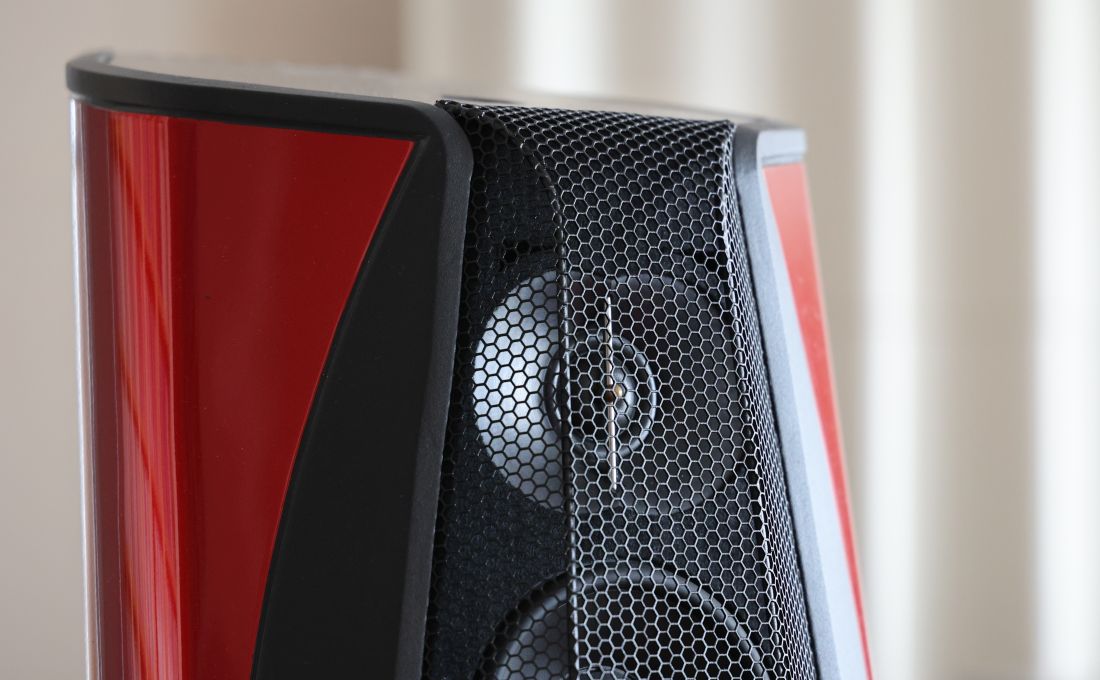
Aequo Audio uses super-fast, well-controlled motor designs on stiffer materials in the bass section and softer, good self-dampening cone/dome materials in the mid/high section. All drivers have low moving mass, high speed, and very low distortion, combined with very powerful motor systems, to achieve a fast response with high efficiency. Perfect phase alignment is achieved throughout the whole frequency range through driver positioning based on the acoustic centers.
Compared to the Stilla, the Ensium reduces distortion levels by half while being capable of playing at much higher volumes. This is a notable achievement!
The very heavy, high-damping cabinet materials are responsible for a pure, natural sound without ringing. Low-order crossover filter topology and minimized cabinet diffraction result in a speaker that easily disappears.
Selected colors and wood types
Below is the premium selection of colors and wood types. Bespoke lacquers and wood types are available on request.
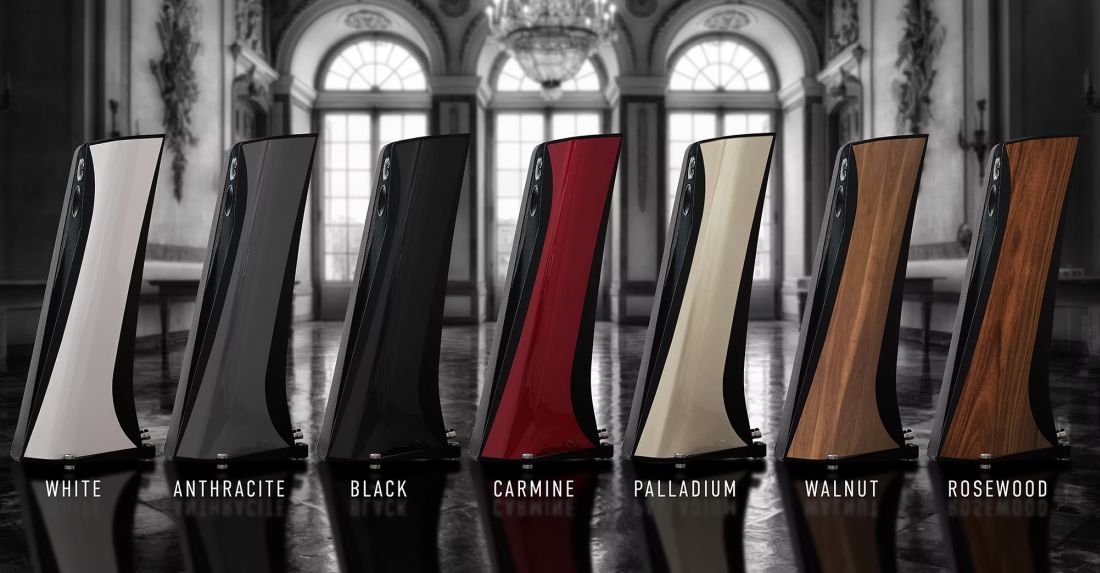
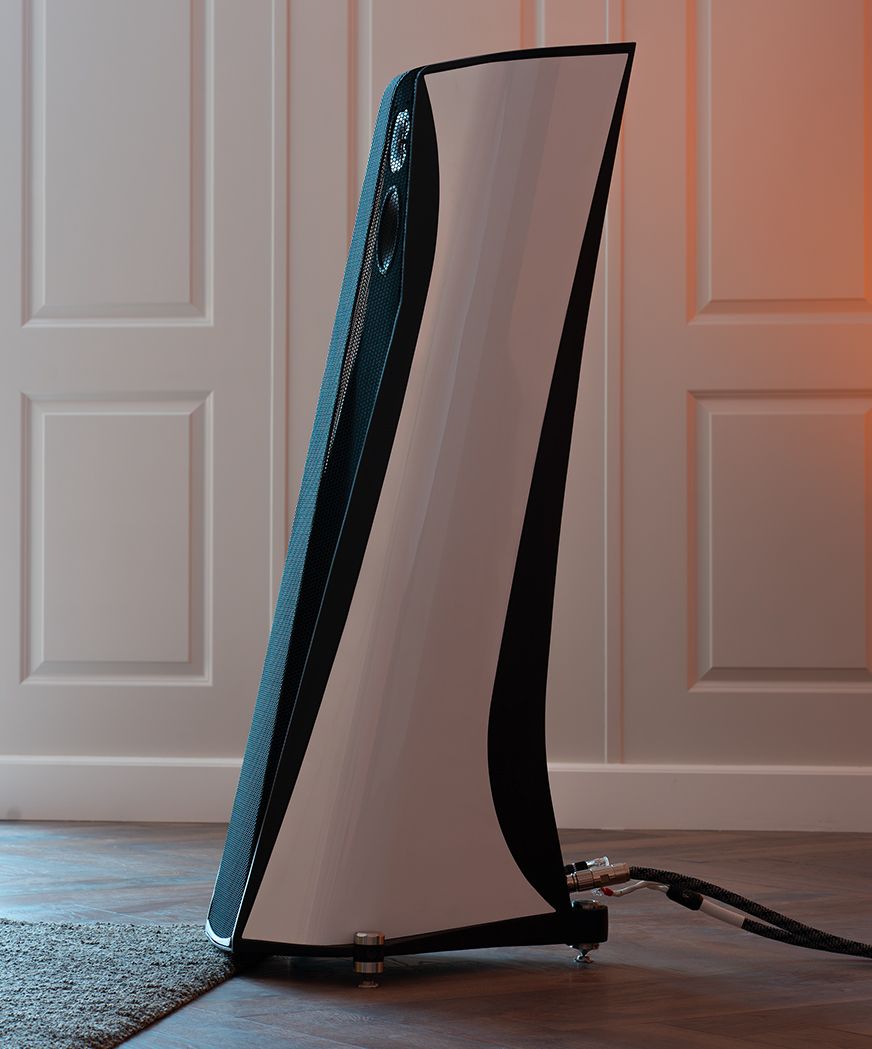
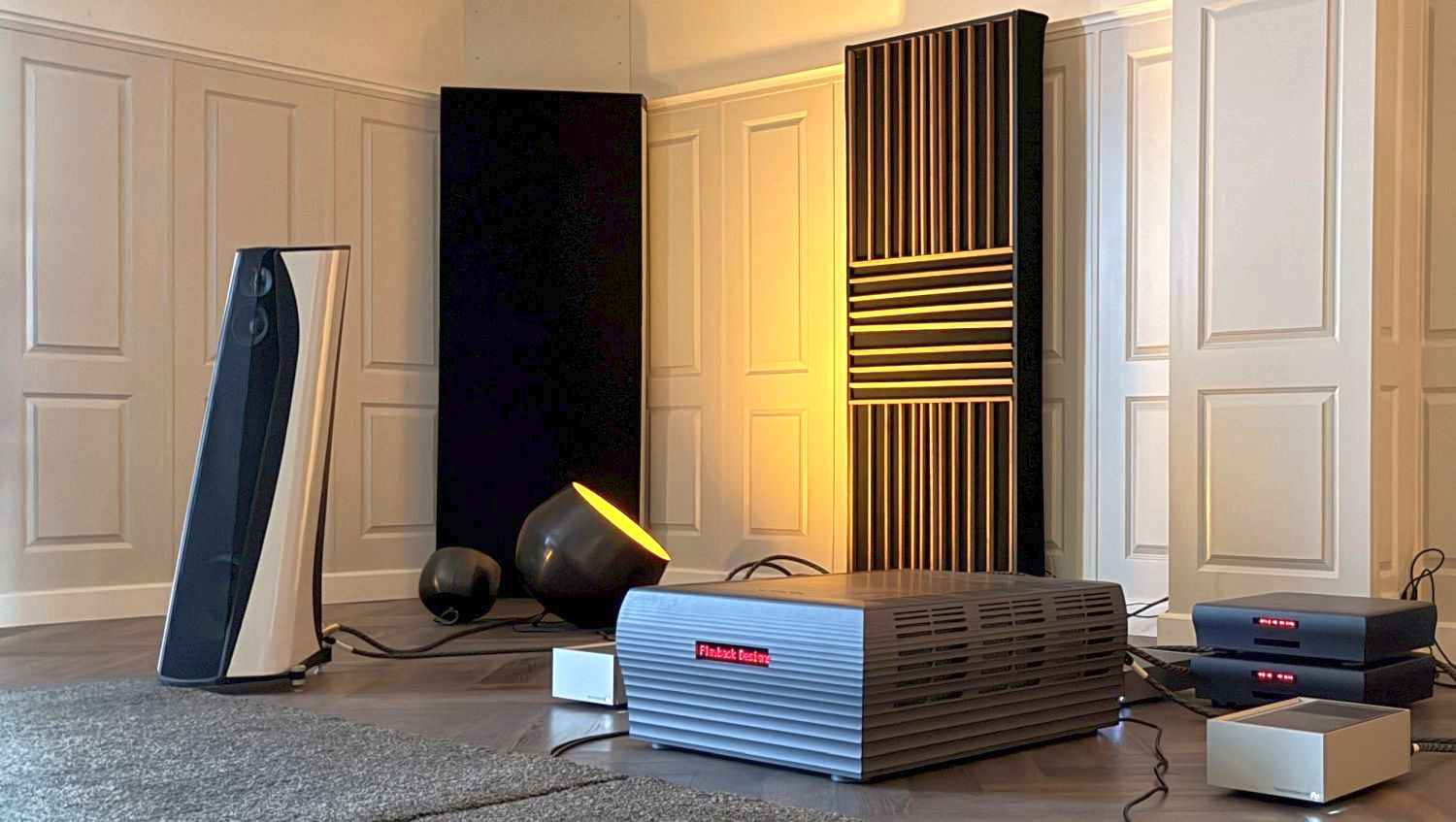
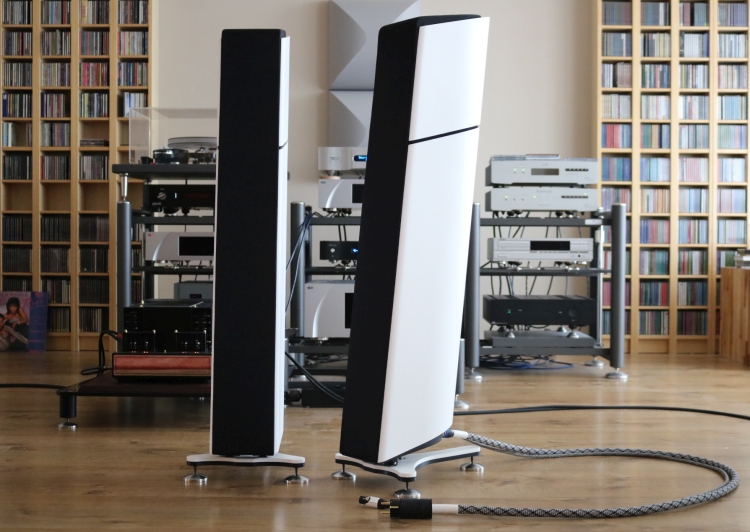
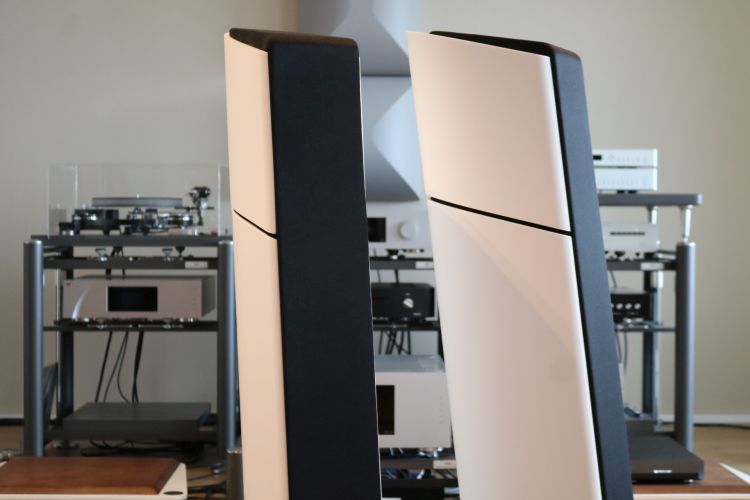
Above: High-Gloss White finish.
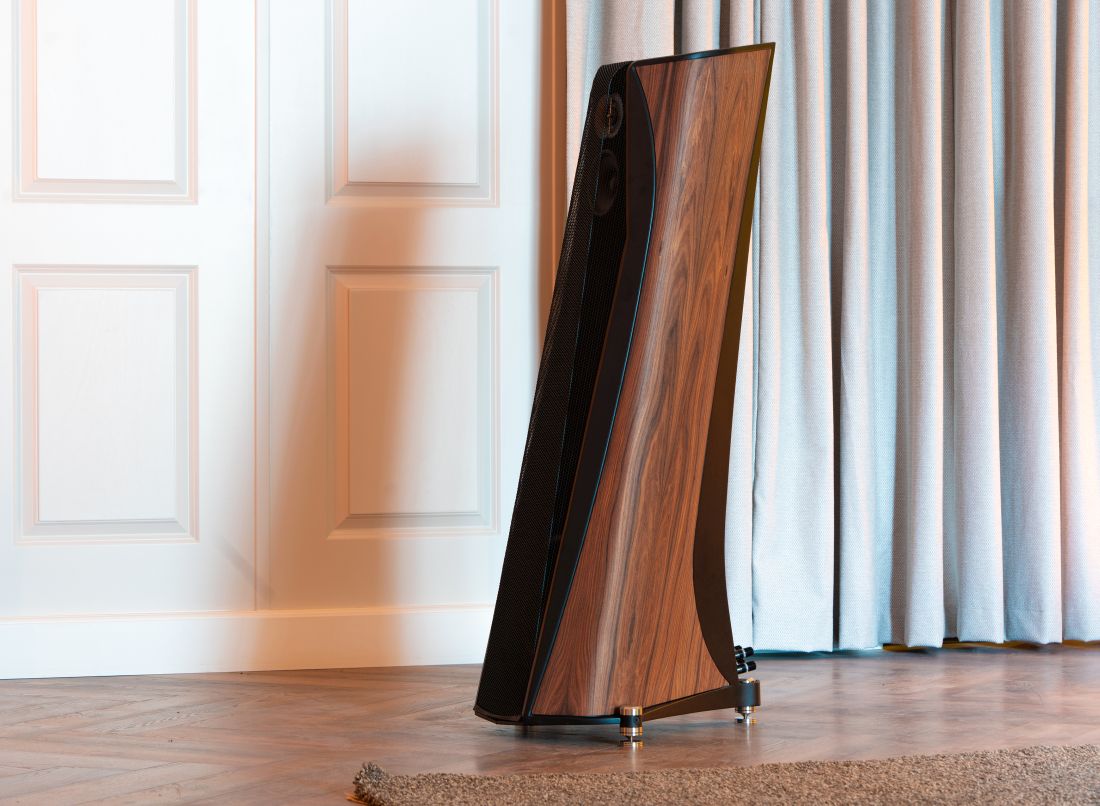
Above: Rosewood finish.
The Technology section on the Aequo Audio website offers a wealth of information for those who want to dig deeper.
Review Context
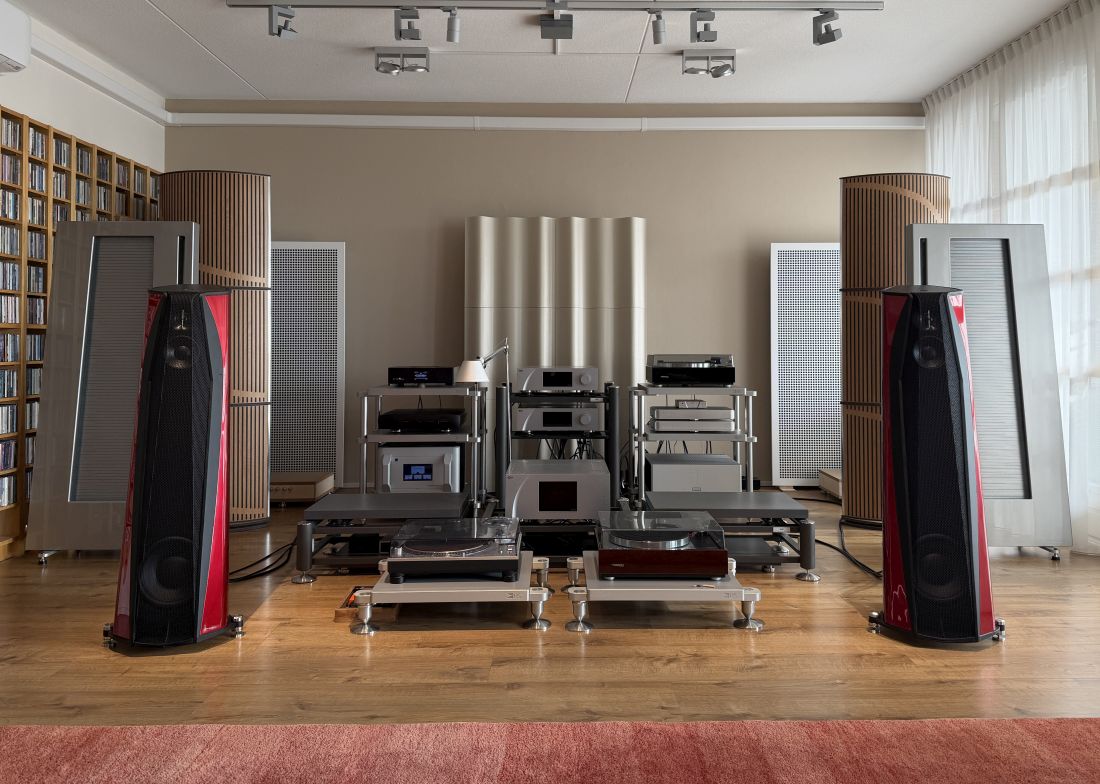
The Ensium was listened to in the main system, comprising the CH Precision C1.2 DAC, L1 preamplifier, and A1.5 power amplifier. Digital sources include the Aqua La Diva M2 CD Transport, Antipodes Oladra, and Grimm MU1 music servers. Speakers used for comparison are the Apogee Duetta Signature (recently refurbished and fitted with new foils) and the Driade Premium Model 9. All interlinks are Driade Flow Link Reference 808, and the speaker cables are Driade Flow Reference 808. All components (including review components) are powered by the PS Audio P20 PowerPlant.
Listening
The review pair had played for an estimated 150 hours before being delivered to me. In my system, they have played for approximately 60 hours, during which I noted a subtle change in the ease and flow. Paul and Ivo indicated that they should be well on their way to being run in, but also added that further settling would likely occur even beyond the 250-hour mark.
Ivo and Paul kindly installed, positioned, and adjusted the speakers for me. Since I usually handle everything myself, it was a luxury to see someone else do it for a change! They did an excellent job dialing in the speakers. At that moment, the listening couch was still placed far from the back wall to achieve the most linear bass response from the Apogee Duetta Signature Ribbon Speakers. My room has a complex shape and is larger than the typical Dutch home. Just like any room, it has its peaks and nulls, and I have tried to address these through various acoustic treatments and careful placement of speakers and the listening couch. Since the Apogees are fully open dipoles with a full-range, out-of-phase output at the back, they interact with the room’s nulls and peaks differently from dynamic speakers, which can be a blessing or a curse. Peaks can be addressed quite effectively with the right acoustic treatment, but nulls are best addressed by finding the ideal relative speaker/listener position. Due to their in-phase/out-of-phase bass, the Apogees require different positioning to achieve an ideal balance. From earlier experience, I knew this setup was not ideal for dynamic loudspeakers. On the other hand, the recent installation of six large Mass Spring Bass Absorber panels has proven highly effective at controlling low-bass decay with the Duettas, and I had not yet found out how the newly treated room would respond to dynamic speakers. Therefore, rather than repositioning the listening couch to its previous, less acoustically treated spot used with my former dynamic reference speakers, the Magico S1 MkIIs, I chose to test the current positions first.
As the starting position for the Ensiums, we chose the former Magico positions, about 3 meters from the current listening position, now that the couch was further from the back wall. Despite the close distance, Ivo and Paul achieved an immersive sound with incredibly tangible focus, edge-of-your-seat immediacy, explosive dynamics, wide and deep soundstaging, and impressively tight, well-controlled bass, with an amazingly realistic timbre. It has to be said, these guys know how to position speakers in a room!
Having reviewed the previous model, Stilla, I am very familiar with their sound. From a new speaker by the same company, following the same design principles with a different cabinet, I expected a familiar house sound, improved, but surely more similar than different. However, when I first heard the Ensium in the Aequo showroom as part of my Playback Designs SPA-8 Quick Impression, my feeling was that they were actually more different than similar. They impressed me with their remarkably clear, pure, and communicative midrange, supported by a weighty yet fast and expressive bass. From memory, the Stilla was quite a bit smoother, warmer, and more laidback. Even though this was my first visit to this showroom, I was pretty confident that the Ensiums were much cleaner and much more neutral than the Sttillas, but given the unfamiliar acoustics and other amplifiers, I could not be sure. Now that I have heard them in my listening room, however, it was obvious that they are not simply upgraded Stillas, but they perform on an entirely new level.
During successive listening, I was repeatedly in awe at the explosive dynamics. They possess a level of immediacy, expression, and attack that rivals the best I have heard in these areas. For their power and expressive immediacy, the Ensium reminded me of a blend of Wilson Audio’s Sasha V and AvantGarde horn loudspeakers. Thinking of the Stillas, my initial recollection seemed correct: the Stilla was indeed quite a bit smoother, warmer, and more laid-back. But most of all, the Ensium was far more neutral, coherent, and transparent. Clearly, the Diluvite cabinet makes all the difference in the world!
Next: Listening Continued, Speaker Cables, and Amplifiers