• About
    • About HFA
    • HFA Awards
    • Associated Equipment
    • Banners on HFA
    • HFA Analytics Data
    • HFA Audio Setup History
    • HFA Audio Setup Snapshots
    • Sitemap
    • Contact
  • HFA Awards
  • Reviews
    • All Reviews
    • Amplifier
      • All Amplifier Reviews
      • Integrated Amplifier
      • Preamplifier
      • Power Amplifier
      • Phono Preamp
    • Loudspeaker
      • All Loudspeaker Reviews
      • Passive Speaker
      • Active Analog Speaker
      • Active Digital Speaker
    • Digital
      • All Digital Reviews
      • CD Player
      • SPDIF DAC
      • USB DAC
      • Music Server
      • Network Player
      • Digital Recorder
      • Digital Interface
      • Audio Software
    • Turntable and Accessories
      • All Turntable and Accessories Reviews
      • Turntable
      • Tonearm
      • Phono Cartridge
      • Turntable Accessories
    • Cable
      • All Cable Reviews
      • Analog Interlink
      • Phono Interlink
      • Speaker Cable
      • Power Cable
      • Digital Cable
    • Accessories
      • All Accessories Reviews
      • Racks / Stands / Feet
      • Tuning / Tweaks
      • Power Connector
    • Industry Update
  • Insights
    • All Insights
    • Analog Insights
    • Cable Insights
    • Connector Insights
    • Digital Insights
    • Extensionblocks / Filters Insights
    • Generic Insights
    • System Synergy Q&A
  • Specials
  • Show Reports
    • All Show Reports
    • Alkmaar Audio Show
    • Chattelin Audio Systems
    • Dutch Audio Event
    • Enosound
    • HifiDeluxe
    • HifiLive
    • Munich High End
    • XFi
  • Classics
    • All Classics
    • Analog Classics
    • Digital Classics
  • Links
  • About
    • About HFA
    • HFA Awards
    • Associated Equipment
    • Banners on HFA
    • HFA Analytics Data
    • HFA Audio Setup History
    • HFA Audio Setup Snapshots
    • Sitemap
    • Contact
  • HFA Awards
  • Reviews
    • All Reviews
    • Amplifier
      • All Amplifier Reviews
      • Integrated Amplifier
      • Preamplifier
      • Power Amplifier
      • Phono Preamp
    • Loudspeaker
      • All Loudspeaker Reviews
      • Passive Speaker
      • Active Analog Speaker
      • Active Digital Speaker
    • Digital
      • All Digital Reviews
      • CD Player
      • SPDIF DAC
      • USB DAC
      • Music Server
      • Network Player
      • Digital Recorder
      • Digital Interface
      • Audio Software
    • Turntable and Accessories
      • All Turntable and Accessories Reviews
      • Turntable
      • Tonearm
      • Phono Cartridge
      • Turntable Accessories
    • Cable
      • All Cable Reviews
      • Analog Interlink
      • Phono Interlink
      • Speaker Cable
      • Power Cable
      • Digital Cable
    • Accessories
      • All Accessories Reviews
      • Racks / Stands / Feet
      • Tuning / Tweaks
      • Power Connector
    • Industry Update
  • Insights
    • All Insights
    • Analog Insights
    • Cable Insights
    • Connector Insights
    • Digital Insights
    • Extensionblocks / Filters Insights
    • Generic Insights
    • System Synergy Q&A
  • Specials
  • Show Reports
    • All Show Reports
    • Alkmaar Audio Show
    • Chattelin Audio Systems
    • Dutch Audio Event
    • Enosound
    • HifiDeluxe
    • HifiLive
    • Munich High End
    • XFi
  • Classics
    • All Classics
    • Analog Classics
    • Digital Classics
  • Links
scroll down for more
Active Analog Speakers Reviews

Aequo Audio Ensium

Christiaan Punter 7 May 2026 No Comments
  • Facebook
  • Twitter
  • LinkedIn
  • Pinterest
  • Email

Fully Active Ensium

In addition to the hybrid Ensium model reviewed here and the fully passive Adamantis version, Aequo Audio will also introduce a fully active Ensium version, enabling a super streamlined system. Whereas the hybrid Ensium requires an external power amplifier, the fully active Ensium eliminates the need for a separate power amplifier and can be driven directly by a preamp or DAC with built-in volume control. This enables the creation of an extremely high-performance, yet hugely cost-effective system. For instance, one could use an all-in-one Music Server/DAC/Preamp such as the Grimm MU2 and connect it directly to the fully active Ensiums via a pair of XLR cables. Besides keeping the setup simple, this also offers truly exceptional value for money.

Speaker Context

Decades of using aluminum, beryllium, and ribbon tweeters have primed me for a predeliction towards these drivers. This is not to say I consider these the best drivers; it’s a matter of personal preference. I know that some listeners actually find ribbons or metal dome tweeters to sound white-ish or unnatural, which I can totally understand if one is used to soft-dome tweeters. This is just to point out how driver characteristics can be perceived differently, and this should be taken into account when reading my comments in the Speaker Context section.

I have owned the Magico S3 MkI and S3 MkII, and the smaller S1 MkII was my reference for the last 8 years, until I fell back in love with Apogees, and sold the Magicos to a good friend a couple of months ago. This means I can no longer make a direct comparison. However, when I reviewed the Aequo Stilla, I did do a direct comparison in this room with the S1 MkIIs, and because I know my system so well, it’s easy to extrapolate how these Magicos differ from the Aequo Ensium.

The Ensium has superior transient behavior and more bite and expression in the upper midrange and treble, with realistic body and absolutely no whiteness whatsoever. But compared to the Apogee Duetta and Centaur ribbon midrange and treble foils, or the Magico Diamond-coated Beryllium tweeters, I feel like I’m missing some delicacy and fluidity in the treble. To be clear, I also feel this way when listening to most other speakers with soft-dome tweeters, including Wilson Audio, YG Acoustics, and several others. More than anything, it’s a matter of taste. The other passive speakers I have for comparison are the Driade Premium Model 9. These small monitors naturally do not go as deep, are not nearly as direct or dynamic, and certainly not as powerful as the Ensium, but they are very uniform, and while not as airy and delicate as the Magicos, they have a sweeter treble. I also listened to a selection of tracks through the Genelec 8050A and 8341A active studio monitors in the other room. The discrepancy in robustness, bass authenticity, focus, soundstaging, timbre, and dynamic behavior was absolutely massive, in favor of the Ensiums! However, the Genelec’s midrange and treble were a little gentler and more forgiving to my ears. Based on these comparisons, I feel it’s fair to say that the Ensium’s upper midrange and treble are more energetic and spicier than average. However, and this is a very important point, it is far easier to make an expressive speaker sound friendlier with the tilt adjustment, component-matching, and cable selection than to make a subdued, polite speaker sound truly dynamic and expressive. More precisely, a polite speaker will never sound as lively and expressive as the Ensium, no matter what you do. And indeed, none of the aforementioned speakers are quite as propulsive and exhilarating as the Ensium.

Depending on the adjustment of the ARPEC controls, the Ensium’s bass can be considerably tighter and more controlled than the Magico S1 MkII, and they are overwhelmingly more communicative, pure, immediate, and direct, particularly in the upper midrange. Neither the Duettas nor the Magico S1 MkII reach the same levels as the Ensiums in focus, imaging stability, bass tightness and control, immediacy, impact, power, and dynamics. The S1 MkII is smoother, creamier, more liquid, and more refined, making these speakers more forgiving, but the question is whether these qualities add to the sense of realism.

Based on what I heard at shows, the current S-series Magicos (unlike the original Q-series) have a highly sophisticated, liquid, and polished sound. The separate midrange driver greatly increases the purity and resolution compared to the S1 MkII. Despite the increased resolution, they are not bright or clinical; rather, I feel the current Magicos are slightly darker than average. The Ensium is not overly bright or clinical, but it does have a more open and energetic upper midrange and treble.

Although the 2-way S1 MkII sounded quite deep and spacious, the models with more drivers tend to sound spatially more constrained. The Ensium is a three-way speaker with an active bass section, yet the pair produces an impressively free, wide, and deep soundstage, along with very stable focus.

Most decisively, perhaps, is the way in which the Ensium manages to sound composed and controlled, yet simultaneously hugely communicative and explosively dynamic, making many other speakers sound polite in comparison. Consequently, I don’t feel that Magico and Aequo Audio compete directly; instead, they cater to different audiences. If I had to name other brands that feel more like competitors, Wilson Audio, Goldmund, and AvantGarde spring to mind.

Value

High-end products have always been seemingly disproportionately costly compared to mid-tier products. These products are designed for maximum performance rather than cost-efficiency. When you push for the last few percentage points of performance, fighting physics becomes very costly, and the perceived price-to-performance ratio no longer scales predictably. Further compounding this are economies of scale, where the development costs of bleeding-edge technology must be recovered across fewer units than in mass production.

Over the last decade, particularly in the last few years, prices of high-end products have skyrocketed. As audiophiles, we are now seeing serious speakers retailing for 60k-70k, and several previously attainable models are nearing or even crossing the 100k mark.

With this in mind, the Ensium is reasonably priced compared with competing brands. Moreover, it offers much greater flexibility, allows successful placement in difficult rooms, and removes the need for a large, powerful amplifier, further strengthening its proposition. All things considered, the Ensium actually offers very good value for money.
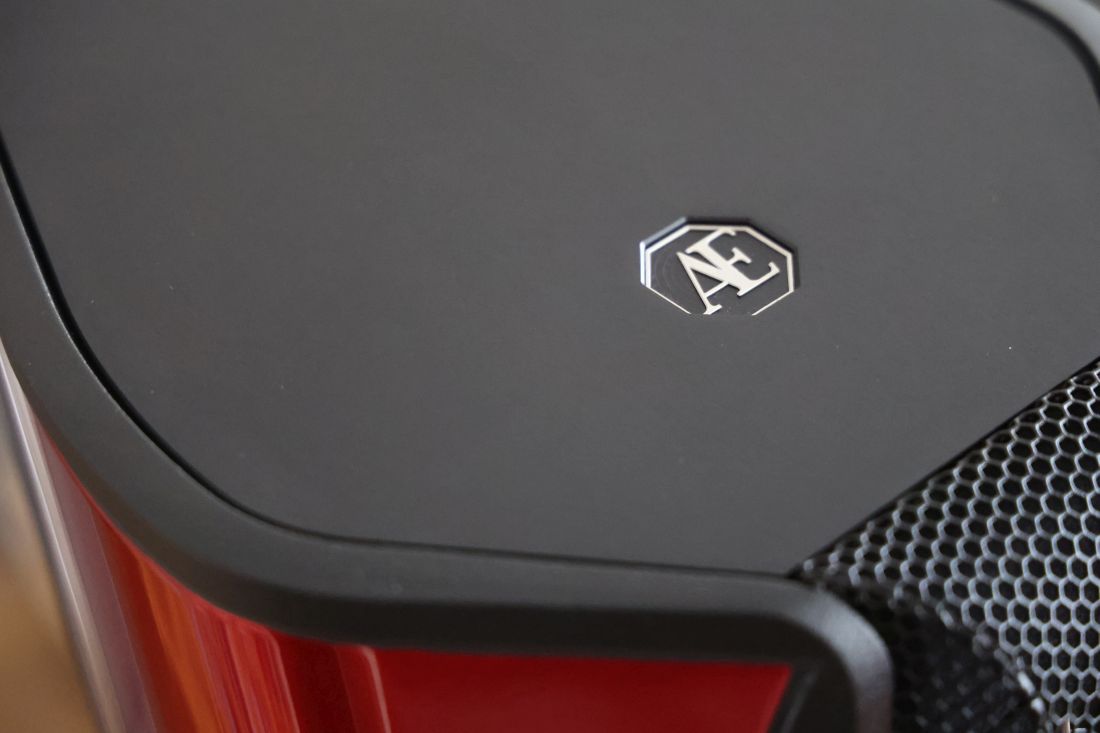
Conclusion

Loudspeakers are challenging to review. As much as we collectively chase perfection, speaker design is, to a not-insignificant extent, the art of achieving an optimal balance of compromises. This leads to enormous differences among speakers, creating strong preferences among listeners and reviewers alike. More importantly, a loudspeaker’s performance is greatly affected by the room’s acoustics. Whereas one speaker may perform splendidly in a given space, another might not work at all. Unless one knows their listening room’s acoustics very well, this can lead to skewed conclusions.

After living in the same apartment for almost two decades and having implemented all sorts of acoustic treatments, I believe I have developed a solid understanding of my room’s acoustics, though I still have my own preferences. Dynamic speakers, particularly large, ported ones, have never worked very well in my room. The Magico S1 MkII was an exception, thanks to the stiff, heavy, closed cabinets, which is why I used them as references for the past 8 years. During that time, a few dynamic speakers have tempted me with certain qualities, but I always find myself eager to return to my own speakers.

The Ensium, however, is something else. They are as clean and uncolored as the Magicos were, yet more open, dynamic, and expressive. With their fully analog ARPEC system, the speakers can be positioned much more freely while still achieving excellent sound in virtually any room, even in very difficult or asymmetrical rooms. Not only do they work every bit as well in my room as the Apogee ribbon speakers or the Magicos, but they produce the best bass I have heard in this room!

Although the Ensium offers a lot of flexibility with ARPEC, they are very neutral and revealing. They give it to you straight, and a bad recording will not be made better than it is. But when the recordings are good, they reproduce the live experience in all its dynamic power and realism, right into the listening room. These speakers can easily and very convincingly play at concert levels, and their confidence inspires one to play louder than one would normally, but they do not need to play loudly to sound convincing. When playing quietly, the sound remains solid and stands firm. Whether you play whisper-quiet or at full hurricane level. That’s true authority!

Although unique and pioneering technology will never be cheap, the Ensium is actually reasonably priced in comparison to competing brands. It offers much greater flexibility and, importantly, removes the need for a large, powerful amplifier. The Ensium will fill any room with spacious, communicative, well-controlled, and authoritative sound, regardless of the amplifier used. For its overall performance and flexibility, the Ensium is highly recommended!

Associated Equipment

External Links

Manufacturer’s website: Aequoaudio.com
Aequo Auditorium: Auditorium-Eindhoven
Diluvite Nanotech Composites website: Diluvite.com

PRESTIGE AUDIO DIFFUSION
Distributor for France & Monaco / French part of Belgium / French part of Switzerland / Luxembourg

Contact : Marc Loubeau
Tel : +33(0)6 49 89 68 88
Email : contact@prestigeaudio-diffusion.fr
Website: www.prestigeaudio-diffusion.fr
Related Posts
Playback Designs SPA-8 Stereo Amplifier – Quick Impression
MJ Acoustics REF 200-SR and Master-Class Ascot-SR
Aequo Audio Stilla Active
Aequo Audio Stilla
Anthem Room Correction and Martin Logan Renaissance ESL 15A
Martin Logan Renaissance ESL 15A
Martin Logan Impression ESL 11A
Computer Audio part 6 – Perspective
Page 4 of 4
Aequo Audio
  • Share This:
  • Facebook
  • Twitter
  • LinkedIn
  • Pinterest
  • Email
Christiaan Punter Owner of Hifi-Advice.com

Your comment Cancel reply

First-time comments need manual approval which causes the post to appear a little later. Avoid using links to prevent marking as spam.


Categories

  • Accessories Reviews
  • Active Analog Speakers Reviews
  • Active Digital Speakers Reviews
  • Alkmaar Audio Show
  • Amplifier Reviews
  • Analog Classics
  • Analog Insights
  • Analog Interlink Reviews
  • Analogy Records
  • Apogee Acoustics Company Special
  • Audio Software Reviews
  • Audiophile Insights
  • Cables Insights
  • CD Player Reviews
  • Chattelin Audio Systems
  • Connectors Insights
  • Digital Cable Reviews
  • Digital Classics
  • Digital Insights
  • Digital Interface Reviews
  • Digital Recorder Reviews
  • Digital Reviews
  • Dutch Audio Event
  • Enosound
  • Extensionblocks / Filters Insights
  • Generic Insights
  • HFA Audio Setup History
  • HFA Audio Setup Snapshots
  • HifiDeluxe
  • HifiLive
  • Industry Update
  • Integrated Amplifier Reviews
  • Marantz & Philips Classics
  • Munich High End
  • Music Server Reviews
  • Network Player Reviews
  • Passive Speakers Reviews
  • Phono Cartridge Reviews
  • Phono Interlink Reviews
  • Phono Preamp Reviews
  • Power Amplifier Reviews
  • Power Cable Reviews
  • Power Conditioning
  • Power Connector Reviews
  • Preamplifier Reviews
  • Racks / Stands / Feet Reviews
  • Rhapsody
  • Show Reports
  • SPDIF DAC Reviews
  • Speaker Cable Reviews
  • Specials
  • System Synergy Q&A
  • Tonearm Reviews
  • Tuning / Tweaks Reviews
  • Turntable Accessories Reviews
  • Turntable and Accessories Reviews
  • Turntable Reviews
  • Uncategorized
  • USB DAC Reviews
  • XFi

BRANDS

  • A&B Systems
  • A10 Audio
  • Aavik
  • Acapella
  • Accuphase
  • AcousticMatters
  • Acustica Applicata
  • Admire Audio
  • Aequo Audio
  • AG Lifter
  • Aidas
  • Akiko Audio
  • Analog Domain
  • Analogy Records
  • Analysis Audio
  • Analysis Plus
  • Ansuz
  • Anthem
  • Anti-Cables
  • Antipodes Audio
  • APL
  • Apogee
  • Apogee Acoustics
  • Aqua
  • Arcam
  • Aries Cerat
  • Artesania
  • ASI
  • Astin Trew
  • atm audio
  • A Tube High Fidelity
  • Audeze
  • AudioAanZee
  • Audio Aero
  • Audio Club Premier
  • Audio GD
  • Audiolab
  • Audiolympic
  • Audiomeca
  • Audio Note
  • Audionote
  • Audio Note (UK)
  • Audio Origami
  • Audio Physic
  • AudioQuest
  • Audio Research
  • Audio Synthesis
  • Audio Technica
  • Auralic
  • Aurender
  • Aurum Cantus
  • Avalon
  • AvantGarde
  • AVID
  • AVIDHIFI
  • Ayon
  • Ayre Acoustics
  • B&W
  • Bals
  • Bang & Olufsen
  • Behringer
  • Belden
  • Benz
  • Bergmann
  • Black Rhodium
  • Boenicke Audio
  • Bowers & Wilkins
  • Bricasti
  • Bryston
  • Burmester
  • Børresen
  • CAD
  • Cardas
  • Care Orchestra
  • CAT
  • CEC
  • Chord Electronics
  • CH Precision
  • Clarisys Audio
  • Classé
  • Clearaudio
  • Concert Fidelity
  • Conrad Johnson
  • Consonance
  • COS
  • Curious Cables
  • D'Agostino
  • DAD
  • Dali
  • Daniël Hertz
  • Daudio
  • dCS
  • Degritter
  • Denafrips
  • Denon
  • Devialet
  • Devore
  • Diptyque
  • Doepke
  • Driade
  • DS Audio
  • Dynavector
  • Dynavox
  • E&T
  • EC-Designs
  • Echole
  • Elac
  • Electrocompaniet
  • Elijah Audio
  • EMAG
  • EMMLabs
  • Emotiva
  • EMU
  • Enosound
  • Ensemble
  • Esoteric
  • Estelon
  • Euphony
  • Exogal
  • Fadel Art
  • Fezz Audio
  • FIM Gold
  • Final
  • Final Touch Audio
  • Finite Elemente
  • FoilFlex
  • Franco Serblin
  • Furutech
  • Fusion Audio
  • Gauder Akustik
  • Genelec
  • Gigawatt
  • GiK
  • Goldmund
  • Graham Audio
  • Grandinote
  • Grimm Audio
  • Gryphon
  • Gustavson Audio
  • Halcro
  • Hanze Hifi
  • Harman/Kardon
  • Harmonic Resolution Systems
  • Harmonic Technology
  • Harmonix
  • Heaven's Gate
  • Hifi-Tuning
  • HiFi.nl
  • HifiMan
  • High Fidelity Cables
  • Hofa
  • Holo Audio
  • Home Audio Fidelity
  • HRS
  • IeGO
  • Ikigai
  • IMF
  • Isotek
  • Jadis
  • Jay's Audio
  • JCAT
  • Jeff Rowland
  • Jena Labs
  • JMF Audio
  • Jorma Audio
  • Jorma Design
  • Joseph Audio
  • JPLAY
  • JVC
  • Kemp
  • Kharma
  • Kimber
  • KingRex
  • Kinki Studio
  • KlinktBeter
  • Kora
  • Krell
  • Kroma Audio
  • Kupp
  • LAiV Audio
  • Lampizator
  • Lapp
  • LAST
  • Lector
  • Leema
  • Lejonklou
  • LessLoss
  • Line Magnetic
  • Linn
  • Logitech
  • LOK
  • Loudness War
  • Lumin
  • Luxman
  • M2Tech
  • Mad Scientist
  • Magico
  • Magnan
  • Magnepan
  • Mamba Audio
  • Manley Labs
  • Manunta
  • Marantz
  • Mark Levinson
  • Marten
  • Martin Logan
  • Master
  • Matrix
  • MBL
  • McIntosh
  • Melco
  • Melody
  • Meridian
  • Metrum Acoustics
  • Michell
  • MIT
  • MJ Acoustics
  • Modus Audio
  • Mogami
  • Mola-Mola
  • Monitor Audio
  • Monrio
  • Moon
  • Morel Hifi
  • Musetec
  • Musical Fidelity
  • Mytek
  • Nagaoka
  • Naim
  • Naiu Laboratory
  • Nakamichi
  • NBS
  • Network Acoustics
  • Niels Setup
  • Nordost
  • NuPrime
  • Ohm Audio
  • Oladra
  • Olive
  • Onkyo
  • Onzow
  • Origin Live
  • Ortofon
  • Oyaide
  • Panasonic
  • Paradigm
  • Parasound
  • Pass Labs
  • Philips
  • Pink Faun
  • Pioneer
  • Playback Designs
  • Precision Audio
  • PrimaLuna
  • Proceed
  • PS Audio
  • PUUR AVD
  • PUUR hifidelity
  • Pylon Audio
  • Qln
  • Qobuz
  • Quad
  • R.T.F.S.
  • RAAL Requisite
  • Raidho
  • Reference Sounds
  • Reference Tweaks
  • Rega
  • Rein Audio
  • REL
  • Resonator Stockholm
  • Revel
  • Ricable
  • Roon
  • RTFS
  • SAEQ
  • SAT
  • Schiit
  • Seawave Acoustic
  • Sennheiser
  • Shakti
  • Shuguang
  • Shunyata
  • Shure
  • Signal Projects
  • Silent Angel
  • Siltech
  • SME
  • SolidSteel
  • Solid Tech
  • Sonic Frontiers
  • Sonos
  • Sonus Faber
  • Sony
  • Sooloos
  • SOtM
  • Soulution
  • Sound Anchor
  • Sound Lab
  • Spectral
  • Spotify
  • Stack Audio
  • Stealth
  • Stillpoints
  • Straight Wire
  • SW1X Audio Design
  • Symo
  • Synergistic Research
  • Synology
  • Synthese
  • T+A
  • Taiko Audio
  • Tascam
  • Teac
  • TechDAS
  • Technics
  • The Chord Company
  • Thorens
  • Transparent Audio
  • Trends
  • Tung Sol
  • Unison Research
  • UpTone Audio
  • VAIC
  • van Damme
  • van den Hul
  • van Medevoort
  • Vermeer Audio
  • Vermouth Audio
  • Vibex
  • Vifa
  • Vincent
  • ViRa High End
  • Viva
  • Vivid Audio
  • VTL
  • Wadax
  • Wadia
  • Wattgate
  • Wattson
  • Way Cables
  • Weiss
  • Western Electric
  • WestminsterLab
  • Widealab
  • Wilson Audio
  • Wilson Benesch
  • Winyl
  • Wires 4 Music
  • Wireworld
  • Wolf von Langa
  • Wooden Bull
  • XACT
  • Xavian
  • xFyro
  • Xindak
  • XLO
  • Yamaha
  • Zanden
  • Zesto
  • ZYX

Follow HFA on Social Media

Facebook

LEGAL

Privacy Policy

This site is protected by reCAPTCHA. Google Privacy Policy and Terms of Service apply. All rights reserved © 2026 - hifi-advice.com.
  • Contact
  • Home