Playback Designs SPA-8 Stereo Amplifier – Quick Impression – Part 2

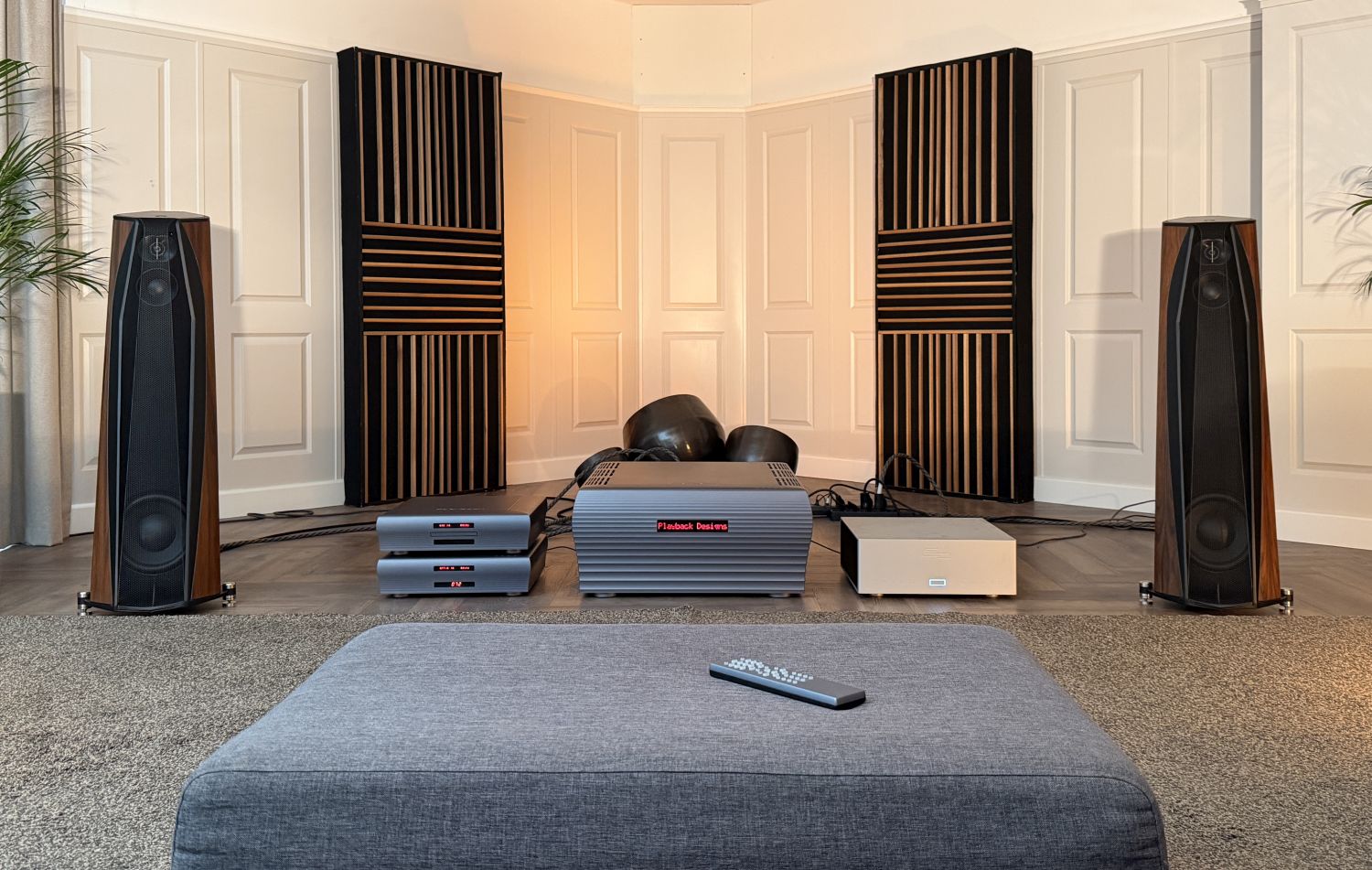
Review organized by Marc Loubeau / Prestige Audio Diffusion
Review sample supplied by Playback Designs
Retail price in France, Monaco, Benelux, Germany & Austria including VAT: 94.990 euro
This is part 2 of the Playback Designs SPA-8 review. Go to part 1.
Quick Recap
The Playback Designs SPA-8 stereo power amplifier measures 73 cm wide, 86 cm deep, and 34 cm high, and weighs 137 kg. Its shipping crate is even larger, making it impossible to bring into my apartment. Therefore, we opted to review the SPA-8 at the Aequo Audio showroom, which forms part 1 of this review. In that review, I shared my initial impressions based on speakers I had not yet experienced firsthand. Nonetheless, I was already familiar with Aequo Audio loudspeakers, having previously reviewed the Stilla and Stilla Active models. Thanks to A-B comparisons in this setup with other amplifiers I have reviewed and know well, I was able to provide baseline impressions in part one of this review.
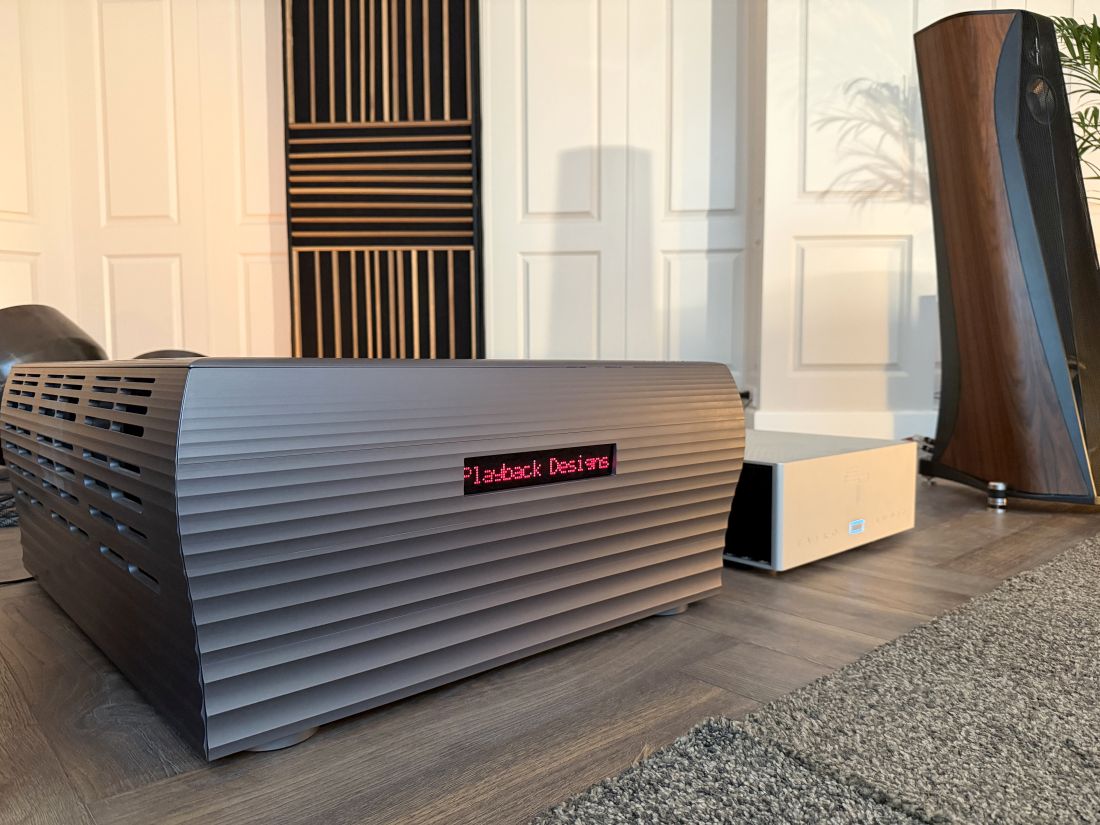
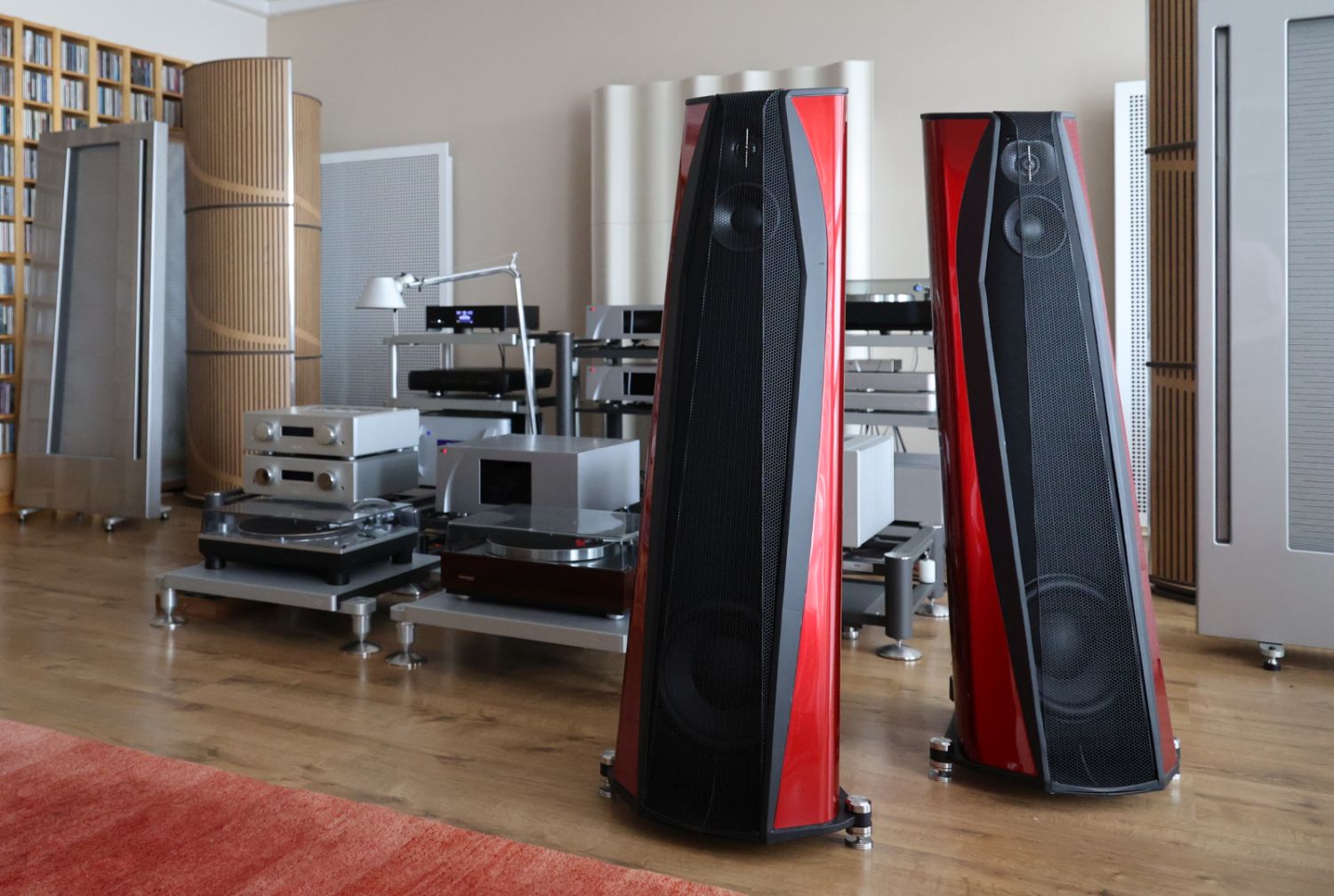
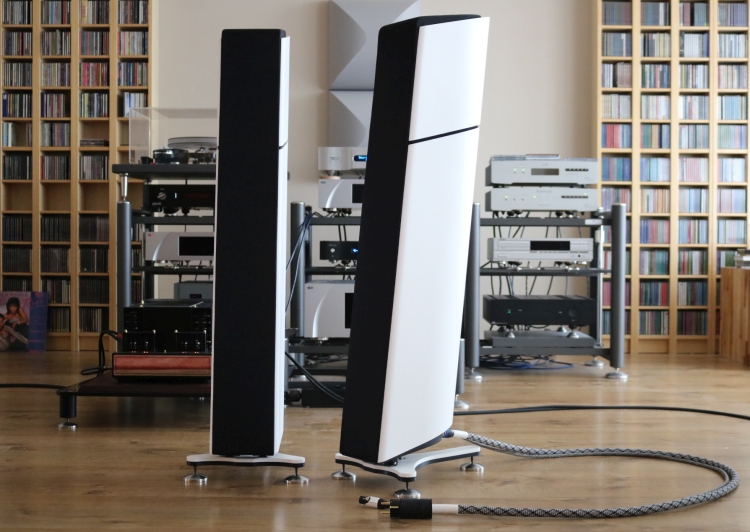
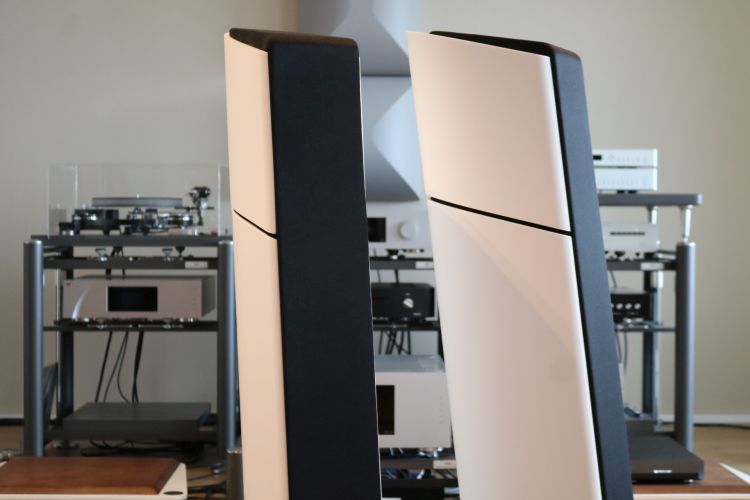
Meanwhile, I have reviewed the Aequo Audio Ensium loudspeakers in my own listening room and now know them well. With this experience, I returned to the Aequo Audio showroom to finalize this Quick Impressions report.
Having reviewed the Playback Designs MPT-8 Dream transport and MPD-8 Dream DAC, as well as the Ensiums, the SPA-8 amplifier is the only remaining variable, making it much easier to assess.
System Context
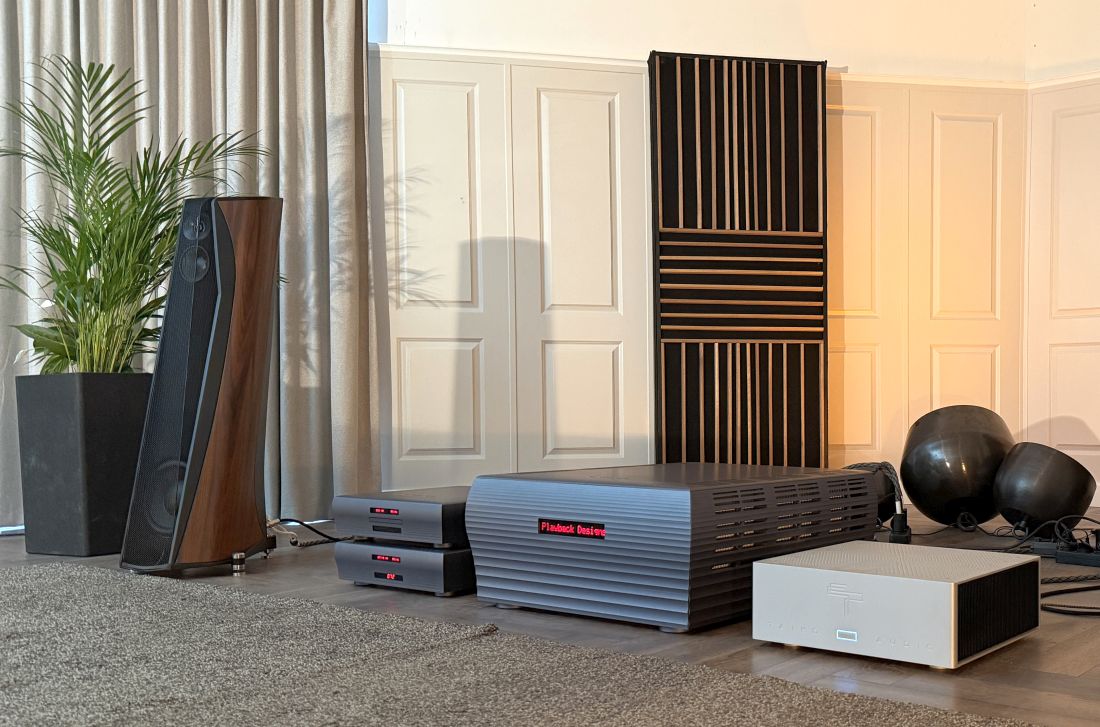
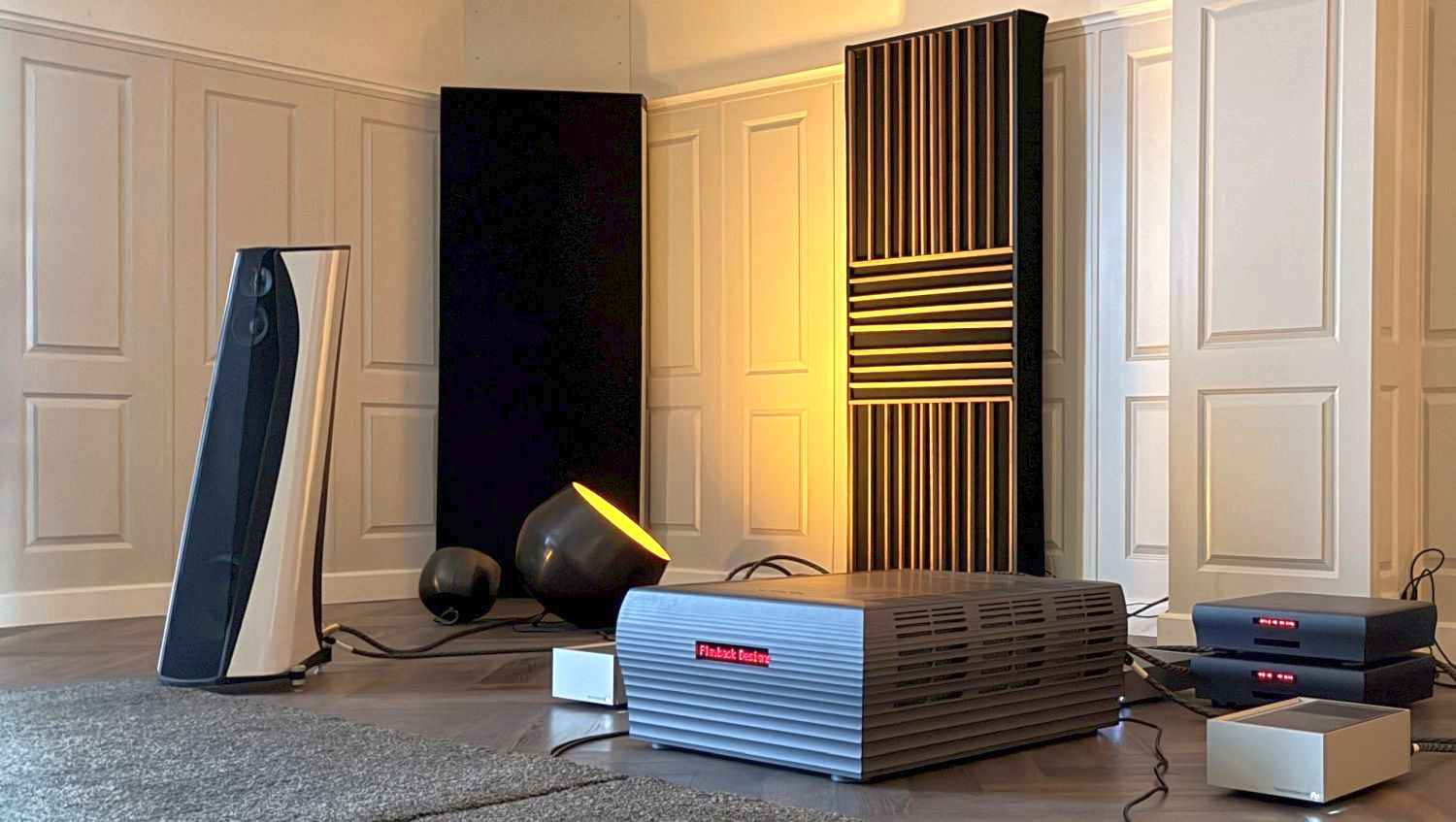
For this second part of my Playback Designs SPA-8 amplifier assessment, I will listen in the same room and with the same Aequo Audio Ensium speakers. The audio components are the same as in the first part of this review, with one significant change. Thanks to the MPD-8 Dream DAC’s high-quality Volume Control, the traditional analog preamplifier can be omitted, allowing the SPA-8 amplifier to connect directly to the MPD-8 Dream DAC’s analog outputs, as recommended by Playback Designs.
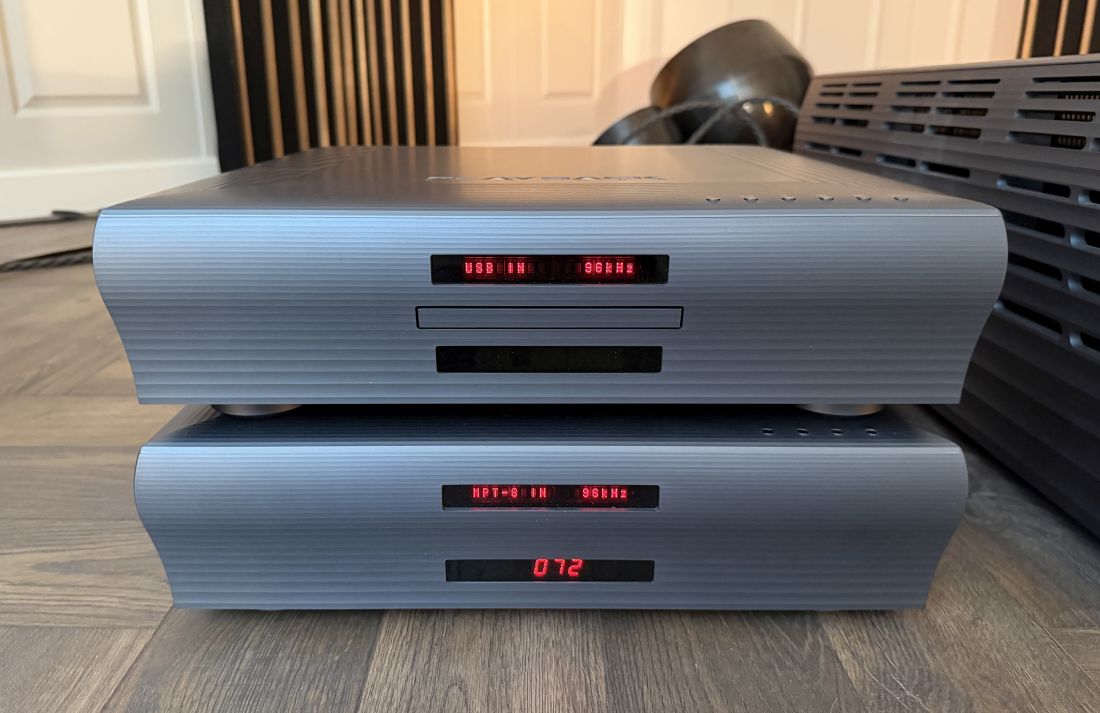
The Taiko Audio Extreme Music Server was connected via USB to the Playback Designs MPT-8 Dream Transport, which was connected via PLINK to the MPD-8 Dream DAC, which was connected via XLR to the SPA-8 Power Amp. The system uses Aequo Audio cables throughout: power, XLR interlink, and speaker cables.
The review system consists of the following components:
- Taiko Audio Extreme Music Server
- Playback Designs MPT-8 Dream Transport (used as CD/SACD Transport & Reclocker + PLINK Interface)
- Playback Designs MPD-8 Dream DAC (used directly with its Analog Volume Control)
- Playback Designs SPA-8 Power Amplifier
- Aequo Audio Ensium and Adamantis Loudspeakers
MPD-8 Analog Volume Control
Because volume control in the digital domain inevitably causes a measurable, audible loss of resolution and microdetail, the MPD-8 Dream DAC’s volume control stage is purely analog in the signal path. The switching network is embedded in a custom analog feedback structure, buffered by active low-impedance amplifiers, with digital control for precision and repeatability. Attenuation is achieved via a chip matrix of high-precision resistors, arranged in finely tuned combinations, which are switched using specialized low-noise solid-state FET switches, enabling completely silent mechanical and electrical operation.
The MPD-8 is also available as the MPD-8 AI (Analog Input) version, which adds RCA and XLR analog inputs to maintain a fully analog path when using analog sources.

Listening
When I arrived at Aequo HQ in the afternoon, the system had been powered on all day and was playing quite loudly. I often find very loud playing systems annoying, especially when they sound shouty or, worse, sharp or harsh. But in this case, it was simply loud, and not at all intrusive. We could even still comfortably talk over the music. This first renewed impression was actually telling! I mentioned in the Ensium review that these speakers’ openness and immediacy can be a two-edged sword because they do not rose-tint anything, which lays bare any edge or rawness elsewhere in the system or in the recording. However, when driven by the Playback Designs front end and SPA-8 amplifier, the sound was sweet, organic, full-blooded, and beautifully balanced. Does this imply that the SPA-8 sounds warm and forgiving? As further listening would reveal, most definitely not!
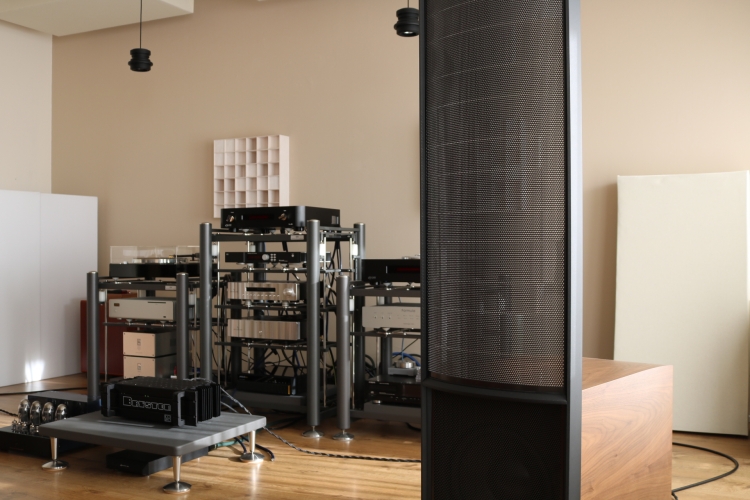
The Aequo Audio listening room is larger than my own, providing more space between the listener and the speakers. Further, all components were positioned directly on the floor, connected using Aequo Audio interlinks, power cables, and speaker cables, and powered by standard power distributors. By contrast, I have gone to great lengths to get my system, power, and room to sound as clean, neutral, and direct as possible. It’s only logical that such an optimized environment is more revealing. Nevertheless, as sweet and pleasant as the system sounded in the Aequo listening room, I did not have the feeling of missing any vital information.
When it comes to a huge amplifier such as the mighty SPA-8, it’s almost impossible not to expect certain acoustic trade-offs that often come with the use of many parallel amplification devices, whether tubes or transistors, such as thickness, slowness, and perhaps even a bit of blur. Such a sound is often perceived as sweet, pleasant, or “musical”. However, throughout both listening sessions, such trade-offs were simply never heard.
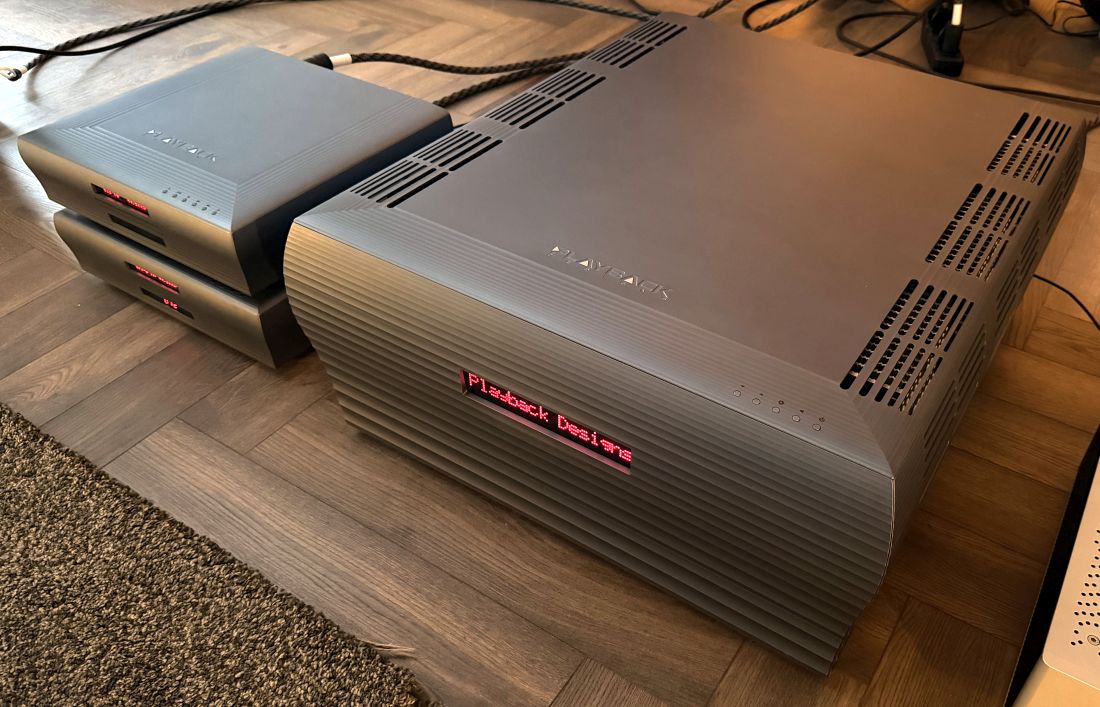
The treble was beautifully open and precise, yet possessed just the right amount of smoothness, and the midrange was still engagingly communicative, as expected of these speakers, but neither forward nor laid-back. The SPA-8 sounds pure, upbeat, and clean, or big, lush, and bombastic, just as the music requires. It does not sound thick or slow, nor does it have a typical “fast” sound. It’s not lean or staccato, yet its pacing or transient behavior are never in question. An audio component should not act as an EQ; it should be neutral and natural, providing a realistic rendition of anything played. And that sounds a whole lot easier than it is!
Next: Listening Continued and Conclusion

So, with those speakers in what appears to be a med-large room you used what, 5 watts max? For loud peaks? And the other 795 watts (into 8 ohms) are available just in case? 🙂
Regarding the MPD-8, nice to hear your estimate of the value of the analog pre section at ~$30k. I know my MPS-8 has rendered my $8k pre amp obsolete but wondered how much one would have to spend to equal the wonderful analog gain section in the MPD/ MPS ( I assume they are the same?). Also don’t forget to include the additional savings by elimination of a power cord, a set of interconnects, and most likely a platform or footers as well.
Hi Christiaan, This was a very interesting set of impressions of the Playback Designs amplifier. Not a lot of coverage out there of this amp. I own an MPD-8. It is interesting to hear that Playback largely replicated its sonic signature in this amp. Out of curiosity, how do you compare the sonic signature of this Playback with that of Aries-Cerat? I know it’s an apples-to-oranges comparison in many respects (different component types reviewed, different systems, etc.) but since you’ve heard multiple Playback components now and multiple Aries components now, perhaps you’re able to offer some generalized observations about the respective sonic signatures of these two brands?
Hi Ajay, I’m afraid I cannot answer that, as I have not had the SPA-8 or any Aries Cerat amplifier at home to compare with my other amplifiers. After hearing AC at a few shows, I have a general sense of the brand’s priorities (robustness, tonal fulness and musicality) and the overall sonic signature, but that is not enough to draw conclusions at this level, especially since I reviewed two AC preamplifiers that sounded quite different from one another. Sonic signature aside, the main difference is, of course, the available power. While Aries Cerat amplifiers are said to be very stable, they do not deliver SPA-8 levels of power. Naturally, the power requirement depends on the speakers and whether they are particularly inefficient.