Playback Designs SPA-8 Stereo Amplifier – Quick Impression – Part 2

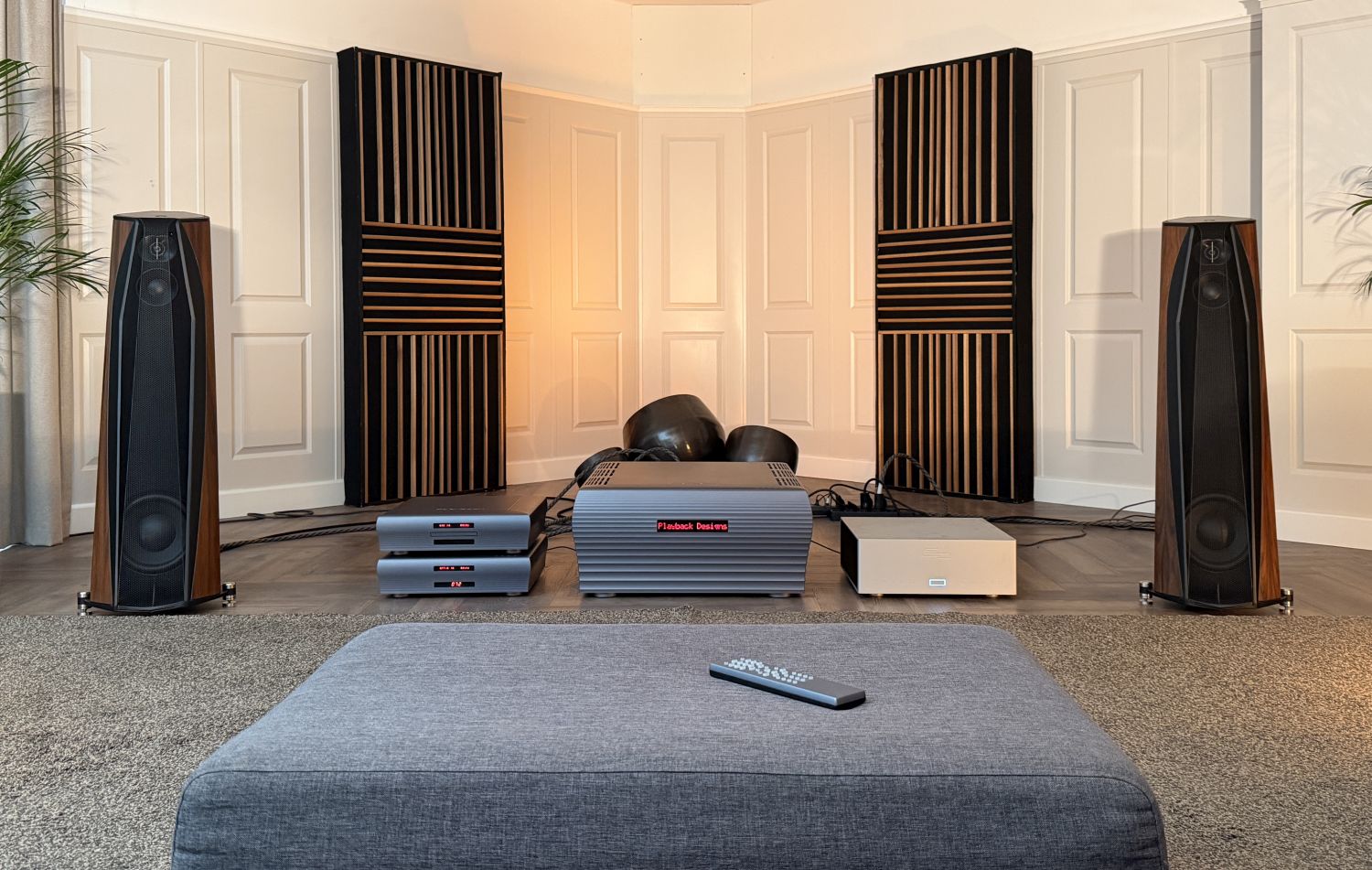
What I consistently find exceptional about Playback Designs source components is their ability to blend technological excellence such as precision, control, transparency, and high resolution with earthy solidity, and a subtle amount of organic meatiness and harmonic richness. They are precise yet sound very natural, with an analog-like sense of continuity and liquidity. This combination results in sound that is both precise and richly detailed to please the inner audiophile, yet musical and enjoyable to make my head nod, my foot tap, and my soul connect, and I believe the SPA-8 shares this characteristic. Just like the source components, it perfectly mixes resolution and precision with realistic body and tonal richness.
Even if a product balances seemingly opposing qualities perfectly, it can still have a distinct character, and excessive character inevitably wears on me, which is why I prioritize neutrality above all. As the thought of organic meatiness with a touch of harmonic richness can evoke the association of a nice “sauce” poured over the musical proceedings, I must add that these aspects are not added on top but are very subtly and seamlessly integrated into the fabric of anything played. These so-called “musical” aspects are integrated so carefully that they are never imposed on the music as flavoring. Even after playing a long list of well-known tracks and observing the behavior of this amplifier, I still fail to detect any consistent additive flavoring. Throughout my two listening sessions, the SPA-8 essentially rendered itself invisible. Every song I play simply sounds the way it should, and that is a huge, not-to-be-underestimated positive aspect!
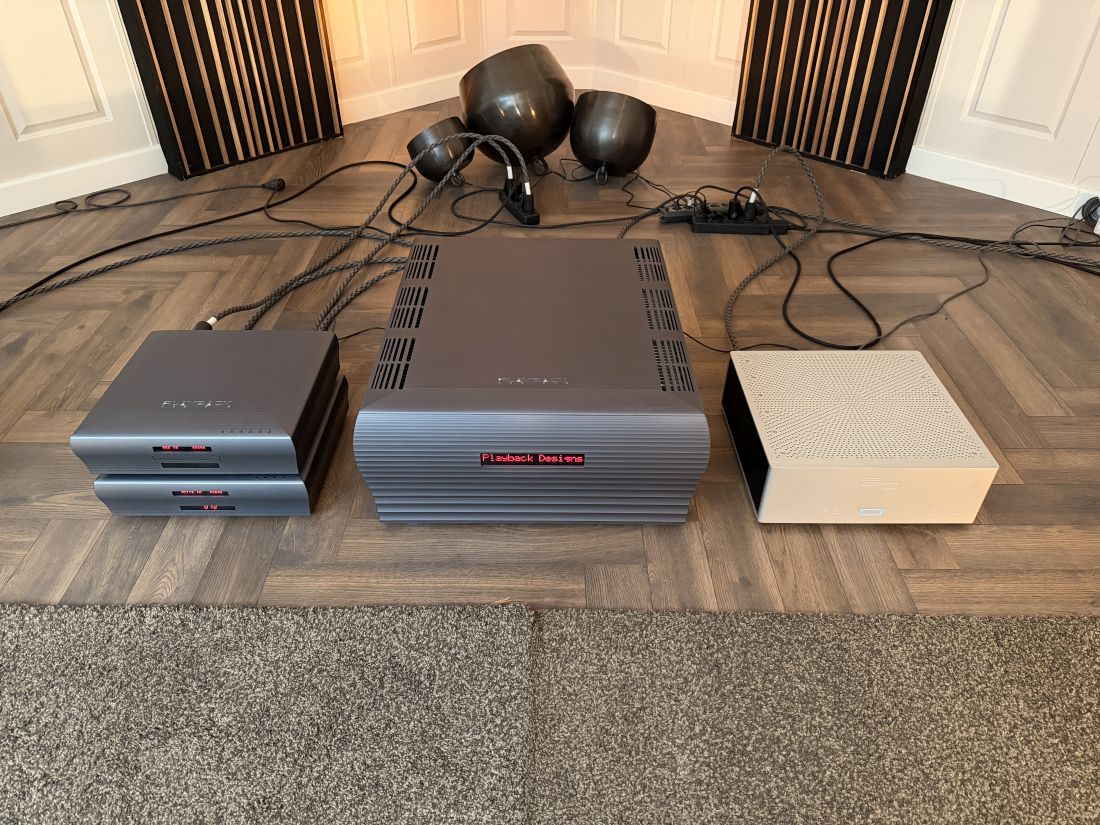
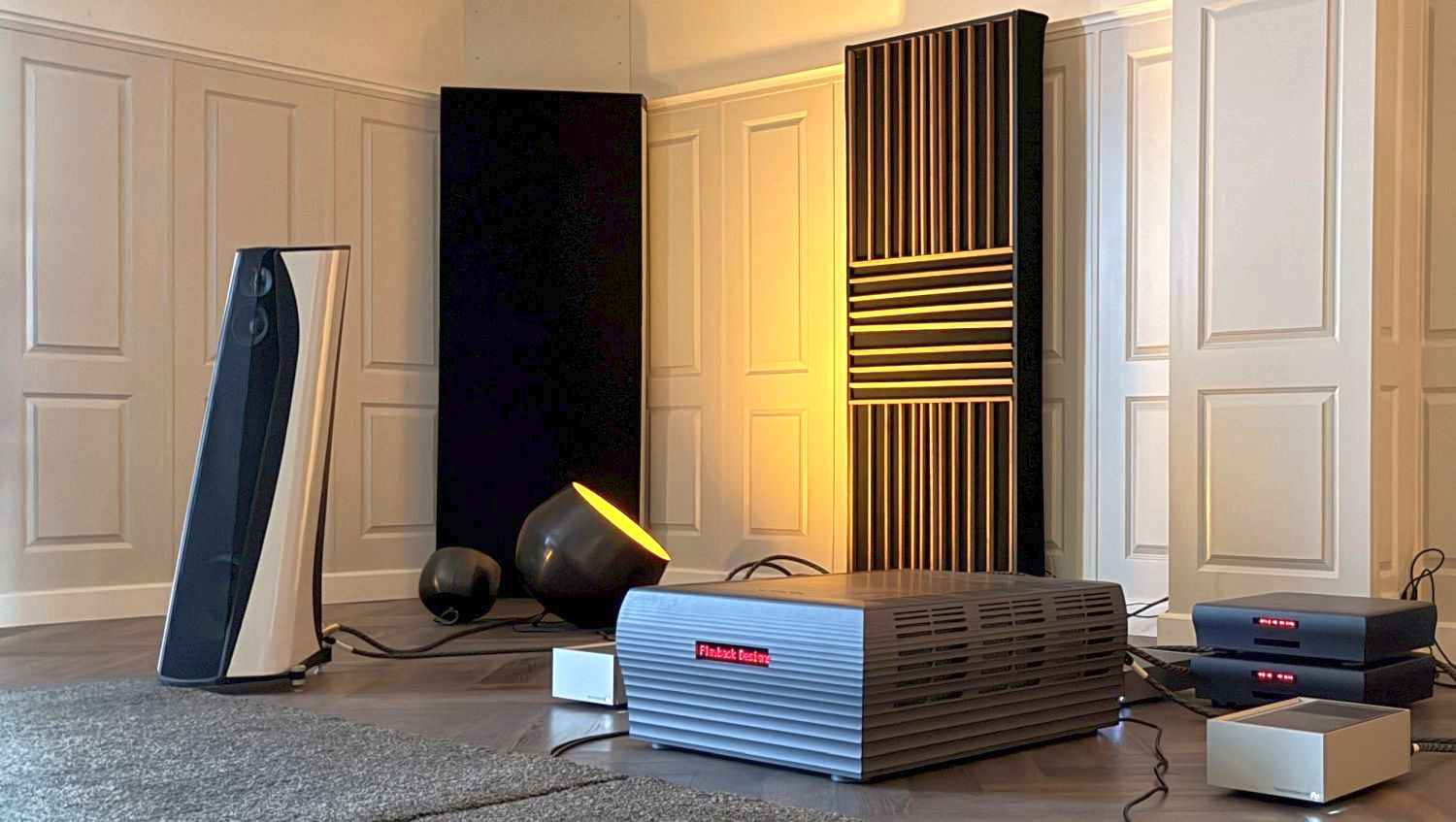
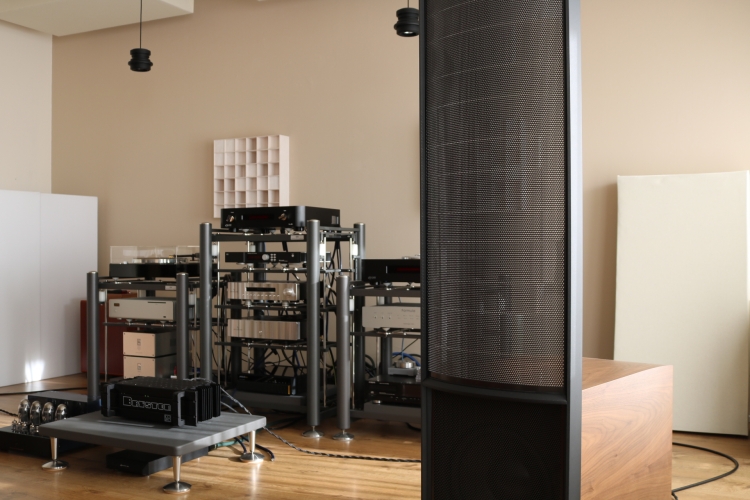
Just look at the Taiko Audio Extreme Server on the right. By no means a compact server, but it seems cute compared to the massive SPA-8!
One might still question whether the very efficient Ensiums need all the power that the SPA-8 has to offer. As mentioned in part 1 of this review, contrary to popular belief, it is usually the midrange that consumes most power, not the bass, which answers part of the question. But even if these speakers do not require much power, knowing firsthand how revealing they are, this sure says a lot about the amplifier’s refinement, fluidity, and neutrality, and the SPA-8 passes these tests with flying colors.
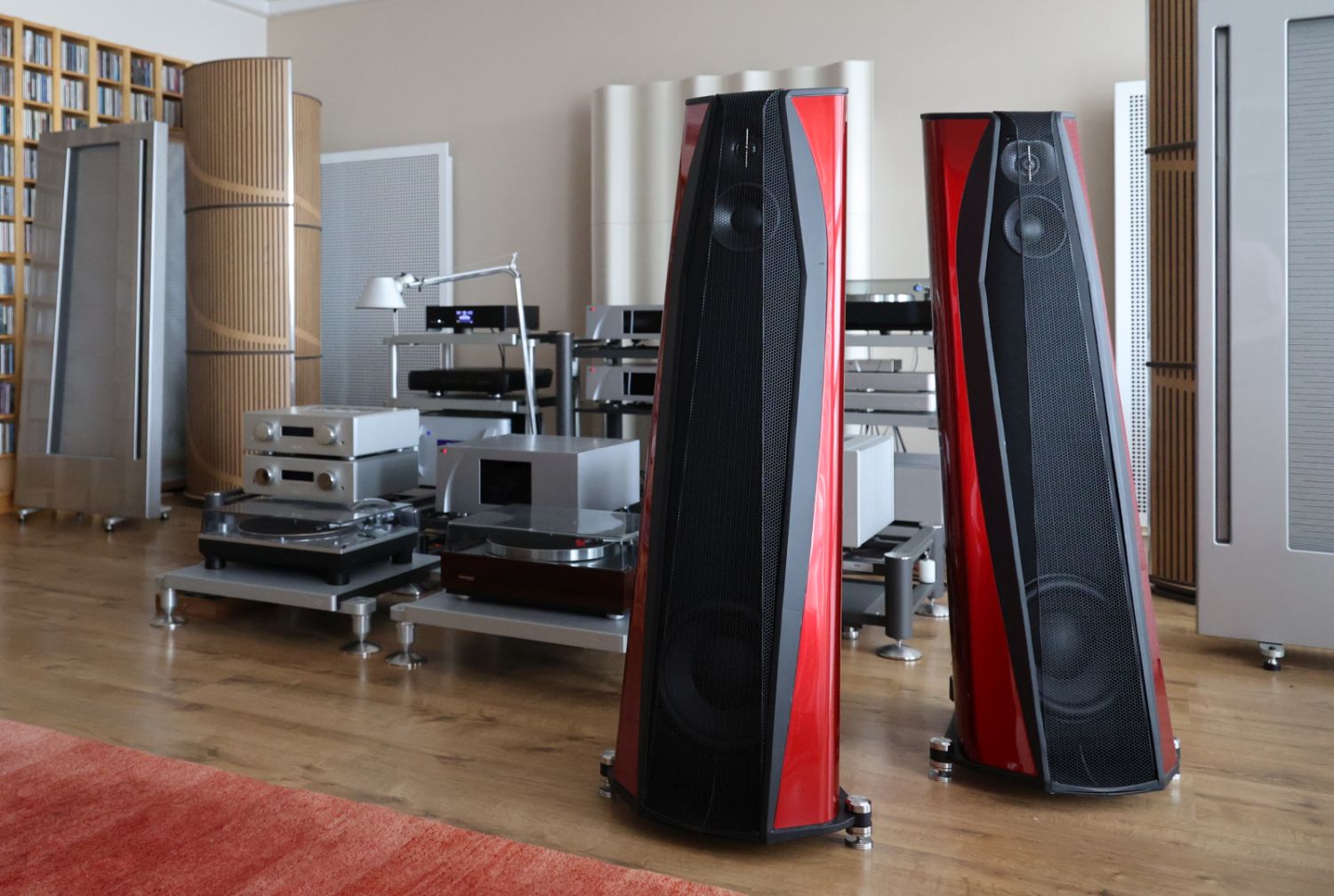
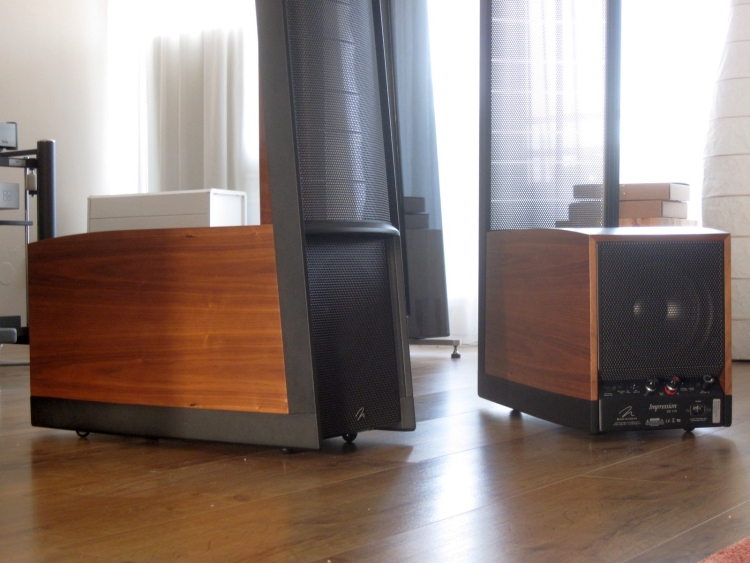
Even so, I will admit that audiophile prejudice remains hard to suppress, and I kept wondering how much different the amplifier would behave when driving a fully passive speaker. Aequo Audio also offers the Ensium as a passive version without the assisted bass section, and I was pretty sure it would sound very different, since the crossover’s additional capacitance for the passive woofer loads the amplifier differently and demands more of it. Even though Ivo at Aequo Audio had already assured me the two models sound very similar, I’ve been eager to directly compare the Ensium to the Adamantis to judge this for myself. Alas, the Adamantis was not yet ready for that initial visit.

For this visit, however, much to my delight, the guys prepared a pair of each for me to listen to. As this is not a speaker review, I’ll reserve the finer details for a separate review, but suffice it to say that the two speakers do indeed sound incredibly similar. Everything remained tonally well-balanced, upbeat, precise, dynamic, and most of all, emotionally engaging. Most importantly, the SPA-8 also drives the Adamantis speakers effortlessly without either becoming thunderous or exerting too much control, and just as with the bass-assisted Ensium, it “simply” allows the music to speak for itself.

No preamplifier required
At this stage, it’s worth noting that I listened to a full Playback Designs setup using the MPD-8 Dream DAC’s built-in volume control, without a separate analog preamplifier. Yet, there was absolutely nothing missing.
When using a DAC with its built-in digital volume control, there is always a pay-off in terms of refinement and fluidity, or in transient behavior, as soon as the volume control is used. And even when a DAC has an analog volume control, this is no guarantee that it can fully substitute a dedicated preamplifier in all facets. In this case, however, I never even thought about it as the system behaved as if there was actually an analog preamplifier in the chain.
Given that analog preamplifiers can be very expensive, especially at this level, connecting the DAC directly to the power amp yields significant savings. The SPA-8 has a serious price tag, but not having to buy a top-performing preamplifier will easily save 30.000 Euros, which goes a long way toward offsetting the amplifier’s cost.
Final Thoughts
It happens that a system impresses me cerebrally but not so much emotionally. In such cases, I lose interest after a few tracks. In other cases, a system can be sweet and pleasing but not precise or realistic enough. In this case, the Playback Designs and Aequo Audio system performed in perfect unison with equal attention to all audiophile traits. Honestly, this was one of the most enjoyable and engaging listening sessions I have experienced reviewing a product. The system sounded so natural and engaging that I stopped paying attention to audiophile details halfway through my playlist and simply continued enjoying the music. It’s rare, but I actually felt even more relaxed on my way back home than I did before.
Conclusion
While I haven’t compared it directly with other top contenders, spending two afternoons with this excellent amplifier has given me a strong sense of its performance. First off, the SPA-8’s technical performance is simply never in question. Power, Control, Speed, Drive, Expression, Resolution, Transient behavior, and Dynamics are all clearly top-notch. As with Playback Designs’ source components, it stands out by providing a subtle touch of organic fullness, tonal saturation, and harmonic richness, in precisely the right dose to balance its high level of technological perfection, leading to a smooth and natural performance that verges slightly on the musically pleasing side of strict neutrality. Nevertheless, the SPA-8 does not impose itself on the sound; it always puts the music first, and excels at portraying everything with conviction and realism.
To fully understand precisely where the SPA-8 positions itself among the top contenders, I’d have to compare it to competing models by Gryphon, Vitus, Soulution, CH Precision, MSB, D’Agostino, and Halcro. Nevertheless, based on my experiences thus far, the SPA-8 is definitely among them.
Delivery and installation are best left to a professional moving company. If that can be arranged, I highly recommend taking it for a test run. There’s a good chance the moving company need not return!
If the SPA-8’s size, weight, or price tag is prohibitive, do read on!
Upcoming Smaller Amplifier
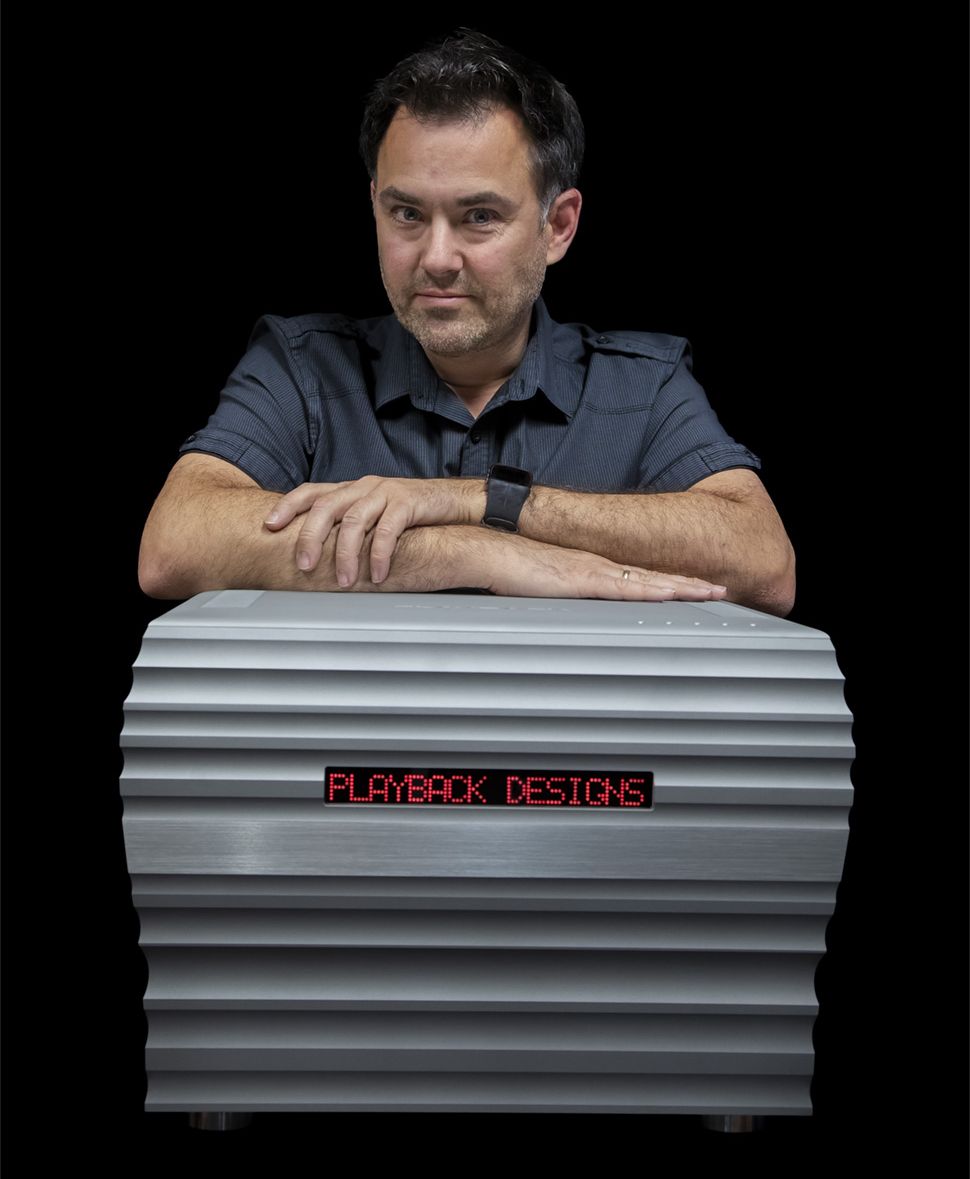
Bert showing the first Sapphire prototype, which does not yet have the definitive anodized finish.
Good news for those interested in the SPA-8 but concerned about its large size and weight: Playback Designs will soon introduce the smaller Sapphire amplifier as part of the new GemStone series. This new model shares the same architecture and technology as the SPA-8 but with less “colossal” dimensions and power. It measures 480mm x 335mm x 424mm (W x H x D), weighs 70kg, and is also more affordable. It delivers 250W RMS into 8 Ohms and 500W RMS into 4 Ohms with just 0.0005% Total Harmonic Distortion and Noise, and it is designed as an ideal companion for the Dream Series and Edelweiss Series products. It is scheduled to be released in the Dream Series grey first, and later in the Edelweiss silver finish. Production is expected to start around Fall 2026.
External Links
Aequoaudio.com
Playback Designs
PRESTIGE AUDIO DIFFUSION
Distributor for France & Monaco / Benelux / Switzerland / Germany / Austria / UK
Contact: Marc Loubeau
Tel: +33(0)6 49 89 68 88
Email : contact@prestigeaudio-diffusion.fr
Website: www.prestigeaudio-diffusion.fr

So, with those speakers in what appears to be a med-large room you used what, 5 watts max? For loud peaks? And the other 795 watts (into 8 ohms) are available just in case? 🙂
Regarding the MPD-8, nice to hear your estimate of the value of the analog pre section at ~$30k. I know my MPS-8 has rendered my $8k pre amp obsolete but wondered how much one would have to spend to equal the wonderful analog gain section in the MPD/ MPS ( I assume they are the same?). Also don’t forget to include the additional savings by elimination of a power cord, a set of interconnects, and most likely a platform or footers as well.
Hi Christiaan, This was a very interesting set of impressions of the Playback Designs amplifier. Not a lot of coverage out there of this amp. I own an MPD-8. It is interesting to hear that Playback largely replicated its sonic signature in this amp. Out of curiosity, how do you compare the sonic signature of this Playback with that of Aries-Cerat? I know it’s an apples-to-oranges comparison in many respects (different component types reviewed, different systems, etc.) but since you’ve heard multiple Playback components now and multiple Aries components now, perhaps you’re able to offer some generalized observations about the respective sonic signatures of these two brands?
Hi Ajay, I’m afraid I cannot answer that, as I have not had the SPA-8 or any Aries Cerat amplifier at home to compare with my other amplifiers. After hearing AC at a few shows, I have a general sense of the brand’s priorities (robustness, tonal fulness and musicality) and the overall sonic signature, but that is not enough to draw conclusions at this level, especially since I reviewed two AC preamplifiers that sounded quite different from one another. Sonic signature aside, the main difference is, of course, the available power. While Aries Cerat amplifiers are said to be very stable, they do not deliver SPA-8 levels of power. Naturally, the power requirement depends on the speakers and whether they are particularly inefficient.