
Review organized by Marc Loubeau / Prestige Audio Diffusion
Review sample provided by Prestige Audio Diffusion
Retail prices including VAT:
MPT-8: 23.990 euro
MPT-8 with Stream-X2 option: 27.580 euro (as reviewed)
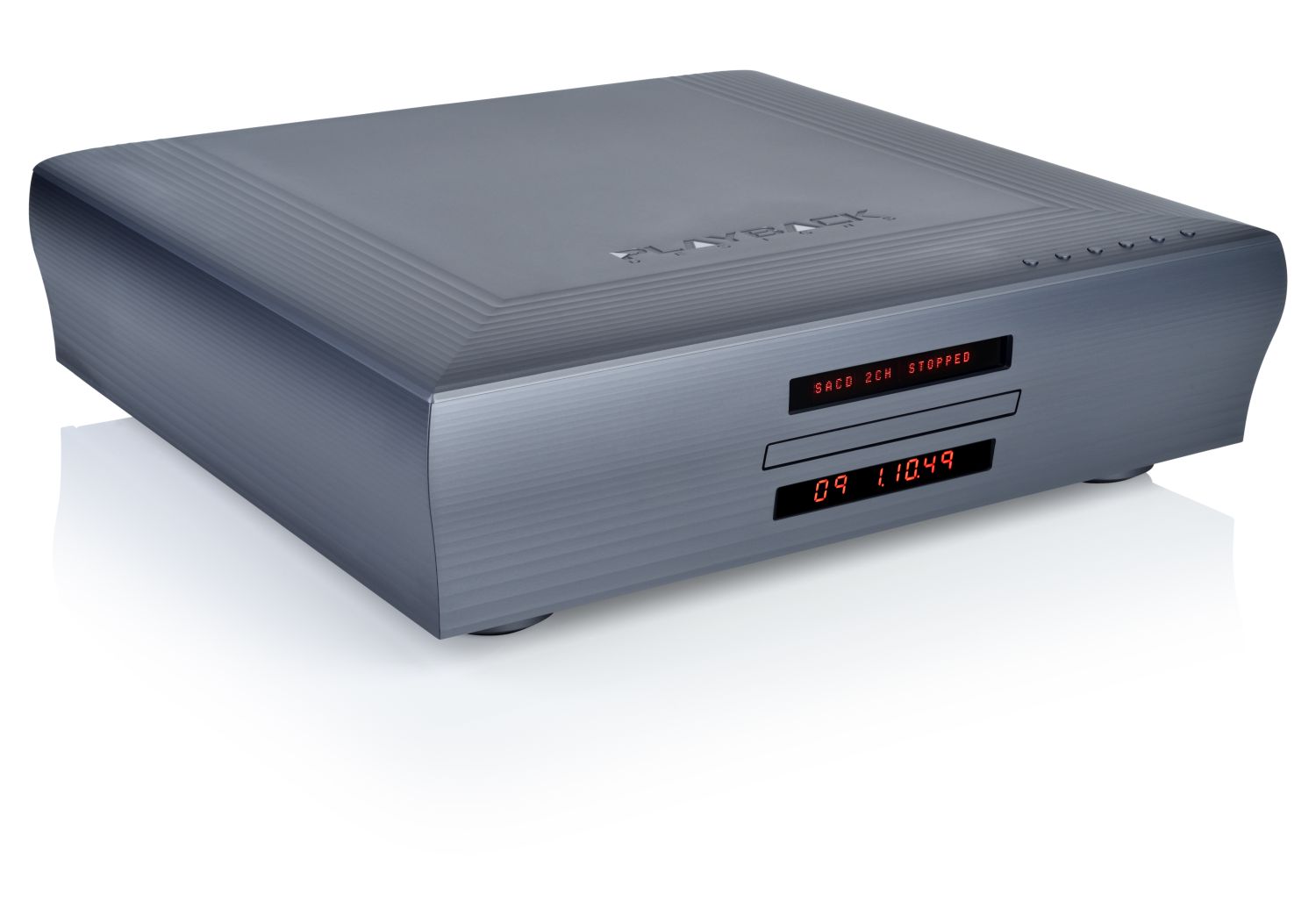
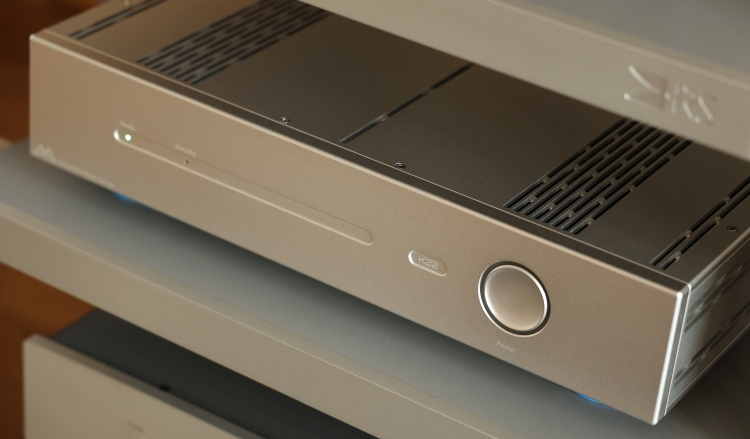
The MPT-8 Dream Transport was initially delivered as part of a combo for the MPD-8 Dream DAC review. During that review, I found that the MPT-8 offered such extensive functionality and achieved such excellent results that it warranted a dedicated review. In this review, I will assess all of the MPT-8’s functionality using three different servers and multiple DACs, including the MPD-8.
MPT-8 Description
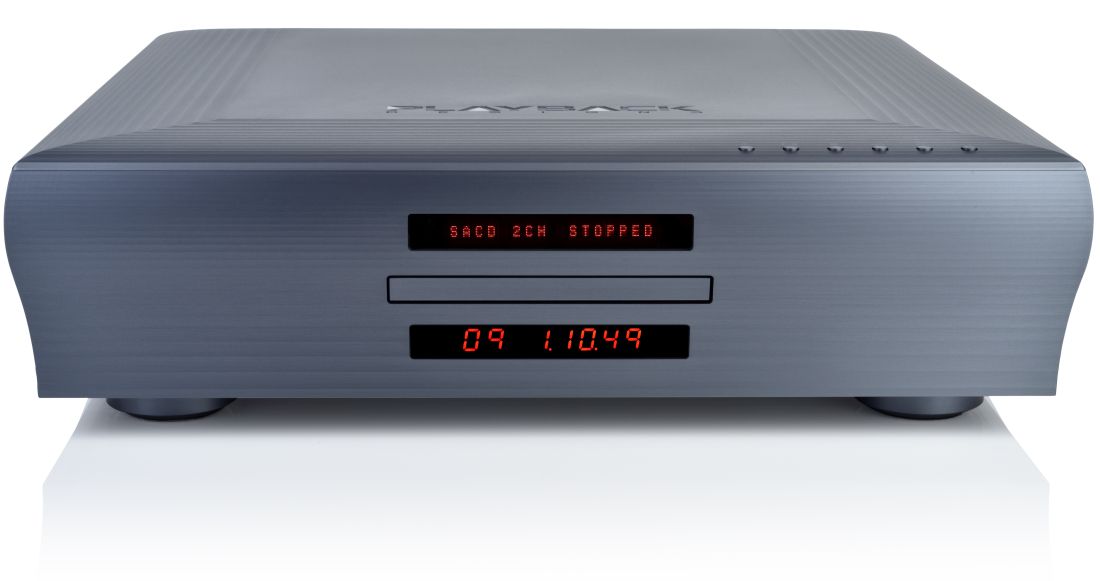
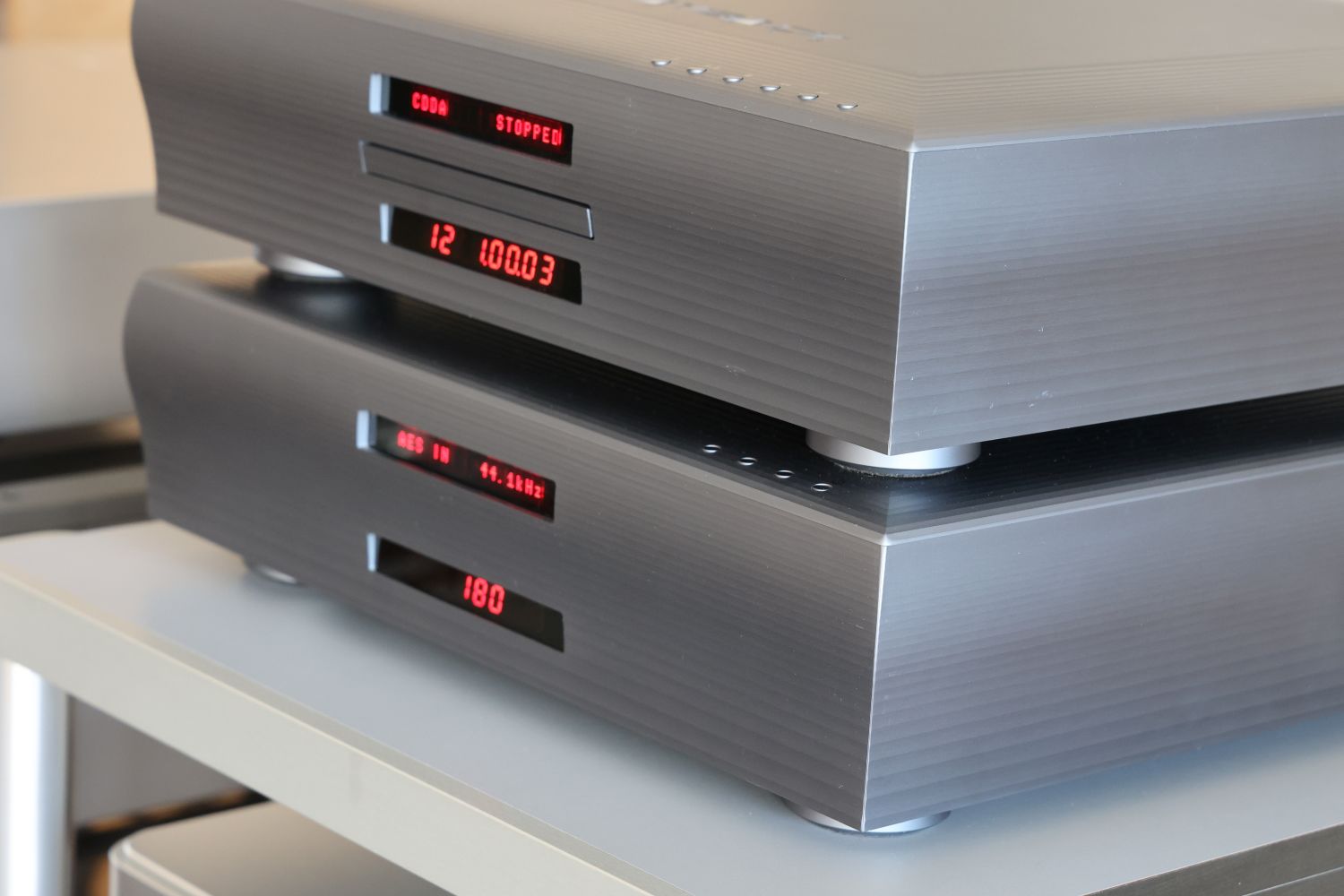
The MPT-8 is designed to be a one-stop source solution. It contains a CD / SACD Transport based on a high-quality mechanism developed by D&M specifically for audiophile applications. The MPT-8 can output native mode DSD via the fiber optical PLINK connection.
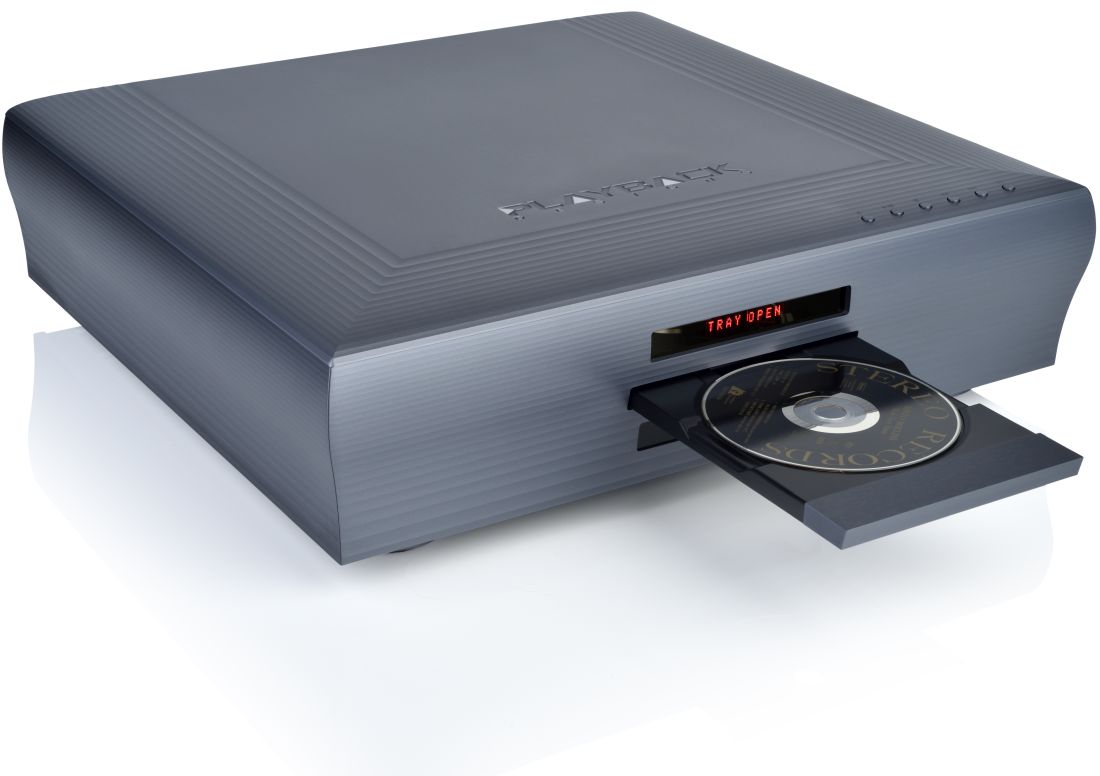
The MPT-8 is also designed as an ideal platform for the Stream-X2 option, making it a Universal Transport. In addition, it provides extensive connectivity for many external sources.
As standard, the MPT-8 can interface with a wide range of digital sources via Coaxial and Optical Toslink S/PDIF, AES/EBU, USB, and PLINK. The optional Stream-X2 option is connected via RJ45 and also offers a USB input to connect USB flash disks or HDD/SSD storage devices. The output signal is available via AES/EBU and PLINK.
The Stream-X2 option enables a wide range of Playback Designs components to include very high-quality streaming over an RJ45 network connection for local library- and cloud services, such as Tidal, Qobuz, Deezer, vTuner, NAS, and Roon. Any DLNA/UPnP-compatible app will work with the Stream-X2 option, but the best ones are JPLAY for iPad and Bubble UPnP for Android.
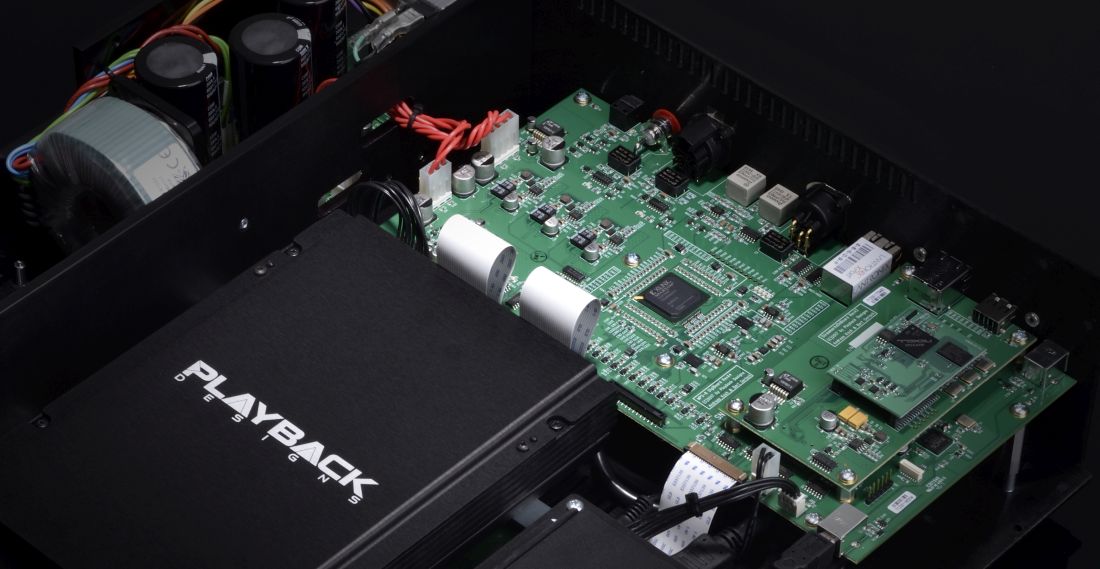
The MPT-8 is powered by the same high-quality linear power supply used in the MPD-8 DAC and incorporates extensive buffering, re-clocking, filtering, and cleaning of all digital sources to prevent any inter-modulation effects from reaching the DAC. As the last step, the digital data is encoded in its native format and output via AES/EBU or PLINK to be decoded to analog by the DAC.
More about PLINK
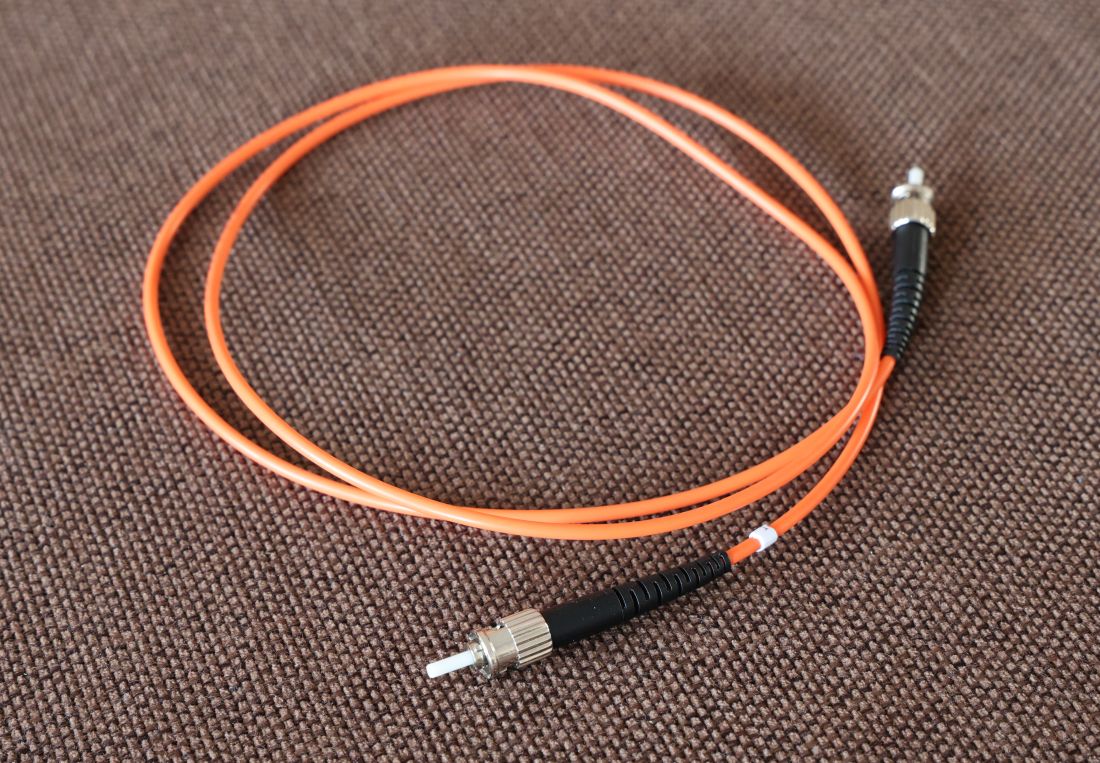
PLINK is a variation on ST glass optical, specially adapted by Playback Designs to carry the delicate music signal from component to component whilst supporting all sample rates for PCM and DSD natively. PLINK is an optical format but uses an entirely different interface than Toslink. Instead of relying on an LED source, PLINK uses a high-quality, low-jitter, Laser ST fiber optic interface. This interface is normally used for very high bandwidth communication links where receivers require an extremely low-jitter signal for reliable decoding. The music signal travels over PLINK using a much lower bandwidth protocol than the specified limit of the media, further increasing robustness against jitter and allowing for extremely long cable lengths (up to 300m). Cables for PLINK are specified for multimode, 62.5/125µm.
The first version of the PLINK interface was launched more than 15 years ago and supported DSD up to 5.6MHz. This version is called “Classic” and is implemented in the Playback Designs 5-series products and IPS-3 (unless they have been upgraded). As technology never sits still, the DSD sample rate has been expanded to 11.2MHz several years ago. Accordingly, Playback Designs also expanded the PLINK format and called it “Sonoma” reminiscent of its Sonoma workstation origin.
It’s worth noting that PLINK is compatible with NAGRA LINK, meaning that the MPS-X Network Transport is compatible with NAGRA DACs with a NAGRA Link input. And the same logic applies to the MPT-8 Transport. This is worth noting as there are currently no CD/SACD Transports in the NAGRA catalog.
Review Context
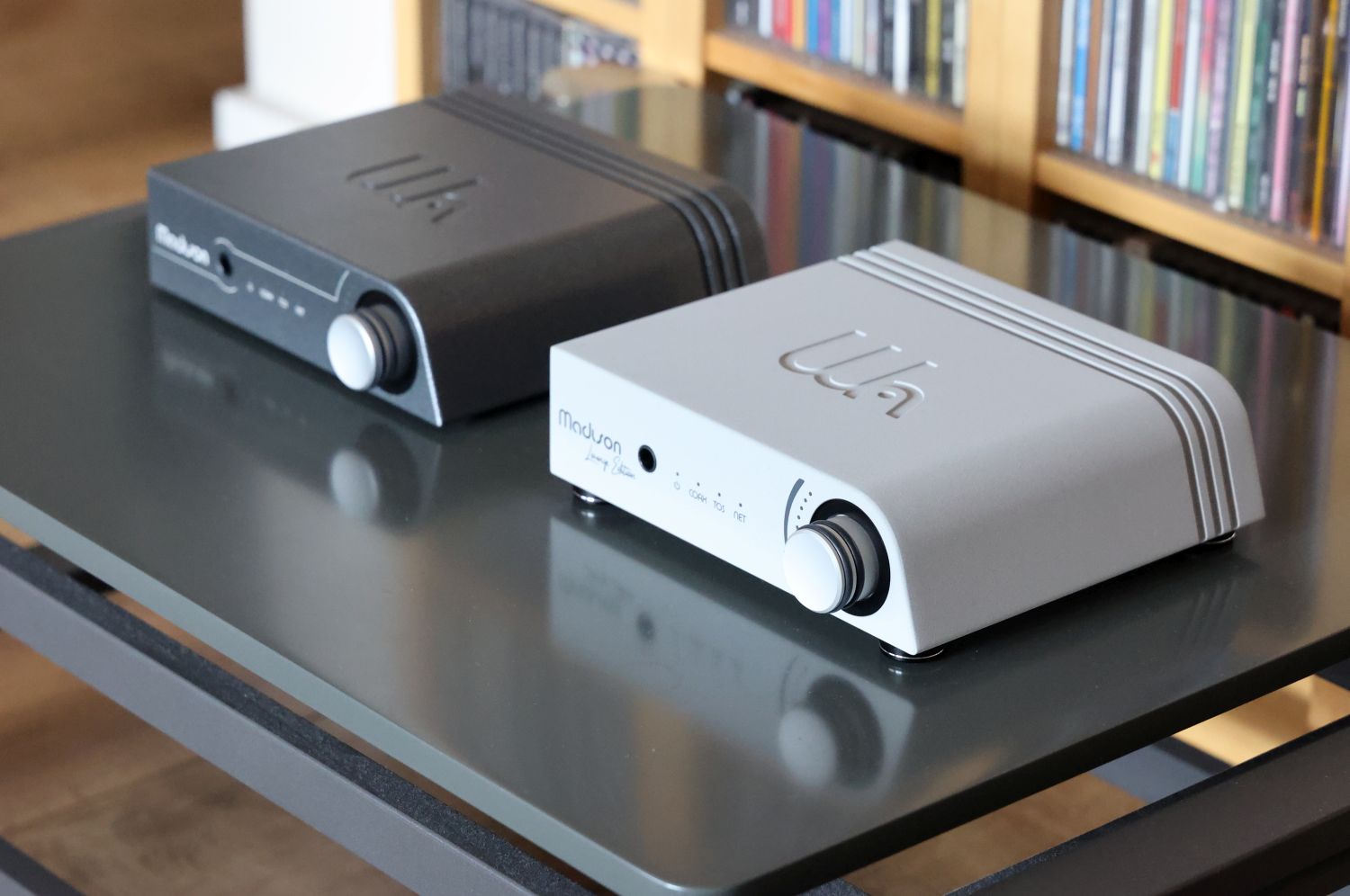
The MPT-8 Dream Transport is a natural partner for the MPD-8 Dream DAC, which was reviewed separately. I will be using the MPD-8 again in this review, but will focus on the MPT-8, and will use it with other DACs as well.
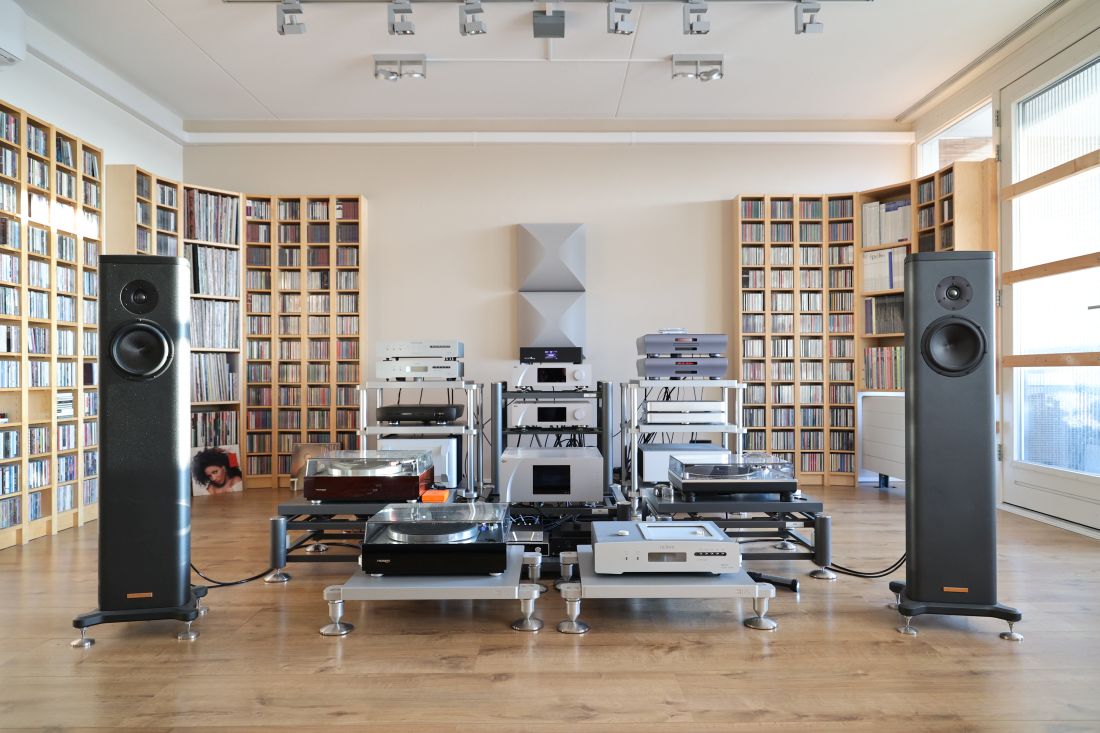
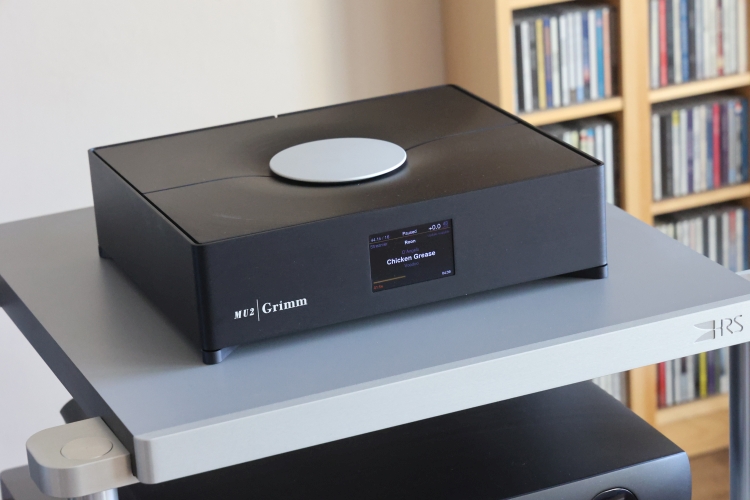
The MPT-8 was listened to in the main system that consists of the CH Precision C1.2 DAC, CH Precision L1 preamplifier, CH Precision A1.5 power amp, and Magico S1 MkII speakers. Digital sources include the Antipodes K50, Grimm MU1 and Taiko Audio Extreme music servers, the Aqua Diva M2 CD transport, and the Aqua LinQ network interface.
All interlinks are Driade Flow Link Reference 808, balanced and unbalanced, and the speaker cables are Driade Flow Reference 808.
For support, I use Artesania Exoteryc racks and Aire floor platforms with Carbon Fiber Linear Arms, and HRS EXR Stands and Floor Platforms.
Setting the Stage
When first reviewing the MPT-8 as part of the MPD-8 Dream DAC review, I discovered that all my available sources worked exceptionally well when connected directly to this excellent DAC. All three servers’ characteristics were fully retained and presented with fantastic purity and clarity, while the DAC always got to the musical core of the performance. In summary, the MPD-8 performed so exceptionally well that it earned a Magnificent Masterpiece award.
Next: Listening

Hi Christiaan,
thank you, great review as usual.
One question:
Only considering streaming from Qobuz, after this review which set-up (upstream to the DAC) provides the best performance when using MPD-8 as DAC?
Thank you
Matt
You mean which server? I will leave that to the reader to decide as they all have their unique characters, which I described in the MPD-8 review. The beauty of Qobuz is that you can also stream directly, without a server, directly from an app. This also sounds really good.
Hi Christiaan, I appreciate your review. I had a MPS-8 + Stream X2 and used it for some months with MPD-8, connected by P-Link. The sound was really impressive, better to all my previous digital set up. Listening to CD or SACD proved that PLAYBACK DESIGNS has realized a fantastic player at quite an expensive price but not stratospheric. Then I use TAIKO Extreme + MPD-8 with USB and the sound from Qobuz or server is much more open, more realistic in soundstage and dynamics increased to an unpredicted level of realness. I much recommend to use MPT-8 or MPS-8 with better feet than the original that use felt. Remove the 3 felts, use top rank cones + base and the sound will improve greatly.
Best
Hi PHP,
thanks for your info that Taiko Extreme outperforms MPS-8 + Stream X2.
I think you will not get a comment by Christiaan about Taiko since he works for this company.
ATB
Indeed, I cannot get into deeper comparisons between the Extreme and other servers, as that will pose a conflict of interest. This is why I rarely use the Extreme Server in my reviews.
Great review! I own an MPD-8 and previously owned a La Diva Mk. 2 CD transport but got rid of it because, while I found soundstage depth and layering to be excellent the height and width of the stage were of a significantly smaller scale than my previous (and rather boring Musical Fidelity transport). I’m curious what you noticed in comparing the soundstage (particularly the height and width) of the La Diva to the that MPT-8?
I think what you may be referring to as a high and wide stage is what I usually call an “aura” or “bubble”, a consistent feeling of a room-filling sound. This is not necessarily the same as a component accurately relaying the stereo- and phase information in the recording. To me, the Aqua La Diva M2 is every bit as wide, deep, and room-filling as the best players I heard, but only when this information is in the recording. I don’t recall finding the La Diva M2 to sound smaller than the PD MPT-8, although the latter clearly had more body and stature, providing a bolder and more impactful sound. However, I did find the original La Diva to have quite narrow imaging with less projection outside of the speakers, and with an overall less spacious feeling than most other players. On the other hand, it was also tighter and more accurate than most, and that usually has an inverse effect on the perception of space. Lastly, the way we experience soundstage also ties in quite heavily with the room acoustics, listening position, and speaker placement, making this, unfortunately, perhaps also a relative matter.
Hi Christiaan, Thanks for your reply! I don’t know if I am referring to the “aura” effect as you define it (because I’m not sure of that includes off-axis listening or not) but merely to the boundaries of the soundstage as one experiences them in a sitting in the sweet spot. The properties I’m talking about I think are the kind you mentioned there when describing there the original La Diva. You had also described the Tambaqui a while back in similar terms as producing a more “focussed” soundstage (horizontally) that sat more between the speakers rather than extending beyond them. In those terms, what I experienced was about the same from the mk 2. Indeed there are many variables at play including room acoustics, as you said. Seems you don’t have the same impression of the mk. 2. (that of a more “focussed” stage) after trying it in numerous system configurations. In my case I’ve had multiple transports in my system and the mk. 2 stood out as being on the side of the narrower and shorter soundstage.
Hi Ajay, Ok, interesting! Maybe I was generalizing. But indeed, I experience the La Diva M2 as much more spacious and free-flowing than the orginal La Diva, which does indeed image more or less similarly as the Tambaqui. In any case, the MPT-8 ranks at the top of my list.
Thanks, Christiaan! We all generalize about the characteristics of individual components even knowing that that is a tricky proposition because of system and room dependency factors. But I think some people have a sounder (even if not absolutely conclusive) basis for their generalizations than others. In your case you at least often get to try out components in many different configurations of systems which allows you to notice patterns which I can t so easily (because I have a much more limited array of equipment at my disposal). Interesting what you found with the mk. 2. Makes me cautious with respect to the MPT-8, though (given the soundstage width and height were not much different than with the mk. 2 in your tests). I suspect something else in my system is probably constraining the sound-staging in this regard.
Hi Ajay, thanks for the trust. Following what you said about the MF, I know that certain transports can sound extra-spacious, or perhaps even larger than life. Some of the classic CDM-1-based players come to mind, but invariably, these are also much less concrete and precise, and I do not consider these classic players reference-grade. But ultimately, as much as we want it to be an exact science, there is always a personal component to audio. We may perceive things differently, or just prefer different renditions. BTW, the MPT-8’s behavior can be influenced by the digital interconnect system, and it sounds significantly more liquid (as well as most free-flowing and subjectively more spacious) when using PLINK. Personal preferences aside, when you have an MPD-8, I would still think the MPT-8 is the ideal partner, and I would recommend trying to get a home audition so you can decide for yourself. If you do, I will be interested in hearing your thoughts!
Thanks, Christiaan! I will keep you posted on that. BTW, apparently the Muaical Fidelity transport utilizes the Sharp GH6C005B optical pickup mechanism — seemingly something relatively uncommon in the audiophile world. Still, it synergism’s well in my system — perhaps more because it compensates for other system limitations than because it’s such a great player. Have to agree that the La Diva mk 2 was more resolving, imaged better, etc.
Hi Christiaan, I have a Nagra HD DAC and am wondering if any other SACD players use this plink. The Playback Design MPT-8 is a bit above my budget. Please let me know.
Hi Maurits, not that I am aware of.
Hi Christiaan,
As I make my shortlist of considerations for introducing a CD transport to my system, one significant drawback of the Aqua La Diva M2 in my case would be that my Tambaqui’s single AES input is already consumed by my MU1, so in this setup I’d have to switch my AES cable between my MU1 and the Aqua all the time which wouldn’t be good.
It sounds like the MPT with Stream-X2 might be a good alternative that solves this problem with only the need for 1 AES output to my Tambaqui regardless of whether I’m streaming or playing CDs.
My tastes tend towards precision with a neutral, fast, crisp, airy and layered presentation, while being simultaneously delicate and energetic. I don’t consider this profile to be analytical if done right.
With the MPT-8, how much would I be compromising using AES into my Tambaqui instead of Plink with a Playback DAC?
And, given my tastes, would Playback’s Stream X2 be an upgrade over the MU1?
Lastly, have you been able to compare any of the Esoteric transports at this level? With this approach I’d have the choice to use the onboard DAC or my Tambaqui.
Decisions….
Hi Christiaan, one clarification related to my question, my MU1 has no storage and so only use it to stream using Roon. With an MPT-8 I’d be using Stream-X to do the same but with UPnP and Tidal, and I’m wondering if this would be equal or better to my current setup with the MU1. If so the MPT-8 may be the best option for me.
Hi Nigel, the MPT with Stream-X2 is indeed an excellent alternative. Even with AES/EBU instead of PLINK, I still think this combo is superb: just as neutral, crisp, and precise, but grander, more majestic, and more organic than the MU1 with Tambaqui.
As for Esoteric, I cannot go into detail about equipment I have not reviewed in my own system and on HFA, but I have used and heard several Teac and Esoteric transports, both classic and current. They tend to have a very robust, earthy, well-controlled, slightly dark delivery. YMMV, but I personally prefer the MU1, Aqua, and Playback Designs for their blend of technical excellence with delicacy and flow.
MTP8+Stream X2 is better than MU1. MTP8+Stream X with optical link is miles better.
Thank you for clarifying this – I wasn’t certain from your review if you had only tested the MPT-8 with the different servers streaming to it, or if you had compared the MPT-8 directly streaming from the network with no server in front of it.
Hi Nigel, that response was not from me, but from Philippe of PHP Audio:-) Nevertheless, I can confirm that the MPT-8 with Stream-X2 sounds superb with any source. It ranks at the top in the streaming endpoint and CD Transport sections of the HFA Awards page for a good reason;-)
Thanks Christiaan! I’ve placed an order for a mint condition MPT-8, which supposedly only has a couple of months use on it according to the dealer. After selling my MU1 the net cost will even be lower than the Aqua M2, but with better CD performance and better streaming performance than my MU1, all in one box.
Thanks again!
Hi Nigel, Congrats! Having heard all these units, I would say you made the correct choice. Be curious to get your reaction here. When does the MPT arrive to you?
Thank you! The MPT should arrive in two weeks. I’m not sure if the unit is fully broken in, as the prior owner used it only for two months (supposedly according to the dealer), before deciding it wasn’t a match with their system. Sounded like they were after a warmer and lusher and relaxed presentation (not my thing).
Should be interesting as I was happy with the MU1 already, and was really just after a CD transport, after realizing just how much noise comes in over the stream that isn’t solvable with the most capable audio gear for networks. Thought it was due to power quality fluctuations at first (after attempting to solve the issues for years with all manners of audiophile acrobatics), and it was to a degree. But I took my system entirely off-grid, powering my PS Audio Power Plant 20 with a Goal Zero rechargeable power source. After still experiencing fluctuations in quality (albeit with a notable improvement in quality and consistency), I dug out a 30 year old Arcam CD player and was blown away by how it made me realize just how much noise I was getting over my network stream, 90% of the time at least. Maybe my issue is unique to my house, who knows.
Either way, I’m looking forward to having both streaming and CD capabilities in one box, with consistently high performance.