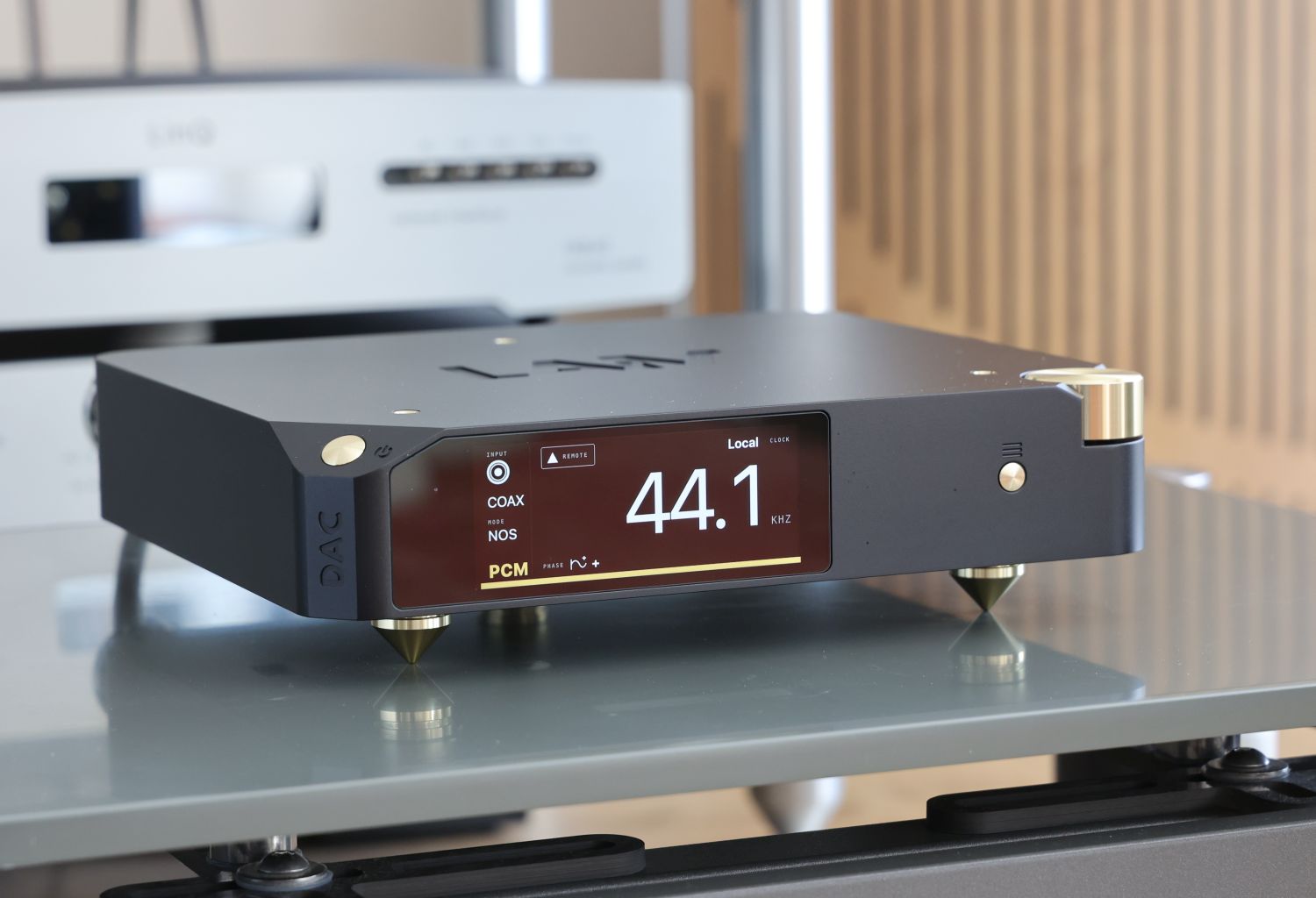
Review sample provided by LAiV Audio
Retail price: USD 3.994 + VAT (4.599 Euro in the EU)
I fondly remember reviewing LAiV’s first product, the Harmony DAC, almost exactly two years ago now. This lovely small DAC surprised me with its excellent sound, and it’s been an HFA Favorite ever since. Now, the company has issued its successor, the Harmony 2 DAC.
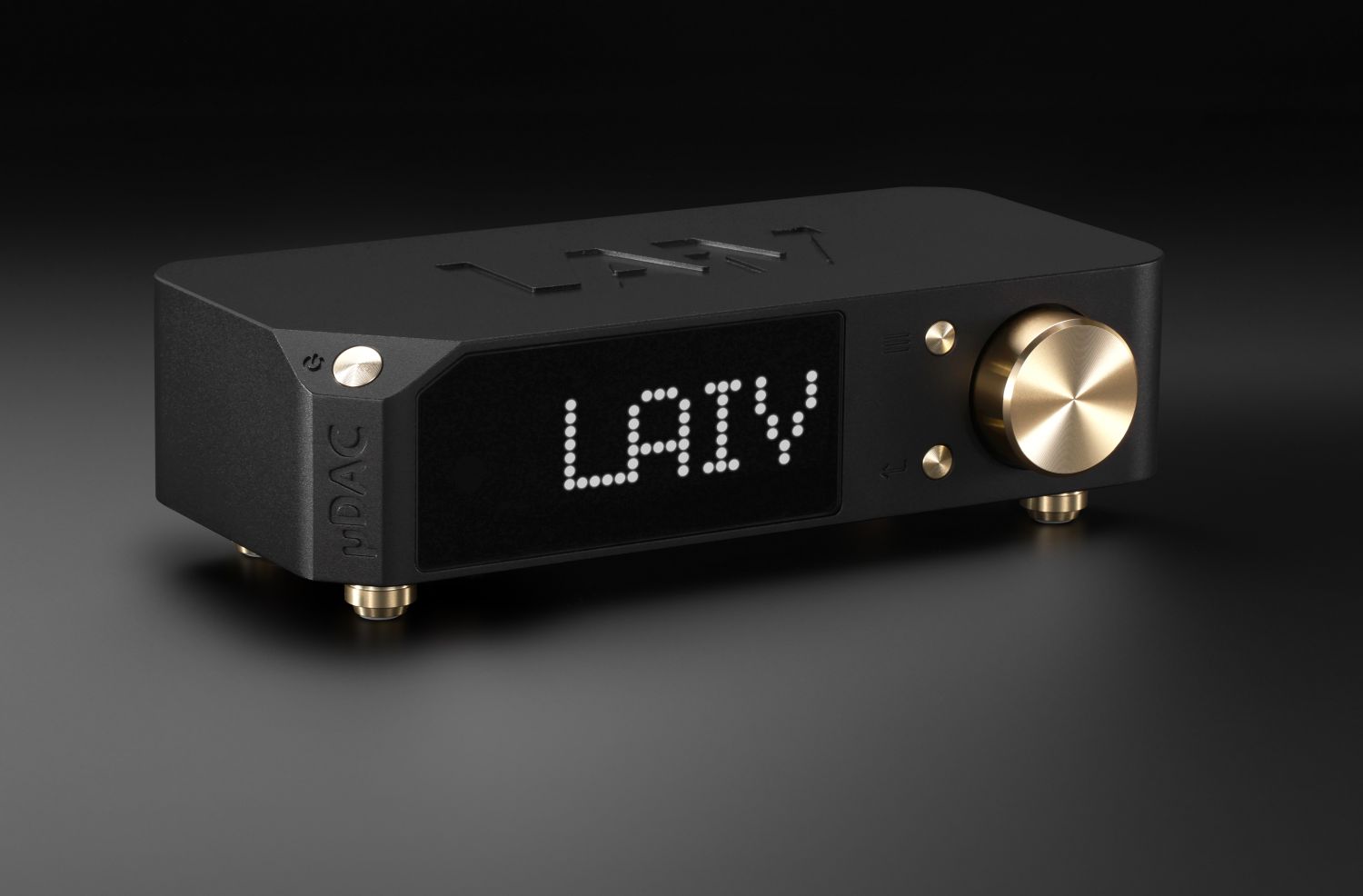
Rather than stirring the pot, the Harmony DAC 2 keeps the winning formula. It takes everything that made the original so good and takes it further. The DAC section is unchanged and remains a fully balanced, discrete R2R ladder. However, it adds several interesting new features.
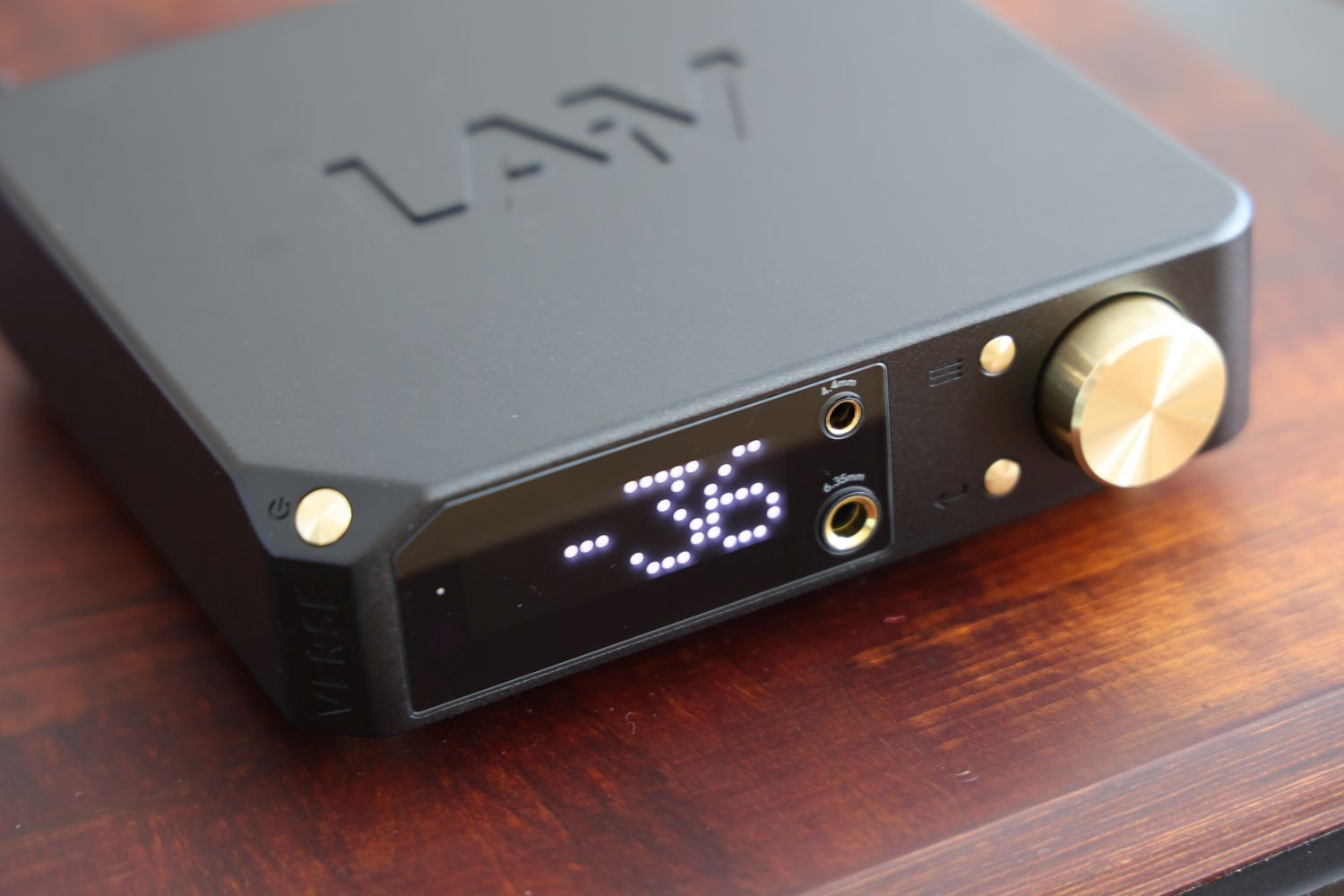
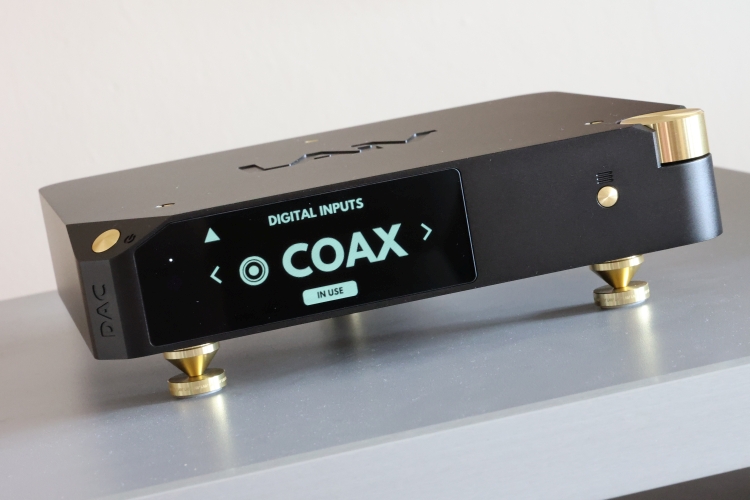
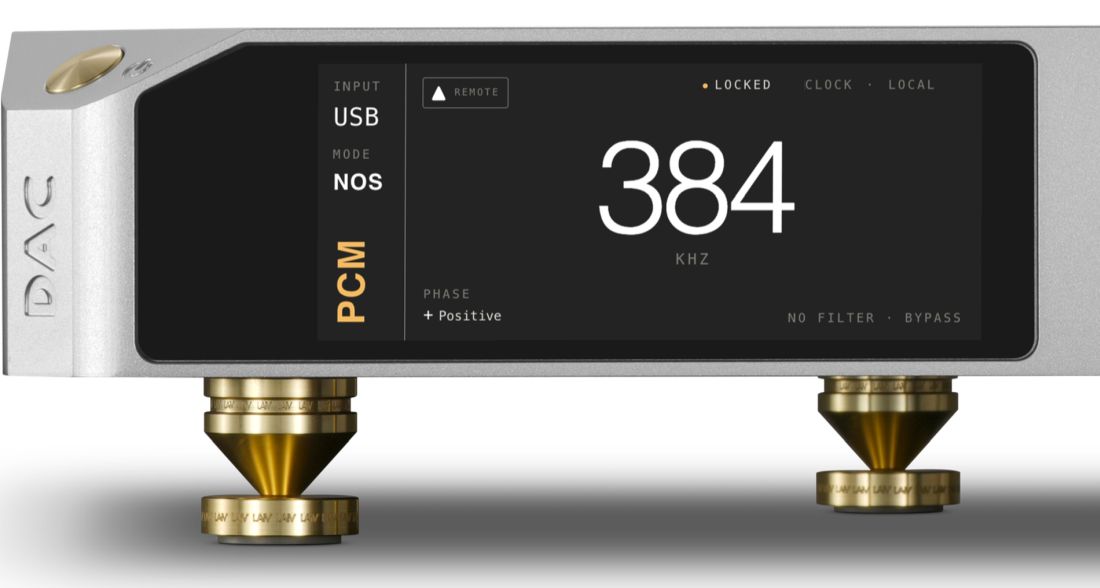
The most obvious difference is visual: the screen is upgraded from a 16-level grayscale OLED to a super-high-res, full-color LCD, plus a new, clear menu structure and a beautifully crisp graphic interface.
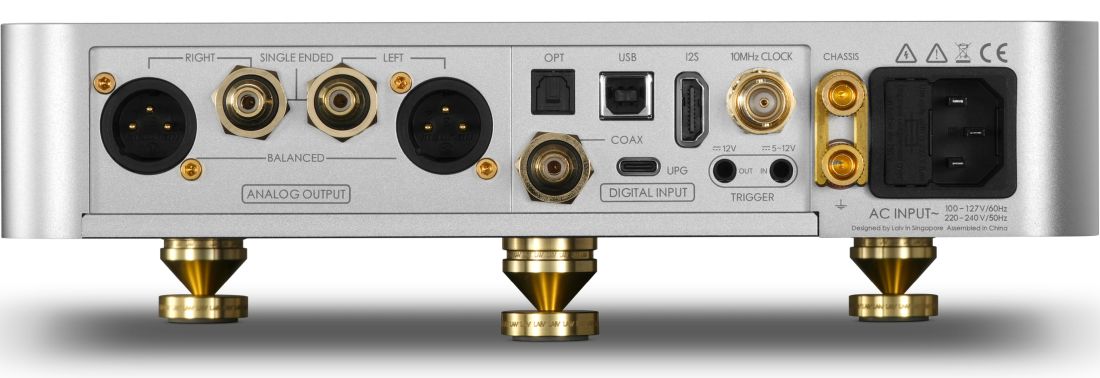
Other notable differences include a discrete Class A output buffer with concurrent XLR and RCA output, a dedicated hardware sample rate converter with selectable NOS, OS, and SRC modes for PCM, a direct 10MHz external master clock input, full digital isolation between input and output, a 12V trigger, and the possibility of USB-C firmware updates.
An upgrade kit will be available for Harmony DAC owners. Please check the LAiV website for more information.
New Display and User Interface
The screen has been upgraded from a 16-level grayscale OLED to a crisp, high-res, full-color TFT LCD, with a new, clear menu structure and a beautifully crisp graphic interface. At 960 x 400 pixels, it isn’t truly on par with a high-end phone in resolution, but the pixels are so small that I cannot see them, and the graphics are so crisp and clear that you might as well call it a Retina screen.
To make the most of the screen’s high resolution, LAiV offers two user interface modes you can switch between at any time. The first, Rich, is for nearby use, for instance, on a desk, with small fonts and lots of information shown at once. The second, Simple, is for listening room use, with less information and larger fonts.
Discrete Class A output buffer
The Harmony DAC 2 adds a Discrete Class A output buffer with concurrent XLR and RCA output. This new buffer drives both analog outputs concurrently with low output impedance. This was possible with the original Harmony DAC, but not recommended, because both outputs were wired in parallel.
Dedicated hardware sample rate converter
In addition to the original’s NOS and Oversampling modes, the Harmony 2 adds a dedicated hardware sample rate converter for PCM. You can now choose between pure NOS for the most direct path (which is my preference), LAiV’s in-house OS mode, or a dedicated hardware sample rate conversion stage. These modes apply only to PCM, as an R2R ladder cannot read a 1-bit stream. The DAC also converts DSD, but it first converts it to multi-bit digital before the ladder renders it to analog.
External master clock input
The Harmony DAC 2 accepts a 10MHz external master clock directly via a 50-Ohm BNC. On the original Harmony DAC, external clocking required the separate DDC unit feeding I2S. An external clock can improve the sound, but the DAC 2’s internal clock will also get the timing right on its own when no external clock signal is present.

New Harmony DAC 2 on top and original Harmony DAC on the bottom
Isolation between the input and output stages
The Harmony DAC 2 places full digital isolation between its inputs and outputs, breaking the electrical path that noise would otherwise ride from your source into the conversion and output stages. Ground loops, USB bus noise, and upstream interference stop at the barrier.
12V trigger in/out connection
A 12V trigger input and output lets the DAC 2 wake and sleep with the rest of your system. This was already a feature on the HP2A preamp and GaNM power amplifiers, but the original Harmony DAC didn’t have it. This useful feature now extends to the Harmony DAC 2.
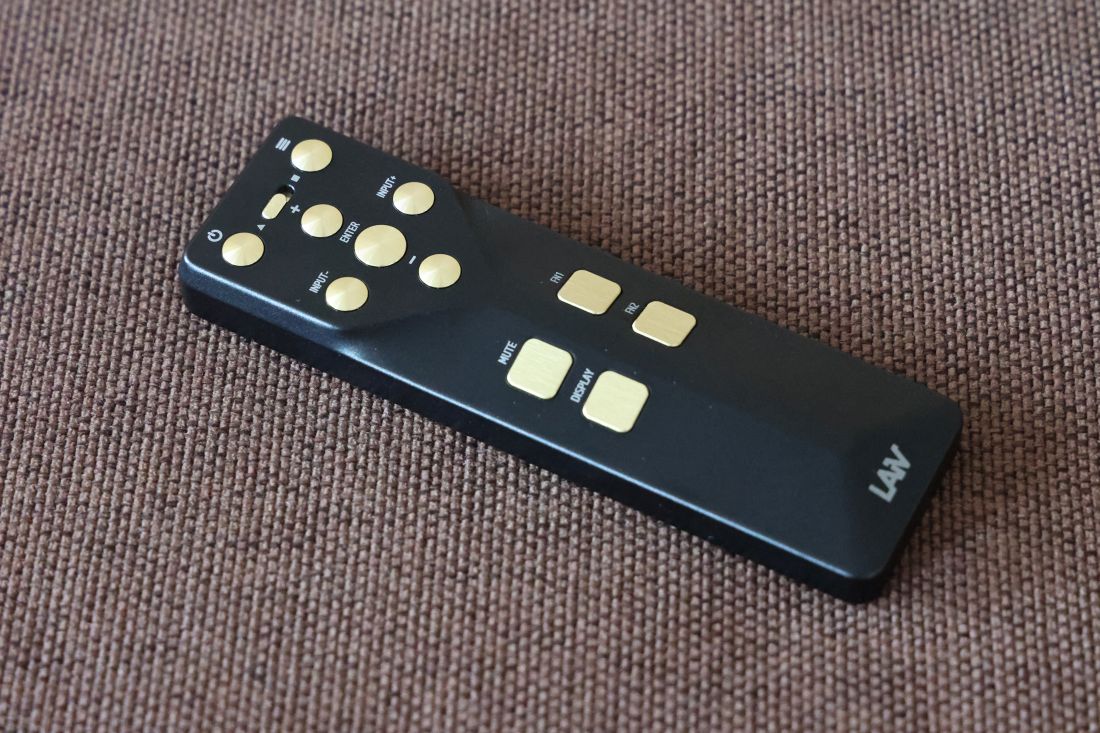
Harmony RCX Remote
The beautifully sculpted Harmony RCX infrared remote control is included.
Review Context
I reviewed the Harmony DAC 2 in direct comparison with the original Harmony DAC in two very different systems. First, in the Media Room, in combination with the LAiV HP2A preamp and the fully analog Genelec 1037 studio monitors.
Second, in the main system, comprising the CH Precision C1.2 DAC, L1 preamplifier, and A1.5 power amplifier. Digital sources include the Aqua La Diva M2 CD Transport, Antipodes Oladra, and Grimm MU1 music servers. I used the standard LAiV-supplied power cables. Speakers are the Apogee Duetta Signature (recently fitted with new foils). All interlinks are Driade Flow Link Reference 808, and the speaker cables are Driade Flow Reference 808. All components (including review components) are powered by the PS Audio P20 PowerPlant.
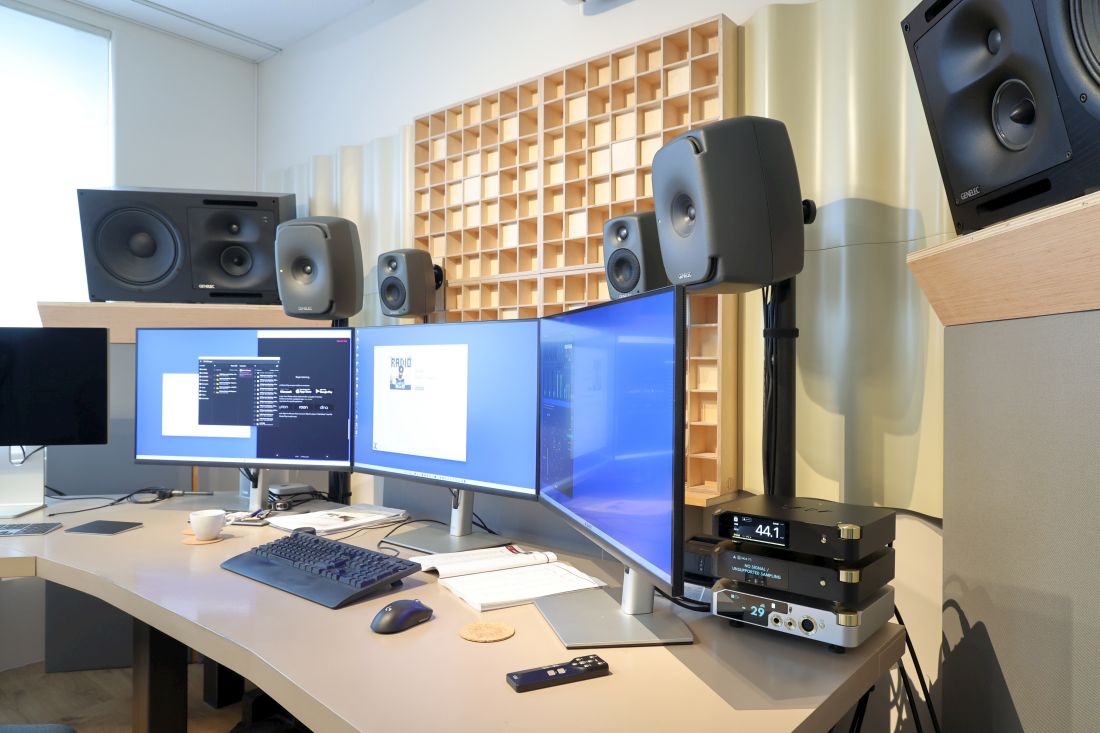
Listening – Genelec system
Before I started listening, I left the Harmony DAC 2 powered on for almost two weeks. To compare it with the original Harmony DAC, I connected them using identical standard LAiV-supplied power cables in an adjacent outlet and reversed the cables halfway through the test to ensure I wasn’t hearing external effects. The source was JRiver with local music using WASAPI in Exclusive Mode, connected via a standard USB cable that I swapped between the two DACs. Power and USB cables can make a difference, but I tend to reserve those tweaks for the main system. I like to keep this “desktop” system simple and relatively sensible.
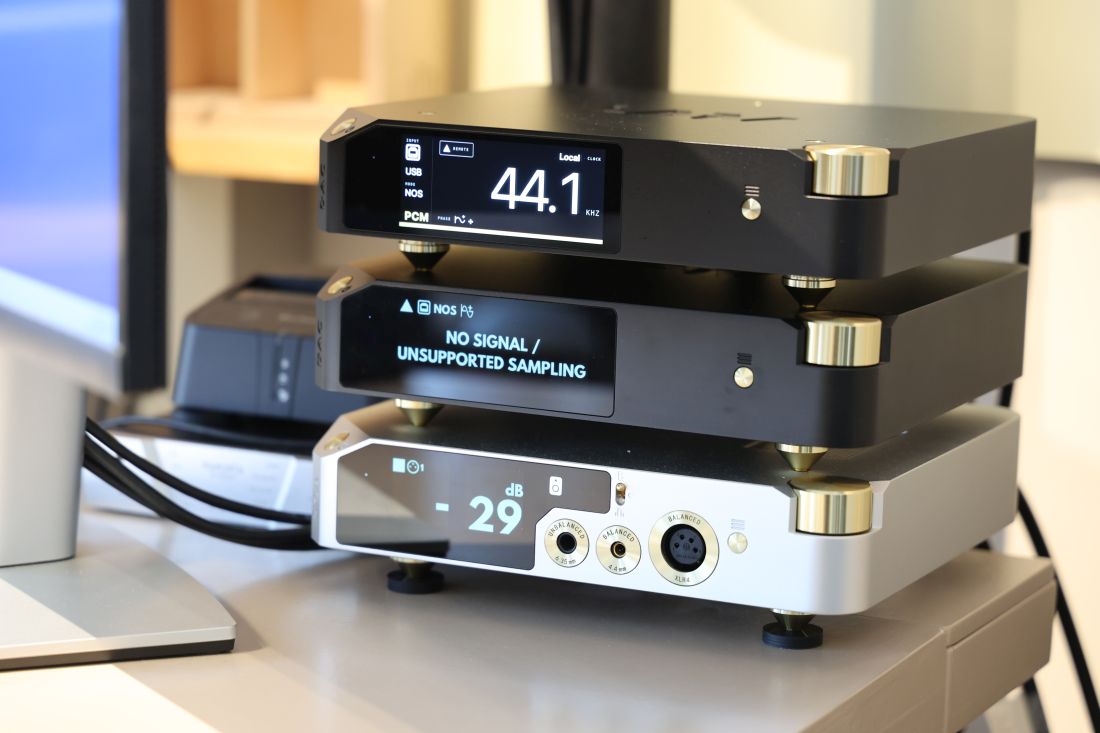
The Harmony line of components are a little too large for this desk, so I had to place them in the far-right corner behind the monitor. Then again, the Genelec 1037As can also be considered too large for this system, so I guess it balances out.
Coming from the original Harmony DAC and listening to the Harmony DAC 2, it is immediately apparent that the new DAC follows very closely in the original’s footsteps. The difference is not huge, but I consistently find the new Harmony DAC 2 to sound a little crisper, more direct, and a bit more energetic. Between the two, I definitely prefer the new model. However, the difference isn’t so large that I can always tell which DAC I am listening to without comparing it to the other. So, I wouldn’t say the difference I’ve heard so far is a strong enough reason to upgrade if you already have the original Harmony DAC. However, the new model offers more, and some features might offset the balance quite a bit. To further assess the Harmony DAC 2’s other features, I will now relocate the DACs to the Main System.
Next: Listening in the Main System and Conclusion