
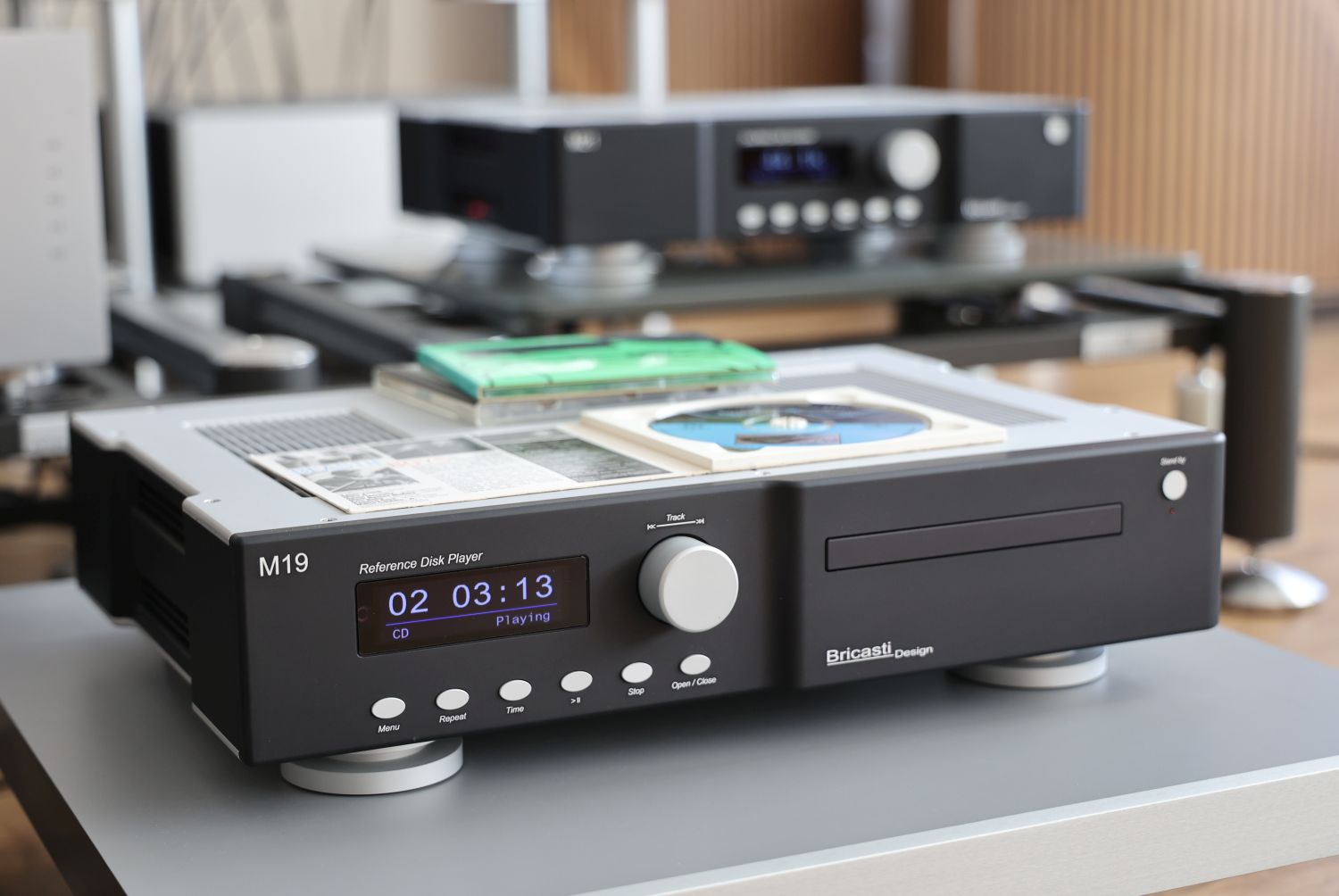
System Context
The M19 was listened to in the main system, which consists of the CH Precision C1.2 DAC, CH Precision L1 preamplifier, and CH Precision A1.5 power amp, and the Antipodes Oladra and Grimm MU1 Music Servers for comparison. All interlinks are Driade Flow Link Reference 808, and the speaker cables are Driade Flow Reference 808. All components, including the Bricasti components, are powered by the PS Audio P20 PowerPlant. Speakers used are the Apogee Duetta Signature (recently refurbished with the latest Graz foils).
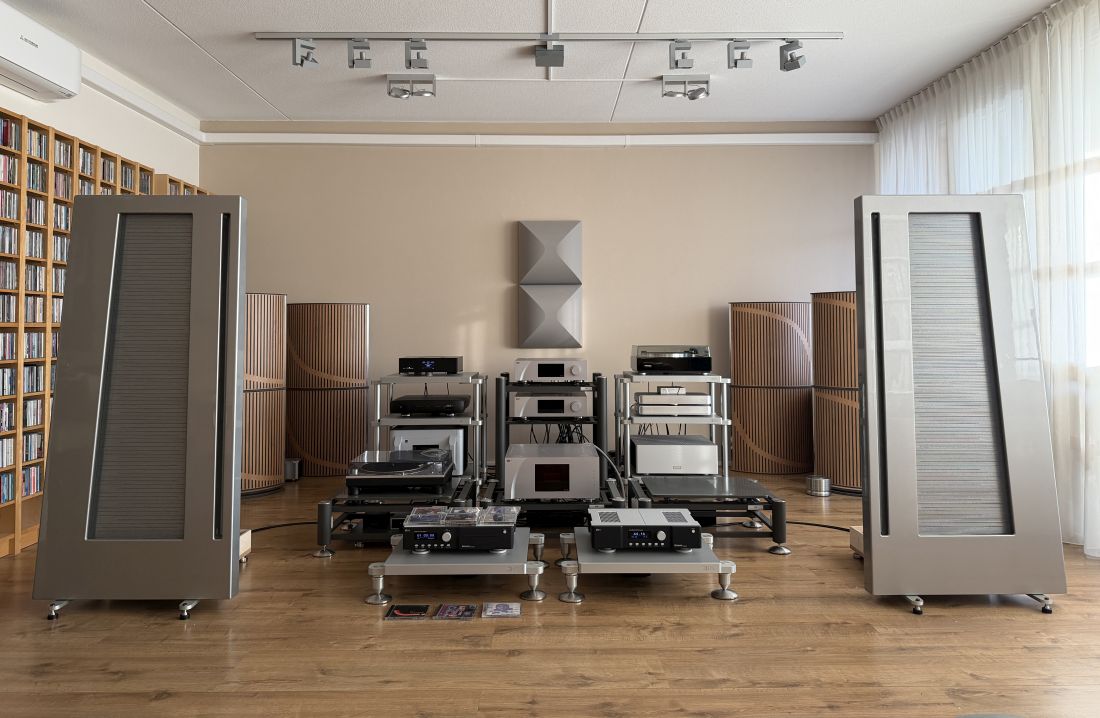
Although the M21 DAC is included in this review, the focus is on the M19 transport. With its AES/EBU and S/PDIF outputs, the M19 is compatible with any DA Converter. However, I suspect many people will buy the player to complement their Bricasti DAC. Naturally, this achieves a matching visual style and sound philosophy, but there’s another essential reason to pair the M19 with a Bricasti DAC: the I2S connection. Not only does the I2S connection deliver better sound than the other digital interfaces, but it also enables Native DSD data transfer. This is why the Bricasti M21 DAC is included in this review.
Bricasti M21 DAC in brief
The M21 DAC offers various settings to tailor its sound to user preferences, and it features three digital audio conversion paths. For PCM, the user may choose either a Ladder DAC or a Delta/Sigma DAC. For DSD, conversion is performed via Delta/Sigma, using an in-house-designed true one-bit modulator and a proprietary, pure-analog filter.
Additionally, one can select between various oversampling filters and choose between Fine and Wide clock settings. I prefer it with the conversion set to Ladder DAC, using the Linear 0 oversampling filter, and the clock set to Fine. This achieves what I feel is the most solid, direct, and expressive sound. Alternatively, it may be set to sound either a little spicier up top or a little rounder and sweeter overall. As a power cable for the DAC, I used the same cable I use for the CH C1.2 DAC, a GigaWatt LC-2 EVO. For the M19 transport, I used my usual very neutral home-made cable, the same as I use with the other digital sources.
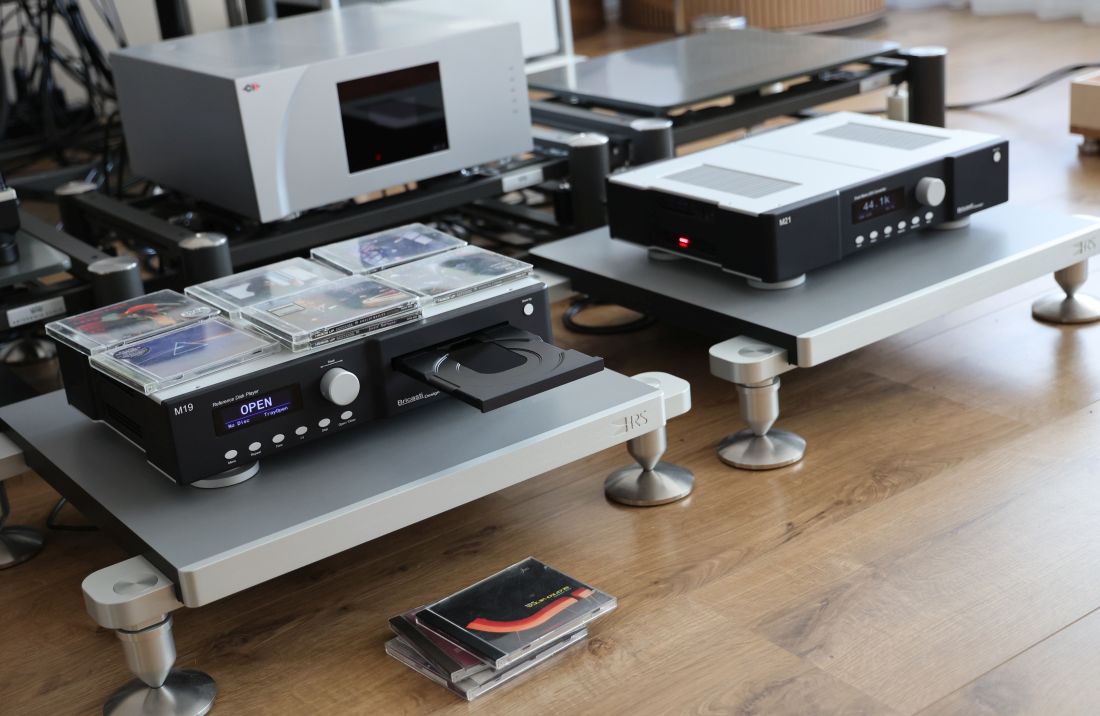
Listening to the M19 and M21 as a combo
The Bricasti combo offers effortless liquidity, natural flow, refinement, and an utter lack of digital or electronic signature. The sound is very neutral, neither cool nor warm, but very natural, and gently relaxed. Whereas a fluid and liquid performance is often accompanied by warmth, thickness, or both, the Bricasti combo is articulate, slender, quick on its feet, transparent, and very precise. Thus far, I’ve not even started experimenting with power cables, interlinks, footers, or rack placement, and already it sounds this good.
Now, I should mention that the Bricasti footers are not just large aluminum discs. These footers contain a special built-in StillPoints coupler mechanism. Like the standalone aftermarket versions, these footers have loosely connected parts that act as mechanical diodes while preventing loose components. This makes it easy to move and position the components.
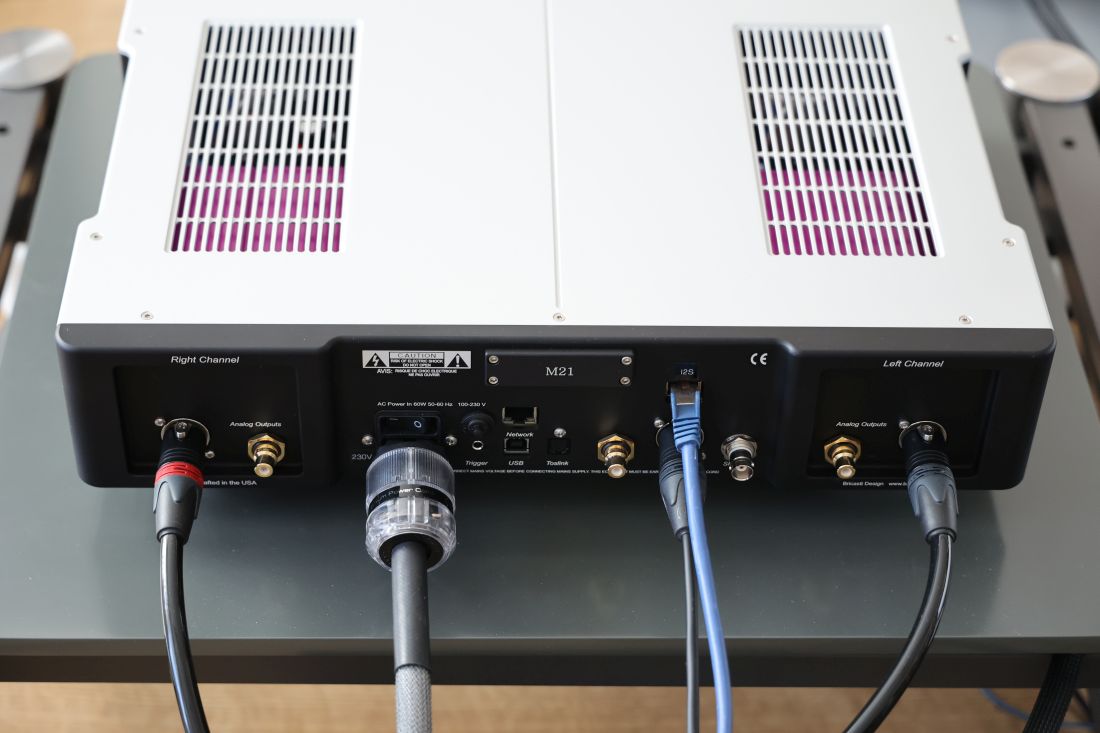
I know I’m off to a very good start when components sound this good right from the beginning, using only a simple home-made power cable and a Mogami 3080 AES/EBU cable. Still, with a system this transparent, it’s worth paying attention to all aspects.
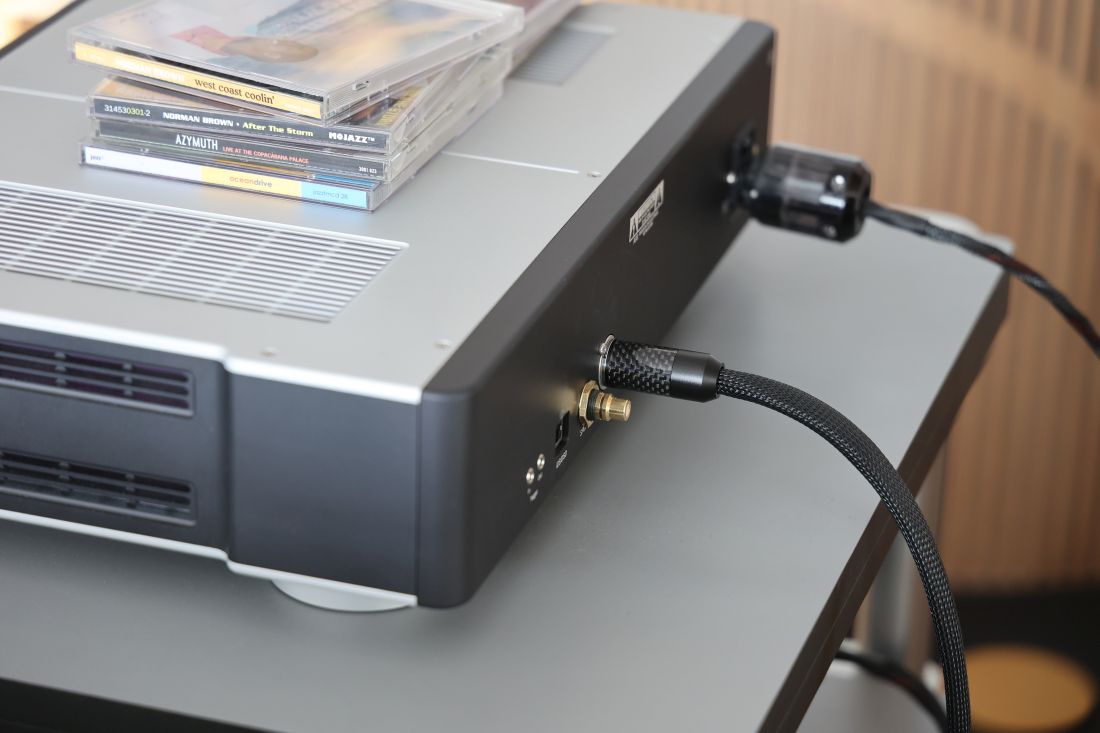
For example, I found that the Network Acoustics muon 2 AES/EBU cable highlights key areas of the M19, improving smoothness and flow, while also adding deeper tonal saturation and a more relaxed character. Likewise, the M21 DAC clearly benefited from a GigaWatt LC-2 EVO power cable.
I2S
The Bricasti I2S connection is compatible with standard RJ45-equipped Ethernet Cables, making it easy to experiment. A short, standard, but good quality Cat. 8 cable is supplied to get you started.
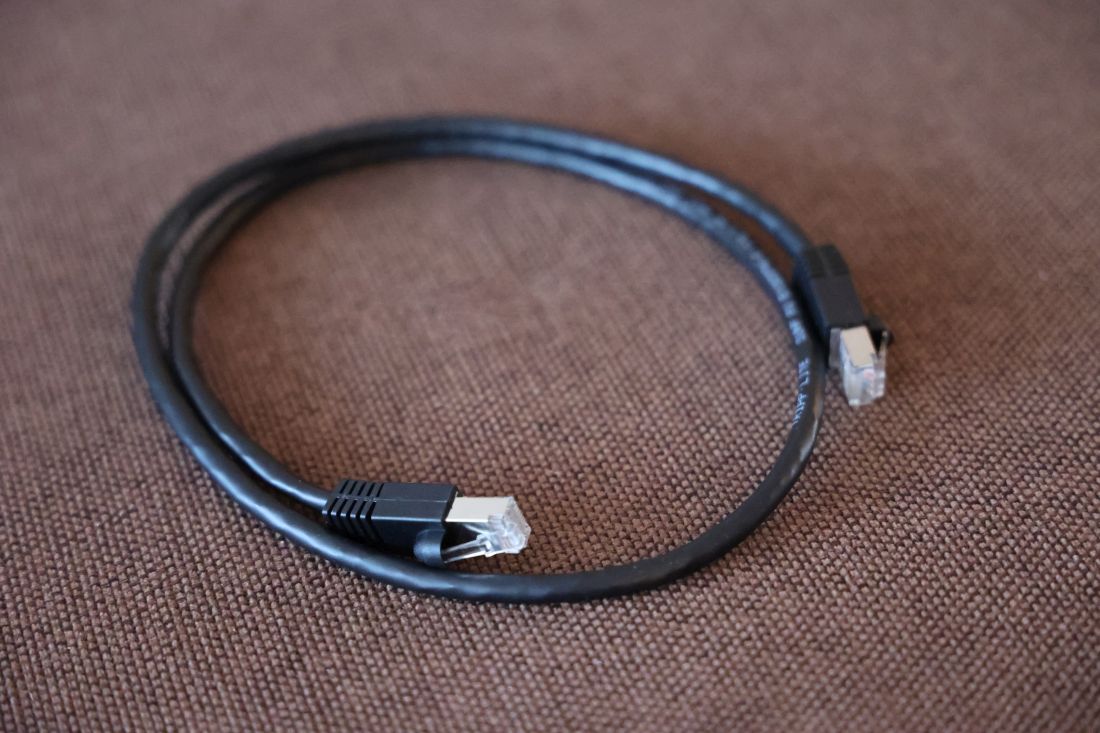
In every case I’ve tried, I2S has always produced better sound than S/PDIF or AES/EBU, and the Bricasti combo is no exception. It’s worth noting that I consistently find that even standard I2S cables produce more accurate results than the best AES or S/PDIF cables, and the same is true for the supplied cable. This is a significant extra benefit of using components with a compatible I2S interface: better sound without the need to obtain exotic cables.
However, it’s possible to achieve a smoother, warmer, fuller, or more relaxed sound with certain higher-end digital cables. Whether this is found to be more pleasant, more truthful to the source, or better at conveying the feeling of a live performance than the relatively more factual rendition of the standard cable remains a matter of personal preference.
I generally prioritize accuracy and neutrality over warmth or harmonic richness. For me, the supplied Ethernet cable does the trick perfectly, providing what I feel is the most accurate and faithful rendition.
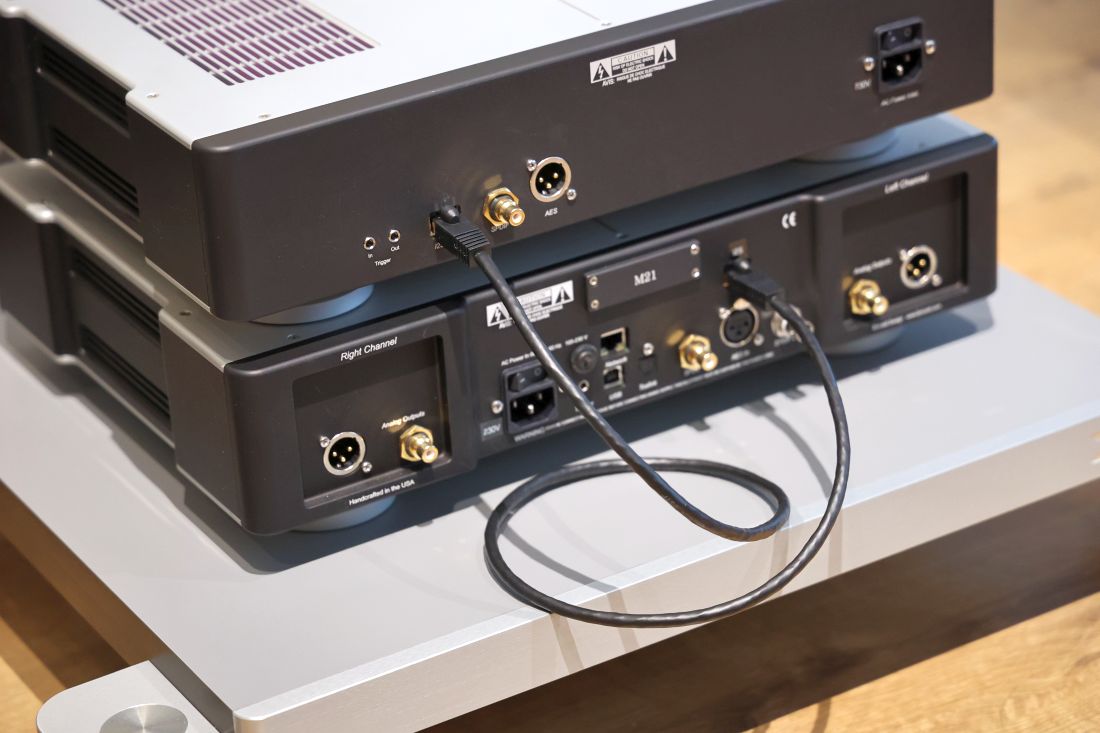
When connected via I2S, the Bricasti combo sounds just as liquid and free-flowing as via AES/EBU, but with increased solidity and bass tightness, crisper transient behavior, and an overall more confident and expressive nature. By comparison, when you go back to an AES/EBU or S/PDIF connection, these sound a little rounder and more diffuse.
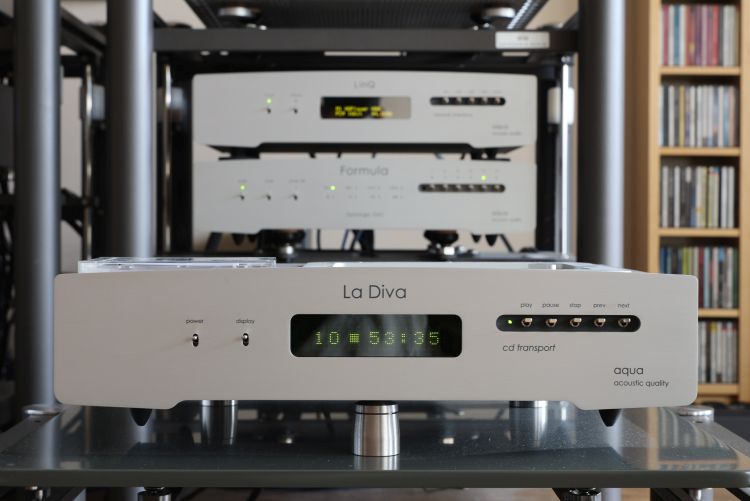
Some I2S-equipped components, such as the LAiV uDDC, have auto-sensing I2S. As such, they are potentially compatible with other I2S connections regardless of pinout. Alas, the LAiV uses HDMI connectors, whereas the Bricasti uses RJ45, making them incompatible. The Aqua La Diva M2 CD transport has I2S on an RJ45 connector, and I tried it with the M21 DAC, but alas, the DAC did not lock onto the signal, meaning the connection is incompatible.
Next: SACD, Transport comparisons, Music Server comparisons, and Conclusion

Thanks for the excellent, detailed, insightful review, Christian.
Long live CD
I hope you can write the names of the tracks you use with each review.
Kind regards
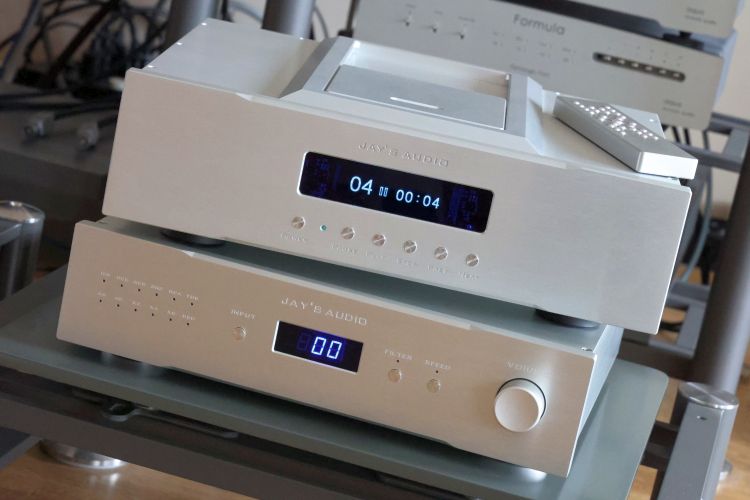
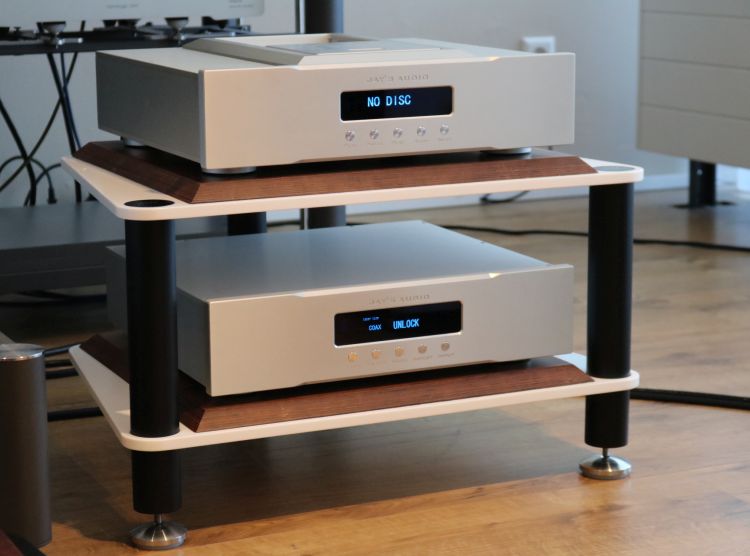
Thanks for reviewing the Bricasti M19. I’m curious to know how you would compare it with the Jay’s Audio CDMk3. .
Kind regards,
Hi Robert, these two transports serve distinct market segments at different performance levels. The Jay’s Audio CDT3-Mk3 offers very good value for money, with a smooth, full-bodied, and more organic sound than most music servers or streamers. However, it does not achieve the Bricasti M19’s high-end performance, particularly in the areas of resolution, transparency, agility, fluidity, delicacy, and air.
Thanks for your quick , helpful response. After perusing your HFA awards list I was puzzled that the Bricasti M19 was not rated as :”highly recommended” since the Bricasti M19 falls just under the Aqua La Diva which is rated as highly recommended, as is the Jay’s CDT Mk 2, which is further down on the list. This was especially so as your review of the Bricasti CDT was very positive. BTW, I am currently using the Jay’s with other Bricasti equipment. Your thoughts, please? Thank you. Robert.
HFA awards consider the price/performance ratio as well as personal preferences. Although they sound slightly different, I rate the Aqua and the Bricasti similarly highly. As mentioned in the article, the Bricasti loses a few points for not offering seek functionality, which I personally use a lot. Nevertheless, it is an excellent player, and I can still recommend it to those who do not need that functionality.
Thanks again. I did gather that from your review and rating; however I was puzzled by the Bricasti’s not having been “highly recommended,” in contrast to others. Is this due to considerations of price position?
In this case, it is down to the lack of functionality, not its price or sound. Its price is commensurate with its performance and build quality.
Thanks
I just bought a used Onkyo 7000R for 900 euros without shipping.
It’s part of their reference series, which was released in 2011.
And by the way, the modification by Hoer-wege for the c-7030 was very good. It made this budget player more resolving but nothing substantial.
Have you heard it?
Kind regards
hi Christiaan
thanks a lot for you review here. i have the M19 and M21 and connected with the I2s cabel. however I am curious to try different RJ45 cables, and FTA Metis caught my eye when I read your review. can you imagine how they would work together ? does the sound of Final Touch match the Bricasti sound in your imagination ?
best regards
Michael Gravlund
Hi Michael, I think that the Metis will match very nicely, as it offers a similarly fluid and free-flowing sound, without becoming slow or undynamic. With that, it will further reinforce the Bricasti’s sonic balance. I’d recommend keeping any I2S connection short, ideally no longer than 1 meter.
Hi Christiian
Thanks 👍😁
Yes i will only need 80 cm
Now we are talking about Final touch … I could need a power cable for M19
Any thoughts of FTA powercable here ?
I recommend reading the FTA Elara review. If my sonic descriptions appeal to you, then it could be a good candidate indeed.
hi Christiaan
after reading your fine reviews of FTA cables, I have ordered the new ethernet cable Carme and the Elara powercable too. looking forward to hear them with the M19
best regards
Michael Gravlund
Regarding the reviewer: great review, as usual (at least the beginning, as I stopped reading – see hereafter).
Many thanks to keep up the good job!
Regarding the product:
in 2026, releasing an I²S output whose pins cannot be reconfigured as to match with the I²S input of a DAC from ANOTHER brand (and thus offering a broader choice of DAC), is totally beyond my understanding.
This point only made me stop reading the review.
Orfeo
There are some really great products out there but then you see the price and have to question the value proposition. For example, is this transport really worth 8 -9 times the cost of the Onix XST20 SACD transport?
Having owned and tested many CD players and transports, I find that while recent, affordable models can sound quite impressive for the money, none so far match the exceptional performance of the Bricasti. Of course, beyond a certain price point, increasingly smaller improvements demand an ever higher cost increase, but the improvements add up and they do indeed lead to a better product.