
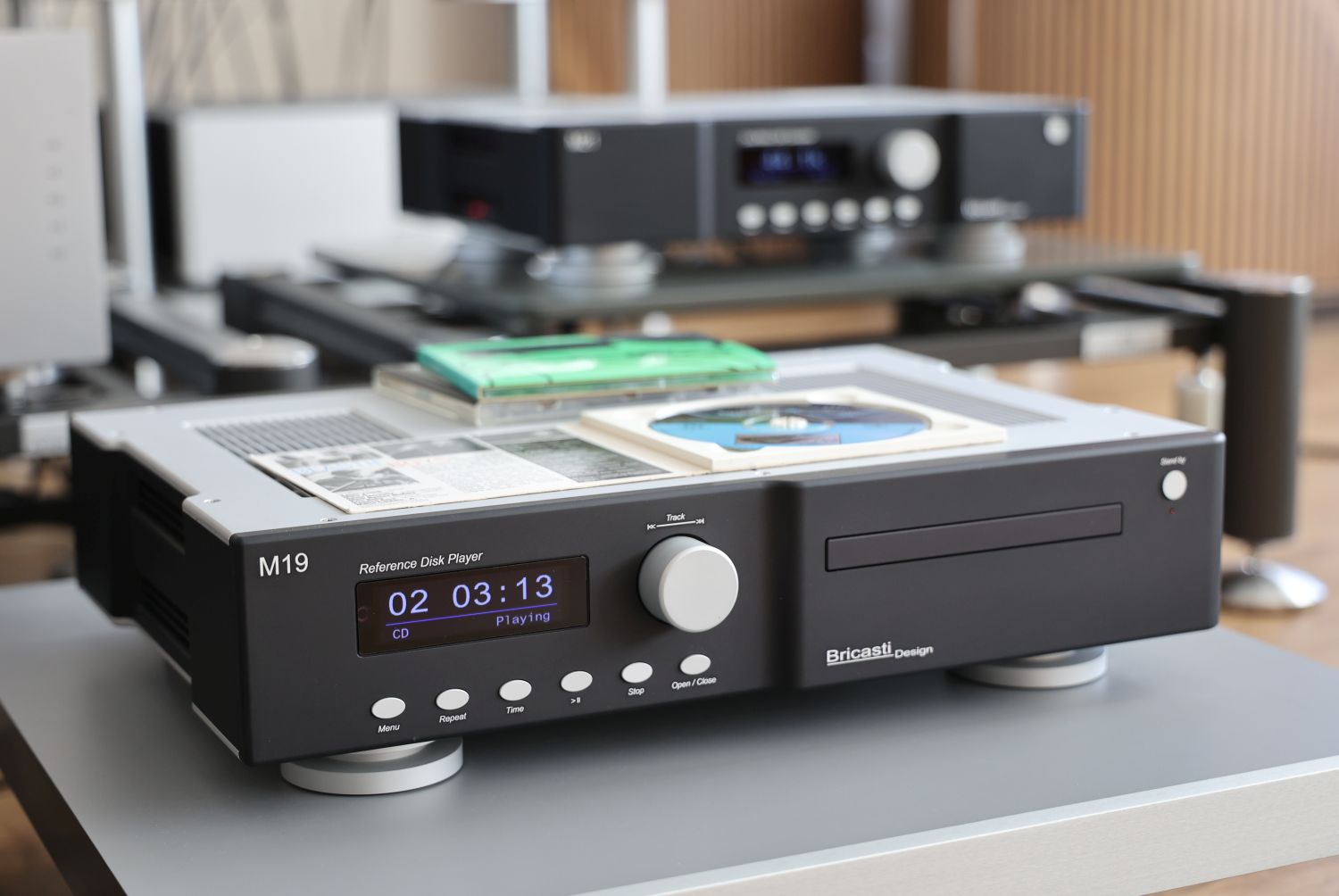
SACD
Using several Hybrid SACDs, I assessed the performance of playing DSD via I2S to the M21 DAC. The presentation is so markedly different from the combo’s regular Red Book CD playback that it is immediately apparent without direct A-B testing.
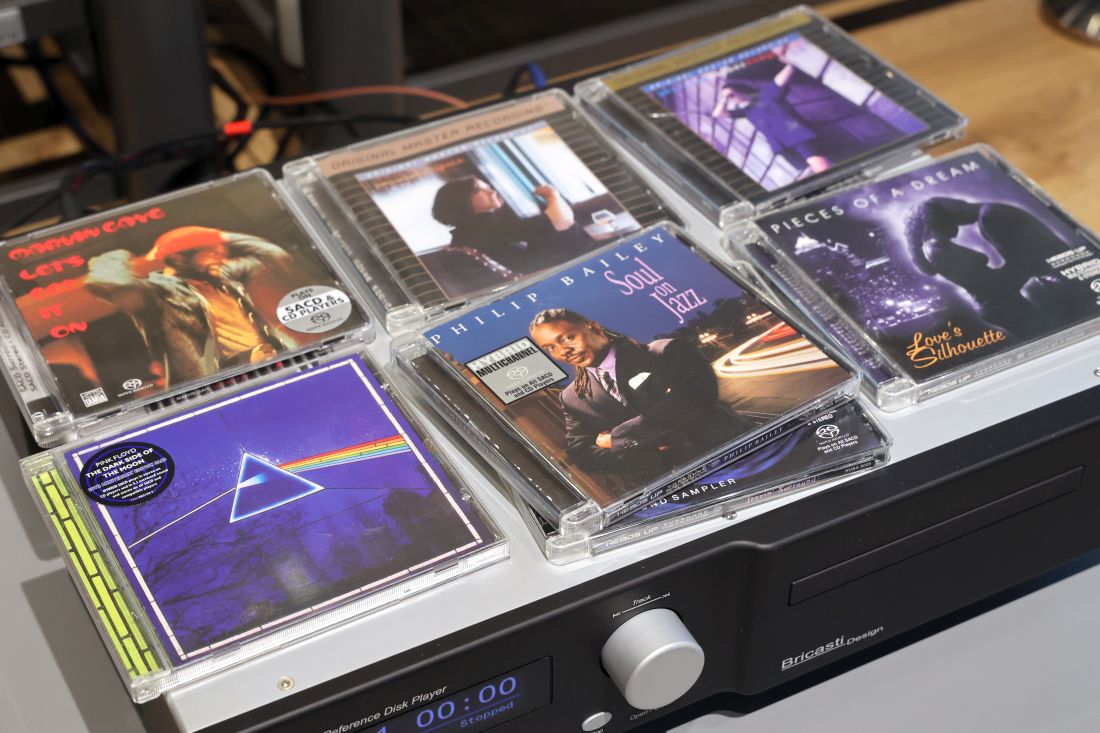
When the M21 DAC’s DSD conversion mode is set to DSD, it engages Bricasti’s proprietary pure 1-bit conversion. When playing SACDs in this mode, the combo produces extraordinarily lush, ultra-delicate, and effortlessly fluid sound. The M19 and M21 already possess these sonic attributes when playing regular Red Book CDs, but with pure DSD, any residual sense of measure, “square-ness”, and dryness (typically referred to as a “digital” signature) is truly and utterly gone. On the flipside, the DSD sound is considerably less solid and impactful in the lower registers than when playing regular Red Book CDs and using Ladder DAC conversion, making it less propulsive and more laid-back in its overall presentation. Nevertheless, the sound remains very neutral and, importantly, upbeat and intricately detailed.
With the M21 DAC’s DSD conversion mode set to PCM, DSD is first converted to PCM and then to analog by a separate Ladder DAC converter. In this mode, the bass becomes considerably more solid and impactful, with a more chiseled character, closer to how Red Book CDs sound in that regard, while still retaining the benefits of high resolution. For those focused on bass and solidity, this may be the preferred setting. However, after being engulfed by the effortlessly free-flowing sound of pure native DSD, the sound feels comparatively drier and more sober, and it can be argued that PCM conversion of DSD leaves behind a sizable portion of the SACD magic. Nevertheless, I am always a strong advocate of options that allow listeners to tailor the sound to their personal preferences, and the M19 and M21 offer complete control.
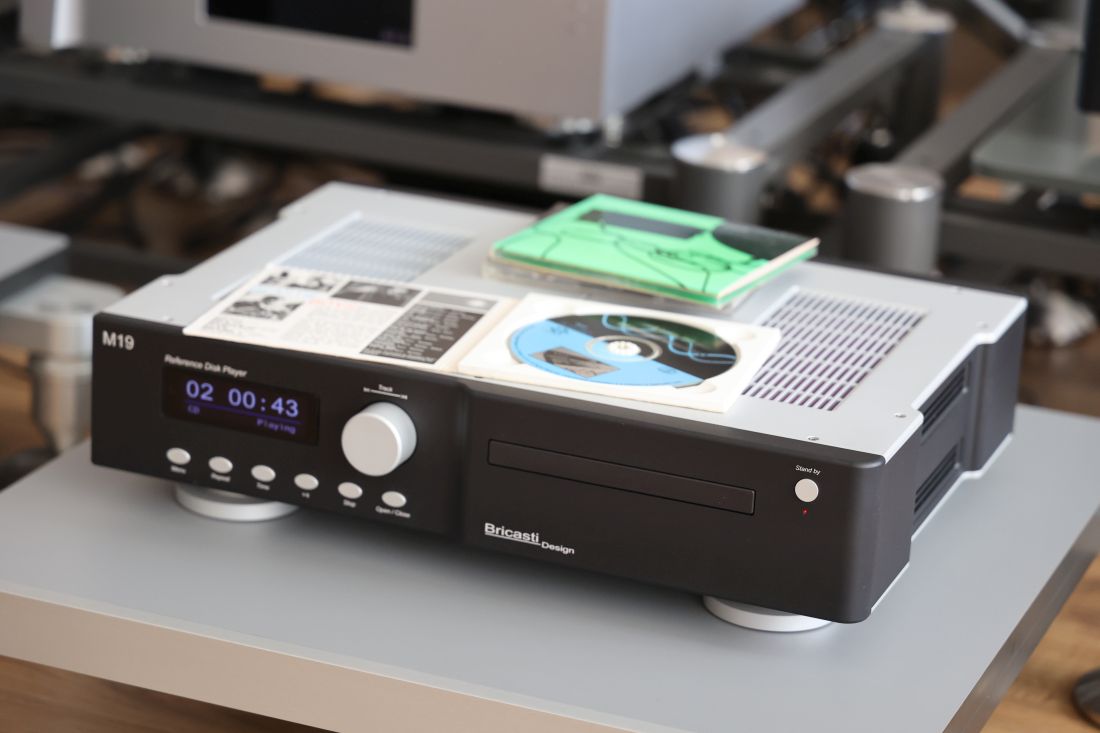
Compared with other transports
For the remaining part of this review, I will assess the M19 standalone, connected to the CH Precision C1.2 DAC via AES/EBU.
Without the M21 DAC, the M19 still makes a strong case for itself. Uniquely, it sounds both focused and controlled, as well as smooth and relaxed. It is unhurried and beguilingly liquid, yet not warm, thick, or diffuse. Its unforced delicacy and flow remind me of the best Philips Swing-Arm-equipped classic CD players, but with vastly greater neutrality and precision.
Since I still have a couple of fully-refurbished classic players, I decided to compare the Bricasti directly to a fully recapped Proceed PCD2 (CDM1 MkII mechanism) and two of my favorite classic Philips CD players. The CD614 uses a CDM4 mechanism, while the more modern CD931 uses a CDM9 mechanism. These players are all over 35 years old, and such a comparison would not make much sense if I were to use original non-serviced samples. However, these samples have recently been modified to serve solely as transport and were fully recapped, while several core components were upgraded. This review is not the place to delve into the details of hobby projects, but suffice it to say, the players have performed very favorably compared to several higher-end players.
However, with the Bricasti, it was simply no contest. The M19 is not only more neutral and technically superior to all three classic players, but it also feels even more organic and is much more engaging musically, making it the most convincingly realistic player overall.
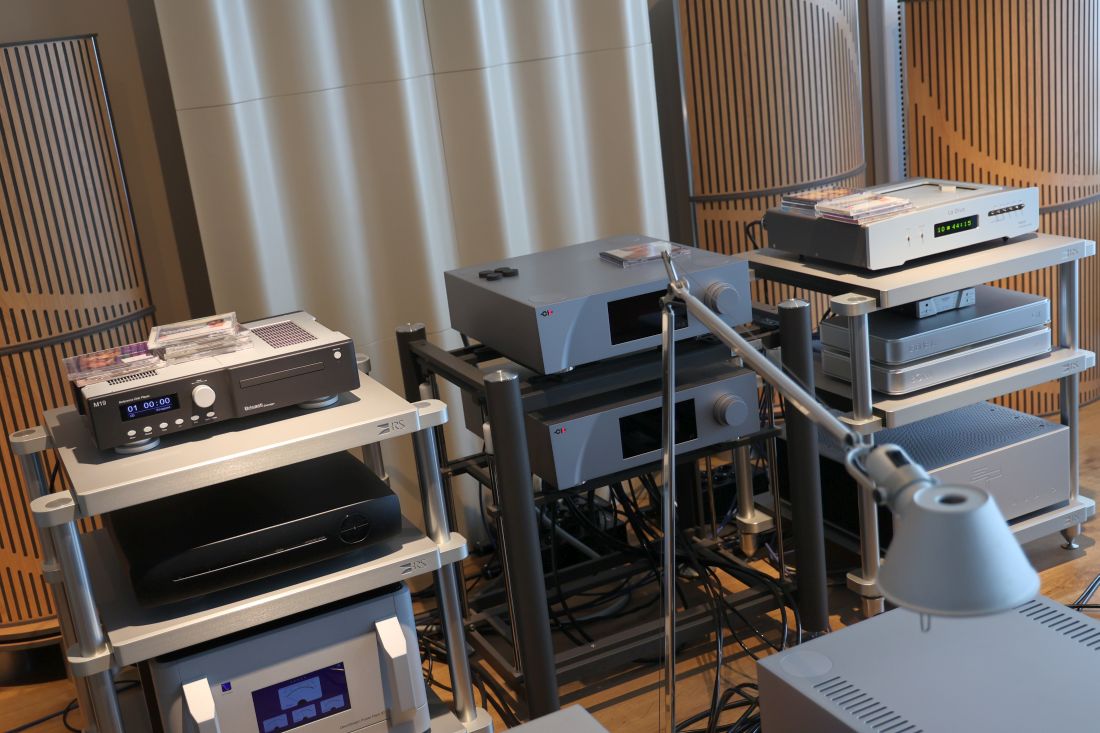
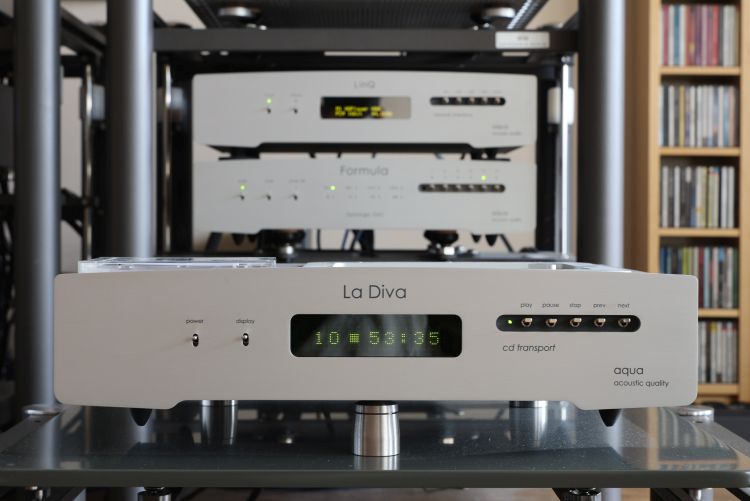
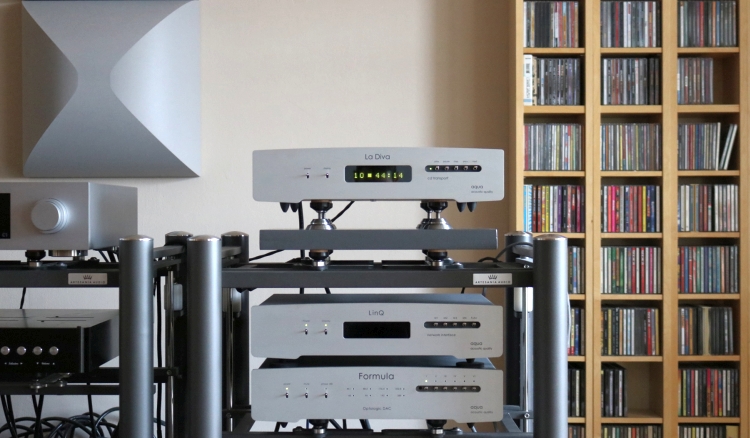
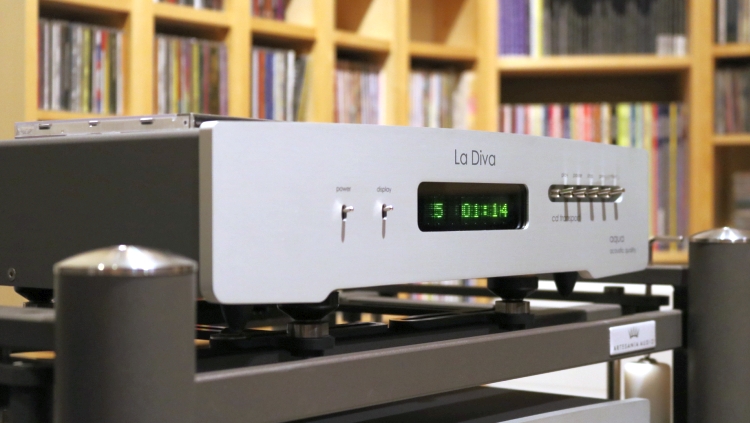
As fun as it is to let the classic players spin some discs again, when assessing a high-end transport like the M19, it makes far more sense to compare it to another high-end transport. The Aqua La Diva M2 is a much more appropriate candidate. As it turns out, these two transports sound a lot more alike than I had anticipated. Using both players on their own footers, with the same cables and on the same HRS EXR stands, and playing the same CDs, the differences are small but noticeable.
The Aqua sounds slightly earthier and more robust, while the Bricasti is slightly more fluid, rounder, and more delicate. In other words, compared to the Aqua, the Bricasti is a little smoother, and vice versa: the Aqua is a little more direct. Ultimately, both are excellent players, with subtle differences.
Compared to Music Servers
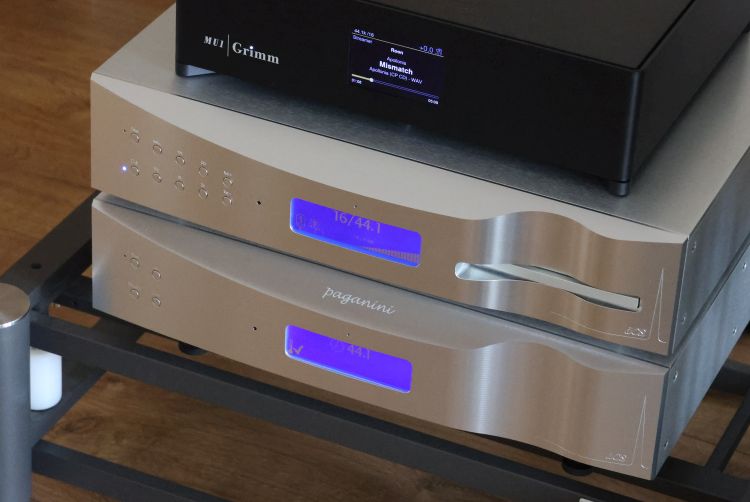
The biggest selling point of the M19 might be that it easily outperforms most music servers in its price range, particularly in fluidity, liquidity, and flow. These are aspects that are typically hard for music servers to get right. The Bricasti M19 delivers not only a very refined and emotionally engaging sound but also excels in specific parameters compared with most Roon-running servers, such as the Grimm MU1. This is because Roon software, unlike UPnP, adds complexity that, depending on the release, affects the perceived agility, immediacy, and transient behavior. The M19 is more agile, delicate, fluid, and refined. However, the Grimm has a more solid, authoritative bass than the M19, which sounds comparatively a bit lighter and leaner.
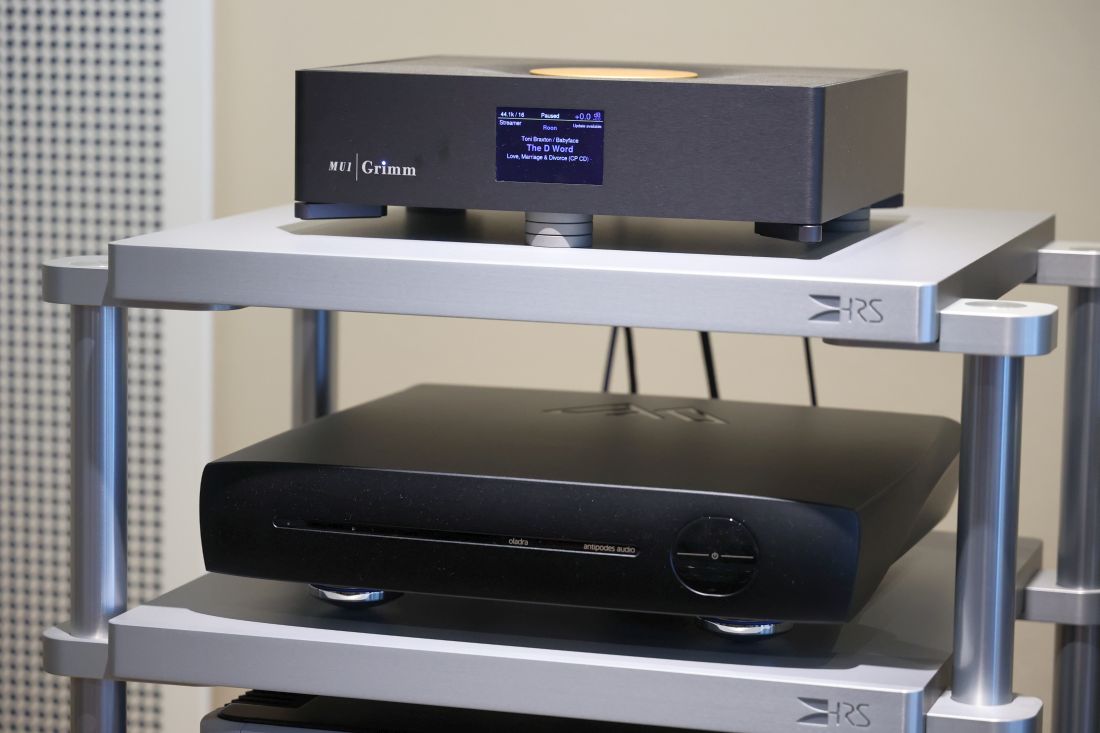
The Antipodes Oladra server delivers a smoother and more organic sound than the Grimm, and when used with MinimServer and an MPD player, it eschews the typical Roon characteristics while retaining its musicality. With USB, the Oladra is more robust in the bass than either CD transport, technically excellent overall, and very pleasant. In terms of organic feel, it almost keeps pace with CD replay on the M19, although the Bricasti is ultimately even lusher, more liquid, and freer.
When the Oladra is connected through its isolated, reclocked AES/EBU output, it ups the game and presents a more formidable challenge to the M19. The server sounds even more natural and fluid this way than via USB, while maintaining a robust, well-articulated bass. However, the M19 still holds two advantages: it remains lusher and more refined.
it’s worth noting that this server costs 30,000 Euros, making it a y good deal.
Conclusion
Whether on its own or combined with the M21 DAC, and with any of its digital outputs, the M19 offers effortless liquidity, natural flow, refinement, and an utter lack of digital or electronic signature. When used as a Red Book CD transport, the sound is very neutral, neither cool nor warm, but very natural, and gently relaxed.
When connected via I2S to the Bricasti M21 DAC, and DSD conversion mode set to DSD, the M19 engages the proprietary pure 1-bit conversion. When playing SACDs in this mode, the combo produces extraordinarily lush, ultra-delicate, and effortlessly fluid sound. Any residual sense of measure, “square-ness”, and dryness (typically referred to as a “digital” signature) that can still linger with Red Book CDs or SACDs converted via PCM to analog is truly and utterly gone.
The M19 is a sleek, minimalist player that offers whisper-quiet performance and a natural, refined sound, whether playing CDs or SACDs. However, it loses a few points for lacking a Rew/Fwd Search function.
Distributor for the Netherlands: Ohm Audio
Manufacturer: Bricasti.com

Thanks for the excellent, detailed, insightful review, Christian.
Long live CD
I hope you can write the names of the tracks you use with each review.
Kind regards
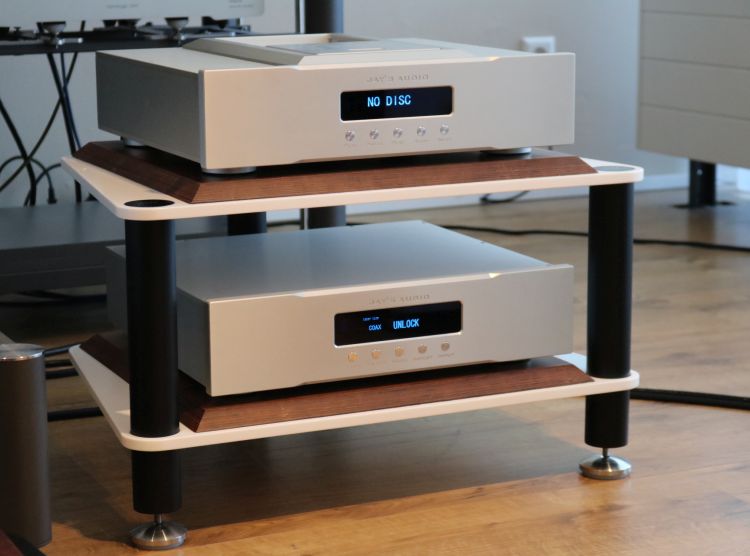
Thanks for reviewing the Bricasti M19. I’m curious to know how you would compare it with the Jay’s Audio CDMk3. .
Kind regards,
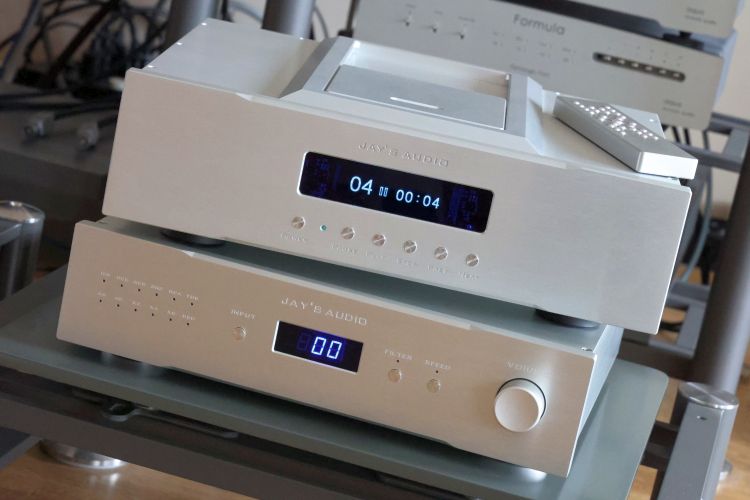
Hi Robert, these two transports serve distinct market segments at different performance levels. The Jay’s Audio CDT3-Mk3 offers very good value for money, with a smooth, full-bodied, and more organic sound than most music servers or streamers. However, it does not achieve the Bricasti M19’s high-end performance, particularly in the areas of resolution, transparency, agility, fluidity, delicacy, and air.
Thanks for your quick , helpful response. After perusing your HFA awards list I was puzzled that the Bricasti M19 was not rated as :”highly recommended” since the Bricasti M19 falls just under the Aqua La Diva which is rated as highly recommended, as is the Jay’s CDT Mk 2, which is further down on the list. This was especially so as your review of the Bricasti CDT was very positive. BTW, I am currently using the Jay’s with other Bricasti equipment. Your thoughts, please? Thank you. Robert.
HFA awards consider the price/performance ratio as well as personal preferences. Although they sound slightly different, I rate the Aqua and the Bricasti similarly highly. As mentioned in the article, the Bricasti loses a few points for not offering seek functionality, which I personally use a lot. Nevertheless, it is an excellent player, and I can still recommend it to those who do not need that functionality.
Thanks again. I did gather that from your review and rating; however I was puzzled by the Bricasti’s not having been “highly recommended,” in contrast to others. Is this due to considerations of price position?
In this case, it is down to the lack of functionality, not its price or sound. Its price is commensurate with its performance and build quality.
Thanks
I just bought a used Onkyo 7000R for 900 euros without shipping.
It’s part of their reference series, which was released in 2011.
And by the way, the modification by Hoer-wege for the c-7030 was very good. It made this budget player more resolving but nothing substantial.
Have you heard it?
Kind regards
hi Christiaan
thanks a lot for you review here. i have the M19 and M21 and connected with the I2s cabel. however I am curious to try different RJ45 cables, and FTA Metis caught my eye when I read your review. can you imagine how they would work together ? does the sound of Final Touch match the Bricasti sound in your imagination ?
best regards
Michael Gravlund
Hi Michael, I think that the Metis will match very nicely, as it offers a similarly fluid and free-flowing sound, without becoming slow or undynamic. With that, it will further reinforce the Bricasti’s sonic balance. I’d recommend keeping any I2S connection short, ideally no longer than 1 meter.
Hi Christiian
Thanks 👍😁
Yes i will only need 80 cm
Now we are talking about Final touch … I could need a power cable for M19
Any thoughts of FTA powercable here ?
I recommend reading the FTA Elara review. If my sonic descriptions appeal to you, then it could be a good candidate indeed.
hi Christiaan
after reading your fine reviews of FTA cables, I have ordered the new ethernet cable Carme and the Elara powercable too. looking forward to hear them with the M19
best regards
Michael Gravlund
Regarding the reviewer: great review, as usual (at least the beginning, as I stopped reading – see hereafter).
Many thanks to keep up the good job!
Regarding the product:
in 2026, releasing an I²S output whose pins cannot be reconfigured as to match with the I²S input of a DAC from ANOTHER brand (and thus offering a broader choice of DAC), is totally beyond my understanding.
This point only made me stop reading the review.
Orfeo
There are some really great products out there but then you see the price and have to question the value proposition. For example, is this transport really worth 8 -9 times the cost of the Onix XST20 SACD transport?
Having owned and tested many CD players and transports, I find that while recent, affordable models can sound quite impressive for the money, none so far match the exceptional performance of the Bricasti. Of course, beyond a certain price point, increasingly smaller improvements demand an ever higher cost increase, but the improvements add up and they do indeed lead to a better product.