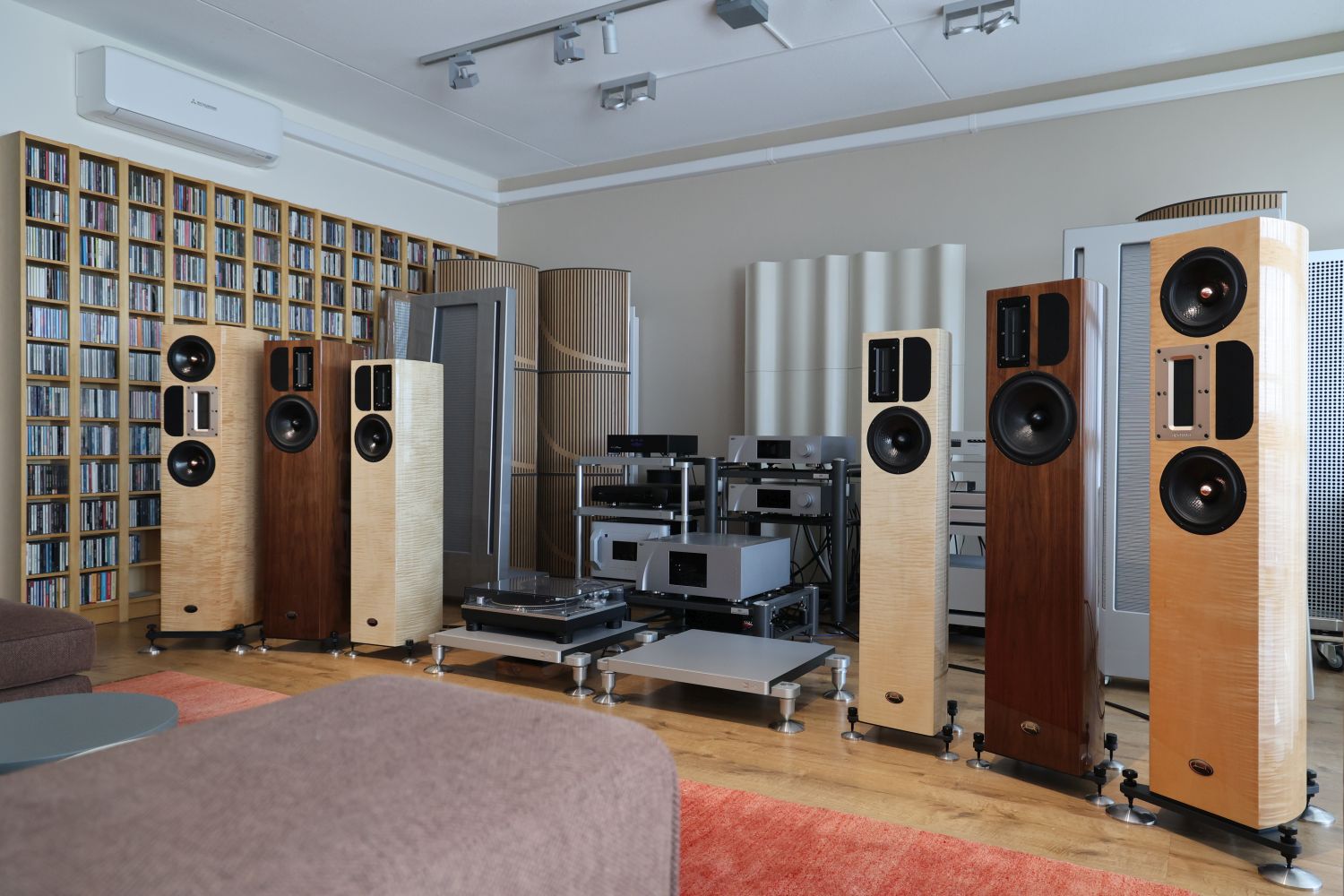
As much as I like the Armonia Evo, going back to it after hearing the perfectly adjusted Edena Evo clearly demonstrates the larger model’s advantages. Ultimately, there’s just no beating a larger woofer in a bigger cabinet. The Edena Evo’s deep, rich bass and astonishing naturalness make the smaller model sound, well, smaller indeed. All of a sudden, the Armonia Evos sound comparatively ever so slightly nasal and “squeezed” in the midrange, compared to the utterly free-flowing, free-breathing Edena Evo.
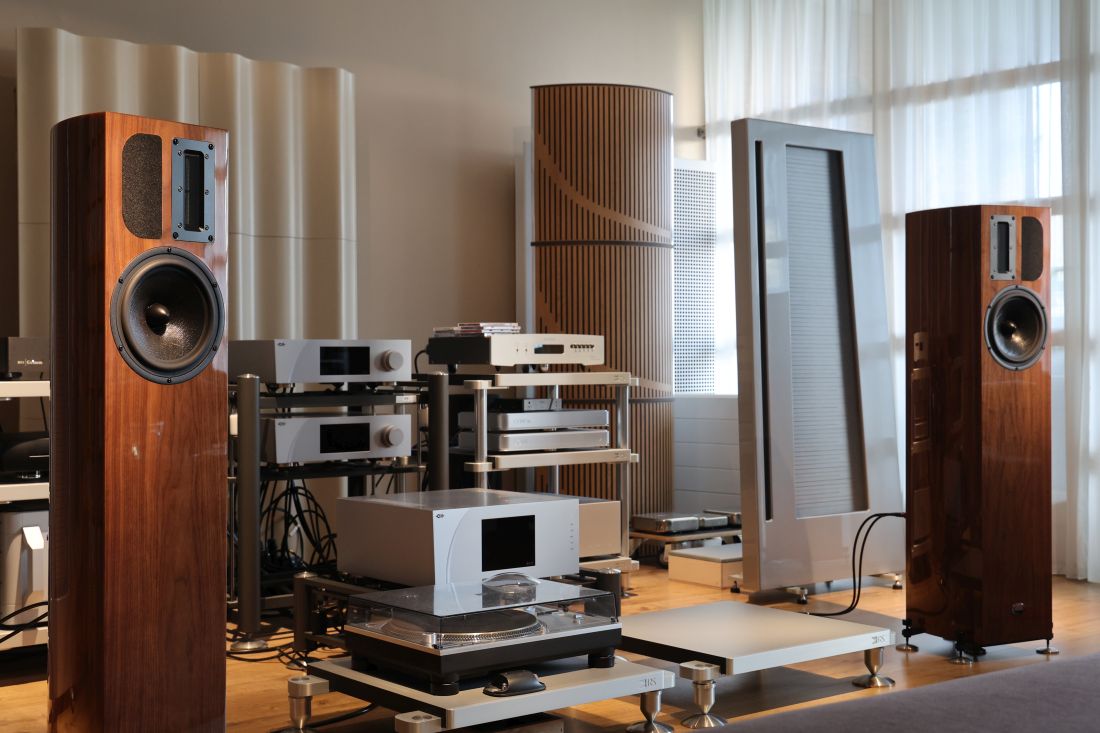
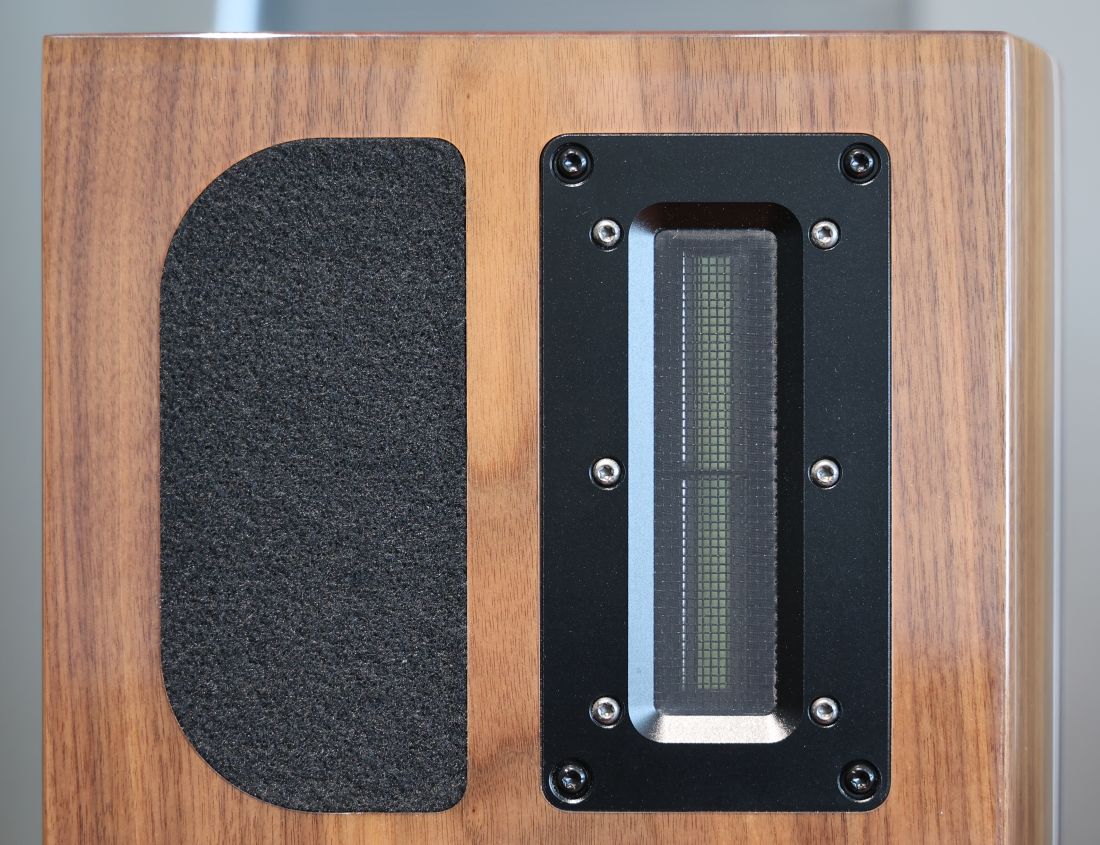
Just as with the Armonia Evo, the ribbon tweeter is seamlessly mated to the woofer, and you never hear it as a separate entity. Interestingly, the larger woofer’s unforced behavior actually enhances the tweeter’s inherent naturalness, making it even more organic and natural, while retaining super-high resolution and presenting everything you play with incredible ease. Vocals, in particular, are simply magical with the Edena Evo; even more so than with the Armonia Evo, they are effortlessly unforced and utterly natural. The Edena Evo encourages relaxed, immersive listening for extended periods. However, it is not as energetic, communicative, or exciting as some other speakers. Nevertheless, the Edena Evo offers excellent focus and very good soundstaging and -layering, better in those respects than the Apogee Duetta Signatures and Centaurs, and, from memory, on par with the Magico S1 MkII.
The Edena Evo exemplifies true gentlemanly behavior, refusing to ever raise its voice, let alone shout at you. Meanwhile, it is dynamically capable but in an unnoticeable, understated manner, never strained or brash. Because of this, the Edena Evo is more forgiving than the Armonia Evo and makes even mediocre recordings sound pleasant. On the other hand, this mild-mannered balance does not have me sitting on the edge of my seat in excitement. That’s why this model might be best suited to listeners who want to calmly relax into the music rather than to those who want to experience it viscerally or long for a thrill ride. Just as I experienced with the Graham speakers, the Edena Evo invites the listener to stop all analysis and let the music pour straight into the soul.
Listening – Adamante
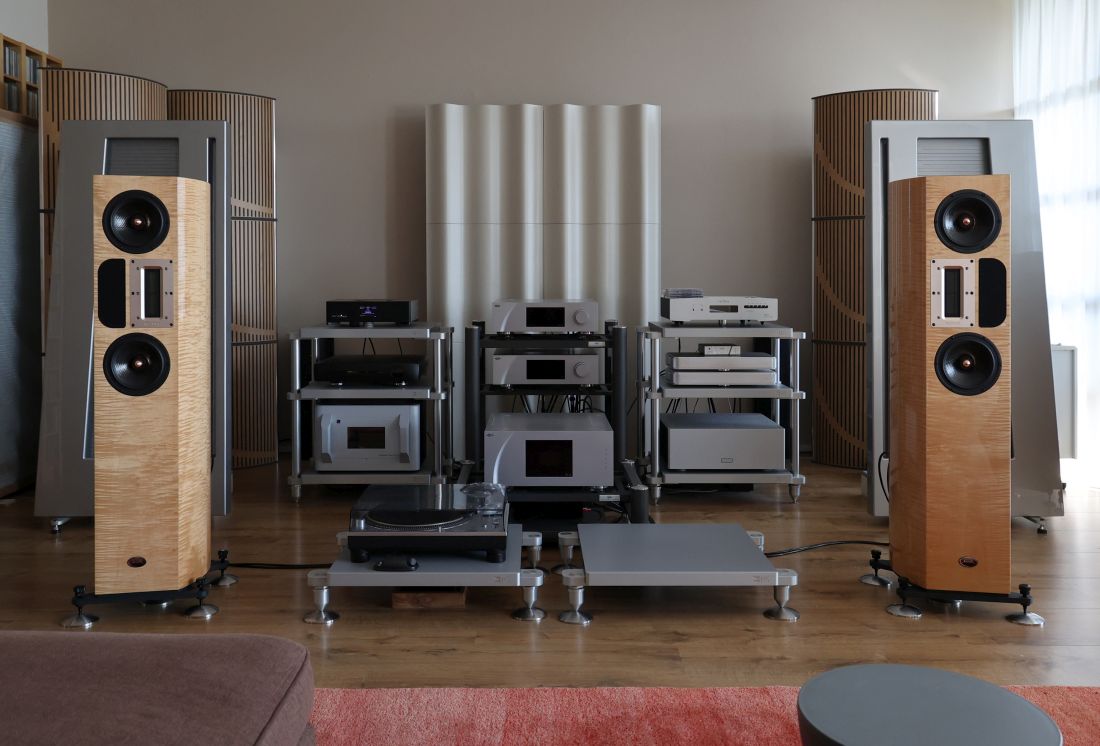
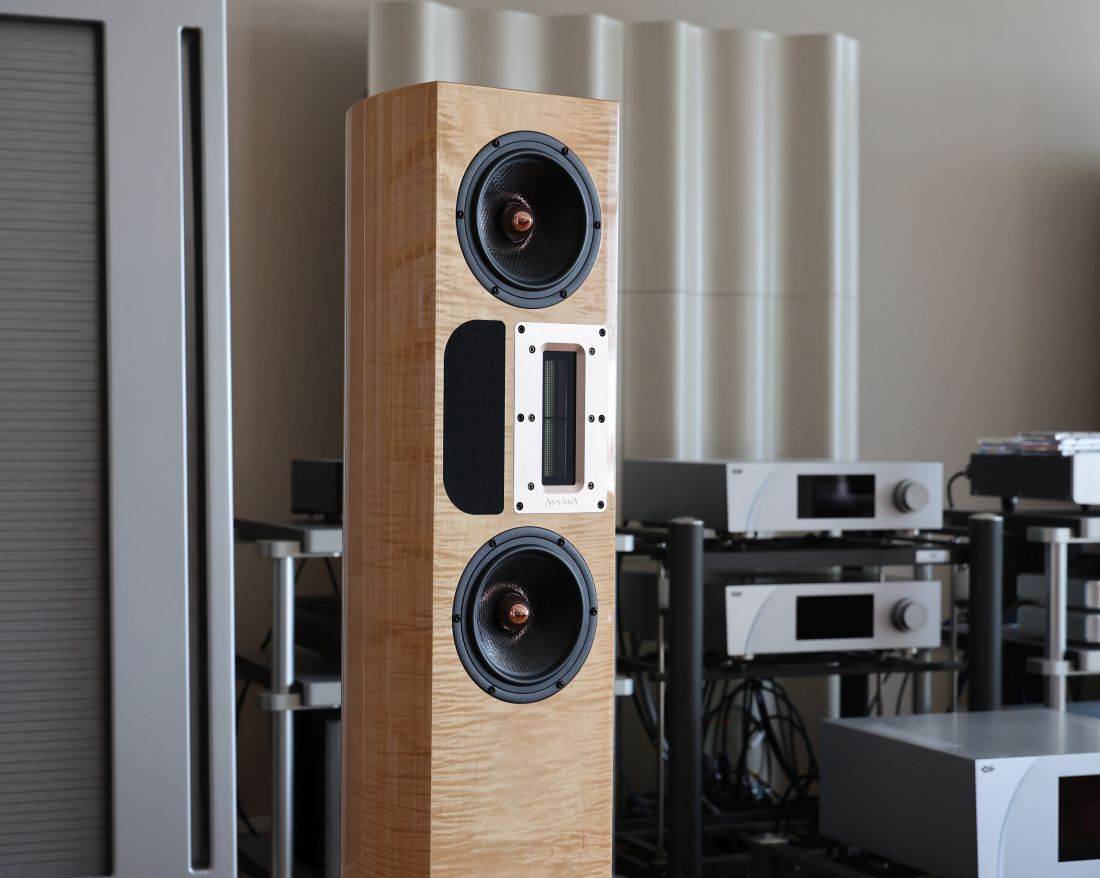
The Adamante’s added value is immediately obvious. Yes, it is quite a bit more expensive, but the increase in performance more than justifies the higher cost. Earlier, I talked about the Edena Evo not just being a better Armonia Evo, and the same is true for the Adamante, which is far more than a better-performing Edena Evo. The Armonia Evo and Edena Evo are not voiced identically, but they are very closely related, like two siblings. The Adamante, however, is a different story altogether. It stems from the same family, but rather than a sibling, it’s more like it’s the parent. Without exaggeration, the Adamante is in a class all its own. The jump in performance is so huge that I struggle to find the right words for this intro. But what it boils down to is that, with the Adamante, the level of realism is so much higher that I soon concluded it no longer sounded like hi-fi but more like a live performance.
The Adamante’s 4dB increase in sensitivity is very noticeable and, along with the speaker’s bolder, more expressive character, this called for a volume readjustment by about the same amount. Yet even at the same relative loudness setting, the Adamante clearly stands out in performance from its siblings.
Let’s start with driver integration and coherence. With the Armonia and Edena, I couldn’t hear the transition, nor could I identify the tweeters as a distinct entity, but with the Adamante, somehow, I have an even stronger sense of coherence between the woofers and the tweeter. The midrange, in particular, is even more seamlessly integrated with the bass, and the lower midrange is much more powerful and convincing. The bass goes even lower than the Edena Evo’s, and it is also much more robust and authoritative. And most important of all, the Adamante simply sounds so much more alive and energetic, and delivers the music with much greater gusto, propulsion, and vibrancy.
As great as the other two models are, the Adamante is positioned several rungs higher on the audiophile ladder. The resolution, speed, expression, transient behavior, and other audiophile parameters are clearly at a super-high level, easily as good as I am used to hearing from Apogee or Magico. Nevertheless, like the other two models, the Adamante still focuses on the music rather than the technicalities, and within a minute, you’re just listening to the music instead of paying attention to the details.
The Adamante’s timbre is also more convincing; there’s a bit more of a “wooden” tonality, in an absolutely beautiful way, without adding warmth, indistinctness, or coloration, but serving to convey a heightened sense of realism.
When going back to the Armonia Evo, it remains an admirable performer with its great all-round sound and refined delicacy, and the Edena Evo also remains special with its seductive smoothness and beguiling electrostatic-like liquidity. Whereas the Edena Evo is rich and lush in the bass and slightly warm in the lower midrange, the Adamante is not warm nor laid-back at all and is actually particularly communicative and expressive in the midrange. After listening to the Edena Evo, it seems like the Adamante’s midrange is quite prominent, while the upper treble sounds slightly darker. But listen longer, and it emerges that this is a trick of the mind, induced by the Adamante’s midrange being much more powerful than the Edena’s, and you realize that the Adamante’s midrange and treble are actually perfectly balanced.
The tweeter’s horizontal dispersion mirrors that of the Armonia Evo and Edena Evo: it is very broad and effectively covers the entire seating area. However, vertically, it is more sensitive, so you’ll want to be extra careful and precise when adjusting the speaker’s vertical alignment.
As with the smaller models, all Apogees, most other full-range ribbon speakers, and all speakers with tweeters taller than typical dome tweeters, the treble rolls off very noticeably when standing or walking around. Nevertheless, the essence of the music is still retained, and this aspect does not bother me personally.
My current reference speakers are the Apogee Duetta Signature, recently fully refurbished with the latest ribbons. Of the three Apertura models, the Adamante’s midrange and treble are most similar to that of the Duettas: crystal-clear, open and direct, and certainly less lush and romantic than that of the other two Apertura speakers. However, it sounds considerably more lifelike and convincing to me. The Duettas’ bass is surprisingly strong for a full-range ribbon speaker, reaching down to 25Hz, but it simply cannot match the Adamante’s robust solidity and impactful slam, and it actually has more in common with the Edena Evo.
The Adamante’s bass initially had me a little on the fence. On the one hand, it was superbly robust, punchy, powerful, and ever so engaging in a way that I had not heard since my Wilson Watt/Puppy system 8; on the other, it was a little rough and boomy. Could this superior speaker’s bass really be this divisive? Could it be a downside of the D’Appolito arrangement? Persevering with positioning, toe-in, and tilting, I eventually found that, whereas the Armonia Evo and Edena Evo perform in a musically engaging manner with very little effort and even in non-ideal conditions, the Adamante is clearly more of a Diva that requires careful setup to perform at its best.