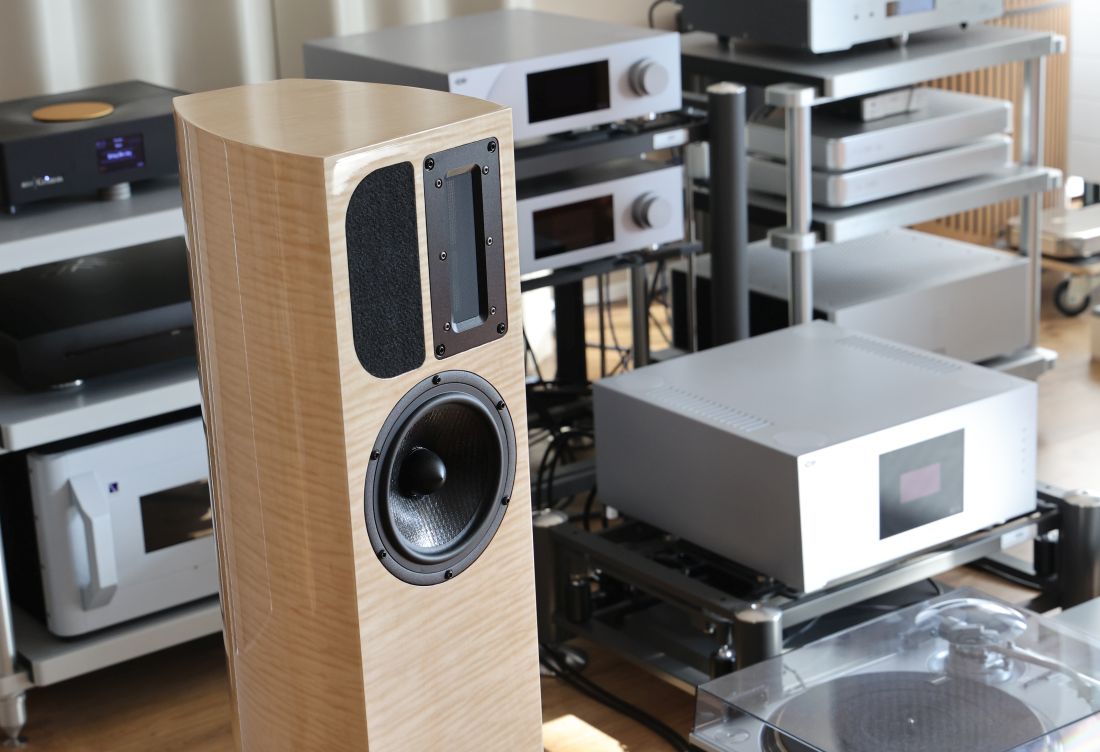
While the speakers sound open and linear across the entire 5-meter-wide seating area, as with all taller-than-dome ribbon designs, the vertical treble dispersion is limited. The vertical dispersion also affects the sound balance, depending on how high one sits. On-axis with the ears, in my case when I am sitting up a bit, the upper midrange is most open, while at my slightly lower, more relaxed sitting position, the treble and upper midrange become a little darker, and the lower midrange becomes a little fuller and more prominent. The speakers sound great either way, and I did not have a strong preference for one over the other. It’s worth being aware of, though, as this creates the opportunity to achieve the desired balance with the seating position or by subtly tilting the speakers backward or forward.
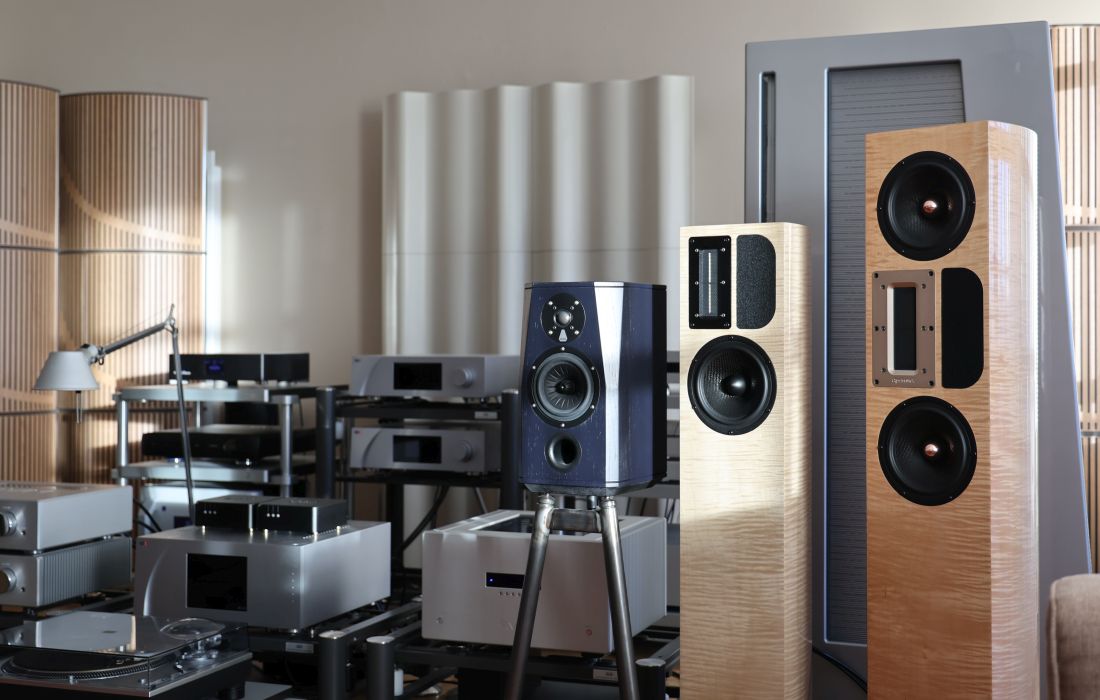
Compared to the Driade Premium Model 9, the Armonia Evo is less taut and expressive and a bit more relaxed. However, it is more elegant and sophisticated, with a sweeter midrange and considerably airier, higher-resolution treble that is particularly easy on the ear. The difference in presentation can lead to the impression that the Armonia Evo is not very dynamic, but after listening for a while and reacclimatising, the Armonias reveal themselves to be more dynamic than they appear in a direct comparison. They are not introverted or restrained, just more mild and friendlier. A floor-standing speaker usually provides deeper bass, and this is true for the Armonia Evo as well. Its bass is fuller than that of the Driade monitor, slightly more relaxed, and goes deeper, while offering very similar precision and speed.
Although it is very neutral and offers superb resolution, it does not function as a magnifying glass or an analytical tool. Rather, it always puts the music first and gets straight to its soul. Even in comparison with larger and more costly speakers, the Armonia Evo remains an excellent performer that is very easy to fall in love with. It’s a small miracle that it can achieve such highly refined performance at such a relatively modest price point.
Listening – Edena Evolution
Seconds into hearing the Edena Evo, it’s clear I had severely underestimated this model. Judged solely on specifications, the Edena Evo and Armonia Evo appear identical, with the only difference being the larger woofer and cabinet. While that may be technically correct, the sonic difference between them turned out to be very significant.
Like the Armonia Evo, the Edena Evo has a huge heart and is immediately pleasing, satisfying, and emotionally involving. There is definitely a family “character” most evident in the upper midrange and treble, which is no surprise, given that the same tweeter and crossover are used. Perhaps also unsurprising is that the bass is considerably fuller and goes much deeper than that of the Armonia Evo. But that’s not the end of it, as the bass is not just much more voluminous, but the Edena truly sounds like a much larger speaker. The bass has more ease and is more relaxed, and the lower midrange is even more natural. The overwhelming feeling is of a big, entirely unstressed, natural, and totally free-flowing sound.
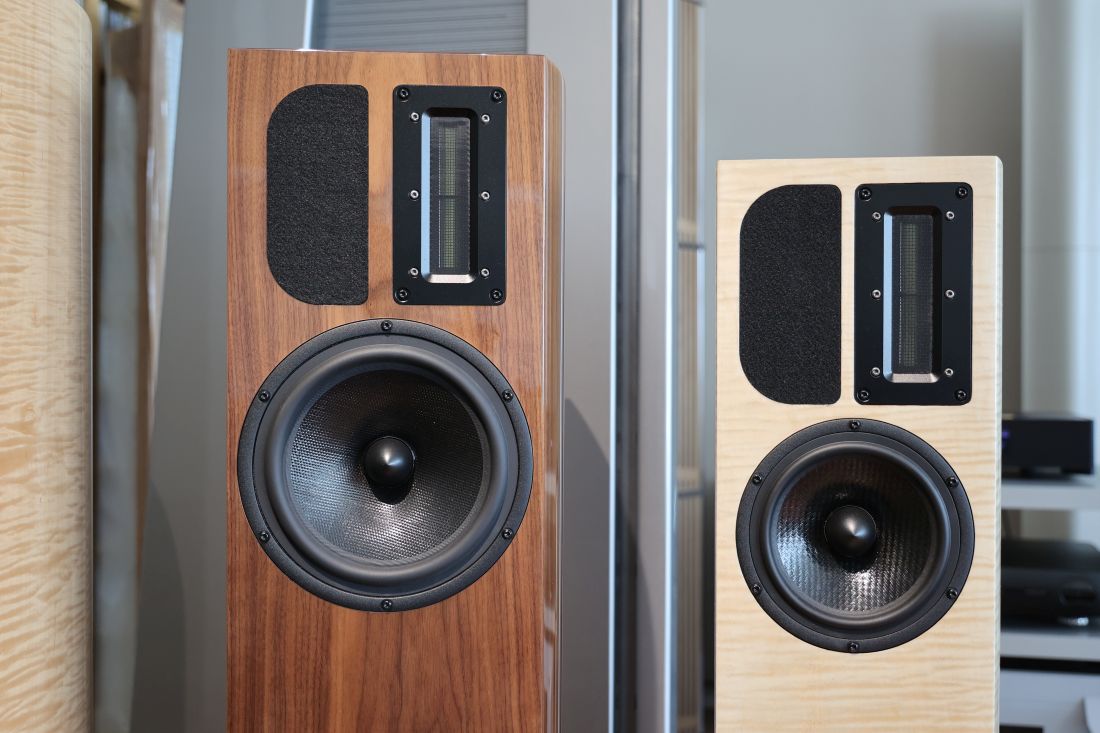
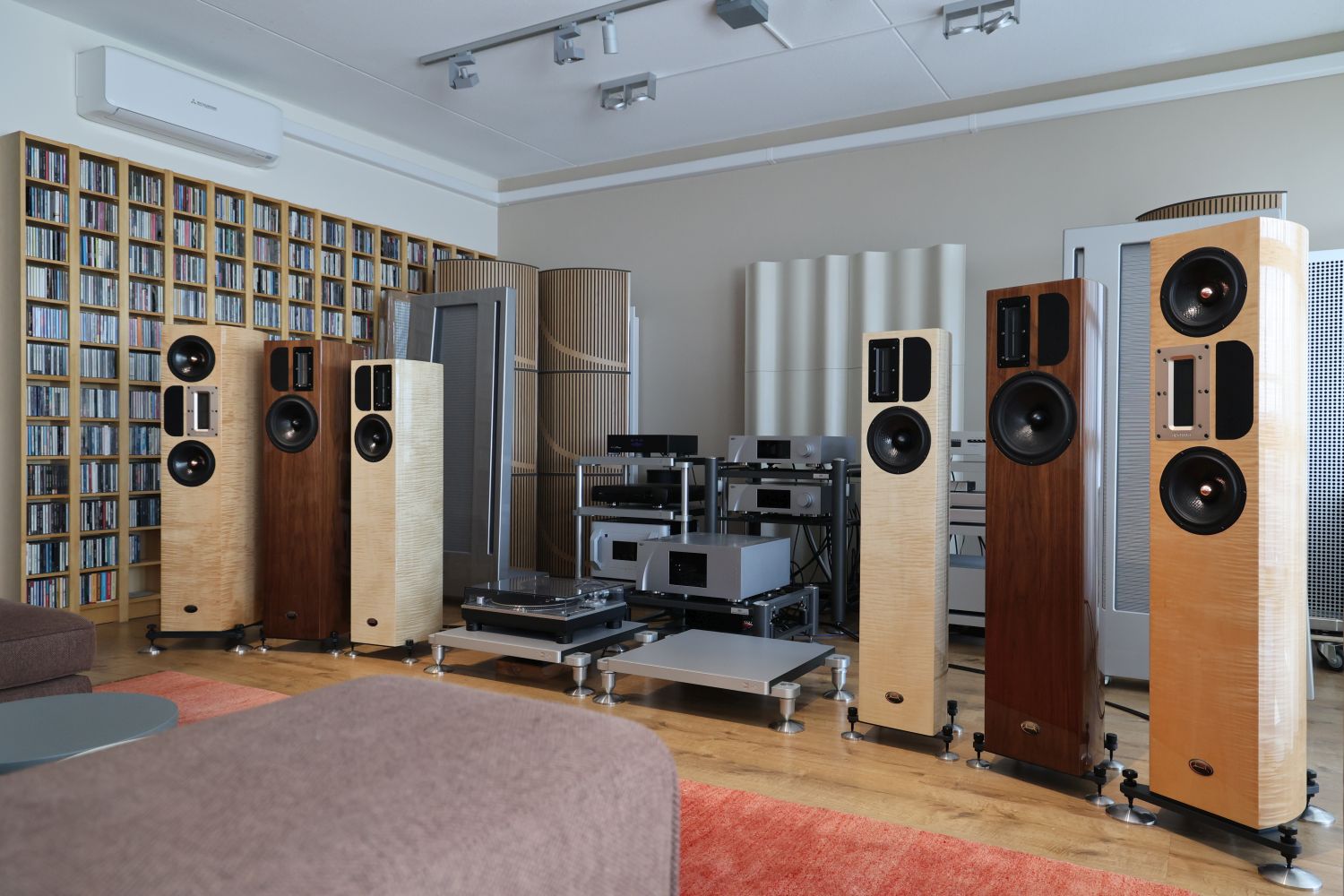
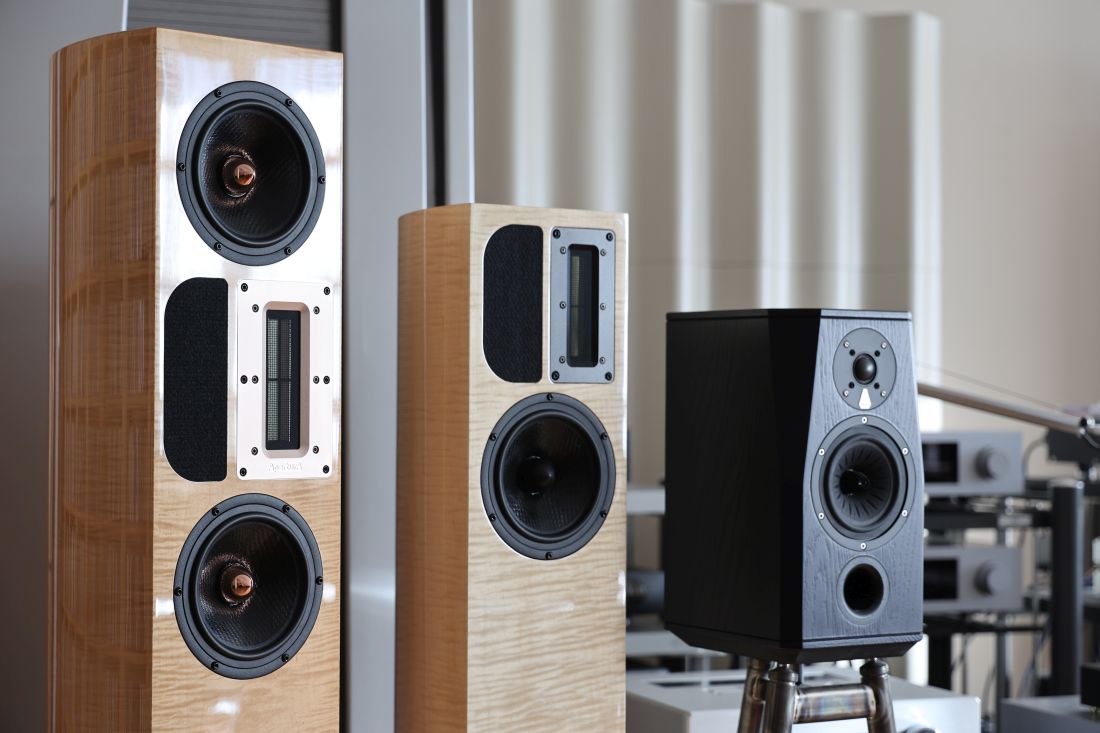
Edena Evo on the left, Armonia Evo on the right
The Edena’s focus is excellent, and the sound breathes entirely freely and does not stick to the speaker cabinets. In these respects, it performs similarly to the Armonia Evo. The Armonia Evo already has no hardness, but the Edena Evo is smoother in the lower midrange, even more liquid, and more forgiving. Whereas the Armonia Evo is sweet and relaxed yet essentially neutral, the Edena Evo is not just more voluptuous in the bass, but also harmonically richer, riper, and a little warmer. It reminds me of the BBC-style Graham Audio LS5/9 for its round, relaxed bass and warm, captivatingly natural midrange. However, whereas the LS5/9s trade off resolution and precision for their musical sweetness and warmth, the Edena Evo offers excellent resolution and a deliciously airy, refined presentation. Also, whereas the LS5/9 did not have particularly precise focus or soundstaging, the Edena Evo performs on a very high audiophile level in these aspects while remaining gorgeously natural.
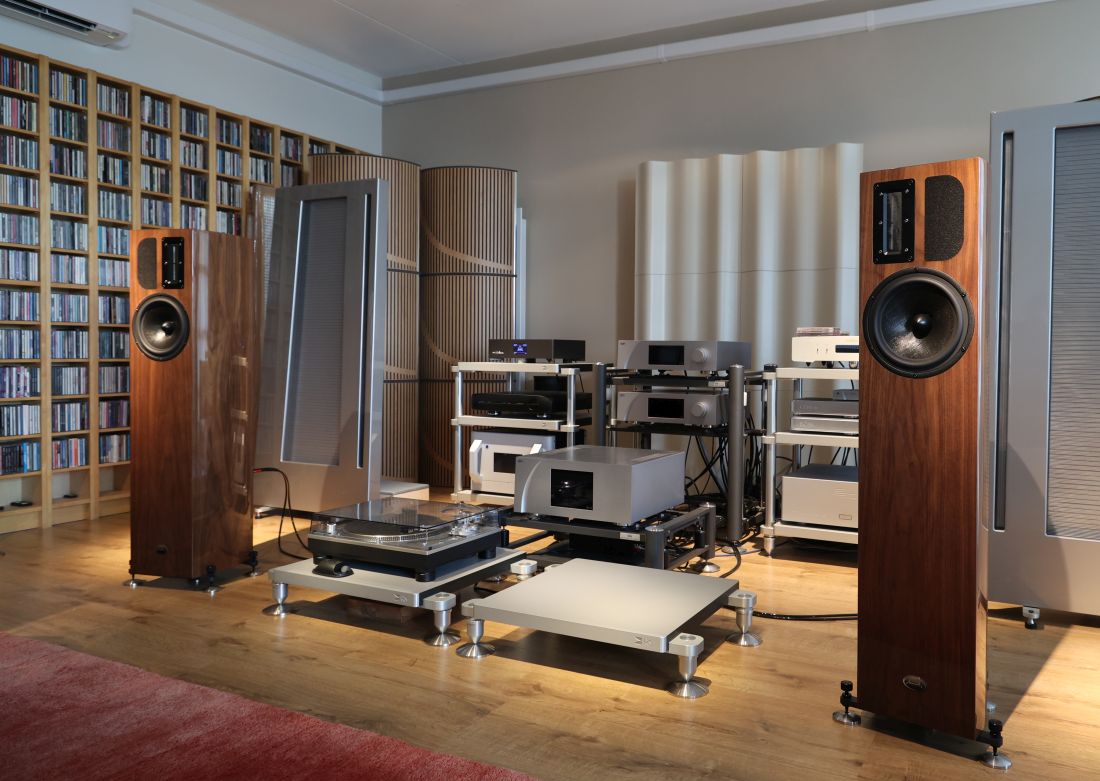
Considerably more so than with the Armonia Evo, neglecting the importance of the mechanical grounding system and using the central cone seriously undercuts the speaker’s performance. Used only on their four outrigger footers, without the center cone, the speakers are very laidback and lack pacing, snap, dynamics, and expression. Reconfiguring the speakers to be supported primarily by the center cone yields significant improvements, addressing my initial reservations about bass grip and midrange reticence, and achieving what I feel is the right balance between a technically correct and a musically pleasing performance, although the Edena Evo remains richer, sweeter, and more relaxed than the Armonia Evo.
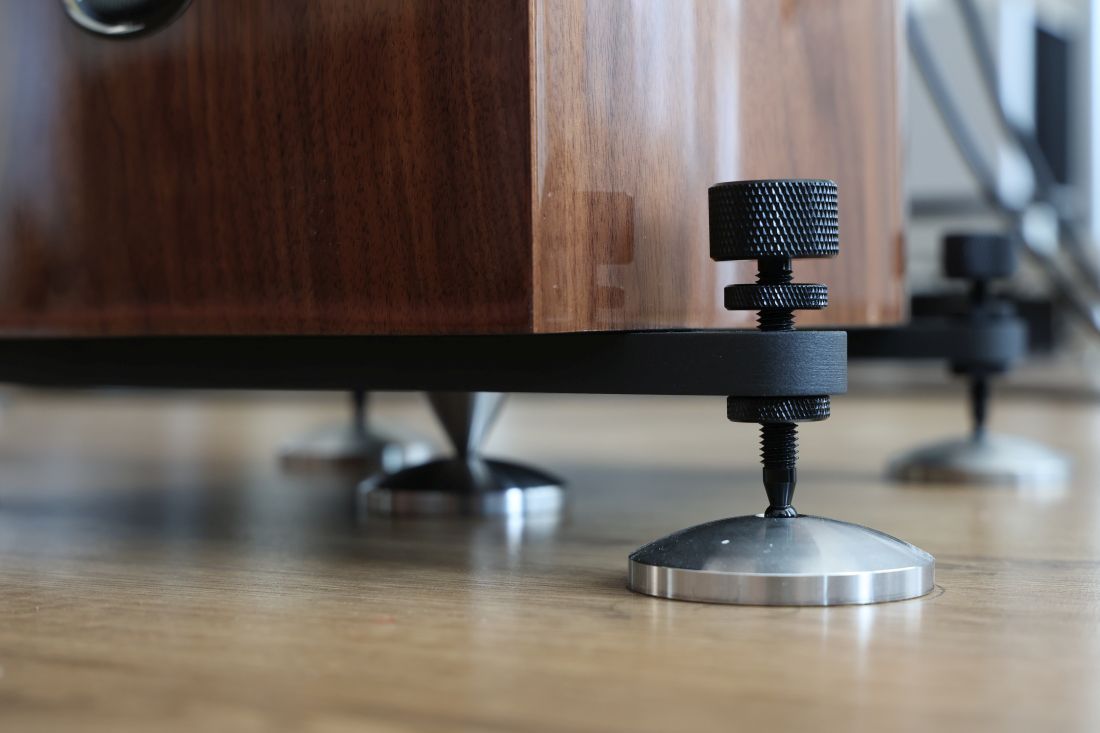
It’s definitely worth experimenting with the footer adjustment, but it can be tricky to get precisely right. The rounded-tip footers/spikes are supplied with two nuts, and to achieve maximum solidity, I tightened one nut on top of the outrigger and one underneath. However, just as with the Armonia Evo, that proved not ideal, as it took away some of the speaker’s alluring free-flowing naturalness and made it more stringent. A good place to start is by having both nuts only loosely against the outriggers. Improvements in tightness and control can be achieved by tightening one of the two nuts by hand. Don’t use pliers, as this will go against the mechanical grounding principle. In essence, the speakers should rest on the center cone, using the outriggers only for balance. Care should be taken to ensure that successive adjustments to the four outer footers do not inadvertently reduce support for the center cone.