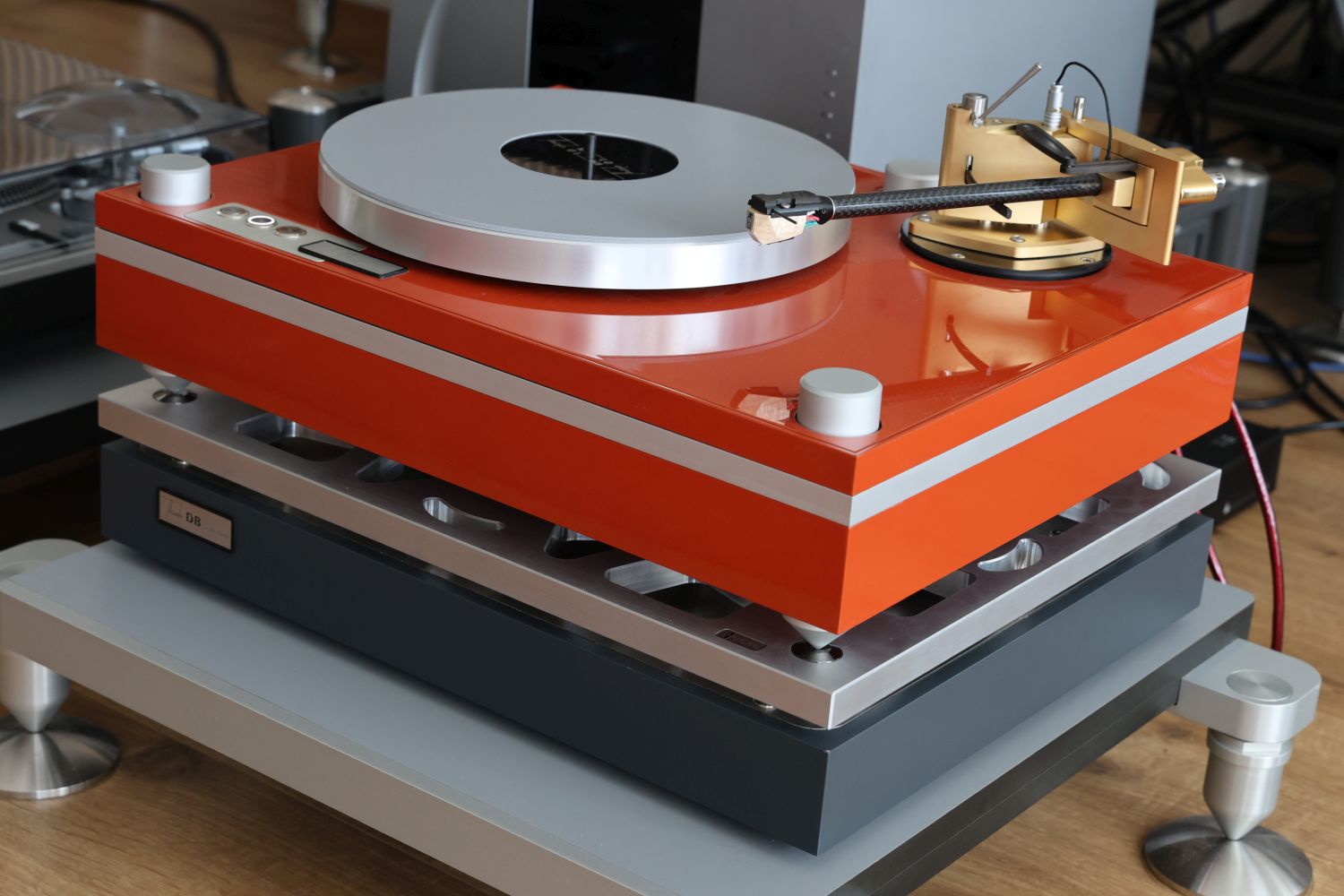
Thiele TT01 Zero Tracking Error Turntable with Thiele DB and DW01

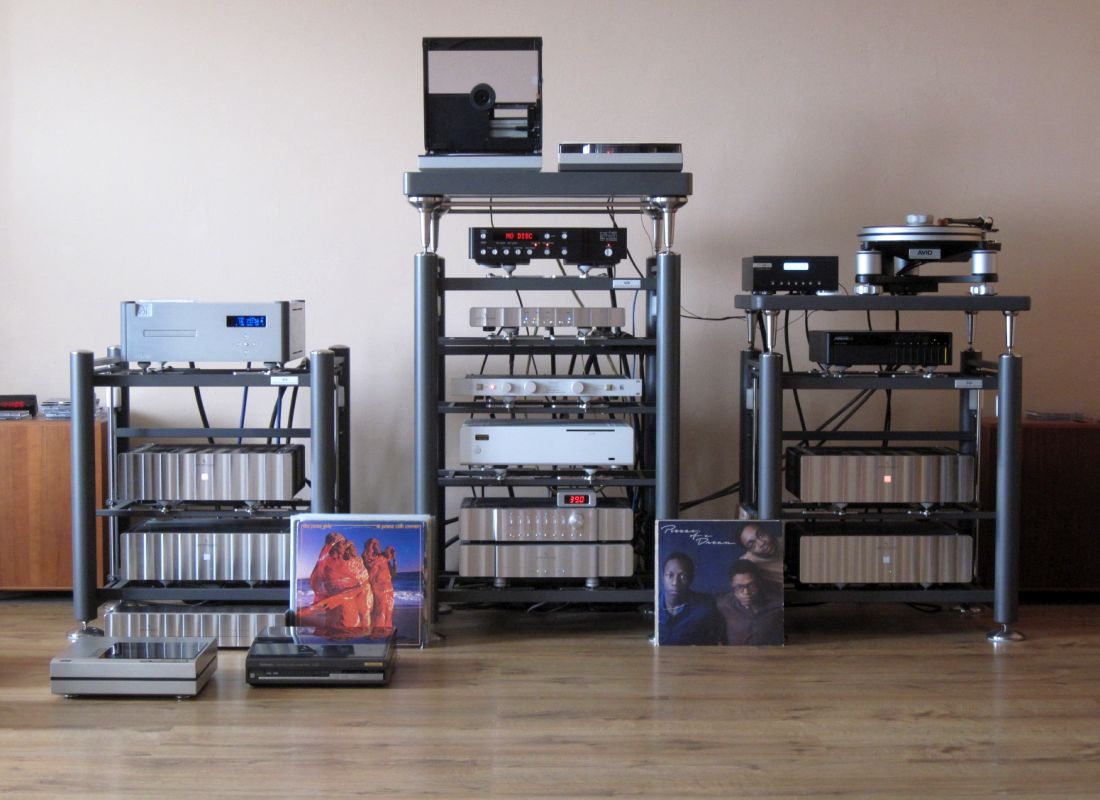
From left to right: Technics SL15, J3, SL10, SL7, and AVID Volvere.
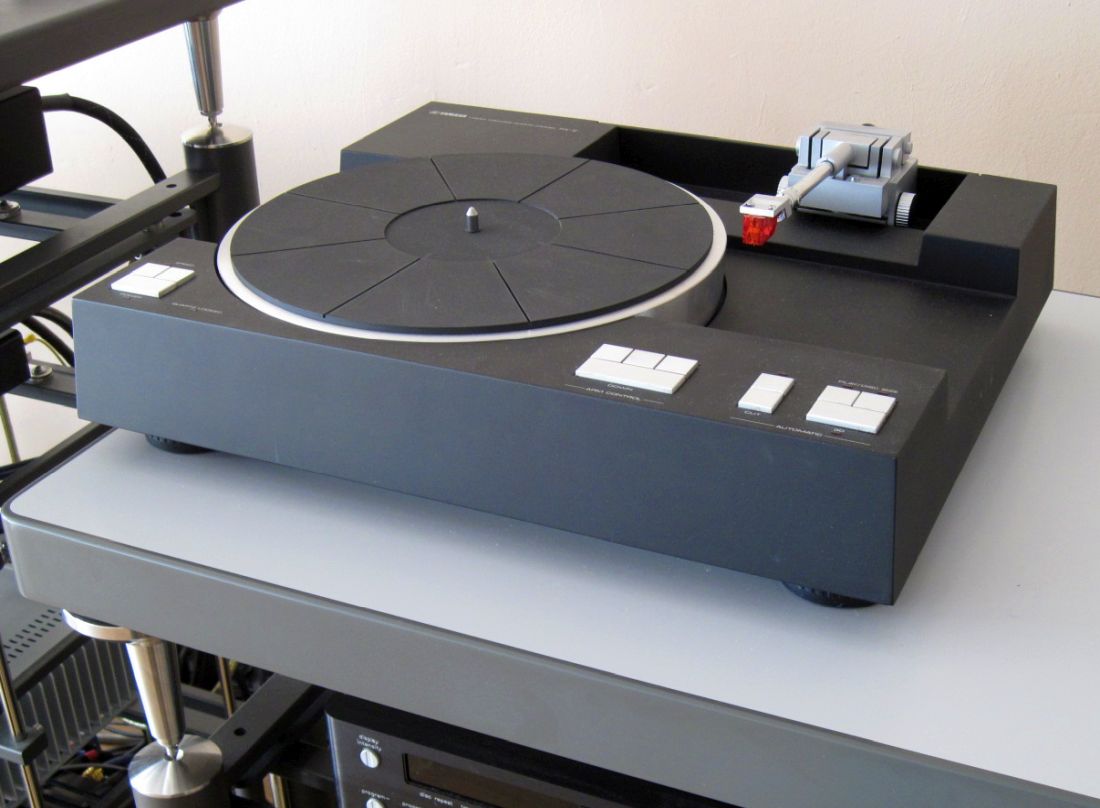
Yamaha PX-2
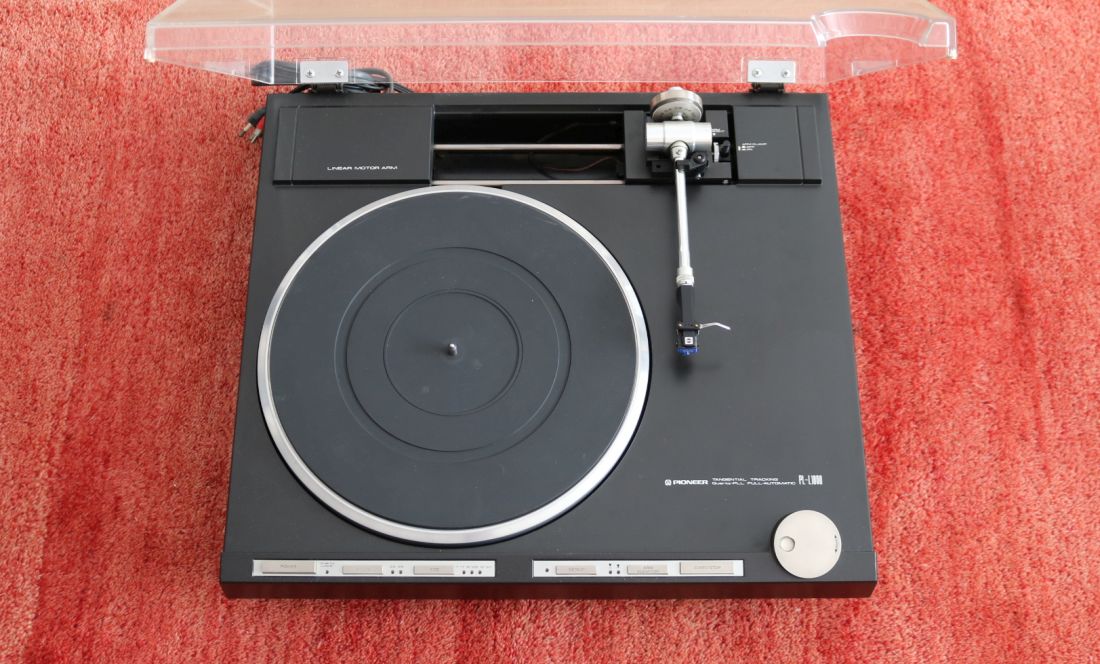
Pioneer PL-L1000 (below: with ViRa Aidas Panzerholz).
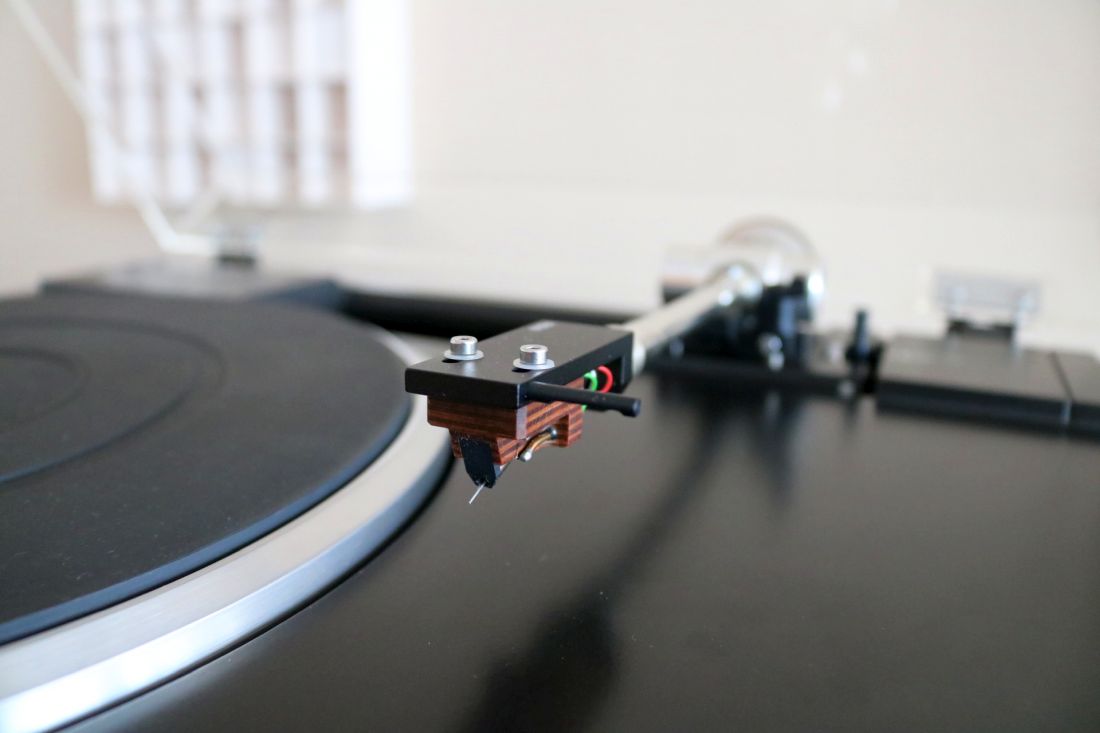
I’ve listened to a few turntables with air bearings, including the Clearaudio TT5, Cartridge Man’s Conductor Linear Arm, Bergmann Magne, and Holbo, and I have owned multiple classic turntables with powered tangential arms, such as the Pioneer PL-L1000, Yamaha PX-2, and several of the LP-sized Technics players, including the SL-7, SL-10, and SL-15. To my surprise, these “cute” automatic turntables actually proved considerably better than expected, although they were ultimately no match for a good standard pivot-arm turntable such as a classic Thorens TD-160.
All these systems work as intended, but most air bearings require a light arm with a delicate construction and an air pump that can be audible, particularly with heavier arm assemblies, while motorized designs are inherently complex. Sonically, air bearings tend to have a light-footed character, whereas motorized arms tend to sound earthy and robust. However, all these motorized designs rely on a small tracking error to detect arm movement and adjust accordingly. In essence, these arms “crawl” across the record. The idea is to allow a small error margin across the entire record, rather than reducing tracking error to zero only at two defined locations and letting the error swing increasingly wide around them, as with pivot tonearms. Also, one has to wonder whether the start-stop nature of the movement produces audible artifacts, whether through power-supply modulation or direct mechanical resonances. Ultimately, while these purely linear systems work, they depend on complex mechanisms.
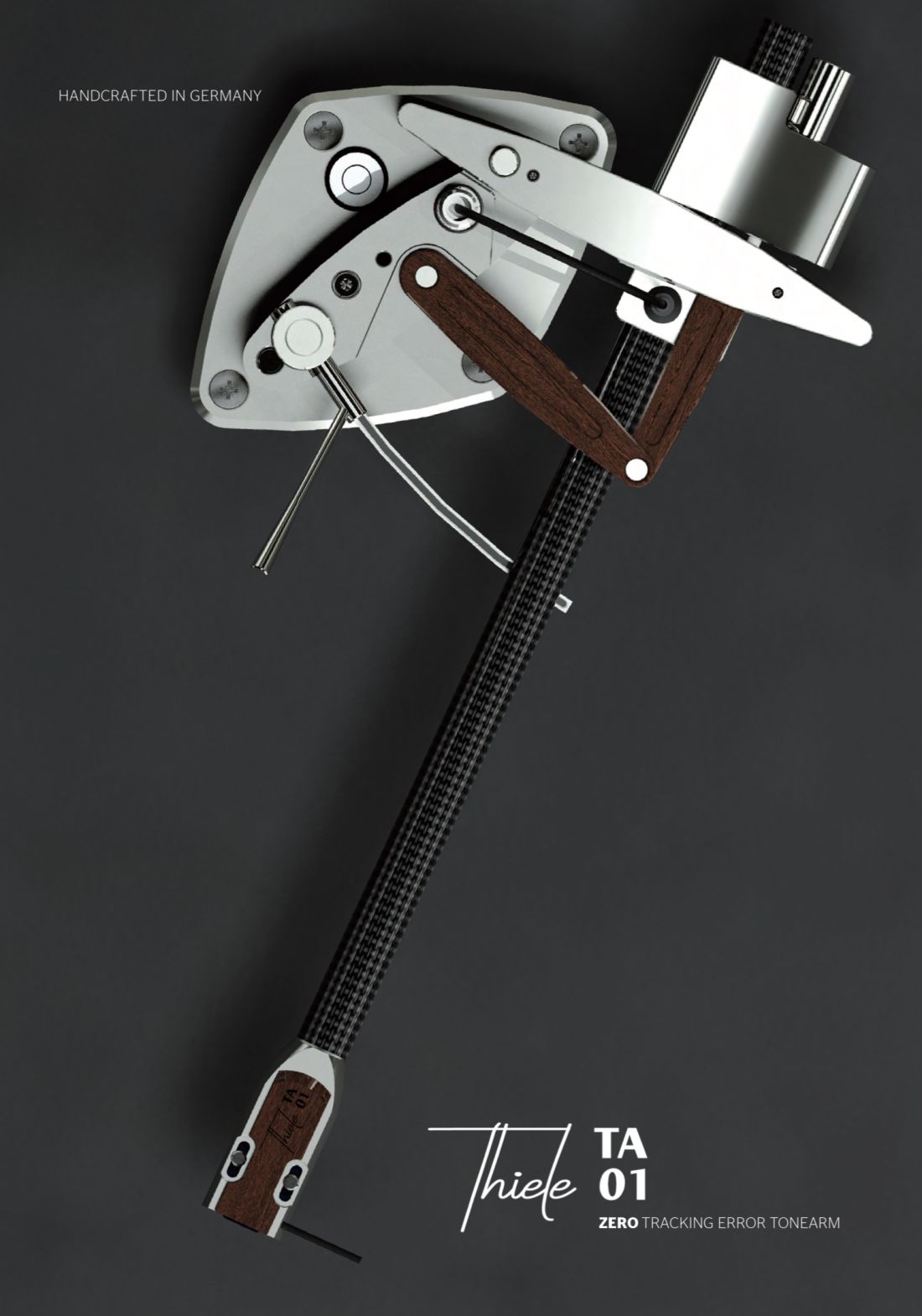
Thiele TA01 Zero Tracking Error Tonearm
With the TA01 Zero Tracking Error Tonearm, Helmut Thiele created an arm that cleverly combines the advantages of the two traditional methods as described above. The TA01 Zero Tracking Error Tonearm uses a pivot design with a single, defined solid mechanical grounding path, but instead of pivoting around a central location, it has two pivot points that allow the arm to move forward as the stylus tracks inward.
This complex motion combines the exact and firm guidance of a pivoted tonearm (robustness, full tonality, and solid bass) with the advantages of a linear tracking tonearm (zero tracking error). This design enables precise cartridge guidance, with a lateral tracking angle error of less than 0,036 degrees.
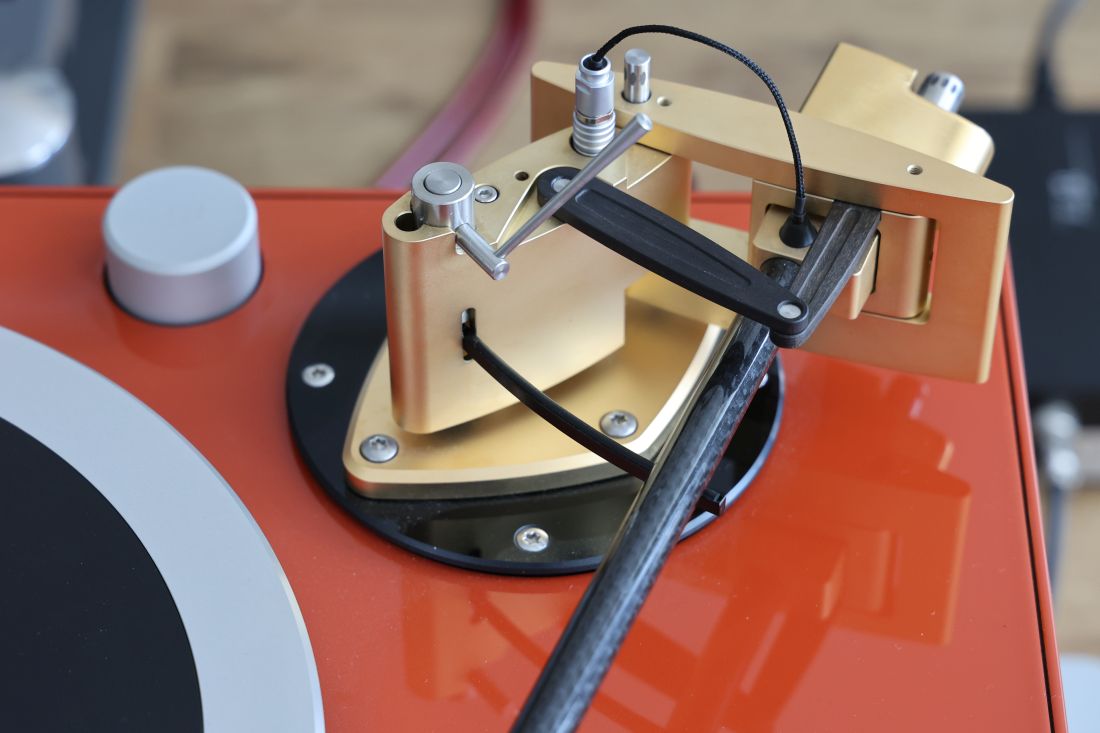
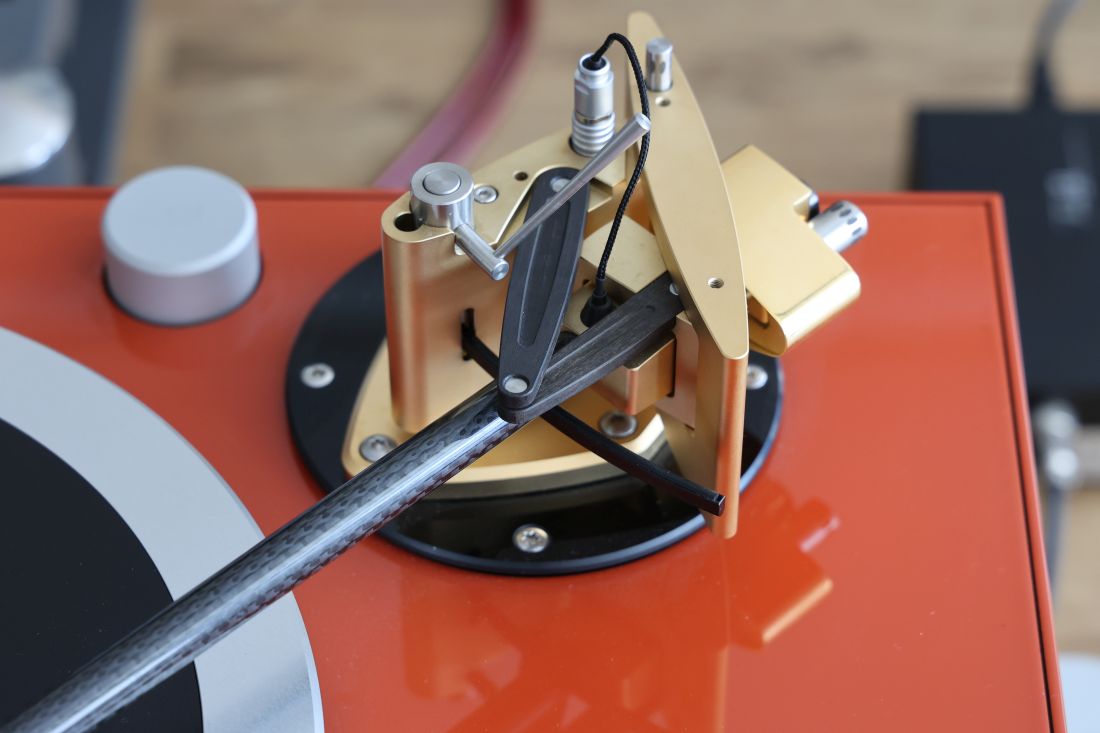
Zero Tracking Error is a major goal, but it is only one of the two main focus areas of TA01. The second important aspect is resonance. Helmut showed me measurements made with a laser motion sensor during the design of the Thorens TP92 tonearm, where different frequencies excite the arm tube into movements one would not think possible. Armed with that knowledge, the arm was damped and braced with a ring in the middle of the tube to counteract certain resonances.
In the TA01, two Carbon-Fiber tubes are used with different resonance frequencies, one inside another, and the gap between them is filled with a 2-component gel for optimum damping.
The TA01 is not the first of its kind; the Thales tonearms spring to mind. When I asked Helmut about this, he confirmed that the Thales Simplicity arm actually inspired him to create his own design. Helmut was fascinated, but felt that the pivot points at the headshell side were undesirable. Thus, he began developing a design that combined the stability of a regular pivot arm with perfect tracking.
The result is the Thiele TA01, which is the first tonearm in which the headshell is rigidly fixed and the entire tonearm assembly, including the counterweight, swings back and forth on a single solid pivot point, guided by a second arm to create the perfect tracking curve.
As ingenious as the arm is in its construction, it is very simple to adjust and operate. VTF is adjusted with a small rotary dial at the end of the arm. Azimuth is adjusted by rotating the headshell in its conical collar that is tensioned lengthwise with a hex screw. The seemingly simple detail of using a conical joint is crucial to achieving the rock-solid stability normally found only in one-piece tonearms.
Next: TA01 Tonearm continued, DB Damping Base, RM01 Recordmat, DW01 Damping Weight, and Analog Relax EX500 MC Cartridge


