• About
    • About HFA
    • HFA Awards
    • Associated Equipment
    • Banners on HFA
    • HFA Analytics Data
    • HFA Audio Setup History
    • HFA Audio Setup Snapshots
    • Sitemap
    • Contact
  • HFA Awards
  • Reviews
    • All Reviews
    • Amplifier
      • All Amplifier Reviews
      • Integrated Amplifier
      • Preamplifier
      • Power Amplifier
      • Phono Preamp
    • Loudspeaker
      • All Loudspeaker Reviews
      • Passive Speaker
      • Active Analog Speaker
      • Active Digital Speaker
    • Digital
      • All Digital Reviews
      • CD Player
      • SPDIF DAC
      • USB DAC
      • Music Server
      • Network Player
      • Digital Recorder
      • Digital Interface
      • Audio Software
    • Turntable and Accessories
      • All Turntable and Accessories Reviews
      • Turntable
      • Tonearm
      • Phono Cartridge
      • Turntable Accessories
    • Cable
      • All Cable Reviews
      • Analog Interlink
      • Phono Interlink
      • Speaker Cable
      • Power Cable
      • Digital Cable
    • Accessories
      • All Accessories Reviews
      • Racks / Stands / Feet
      • Tuning / Tweaks
      • Power Connector
    • Industry Update
  • Insights
    • All Insights
    • Analog Insights
    • Cable Insights
    • Connector Insights
    • Digital Insights
    • Extensionblocks / Filters Insights
    • Generic Insights
    • System Synergy Q&A
  • Specials
  • Show Reports
    • All Show Reports
    • Alkmaar Audio Show
    • Chattelin Audio Systems
    • Dutch Audio Event
    • Enosound
    • HifiDeluxe
    • HifiLive
    • Munich High End
    • XFi
  • Classics
    • All Classics
    • Analog Classics
    • Digital Classics
  • Links
  • About
    • About HFA
    • HFA Awards
    • Associated Equipment
    • Banners on HFA
    • HFA Analytics Data
    • HFA Audio Setup History
    • HFA Audio Setup Snapshots
    • Sitemap
    • Contact
  • HFA Awards
  • Reviews
    • All Reviews
    • Amplifier
      • All Amplifier Reviews
      • Integrated Amplifier
      • Preamplifier
      • Power Amplifier
      • Phono Preamp
    • Loudspeaker
      • All Loudspeaker Reviews
      • Passive Speaker
      • Active Analog Speaker
      • Active Digital Speaker
    • Digital
      • All Digital Reviews
      • CD Player
      • SPDIF DAC
      • USB DAC
      • Music Server
      • Network Player
      • Digital Recorder
      • Digital Interface
      • Audio Software
    • Turntable and Accessories
      • All Turntable and Accessories Reviews
      • Turntable
      • Tonearm
      • Phono Cartridge
      • Turntable Accessories
    • Cable
      • All Cable Reviews
      • Analog Interlink
      • Phono Interlink
      • Speaker Cable
      • Power Cable
      • Digital Cable
    • Accessories
      • All Accessories Reviews
      • Racks / Stands / Feet
      • Tuning / Tweaks
      • Power Connector
    • Industry Update
  • Insights
    • All Insights
    • Analog Insights
    • Cable Insights
    • Connector Insights
    • Digital Insights
    • Extensionblocks / Filters Insights
    • Generic Insights
    • System Synergy Q&A
  • Specials
  • Show Reports
    • All Show Reports
    • Alkmaar Audio Show
    • Chattelin Audio Systems
    • Dutch Audio Event
    • Enosound
    • HifiDeluxe
    • HifiLive
    • Munich High End
    • XFi
  • Classics
    • All Classics
    • Analog Classics
    • Digital Classics
  • Links
scroll down for more
Accessories Reviews

LAiV Crescendo BEAT Linear Power Supply

Christiaan Punter 16 September 2026 8 Comments
  • Facebook
  • Twitter
  • LinkedIn
  • Pinterest
  • Email

Review sample provided by LAiV Audio
Retail price: USD 494 + VAT (€559 in the EU, incl VAT)

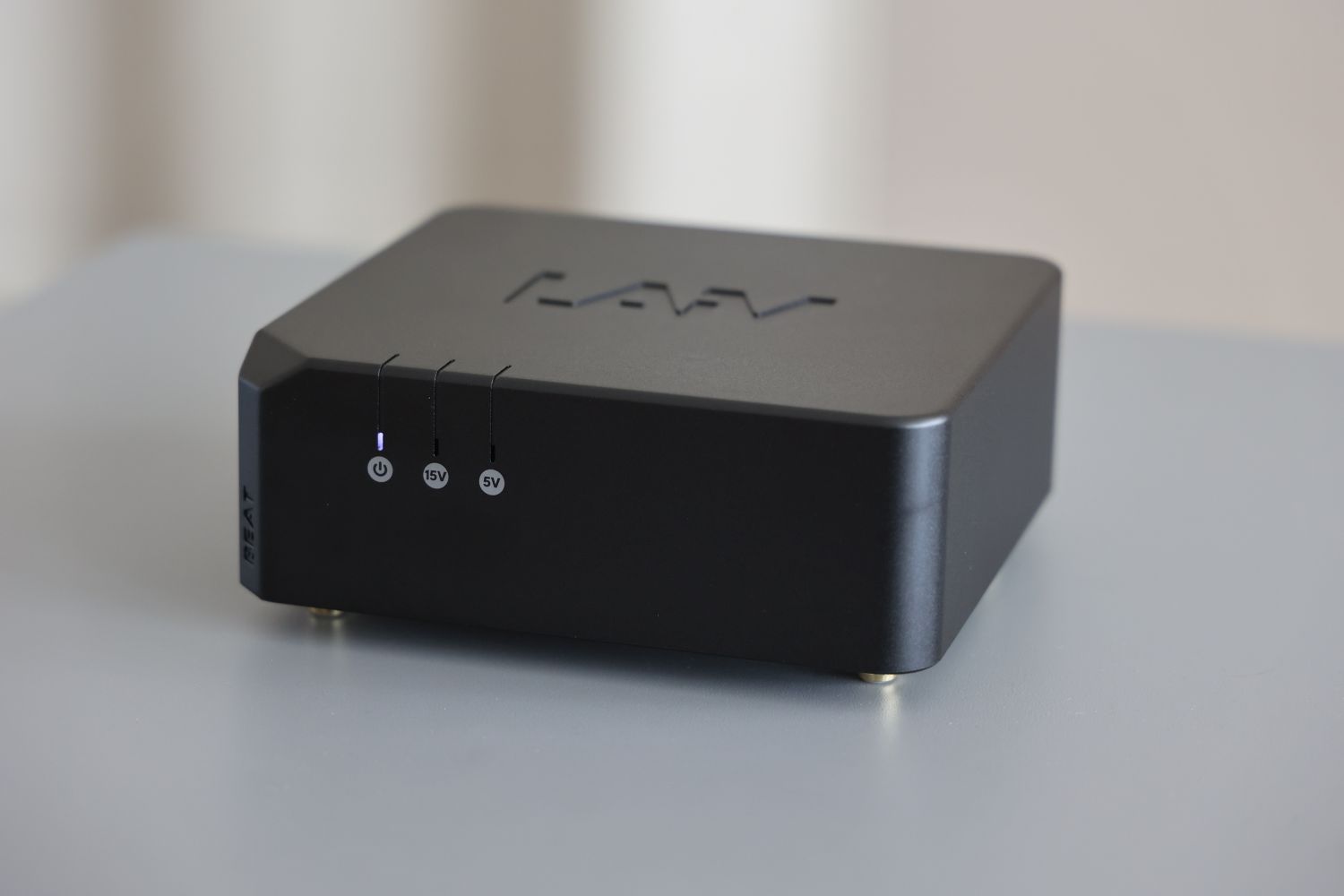
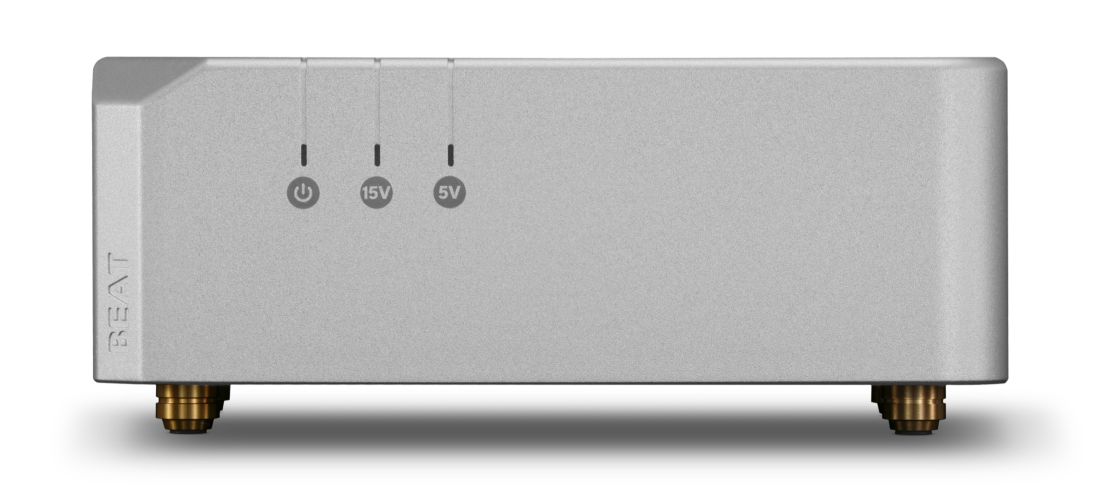
The LAiV Crescendo BEAT is a dual-rail true linear power supply. Dual-rail means each of its two outputs has its own regulation so that they can work independently of one another. With 15V at 2A and 5V at 3A, one BEAT can power two components simultaneously. Both outputs are live simultaneously. Each voltage is fixed rather than adjustable, which is a deliberate choice. LAiV reasons that a rail designed for exactly one voltage delivers that voltage best.
One BEAT can power the Crescendo VERSE or uDAC with its 15V output and the uDDC or a streamer with its 5V output at the same time. The BEAT can also power any combination of components that accept 5V DC at up to 3A or 15V DC at up to 2A, if they have the same polarity and fall within the BEAT’s current ratings. The BEAT has 5.5/2.1mm (for 5V) and 5.5/2.5mm (for 15V) center-positive DC barrel connectors.
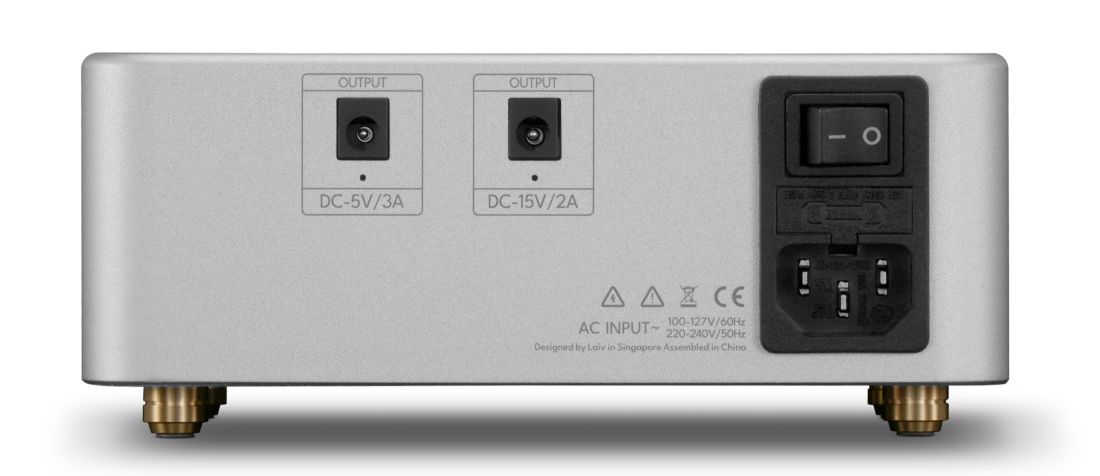
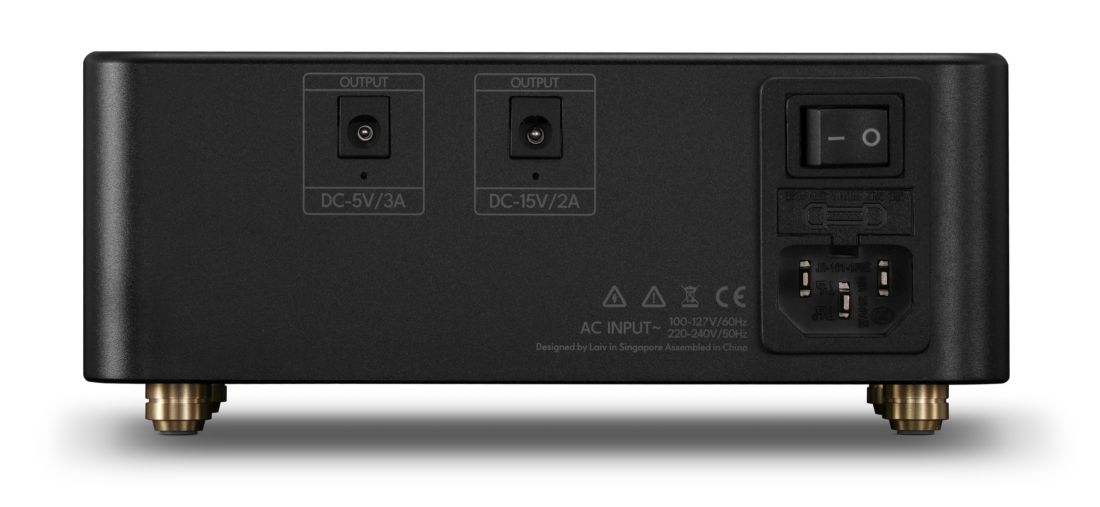
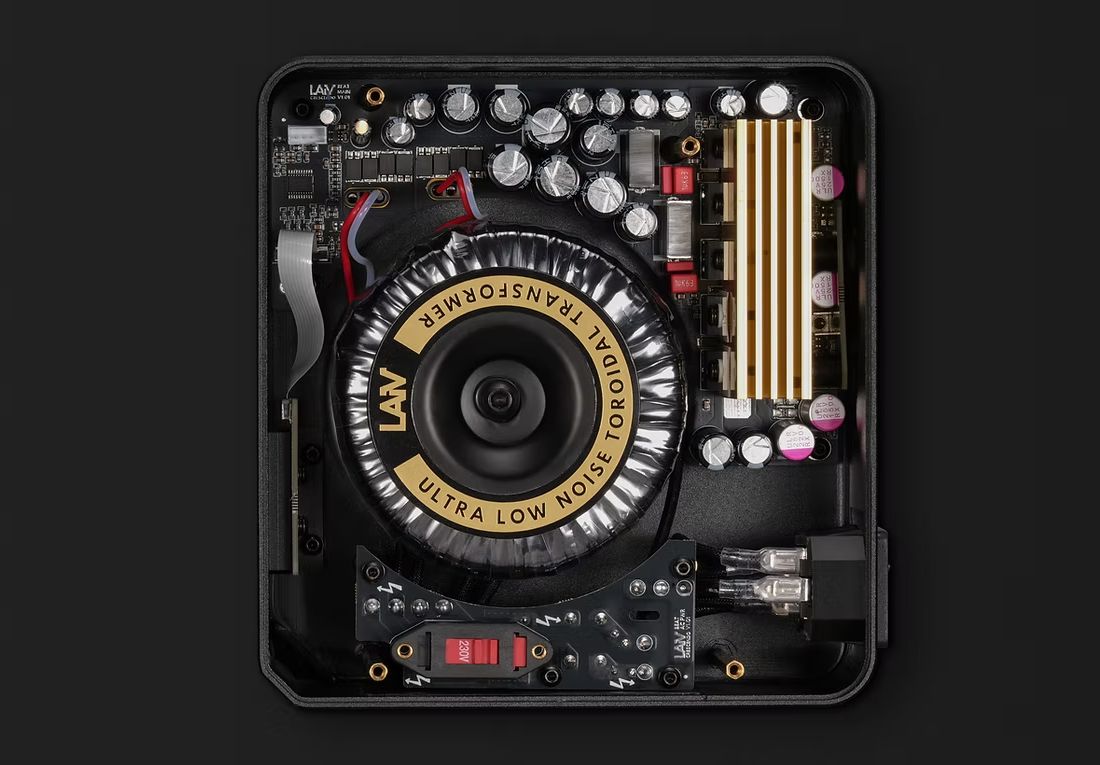
This is not a linearly rectified switched power supply but a full linear design, built the traditional way, with a 70VA toroidal transformer, Schottky rectification, and nearly 18,000µF of filtering. Each of its two rails has dual-stage linear regulation, which further lowers noise and achieves an even more stable output.

The initial regulation stage processes the rectified supply, filtering out mains ripple and load fluctuations, and then supplies a clean power rail to a second, low-noise stage that performs further fine filtering. Each stage multiplies the other’s rejection. The second stage further attenuates noise that survives the first.
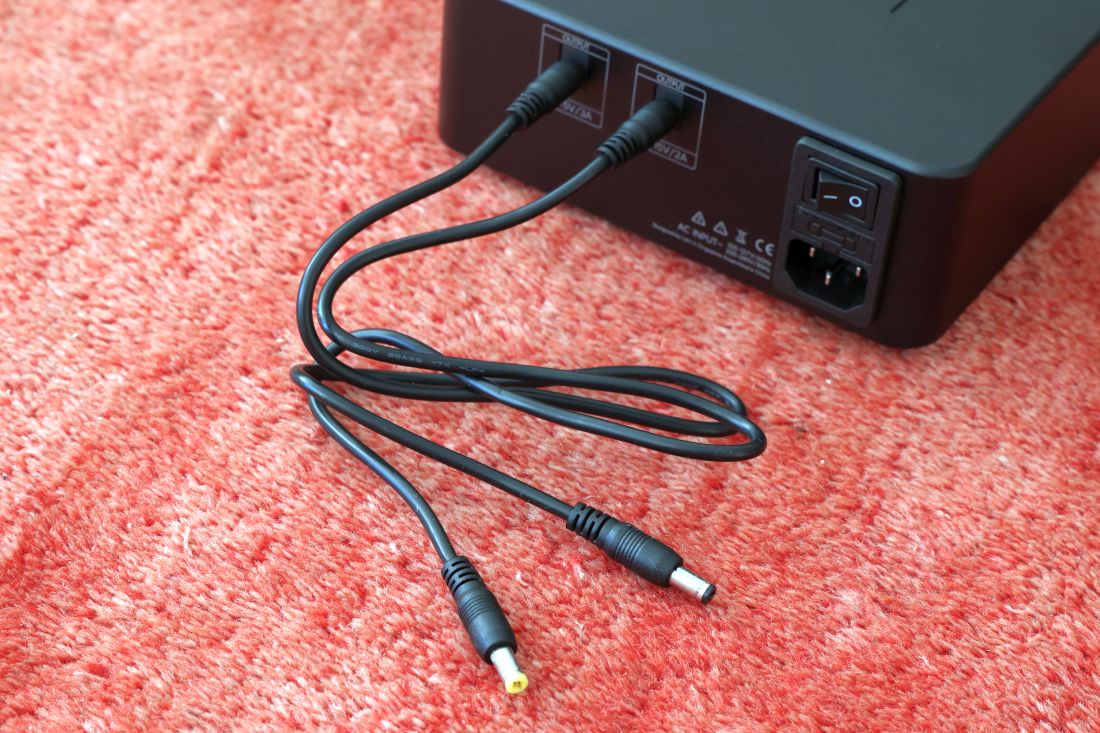
Parallel 5V DC and 15V DC output

Output noise measures at or below 10µVrms with no load and at or below 50µVrms at full load, with ripple rejection above 82dB. LAiV quotes both figures because that is how real systems work: your gear draws real current, and the BEAT stays quiet while delivering it.

To top it off, the BEAT also includes over-current, over-voltage, over-temperature, and short-circuit protection.
The debate between linear and switched designs might never be fully settled. Nonetheless, beyond personal preference, each has its unique character. In my experience thus far, linear supplies tend to sound fuller and more relaxed than switched designs, which tend to sound faster and crisper. Of course, exceptions exist, and I can’t say anything definitive about the BEAT until I have heard it. Based on the specs, looks, and price, though, this neat little power supply looks to be a gem!

Left to right: Genelec 1037B, 8341A, and 8020DPM active studio monitors

Review Context

I will listen to the LAiV Crescendo BEAT Power Supply in the Media Room, with the LAiV Crescendo VERSE DAC driving a pair of recently added Genelec 1037 studio monitors. Music sources are Roon, streaming from the Grimm MU1 Music Server in the Main Setup, and JRiver Media Center using local files.
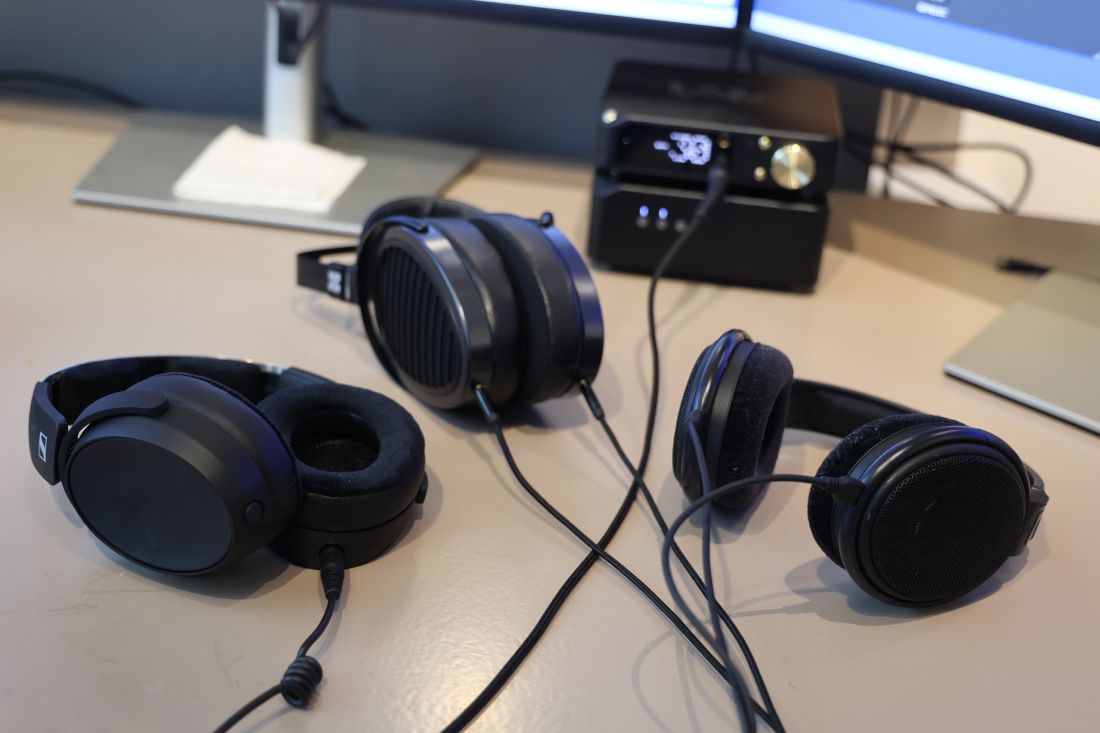
Since the VERSE DAC contains a headphone amplifier, I also used three different headphones to assess the BEAT Power Supply: the well-known Sennheiser HD-650 open-back, the relatively new Sennheiser HD480 Pro Plus closed-back, and the excellent HiFiMAN Arya Stealth Planar Magnetic.

Listening

When I reviewed the Crescendo VERSE DAC and compared it to the Harmony DAC, the difference was obvious: the Harmony is more expensive, but it performs on a considerably higher level. However, at the time, the VERSE was powered by its standard, simple wall-wart switched power supply. So I wondered: how much of the Harmony DAC’s superior performance would be due to its high-quality linear power supply? The Crescendo BEAT will let me answer that question!

Until recently, I used only Genelec 8341A monitors in this system. These speakers have AES/EBU digital inputs, Room Correction, Processing, DACs, Preamplification, and power amplification on board, so I only needed a USB-to-AES/EBU converter to use them with my PC, and the system didn’t need a LAiV preamp or DAC.

Recently, I obtained a pair of old but still very good Genelec 1037B monitors. Despite their appearance, they’re true reference studio monitors, not PA speakers. They are physically large active 3-way systems with 12-inch woofers that produce gorgeously deep bass with lots of authority, plus the neutrality, precision, and refinement you expect from a Genelec. Each speaker has three class AB power amplifiers on board, but because these are older models, they don’t have an onboard DAC or integrated volume control. Now, I did need a volume-controlled DAC. After reviewing the LAiV Harmony DAC and HP2A preamp/headphone amp, I was so impressed that I kept both, and I still have the Crescendo VERSE DAC I reviewed recently, so I had options!
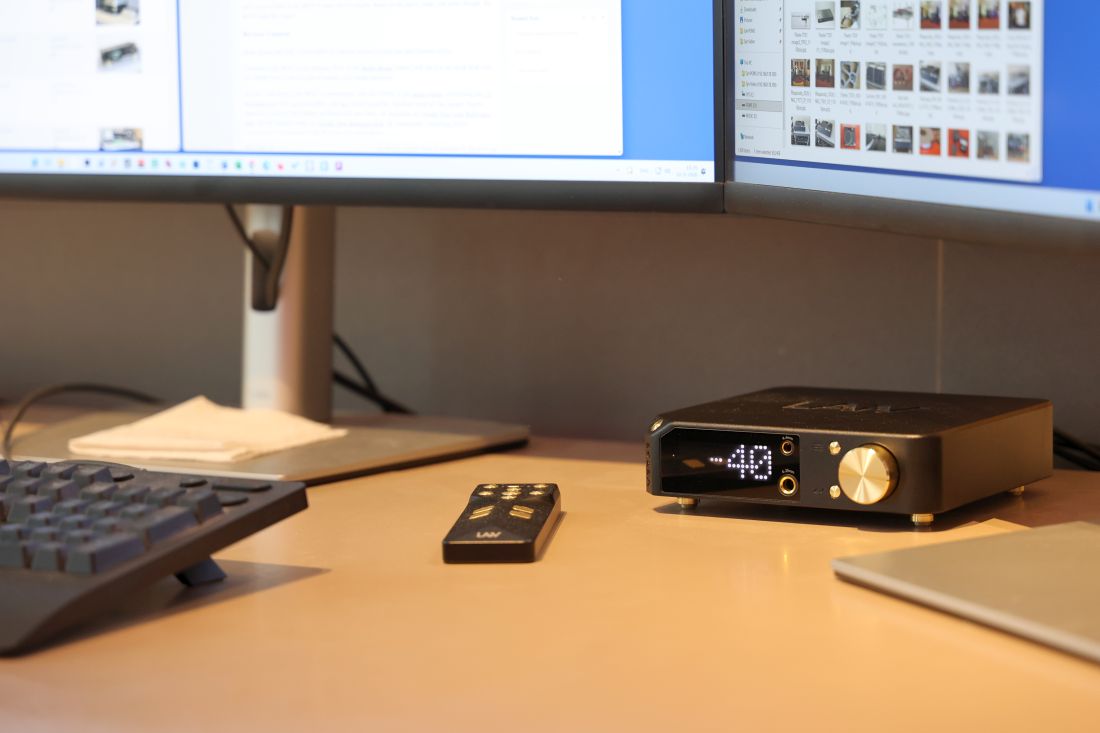
Because the Harmony DAC and HP2A looked absolutely massive on the desk, I started with the Crescendo VERSE. With its small footprint and sleek, luxurious look, this DAC looks great on the desk.

I knew the big LAiV combo performed on a higher audiophile level, but the big Genelecs still sounded very good with the VERSE, and I listened to this combo for a couple of days.

Next: VERSE with BEAT, Harmony DAC and HP2A, uDAC, and Conclusion
Related Posts
PSI Audio AVAA C214 Active Bass Trap
Network Acoustics origin Streaming Power Supply
Artesania Audio Exoteryc Pro Upgrade Kit
Harmonic Resolution Systems (HRS) Additional Base Experiments
XACT N1 Network Switch
PS Audio PowerPlant 15 and 20
Artesania Carbon Fiber and Panzerholz Decoupling Discs
Stack Audio AUVA Speaker Isolators
Page 1 of 2
LAiV Audio
  • Share This:
  • Facebook
  • Twitter
  • LinkedIn
  • Pinterest
  • Email
Christiaan Punter Owner of Hifi-Advice.com

8 Comments

  1. Carl Morse says:
    25 September 2026 at 14:23

    I received the Crescendo BEAT yesterday and used it to power my LAIV UDAC and UDDC stack. At first, I didn’t hear much difference except for the sound being noticeably more forward in the upper midrange especially in the upper frequencies of vocals which stood out more. But, after about 30 minutes everything improved and the standout improvements were smoothness, refinement and pacing. I listened to Noah Kahan’s Stick Season (Forever) which I find to be an excellent recording, and the upper midrange forwardness was replaced by a balanced sound over the full frequency range and quite possibly the most musically satisfying sound I’ve had through my system. I was considering an upgrade to the LAIV Harmony DAC but now I’m going to hold off as I’ve never heard my system sound better. The Crescendo BEAT may be the best $470 I’ve spent on my audio system.

    Reply
  2. Michael Brown says:
    28 September 2026 at 05:21

    Yes it would have been interesting to add the DDC to the udac and beat to this comparison since the beat can power both. I think it would have changed this comparison somewhat.

    Reply
    1. Christiaan Punter says:
      28 September 2026 at 08:20

      The uDDC improves precision and gives a tighter, crisper sound. So, while beneficial, the uDAC when combined with the uDDC is not nudged more toward the Harmony DAC’s more organic, fluid, and more refined sound.

      Reply
      1. Mike says:
        18 October 2026 at 04:05

        So great for the consumer you get a a lower cost Dac amp with a better R2R Dac then the more expensive UDac combo.. So Beat plus Crescendo Verse at 1349 is better or closer to their top tier Dac then the UDac+DDC+Beat which cost 2500.

        Reply
        1. Christiaan Punter says:
          18 October 2026 at 12:01

          The Verse is closer to the Harmony DAC than the uDAC + BEat in some ways, not overall. It depends on your preferences: fluidity and flow: Verse. Robustness and realism in timbre: uDAC.

          Reply
  3. Leonardo says:
    10 October 2026 at 19:22

    Dear Christiaan,

    I am a regular reader of HFA, and I wanted to thank you for your LAiV Crescendo BEAT review, as well as your uDAC and uDDC reviews. The way you compared the VERSE, uDAC and Harmony DAC with and without the BEAT, and tested it with your Genelec monitors, was very clear and genuinely useful for my decision. I also appreciate the detailed answers you give in the comments.

    I am planning a system and would value your opinion on it:

    1) Setup: Mac mini M4 (USB output) and a pair of Genelec 8341A with GLM ( and in the future considering also a sub: 7360).
    2) LAiV Harmony uDAC and uDDC (connected via I2S), both powered by the Crescendo BEAT.
    3) Genelec 9320A as controller and GLM hub (volume, calibration, input selection).
    4) The idea: with 2) and 3), I could switch between a digital path (Mac USB > 9320A > AES/EBU > 8341A) and an analog path (uDAC XLR > AES/EBU > 8341A). This would let me keep the character of the uDAC’s R2R conversion, while still using GLM and the 9320A for volume and calibration.

    My questions:

    – Does this approach make sense in your experience, or do you see limits (for example input level matching, or the 192 kHz limit over USB)?
    – You feed your 8341A digitally through a USB-to-AES/EBU converter. How do you handle volume (through GLM)? Do you think the 9320A would add real value over that approach, or is it unnecessary?
    – Have you heard the uDAC/uDDC feeding Genelec monitors in the analog path, and would you expect the uDAC’s character to survive the Genelec conversion and DSP?

    Thank you very much for your time, and for the quality of your reviews.

    Leonardo

    Reply
    1. Christiaan Punter says:
      13 October 2026 at 10:30

      Hi Leonardo, thanks, that means a lot. The 8341As sound best when used with their digital inputs. I used them analog for a while at first, but while still impressive, the extra AD process is audible as a kind of compression and bleaching of tonality and fullness. Honestly, while you can still hear differences in cables and DACs using the Genelec’s analog inputs, I feel that it’s not worth using upscale electronics upstream only to AD the output before using it. I use the simple GLM kit with the potentiometer in combination with a Manunta USB to AES converter. This gives a very tight and precise sound, expecially when using Exclusive WASAPI. It’s so crisp in fact that some might find this too dry. Using the Genelec 9320A instead produces a comparatively very smooth, liquid, and relaxed sound. I wanted to buy the controller, but found that it was too relaxed for my taste. A close friend who did buy it for his 8341As could not be happier. So, YMMV.

      Reply
      1. Leonardo says:
        14 October 2026 at 19:34

        Hi Cristian,

        Thank you very much for taking the time to reply and for sharing your experience with the 8341A. I really appreciated your notes: it is useful to hear first-hand impressions of the digital path with the GLM kit and the Manunta, and of how the 9320A sounded to you in comparison.

        As you say, YMMV, but impressions like yours are exactly what helps me know what to look for when I do my own listening.

        Thanks again, and enjoy the music!

        Leonardo

        Reply

Your comment Cancel reply

All comments are welcome, but please be civil and stay on-topic. First-time comments require manual approval before they are posted. Avoid using links to prevent being marked as spam.


Categories

  • Accessories Reviews
  • Active Analog Speakers Reviews
  • Active Digital Speakers Reviews
  • Alkmaar Audio Show
  • Amplifier Reviews
  • Analog Classics
  • Analog Insights
  • Analog Interlink Reviews
  • Analogy Records
  • Apogee Acoustics Company Special
  • Audio Software Reviews
  • Audiophile Insights
  • Cables Insights
  • CD Player Reviews
  • Chattelin Audio Systems
  • Connectors Insights
  • Digital Cable Reviews
  • Digital Classics
  • Digital Insights
  • Digital Interface Reviews
  • Digital Recorder Reviews
  • Digital Reviews
  • Dutch Audio Event
  • Enosound
  • Extensionblocks / Filters Insights
  • Generic Insights
  • HFA Audio Setup History
  • HFA Audio Setup Snapshots
  • HifiDeluxe
  • HifiLive
  • Industry Update
  • Integrated Amplifier Reviews
  • Marantz & Philips Classics
  • Munich High End
  • Music Server Reviews
  • Network Player Reviews
  • Passive Speakers Reviews
  • Phono Cartridge Reviews
  • Phono Interlink Reviews
  • Phono Preamp Reviews
  • Power Amplifier Reviews
  • Power Cable Reviews
  • Power Conditioning
  • Power Connector Reviews
  • Preamplifier Reviews
  • Racks / Stands / Feet Reviews
  • Rhapsody
  • Show Reports
  • SPDIF DAC Reviews
  • Speaker Cable Reviews
  • Specials
  • System Synergy Q&A
  • Tonearm Reviews
  • Tuning / Tweaks Reviews
  • Turntable Accessories Reviews
  • Turntable and Accessories Reviews
  • Turntable Reviews
  • Uncategorized
  • USB DAC Reviews
  • Vienna High End
  • XFi

BRANDS

  • A&B Systems
  • A10 Audio
  • Aavik
  • Acapella
  • Accuphase
  • AcousticMatters
  • Acustica Applicata
  • Admire Audio
  • Aequo Audio
  • AG Lifter
  • Aidas
  • Akiko Audio
  • Analog Domain
  • Analogy Records
  • Analysis Audio
  • Analysis Plus
  • Ansuz
  • Anthem
  • Anti-Cables
  • Antipodes Audio
  • Apertura
  • APL
  • Apogee
  • Apogee Acoustics
  • Aqua
  • Arcam
  • Aries Cerat
  • Artesania
  • ASI
  • Astin Trew
  • atm audio
  • A Tube High Fidelity
  • Audeze
  • AudioAanZee
  • Audio Aero
  • Audio Club Premier
  • Audio GD
  • Audiolab
  • Audiolympic
  • Audiomeca
  • Audio Note
  • Audionote
  • Audio Note (UK)
  • Audio Origami
  • Audio Physic
  • AudioQuest
  • Audio Research
  • Audio Synthesis
  • Audio Technica
  • Auer Acoustics
  • Auralic
  • Aurender
  • Aurum Cantus
  • Avalon
  • AvantGarde
  • AVID
  • AVIDHIFI
  • AVM
  • Ayon
  • Ayre Acoustics
  • B&W
  • Bals
  • Bang & Olufsen
  • Behringer
  • Belden
  • Benz
  • Bergmann
  • Black Rhodium
  • Boenicke Audio
  • Bowers & Wilkins
  • Bricasti
  • Brodmann
  • Bryston
  • Burmester
  • Børresen
  • CAD
  • Cardas
  • Care Orchestra
  • CAT
  • CEC
  • Chord Electronics
  • CH Precision
  • Clarisys Audio
  • Classé
  • Clearaudio
  • Concert Fidelity
  • Conrad Johnson
  • Consonance
  • COS
  • Curious Cables
  • D'Agostino
  • DAD
  • Dali
  • Daniël Hertz
  • Daudio
  • dCS
  • Degritter
  • Denafrips
  • Denon
  • Devialet
  • Devore
  • Diptyque
  • Doepke
  • Driade
  • DS Audio
  • Dynavector
  • Dynavox
  • E&T
  • EC-Designs
  • Echole
  • Elac
  • Electrocompaniet
  • Elijah Audio
  • EMAG
  • EMMLabs
  • Emotiva
  • EMU
  • Enosound
  • Ensemble
  • Esoteric
  • Estelon
  • Euphony
  • Exogal
  • Fadel Art
  • Fezz Audio
  • FIM Gold
  • Final
  • Final Touch Audio
  • Finite Elemente
  • FoilFlex
  • Franco Serblin
  • Furutech
  • Fusion Audio
  • Gauder Akustik
  • Genelec
  • Gigawatt
  • GiK
  • Goldmund
  • Graham Audio
  • Grandinote
  • Grimm Audio
  • Gryphon
  • Gustavson Audio
  • Halcro
  • Hanze Hifi
  • Harman/Kardon
  • Harmonic Resolution Systems
  • Harmonic Technology
  • Harmonix
  • Heaven's Gate
  • Hifi-Tuning
  • HiFi.nl
  • HifiMan
  • High Fidelity Cables
  • Hofa
  • Holo Audio
  • Home Audio Fidelity
  • HRS
  • IeGO
  • Ikigai
  • IMF
  • Isotek
  • Jadis
  • Jay's Audio
  • JCAT
  • Jeff Rowland
  • Jena Labs
  • JMF Audio
  • Jorma Audio
  • Jorma Design
  • Joseph Audio
  • JPLAY
  • JVC
  • Kemp
  • Kharma
  • Kimber
  • KingRex
  • Kinki Studio
  • KlinktBeter
  • Kora
  • Krell
  • Kroma Atelier
  • Kupp
  • LAiV Audio
  • Lampizator
  • Lapp
  • LAST
  • Lector
  • Leema
  • Lejonklou
  • LessLoss
  • Line Magnetic
  • Linn
  • Logitech
  • LOK
  • Loudness War
  • Lumin
  • Luxman
  • M2Tech
  • Mad Scientist
  • Magico
  • Magnan
  • Magnepan
  • Mamba Audio
  • Manley Labs
  • Manunta
  • Marantz
  • Mark Levinson
  • Marten
  • Martin Logan
  • Master
  • Matrix
  • MBL
  • McIntosh
  • Melco
  • Melody
  • Meridian
  • Metrum Acoustics
  • Michell
  • MIT
  • MJ Acoustics
  • Modus Audio
  • Mogami
  • Mola-Mola
  • Monitor Audio
  • Monrio
  • Moon
  • Morel Hifi
  • MP&S-Klangwelten
  • Munich High End
  • Musetec
  • Musical Fidelity
  • Mytek
  • Nagaoka
  • Naim
  • Naiu Laboratory
  • Nakamichi
  • NBS
  • Network Acoustics
  • Niels Setup
  • Nordost
  • NuPrime
  • Ohm Audio
  • Oladra
  • Olive
  • Onkyo
  • Onzow
  • Origin Live
  • Ortofon
  • Oyaide
  • Panasonic
  • Paradigm
  • Parasound
  • Pass Labs
  • Peak Consult
  • Philips
  • Pink Faun
  • Pioneer
  • Playback Designs
  • Precision Audio
  • PrimaLuna
  • Proceed
  • Prodigio Audio
  • PS Audio
  • PSI Audio
  • PUUR AVD
  • PUUR hifidelity
  • Pylon Audio
  • Qln
  • Qobuz
  • Quad
  • R.T.F.S.
  • RAAL Requisite
  • Raidho
  • Reference Sounds
  • Reference Tweaks
  • Rega
  • Rein Audio
  • REL
  • Resonator Stockholm
  • Revel
  • Ricable
  • Roon
  • RTFS
  • SAEQ
  • SAT
  • Schiit
  • Seawave Acoustic
  • Sennheiser
  • Shakti
  • Shuguang
  • Shunyata
  • Shure
  • Signal Projects
  • Silent Angel
  • Siltech
  • SME
  • SolidSteel
  • Solid Tech
  • Sonic Frontiers
  • Sonos
  • Sonus Faber
  • Sony
  • Sooloos
  • SOtM
  • Soulution
  • Sound Anchor
  • Sound Lab
  • Spectral
  • Spotify
  • Stack Audio
  • Stealth
  • Stenheim
  • Stillpoints
  • Straight Wire
  • SW1X Audio Design
  • Symo
  • Synergistic Research
  • Synology
  • Synthese
  • T+A
  • Taiko Audio
  • Tascam
  • Teac
  • TechDAS
  • Technics
  • The Chord Company
  • Thiele
  • Thorens
  • Transparent Audio
  • Trends
  • Tung Sol
  • Unison Research
  • UpTone Audio
  • VAIC
  • van Damme
  • van den Hul
  • van Medevoort
  • Vermeer Audio
  • Vermouth Audio
  • Vibex
  • Vifa
  • Vincent
  • ViRa High End
  • Viva
  • Vivid Audio
  • VTL
  • Wadax
  • Wadia
  • Wattgate
  • Wattson
  • Way Cables
  • Weiss
  • Western Electric
  • WestminsterLab
  • Widealab
  • Wilson Audio
  • Wilson Benesch
  • Winyl
  • Wires 4 Music
  • Wireworld
  • Wolf von Langa
  • Wooden Bull
  • XACT
  • Xavian
  • xFyro
  • Xindak
  • XLO
  • Yamaha
  • Zanden
  • Zellaton
  • Zesto
  • ZYX

Follow HFA on Social Media

Facebook

LEGAL

Privacy Policy

This site is protected by reCAPTCHA. Google Privacy Policy and Terms of Service apply. All rights reserved © 2026 - hifi-advice.com.
  • Contact
  • Home