Review Context
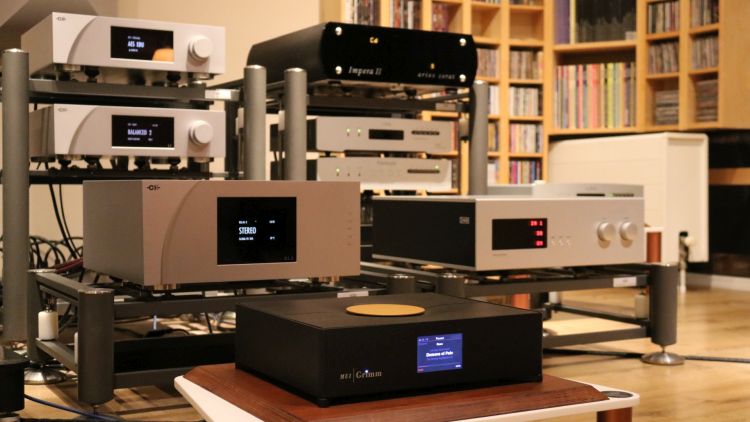
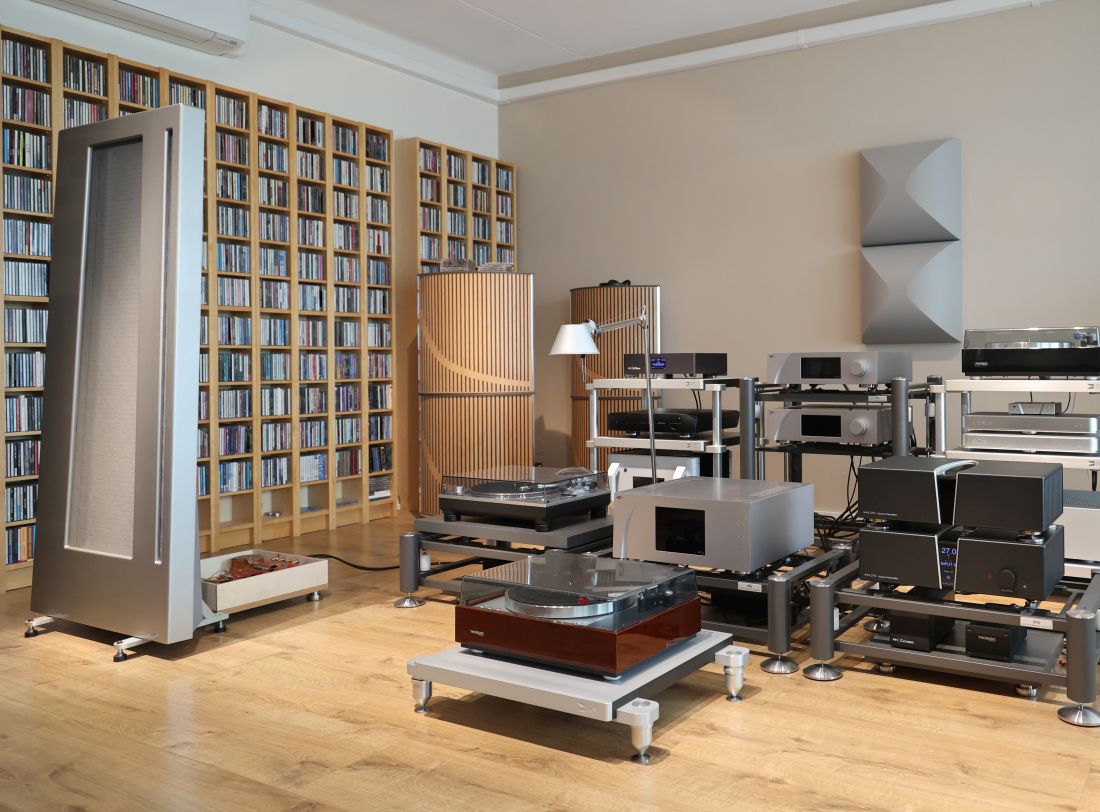
The Halcro Equinox was listened to in the main system, with the CH Precision L1 preamplifier, CH Precision A1.5 power amp, and recently refurbished Apogee Duetta Signature speakers. Digital sources are the Antipodes Oladra and Grimm MU1 music servers. All interlinks are Driade Flow Link Reference 808, and the speaker cables are Driade Flow Reference 808. All components, including the Equinox preamp, are powered by the PS Audio P20 PowerPlant.
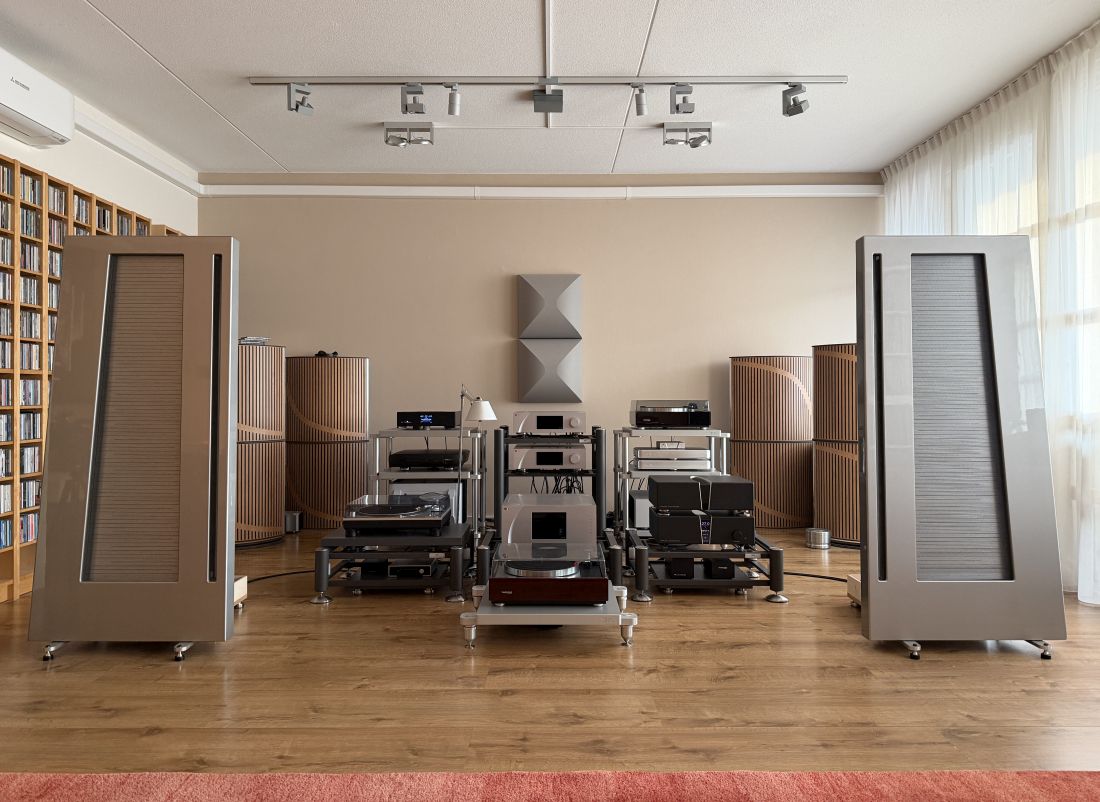
Because the Equinox was available to me for only a short time, I couldn’t make as many comparisons as I usually do. However, I have thoroughly compared it with my CH reference preamplifier and gained a solid understanding of how it compares and performs in my system.
Support
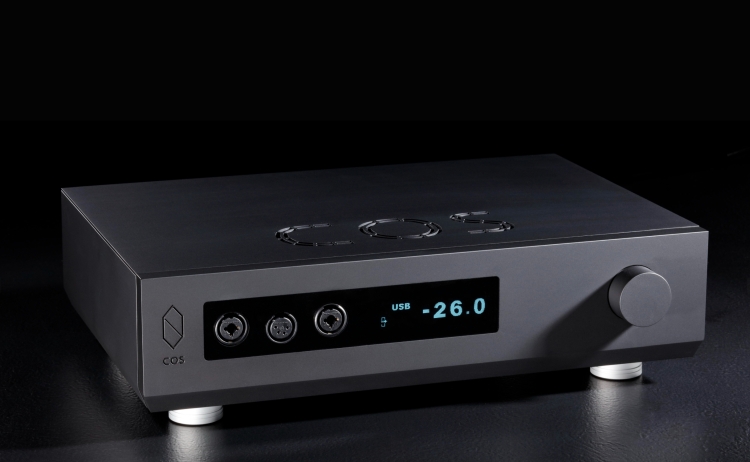
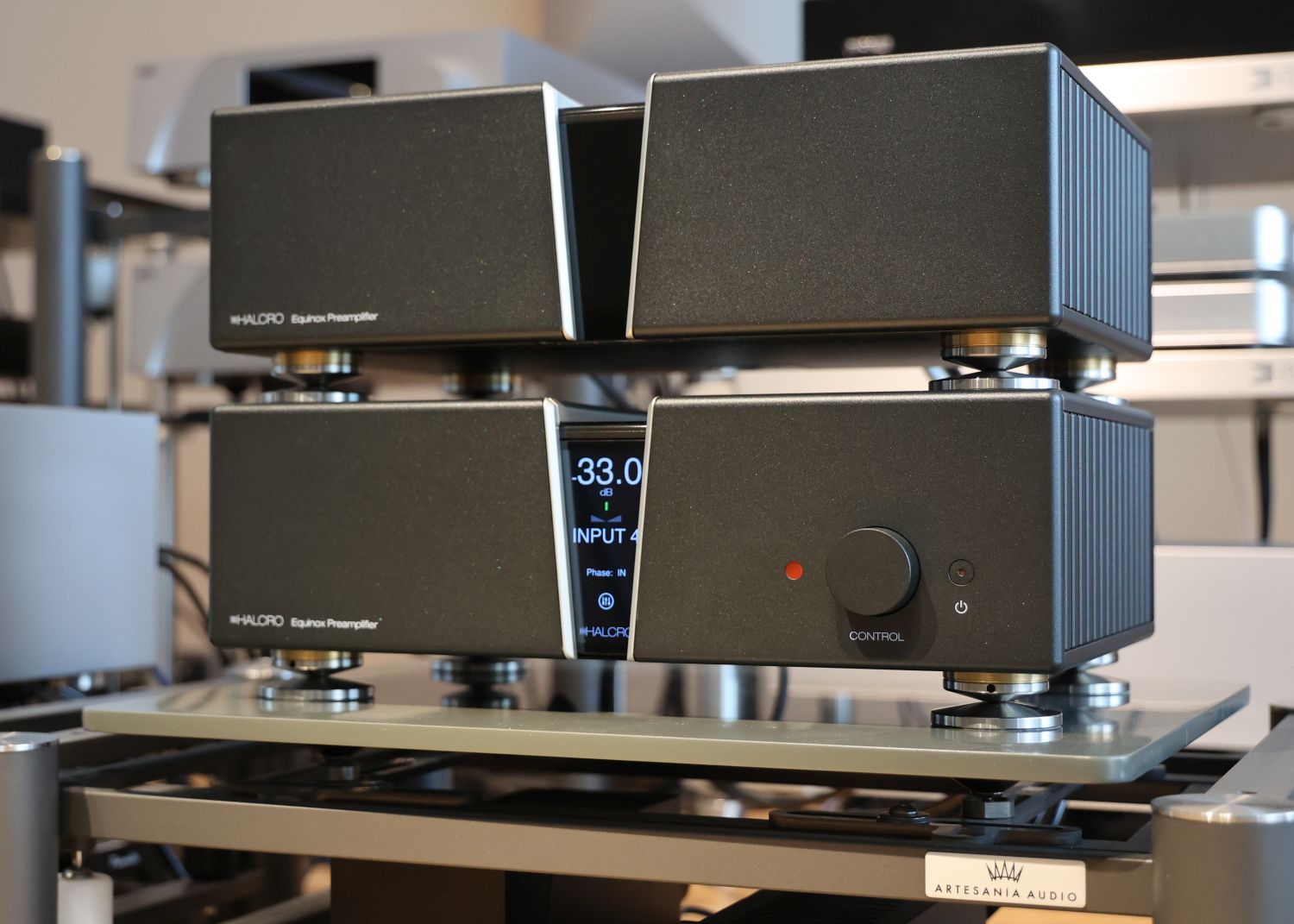
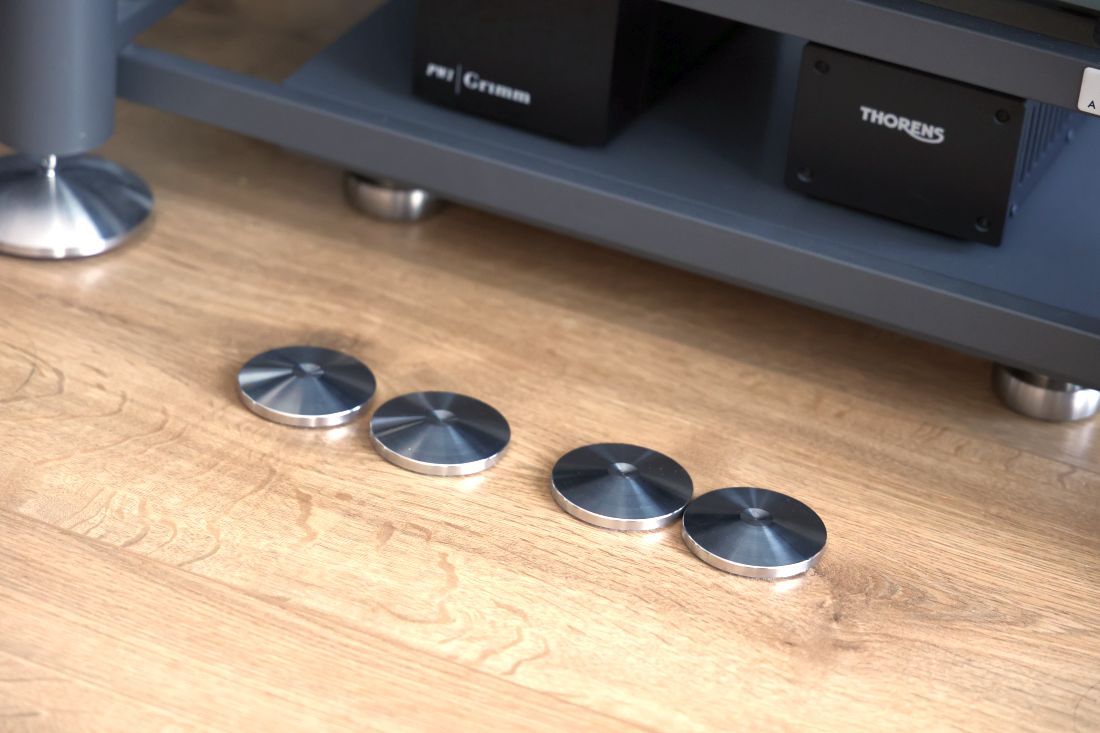
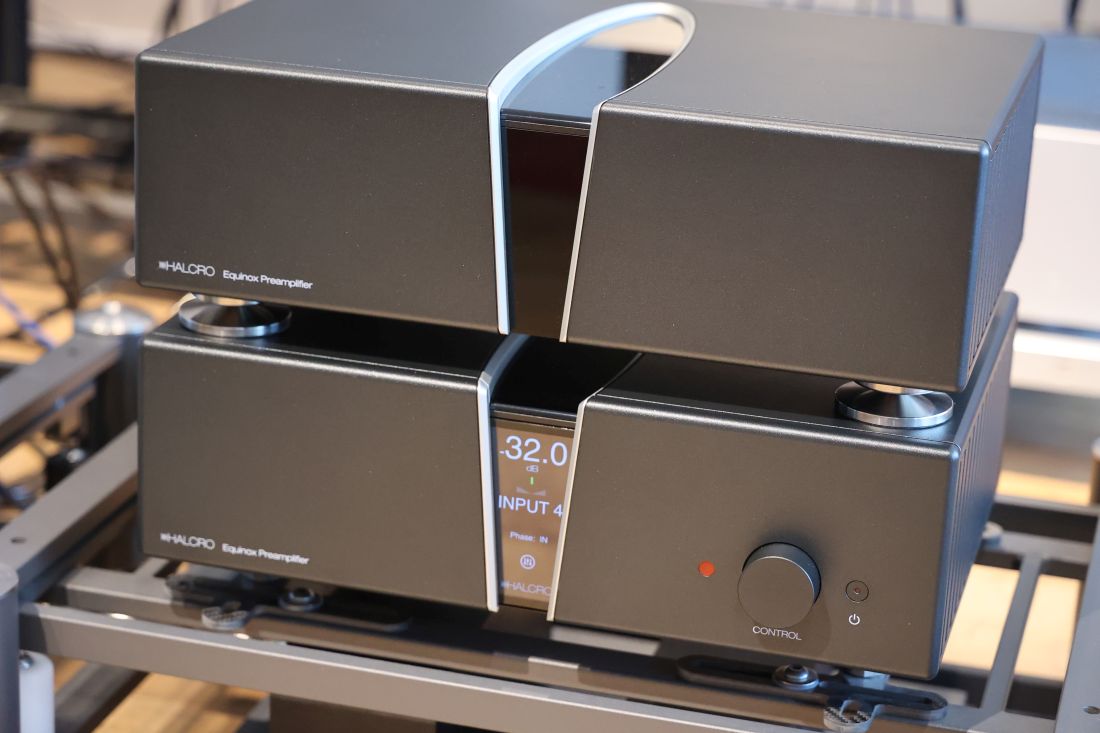
The Equinox’s two enclosures are both fitted with custom, height-adjustable, coned isolation feet and surface-protecting discs. These discs are fitted with thin felt undersides. When stacked, these discs should be used underneath each component.
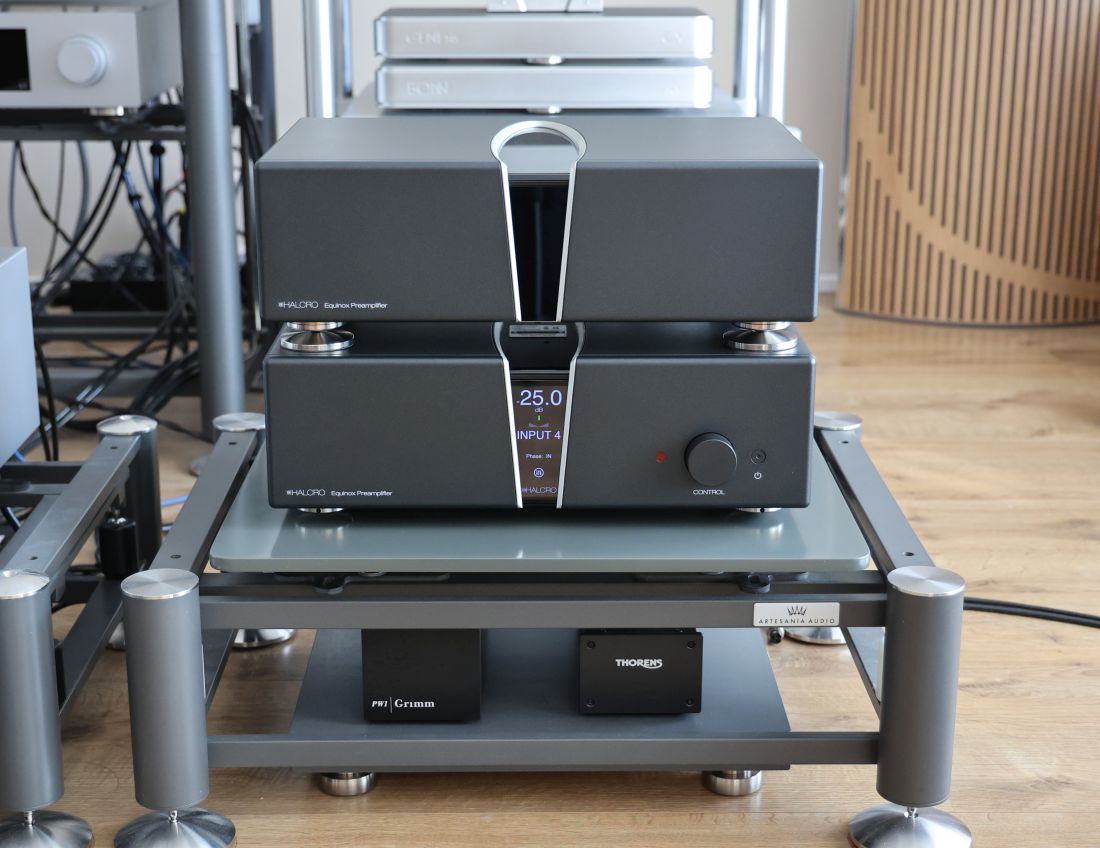
The Artesania Exoteryc rack is designed to support components directly, so I initially placed the power supply unit directly on the rack’s integral Beechwood footers and then placed the preamp unit on top using the four discs.
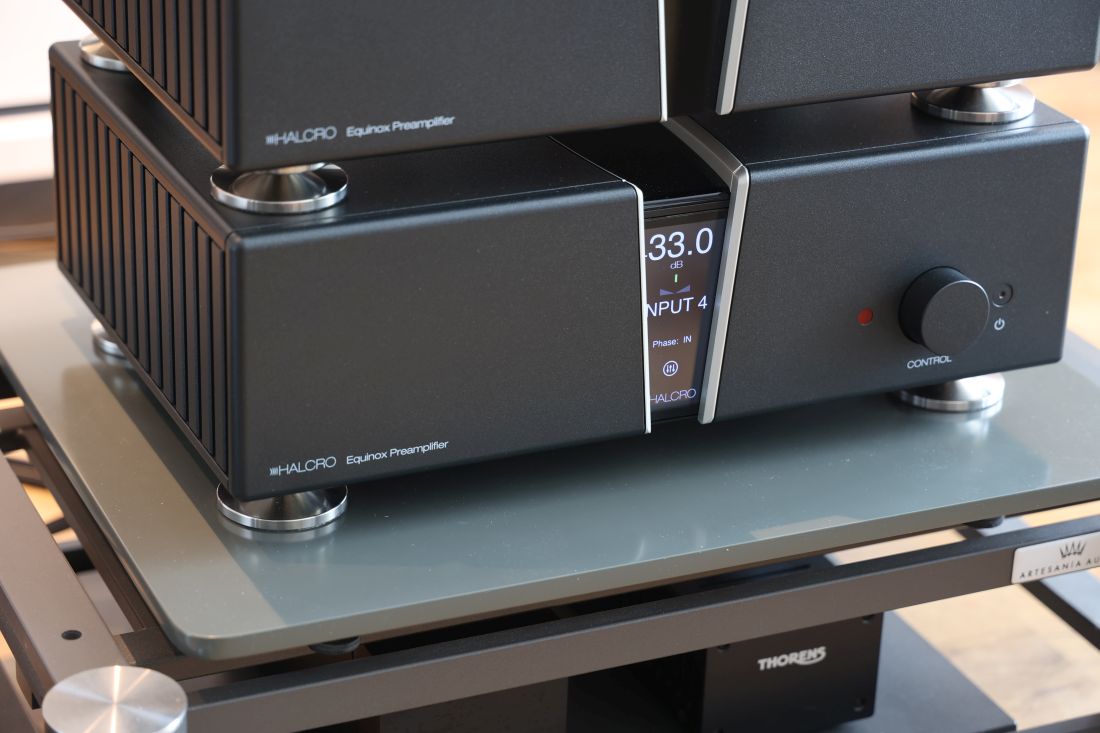
I found that the preamp sounded best when positioned on top of an Artesania KSH2 Krion shelf, as intended, using its own footers and discs. This way, the sound was a bit crisper and more coherent.
Conversely, the direct placement on the Artesania rack’s footers provided an arguably more organic rendition. It’s worth experimenting with the placement, and I would also recommend trying separate shelves for each of the two components.
Listening
Contrary to what one might expect, an extremely fast, wide-bandwidth amplifier does not sound technical, dry, or staccato. As I learned when reviewing the Halcro Eclipse stereo power amplifier, quite the opposite, in fact! Like the Eclipse power amp, the Equinox preamp’s extremely low distortion, high slew rate, and fast transient response lead to a remarkably liquid, organic, and utterly free-flowing sound.
Like the power amp, the Equinox preamp is so natural and self-effacing that it encourages listening to the heart of the music rather than the technical aspects. The Equinox has magnificent resolution, but it never sounds forward, let alone “aggressive” or “in your face”. Likewise, the preamp has incredible analytical qualities, yet it never sounds analytical and consistently presents everything you play in a stress-free and utterly natural way.
Some very precise amplifiers can be overly controlled, and this often extends to the soundstaging. Such products can be highly focused at the expense of flow and expansion. Not the Equinox. The focus is as good as it gets, while the soundstage is as large or as intimate as the recording requires. There is also very good depth within the stage, with precise instrument placement.
Volume control is a hot topic, with manufacturers swearing by one technique or another. It’s not clear how the Equinox handles volume leveling, but what is clear is that it operates extremely evenly. No matter the volume setting, whether whisper-quiet, very loud, or anywhere in between, the soundstage maintains a cohesive unity, and the music simply flows effortlessly.
The Equinox also operates 100% silently. First, and foremost, there is no audible hiss or switching noise when using any of its controls, from the tweeters. Secondarily, there is zero mechanical hum from the case. This may sound like a normal request for an ultra-high-end audio component, but as I know all too well, mechanical silence is by no means guaranteed, regardless of the component’s cost.
The preamp’s quietness is also reflected in the music. There’s a calmness and unforced quality to everything you play, yet nothing sounds the same. There is no forwardness or a tendency to sound laid-back; the sound is neither fast nor slow, and there is never a sense that the preamp is trying to be impressive. The preamp “simply” relays the recordings. This supposedly simple task is actually one of the hardest aspects to achieve with a preamp.
Next: Listening continued and Conclusion