As the days passed, I left the PA1s connected, not just for their own review, but for all my listening. I remembered that I initially felt the PA1s were a little more polite, but that faded away during the successive listening sessions. Instead, I increasingly felt there was no reason to switch back, as the sound was so complete and lacking nothing.
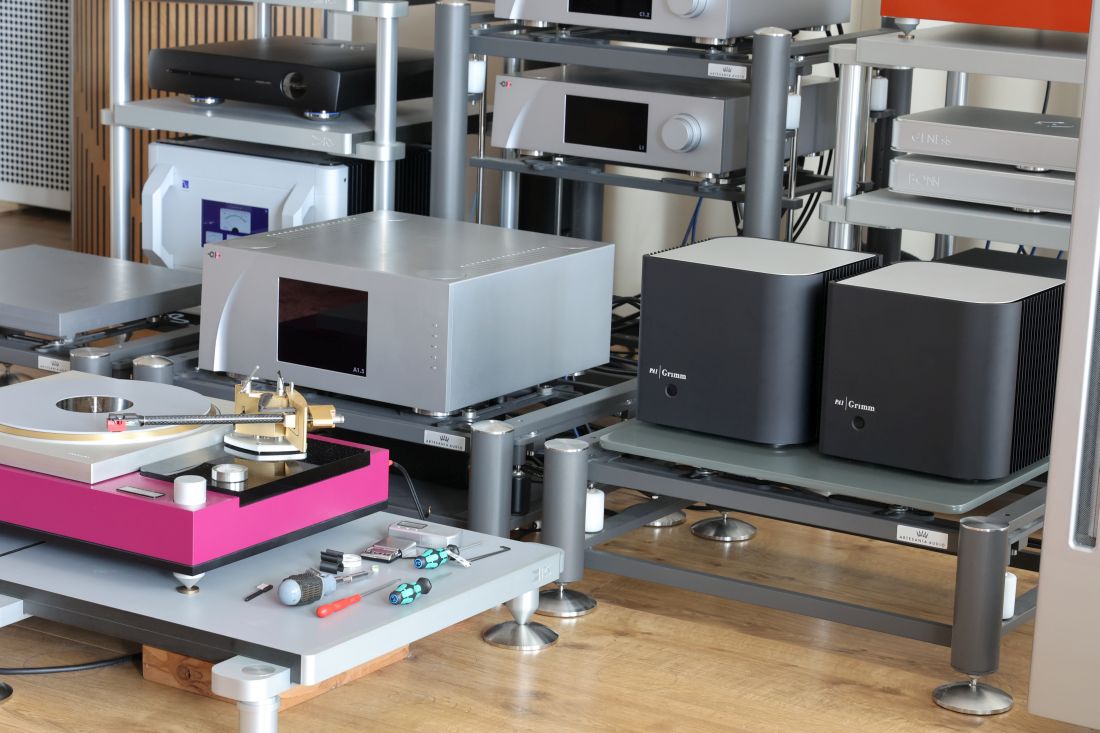
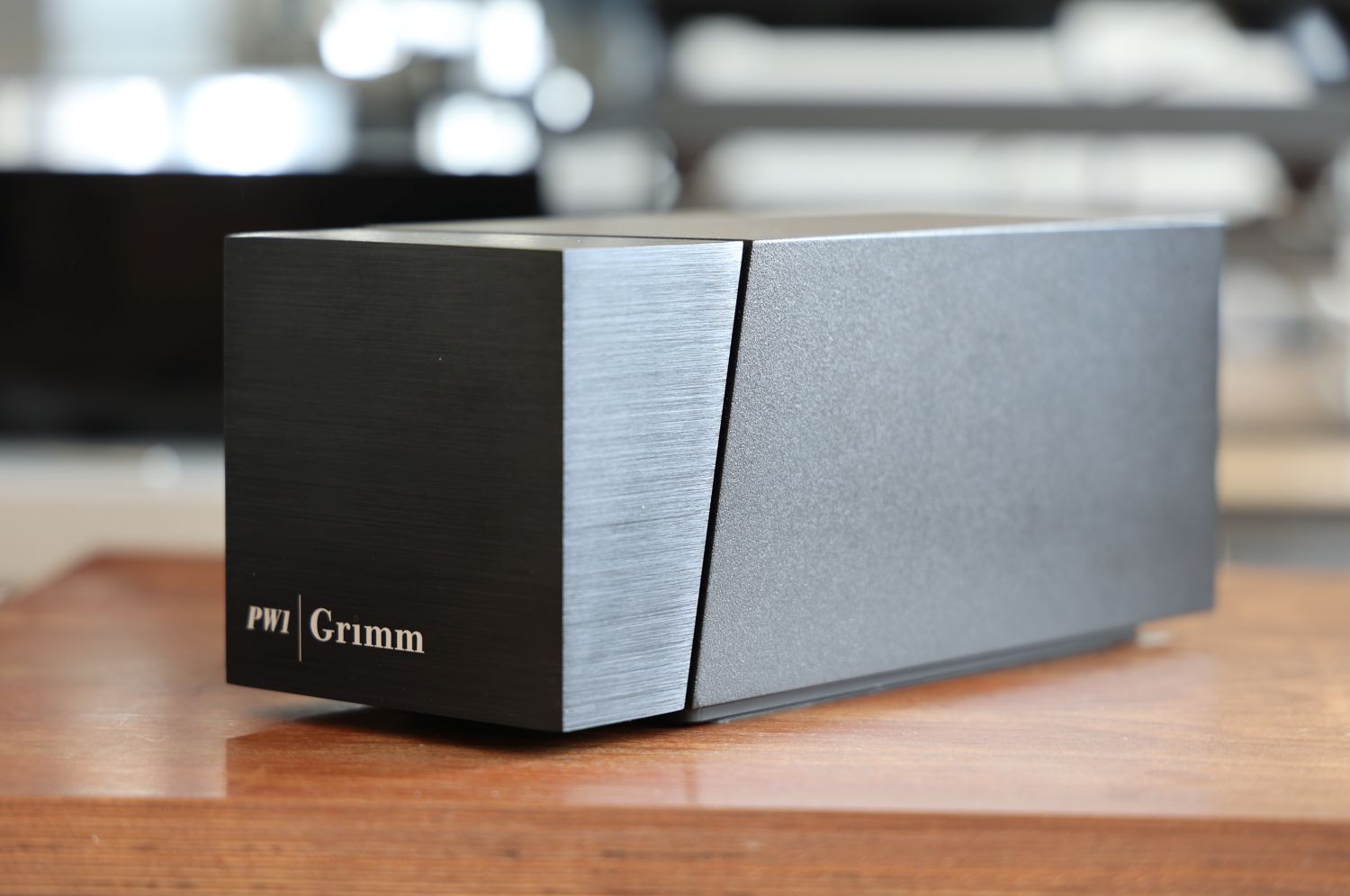
During this time, I had two weekly sessions with my audio buddy Wouter. He has developed a ridiculously time-consuming, multi-stage record-cleaning procedure involving a special cleaning agent, scrubbing, thorough rinsing to remove the cleaning agent, more rinsing, and ultrasonic cleaning, and we listen to a newly cleaned batch of records every week. Lately, this has included a Thiele TT01 Zero Tracking Error Turntable in combination with the Grimm PW1 Phono Stage. Rather than disconnecting the review components as I usually do for these weekly analog sessions, I left the PA1s connected.
In that first session, we both actively tried to find anything negative about the PA1s, but we couldn’t. In fact, it was the opposite: everything we played sounded highly propulsive, communicative, and engaging. During the second session, we never even thought about the PA1s and instead marveled at how involving and expressive the music was.
There was simply no reason to switch back to my usual amplifier, so I postponed it until the last days of my scheduled time with them, almost 3 weeks later. That moment came when a fellow reviewer visited me, and we were both curious to hear the differences. The Grimms had been left switched on continuously for most of the time, but even when I later started switching them off overnight, I never noticed any downsides. On the morning of the last day, I switched on the PA1s and my A1.5, so they would both be well warmed up by the time we started the comparisons.
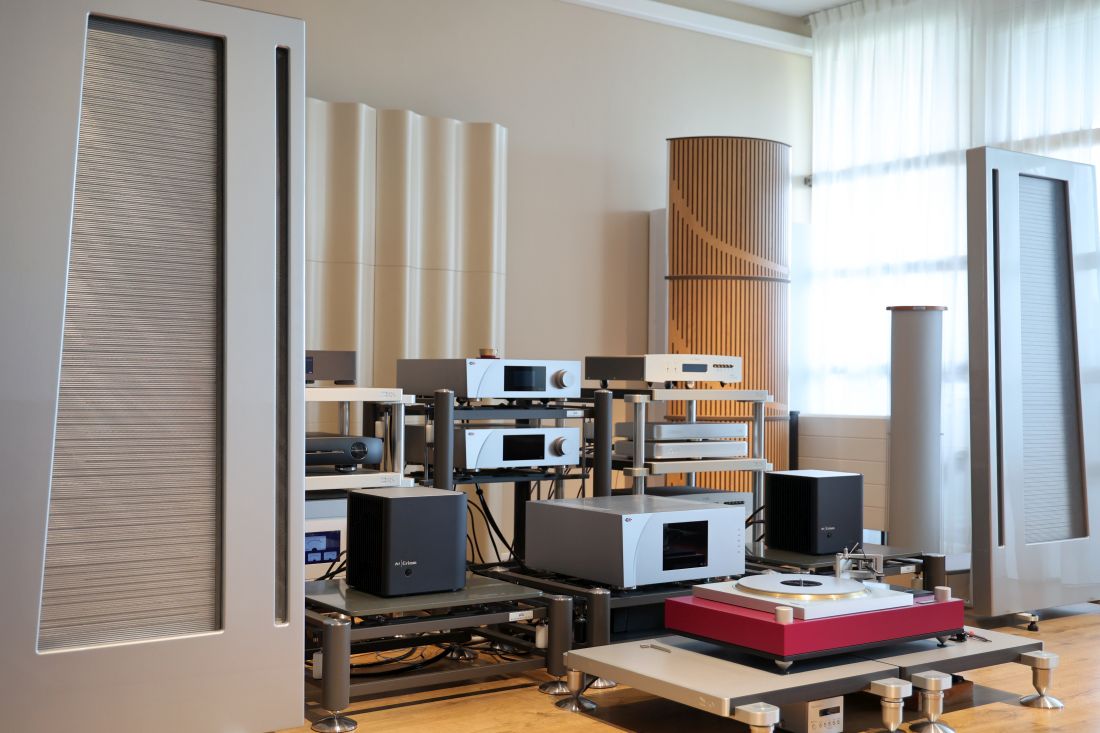
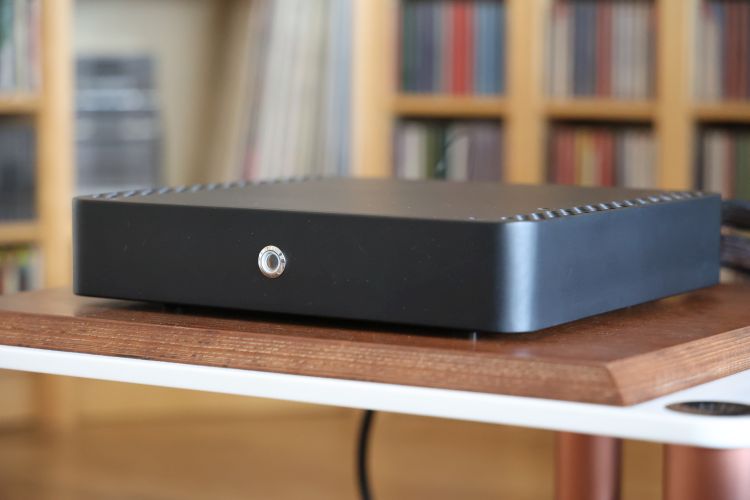
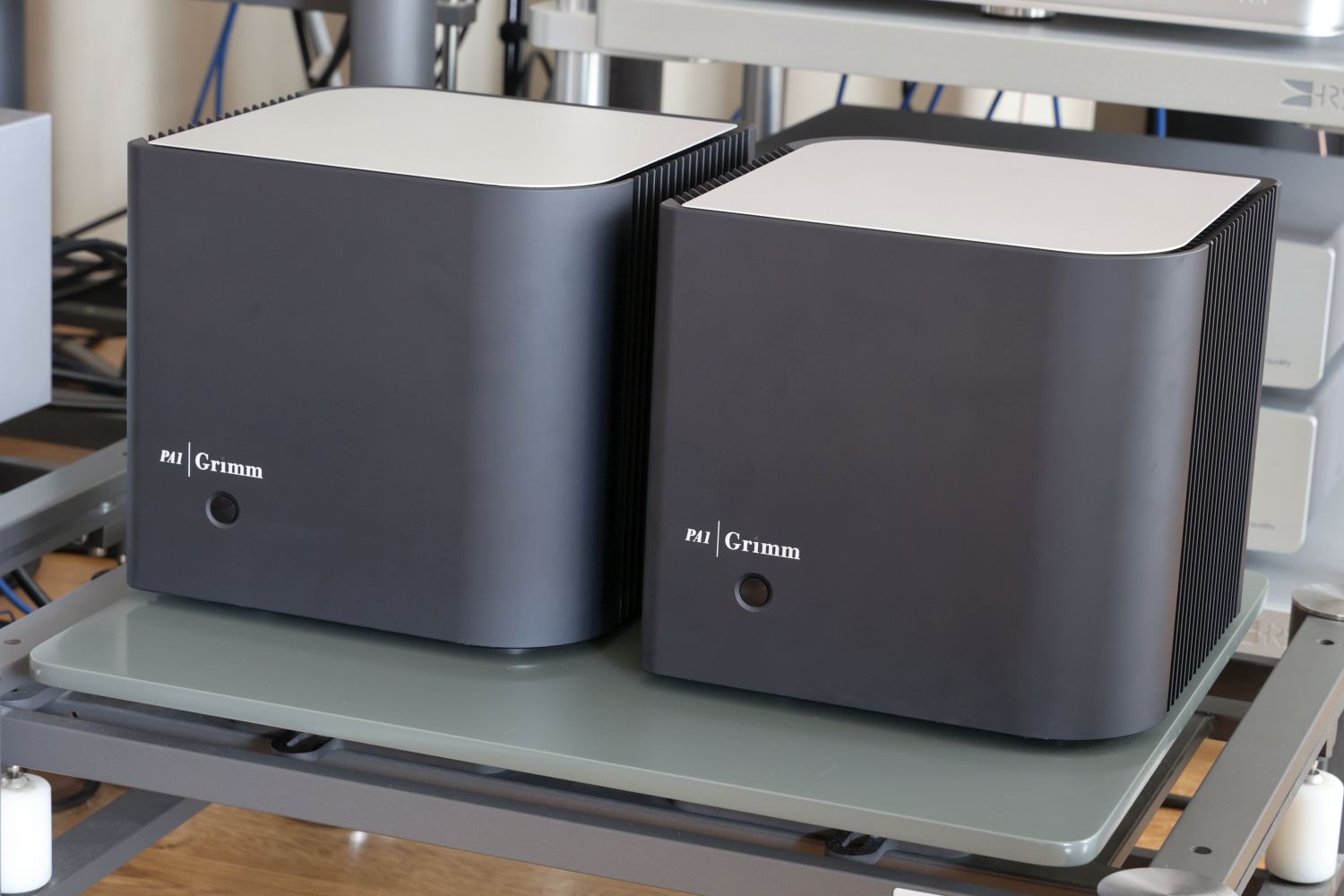
Although two PA1s fit side by side on a single shelf, I much prefer the neatly balanced look of having one on either side
After an hour of listening to all sorts of music, some new, and a lot we both knew well, we switched back to the A1.5. I started the playlist with the last track and worked my way back; halfway through the second track, we looked at each other without saying anything. I think he was biting his tongue, but I saw the same expression on his face as I felt. The sound was surely still great, but rather than the slightly more polite rendition I recalled from the PA1’s early hours, the A1.5 was now the more polite amplifier, as the PA1s were actually nimbler, more fluid, and more communicative. The CH amp still countered with a more authoritative sound, with more stature and a bigger, fuller bass. The A1.5 felt like a big V8 engine: smooth but very powerful, while the PA1s felt more like a small sports car: very quick to accelerate and fast in the corners. But rather than a sports car’s skelter-like behavior, the PA1s never felt rough or unrefined.
Car analogies are getting long in the tooth, I know. So, perhaps a better way to illustrate the PA1s behavior is to picture the purity and immediacy of a great low-wattage Single-Ended tube amplifier, but with more than enough power and no detrimental rounding effects at the frequency extremes. On this I must be very clear: the PA1s do not mimic typical “seductive” Class-A or tube goodness if that means fat, syrupy bass, golden mids, and silky, rolled-off treble. However, the PA1s do something more impressive, which I’ve heard only to this extent with the CH A1.5 and the Halcro Eclipse: an utter absence of character. By not sounding like a tube amplifier or a transistor amplifier, they render themselves invisible and “simply” get out of the way.
Whereas the WestminsterLab Reis were harmonically leaner than the CH A1.5, the Grimm PA1s are just as saturated and harmonically natural as the A1.5 while remaining virtually indistinguishable in neutrality, linearity, and transparency, meaning they come even closer. It’s even a tie in resolution and refinement.
Ultimately, the PA1s don’t sound entirely as liquid and free-flowing, or quite as authoritative, as the Halcro Eclipse, but it’s absolutely astonishing that they come this close at less than half the cost. The PA1s are a little less powerful and euphonic, but they excel in the area I find most important: letting the music speak for itself.
The PA1s sound relaxed and unhurried, but definitely not slow or thick. They are highly lyrical and engaging, very articulate, nimble, and dynamically expressive. They can be incredibly fast, but only if the music requires it. They don’t always sound fast, which can translate to a dry or staccato rendition or shortened decay. Impressively, despite their communicative nature, they never shout or try to impress. Instead, these amplifiers disappear altogether, and you simply forget about them. And that is the highest praise I can give an amplifier.
At €23.999 per pair, the PA1s aren’t cheap, but I can honestly say nothing in that price range comes close. They’re also more affordable than the A1.5, a pair of Reis, or the Halcro Eclipse. Competing with those amplifiers is an amazing achievement in itself, but when an originally pro-oriented music server/Speaker company immediately sets such a high standard with its first power amplifier, that deserves high praise.
Listening Matters

One day before finishing this review, I visited Listening Matters in Hilversum, in their gloriously refurbished villa, where the Grimm PA1s were demonstrated by Eelco Grimm and Marc Bosman during a Listening Event, paired with the PW1 Phono Stage, MU2 Music Server/DAC/Preamp, Luxman PD 191A turntable with Hana Umami Black MC cartridge, and Wilson Audio Sabrina V speakers. Eelco did a wonderful job entertaining the audience. After playing a varied selection of analog and digital tracks, he invited audience members to suggest tracks, with one condition: they had to motivate their choices. This led to remarkably well-articulated motivations that made the selections across styles even more interesting to listen to.
The common thread during this evening: everything sounded superb. Without fail, the soul of the music shone through. Wilson speakers have a distinctive, recognizable sound, and the Sabrina Vs did all the things Wilsons always do well, but this time, there was something extra. I’d swear I haven’t heard any recent Wilson models sound this agile, expressive, heart-touchingly communicative, and free-flowing.
Track after track, this session reinforced what I heard while reviewing these fantastic amplifiers, and it hammered home what I had already decided: the Grimm PA1s “simply” get out of the way and let the music do the talking.
Conclusion
Don’t underestimate these unassuming, “cute” amplifiers. They’re not just great value; they set a standard for transistor amplification that very few achieve and most can only strive for.
What they do may sound simple, but it’s remarkably difficult to achieve: they reproduce music without imposing any character of their own—whether transistor or tube—and let the music speak for itself. And while they don’t punish bad recordings, they certainly also don’t sweeten the sound to make it more palatable. Instead, their distortion is so low that they become, in effect, invisible. You simply forget about them as the music itself takes over. And that is the highest praise I can give an amplifier.
I like them so much that I told Eelco I didn’t want to return the review pair. Alas, this particular pair was already destined for other reviewers, but I’ll add them to the system as soon as another pair is available!

External Links
Manufacturer: Grimm Audio
Listening Matters: listeningmatters
Distributor for the Benelux: Terrason Audio