Review sample provided by LAiV Audio
Retail price: USD 494 + VAT (€559 in the EU, incl VAT)
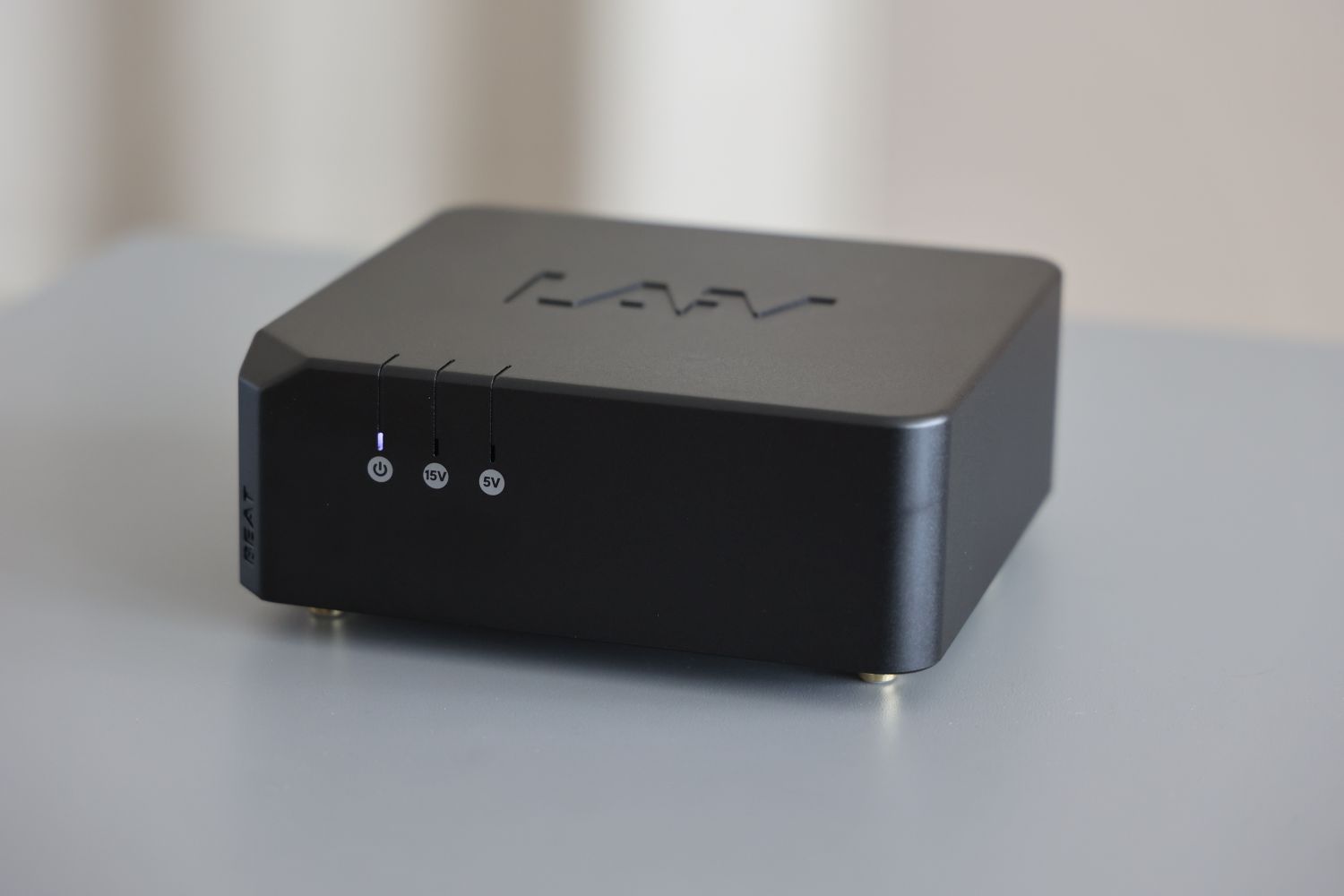
The LAiV Crescendo BEAT is a dual-rail true linear power supply. Dual-rail means each of its two outputs has its own regulation so that they can work independently of one another. With 15V at 2A and 5V at 3A, one BEAT can power two components simultaneously. Both outputs are live simultaneously. Each voltage is fixed rather than adjustable, which is a deliberate choice. LAiV reasons that a rail designed for exactly one voltage delivers that voltage best.
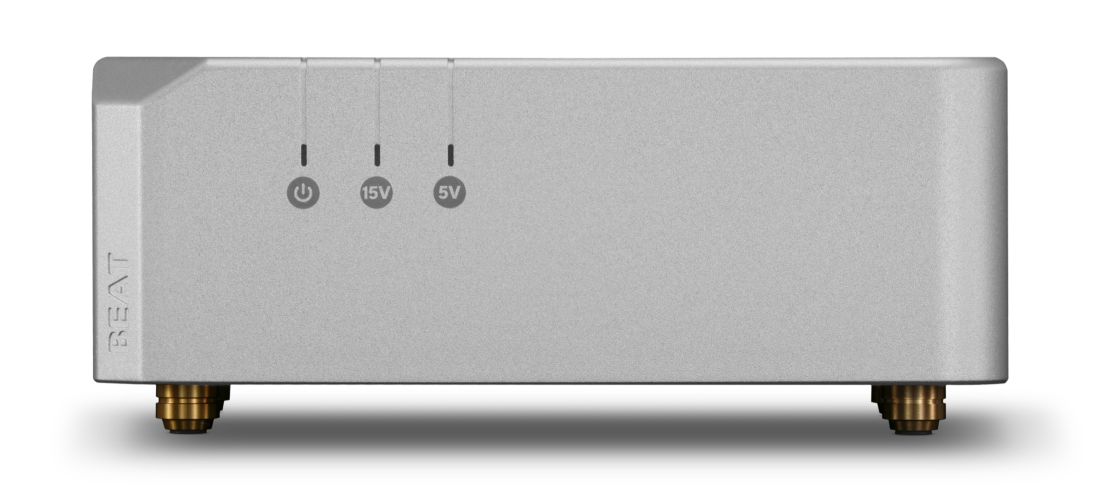
One BEAT can power the Crescendo VERSE or uDAC with its 15V output and the uDDC or a streamer with its 5V output at the same time. The BEAT can also power any combination of components that accept 5V DC at up to 3A or 15V DC at up to 2A, if they have the same polarity and fall within the BEAT’s current ratings. The BEAT has 5.5/2.1mm (for 5V) and 5.5/2.5mm (for 15V) center-positive DC barrel connectors.
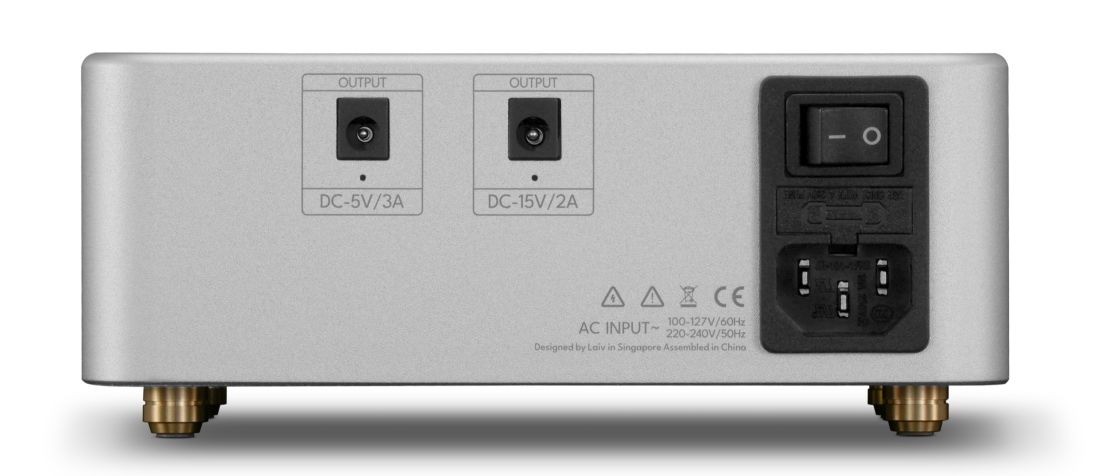
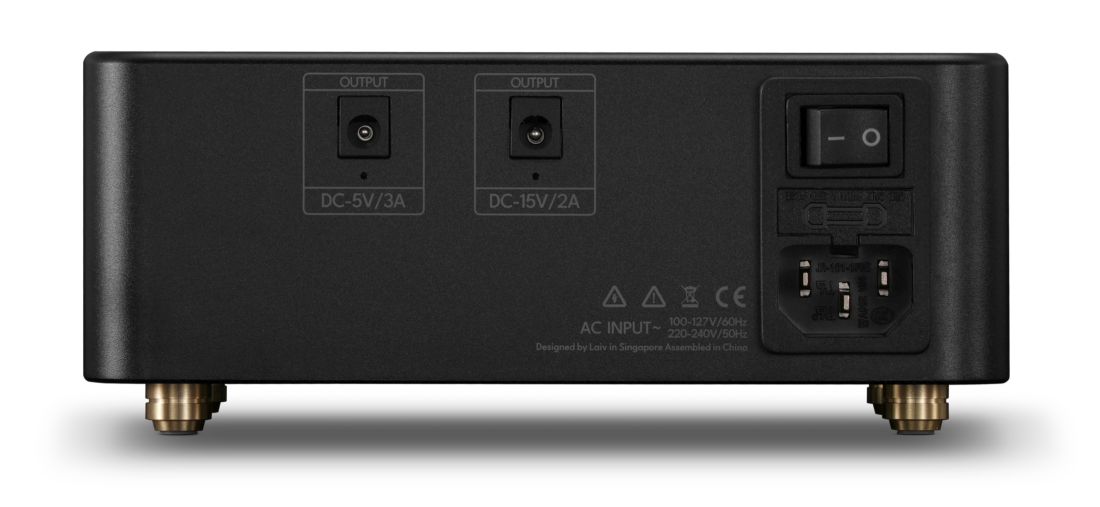
This is not a linearly rectified switched power supply but a full linear design, built the traditional way, with a 70VA toroidal transformer, Schottky rectification, and nearly 18,000µF of filtering. Each of its two rails has dual-stage linear regulation, which further lowers noise and achieves an even more stable output.
The initial regulation stage processes the rectified supply, filtering out mains ripple and load fluctuations, and then supplies a clean power rail to a second, low-noise stage that performs further fine filtering. Each stage multiplies the other’s rejection. The second stage further attenuates noise that survives the first.
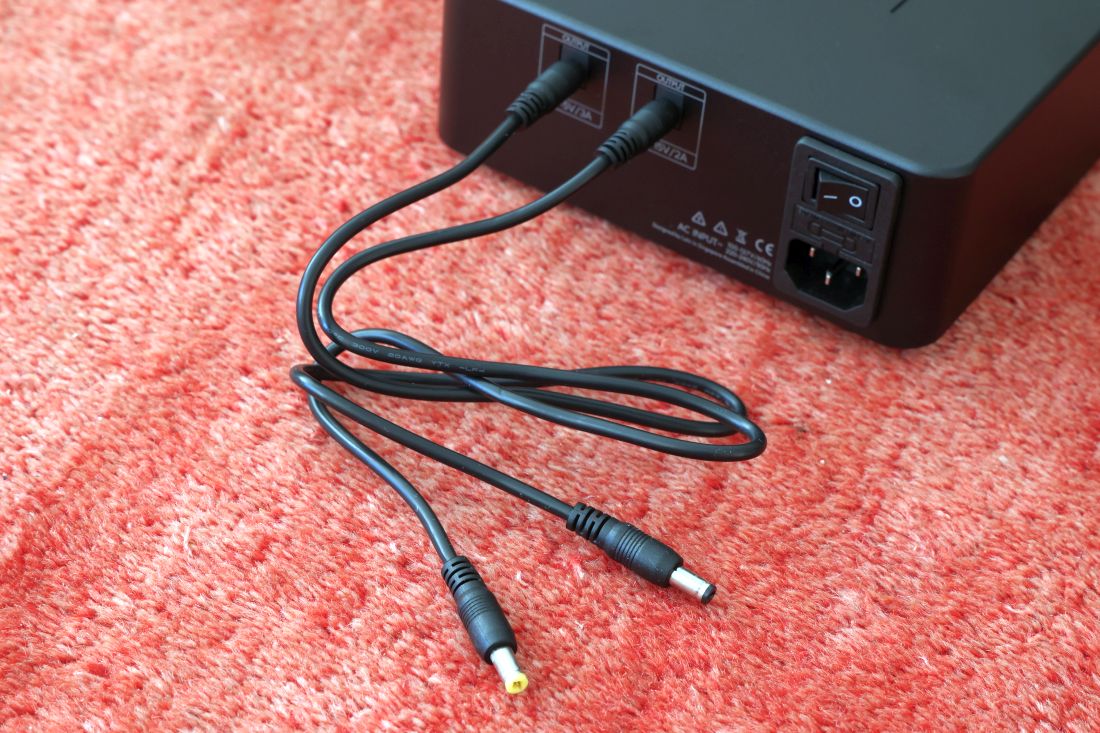
Parallel 5V DC and 15V DC output
Output noise measures at or below 10µVrms with no load and at or below 50µVrms at full load, with ripple rejection above 82dB. LAiV quotes both figures because that is how real systems work: your gear draws real current, and the BEAT stays quiet while delivering it.
To top it off, the BEAT also includes over-current, over-voltage, over-temperature, and short-circuit protection.
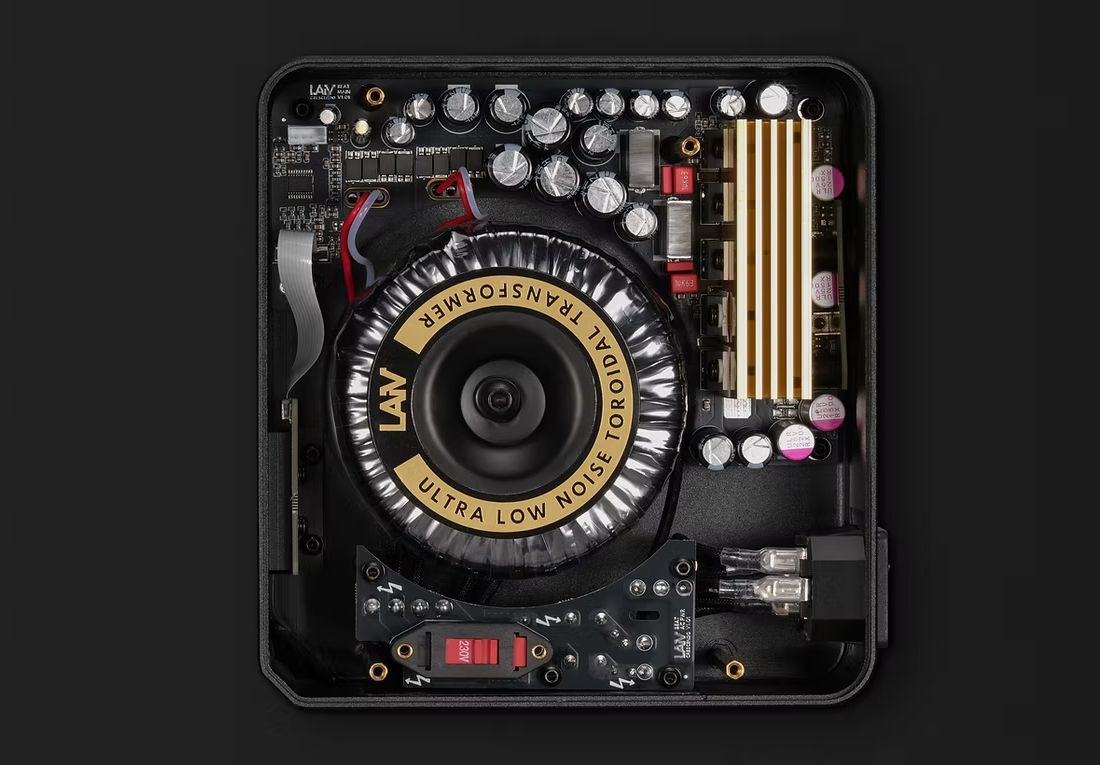
The debate between linear and switched designs might never be fully settled. Nonetheless, beyond personal preference, each has its unique character. In my experience thus far, linear supplies tend to sound fuller and more relaxed than switched designs, which tend to sound faster and crisper. Of course, exceptions exist, and I can’t say anything definitive about the BEAT until I have heard it. Based on the specs, looks, and price, though, this neat little power supply looks to be a gem!

Left to right: Genelec 1037B, 8341A, and 8020DPM active studio monitors
Review Context
I will listen to the LAiV Crescendo BEAT Power Supply in the Media Room, with the LAiV Crescendo VERSE DAC driving a pair of recently added Genelec 1037 studio monitors. Music sources are Roon, streaming from the Grimm MU1 Music Server in the Main Setup, and JRiver Media Center using local files.
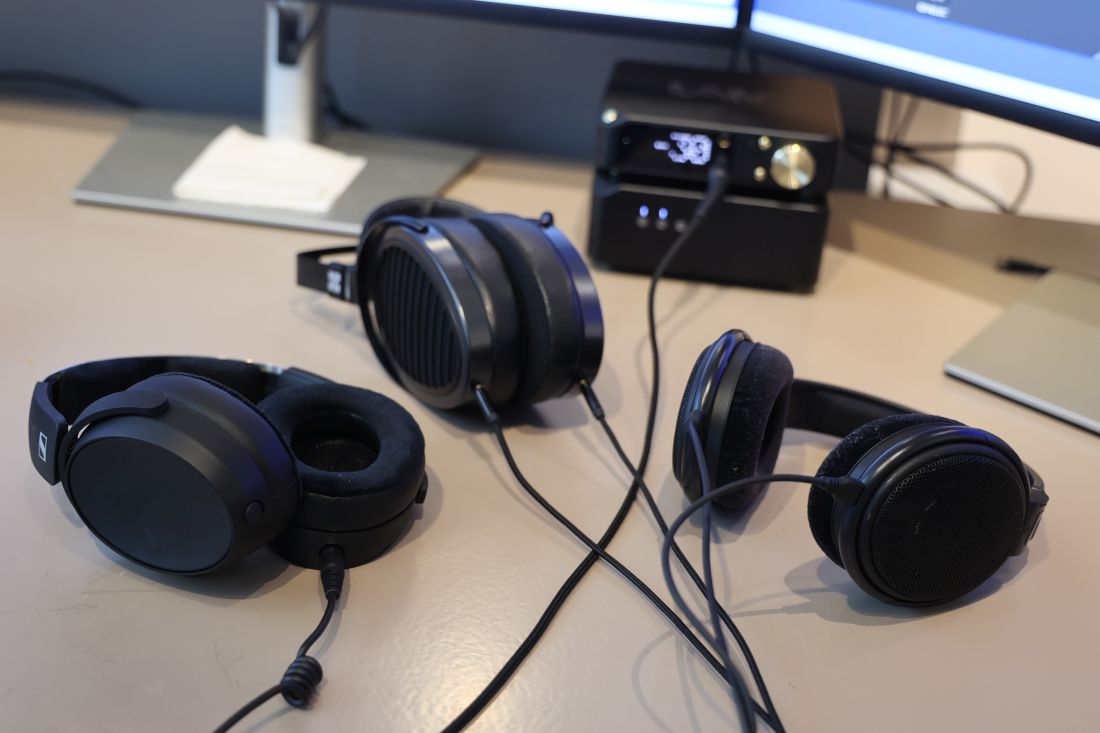
Since the VERSE DAC contains a headphone amplifier, I also used three different headphones to assess the BEAT Power Supply: the well-known Sennheiser HD-650 open-back, the relatively new Sennheiser HD480 Pro Plus closed-back, and the excellent HiFiMAN Arya Stealth Planar Magnetic.
Listening
When I reviewed the Crescendo VERSE DAC and compared it to the Harmony DAC, the difference was obvious: the Harmony is more expensive, but it performs on a considerably higher level. However, at the time, the VERSE was powered by its standard, simple wall-wart switched power supply. So I wondered: how much of the Harmony DAC’s superior performance would be due to its high-quality linear power supply? The Crescendo BEAT will let me answer that question!
Until recently, I used only Genelec 8341A monitors in this system. These speakers have AES/EBU digital inputs, Room Correction, Processing, DACs, Preamplification, and power amplification on board, so I only needed a USB-to-AES/EBU converter to use them with my PC, and the system didn’t need a LAiV preamp or DAC.
Recently, I obtained a pair of old but still very good Genelec 1037B monitors. Despite their appearance, they’re true reference studio monitors, not PA speakers. They are physically large active 3-way systems with 12-inch woofers that produce gorgeously deep bass with lots of authority, plus the neutrality, precision, and refinement you expect from a Genelec. Each speaker has three class AB power amplifiers on board, but because these are older models, they don’t have an onboard DAC or integrated volume control. Now, I did need a volume-controlled DAC. After reviewing the LAiV Harmony DAC and HP2A preamp/headphone amp, I was so impressed that I kept both, and I still have the Crescendo VERSE DAC I reviewed recently, so I had options!
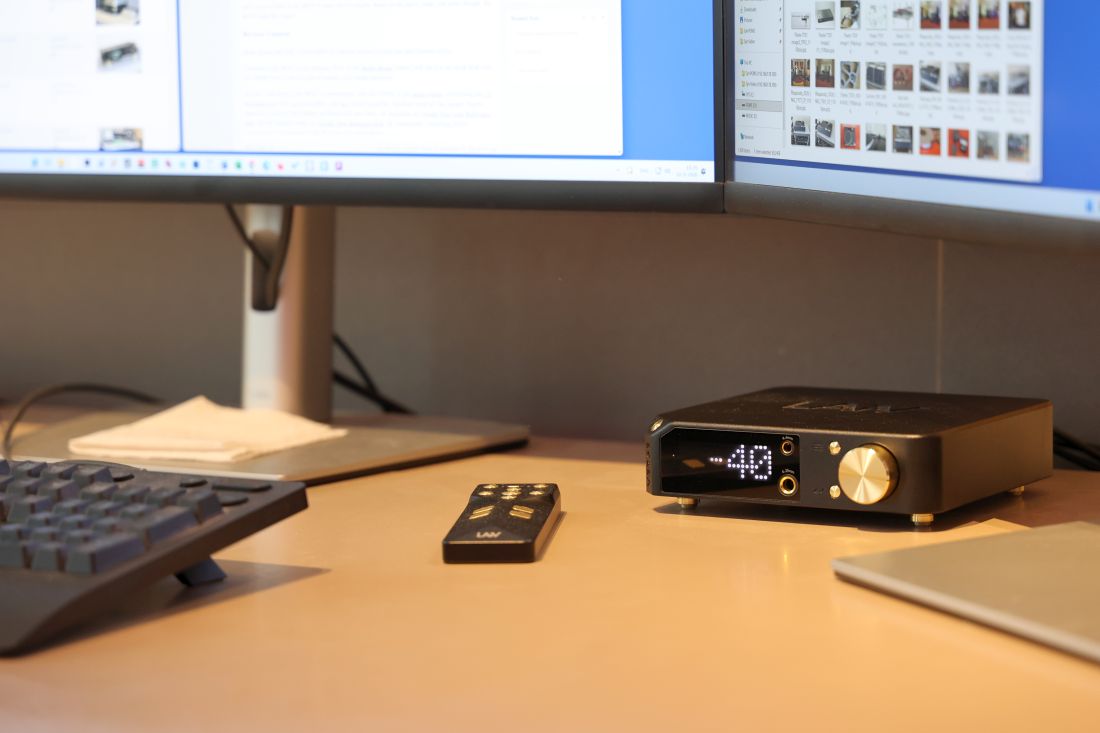
Because the Harmony DAC and HP2A looked absolutely massive on the desk, I started with the Crescendo VERSE. With its small footprint and sleek, luxurious look, this DAC looks great on the desk.

I knew the big LAiV combo performed on a higher audiophile level, but the big Genelecs still sounded very good with the VERSE, and I listened to this combo for a couple of days.
Next: VERSE with BEAT, Harmony DAC and HP2A, uDAC, and Conclusion