Apogee Duetta Signature – Part 1

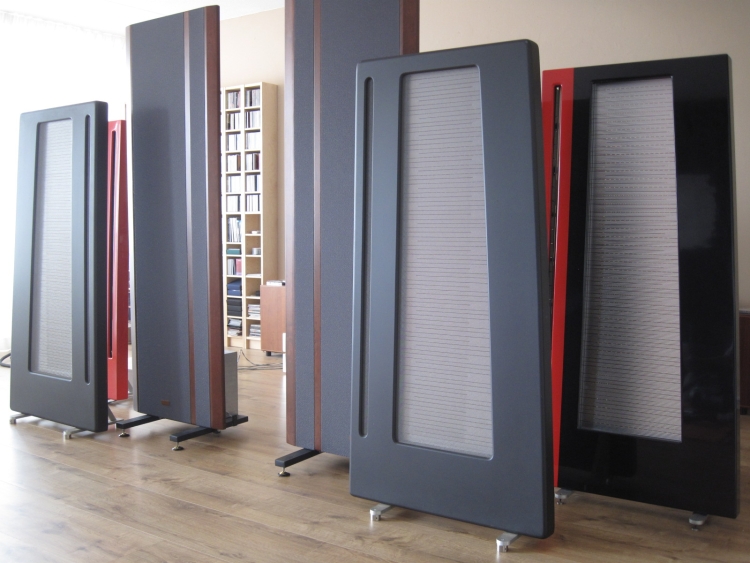
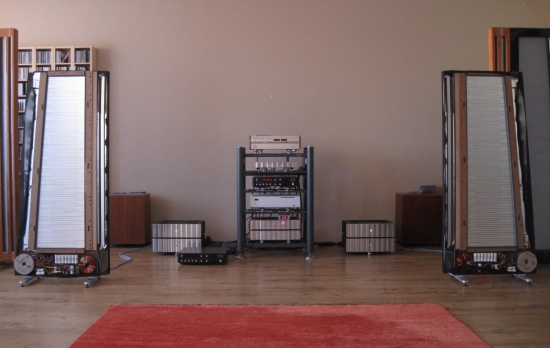
Duetta Crossover swapping – original versus rebuilt
When we connected the newly built Duetta crossovers to the original Duettas, we were shocked to hear how much the sound degraded! Sure, bass was fuller, and the midrange was more forward and lively, but the transparency and, more so, the coherence was greatly reduced, not to mention that the original set now also sounded screetchy and way too forward.
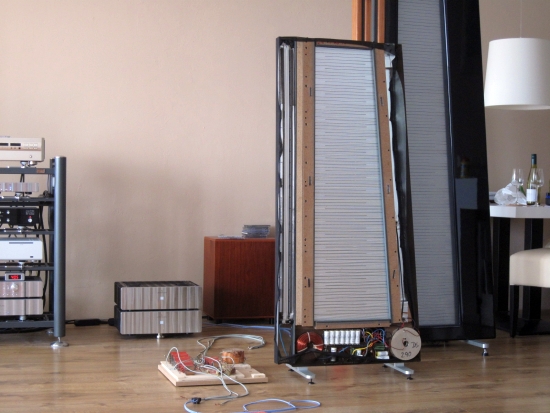
Stop the clock – this meant that my initial assessment of the refurbished Duettas was flawed due to the “wrong” crossover. After some correspondence with the Duetta’s previous owner, it became clear that he had removed some components from the crossover, in an effort to make them sound purer, and in his setup at least, more transparent. But in the process, it also made the MRTW much louder than it should be. I guess this was much of a system synergy thing because, to my ears, the new crossovers actually sounded less transparent than the originals, and although more forward and present, not more detailed and definitely less subtle. The extra perceived dynamics and more “live” feeling is very seductive, but ultimately I prefer the more balanced sound of original Duetta Sigs, or the Divas.
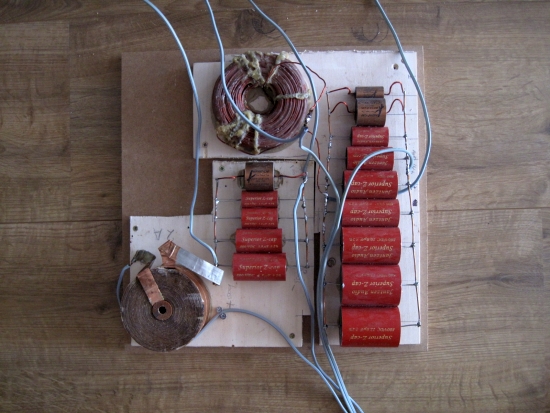
Above: rebuilt crossover, missing some components
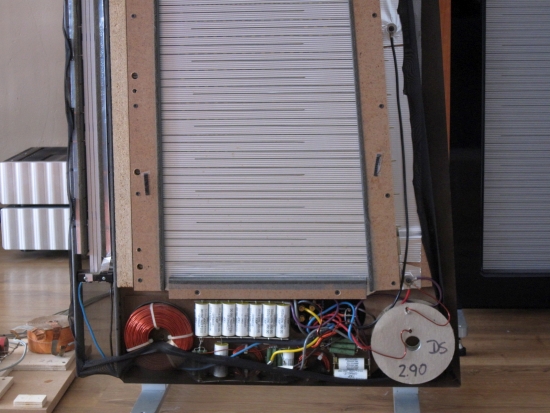
Above: Original crossover
Deteriorating foam and the impact on buying decisions
There’s no doubt that for most sets the foam will have deteriorated after some 20 years. I’ve inspected Jan’s set and could indeed scrape it off with my finger: it was soft and sticky instead of firm and springy. Also, I could see that the foam that is sandwiched between the clamps on both side of the foil seemed to be in the same state. Yet, in spite of this, these speakers did not buzz unless played at ear-splitting levels, and even then, the buzz was only audible when standing right next to the speakers.
When Apogees do start to buzz severely, or even rattle, I’m not convinced that this is due to the foam itself, but rather due to the foil losing tension. The thing is: you can’t replace the foam without damaging the foils, and you can’t replace the foils unless you are very, very handy. The foil is sandwiched between clamps not only by means of foam but also with silicone sealant, and when trying to pry the clamps apart, you will inevitably damage the foil. There are replacement foils from Graz, and also from another supplier in Germany, but the former can only be installed by a certified dealer, and while the latter can be installed by anyone, this is quite a challenging chore.
Bottom line: listen carefully when buying. If you hear no buzz, chances are that that stays that way for many, many years to come – they might even live longer than your spouse will allow you to have them. Also, these speakers cost so little secondhand that I feel they are quite simply worth the risk. To me, they sound better than any other speaker in any practical price range, and while Divas are indeed better in certain aspects, they are also very, very picky and don’t sound any good unless you really pull all the strings.
Serial Numbers:
Jan’s original set: 13 998
My original set: 13 182
JW’s KLM2 refurbished set: 13 185
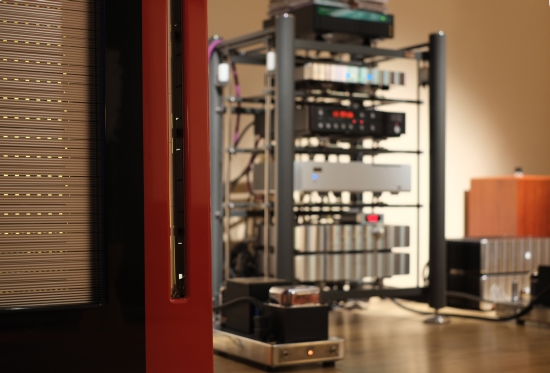
Long after this review was finished, I conducted experiments to replace the non-standard crossovers with the original ones. Read all about this in the next chapter.
There’s More
In the next installment, I will compare a newly made non-standard crossover, an original Duetta Reference crossover, and an original DS crossover.
Serial Numbers:
DS refurbished pair: 13 185
DR Crossovers: 13 180
Refurbished pair ribbon types for the review so far:
Bass: KLM v2 (2006, KLM construction, v2 pattern)
MRTW: KLM2 (2006)
More Duetta Signature
Extensive Duetta Signature Review – Part 2
Extensive Duetta Signature Review – Part 3
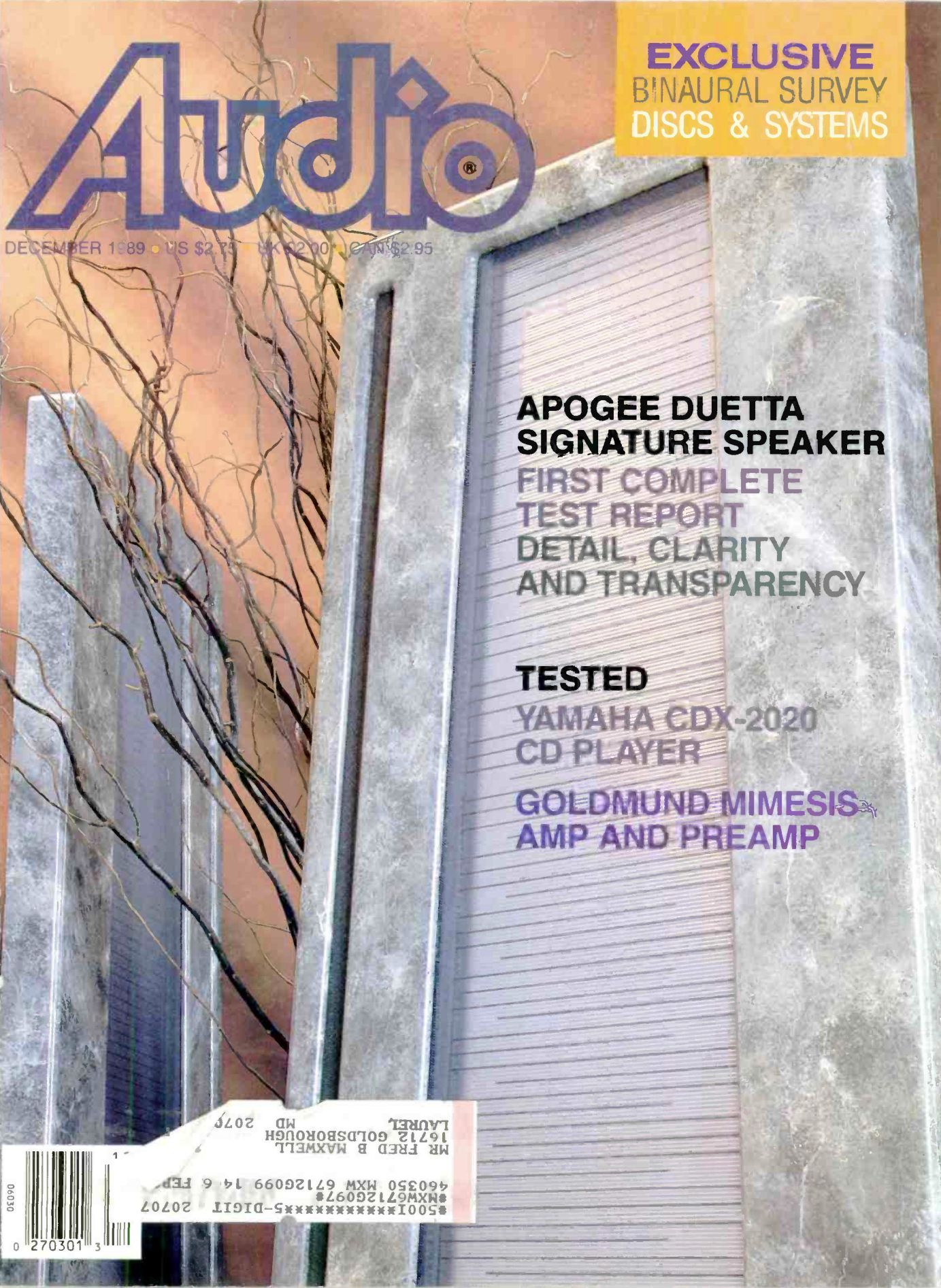
Duetta Signature review 1989 in Audio Magazine (English)
More Apogee
Read Also:
Speaker Cables – biwire or single wire

Are companies still doing Apogee Duetta signature repair on the east coast of usa
See this page for the Apogee Acoustics Endorsed Installers: https://www.hifi-advice.com/blog/specials-graz-endorsed-installers/
Dear Christiaan,
thank you for an exceptionally informative review / article on your journey with Apogee Duetta Signature.
One question, just to make sure I understand correctly:
The infamous risk of some “buzz” from the woofer foils on the Apogee Duetta Signature (and other full range Apogees) seem to be present at – high volume levels – *no matter* if it is the refurbished ones with newer woofer foils, or the original speakers with the original woofer foils. Is that understood right?
(In the text it said. “However, I quickly found that JW’s refurbished Duetta Sigs behaved exactly the same way, and also it was mainly the right hand speaker. I later found that even my Divas do buzz somewhat but only when pushed even harder. So I must conclude that with Apogees some buzz is apparently unavoidable. “)
Again, it is really great to have such detailed 1.st hand experience on both original and refurbished Apogee DS from your article.
(Short on tne background: I made a DIY version of the Apogee Duetta back in 1987. (All that budget allowed being a student at that time!) It survived the years, by some stroke of luck and although living a quiet life for prolonged periods – still play well until this day. Recently however I’ve acqiuired a set of the “originals” – Apogee DS (and a large Krell power amp to drive them from about the same time). Although I really liked my home cooked DIY Duetta version… getting the “real thing” (of course) is a serious step up and has, in short, simply re-ignited this crazy HiFi hobby. Truly a lot of fun, and what a joý these speakers are!
Thanks in advance!
Peter
How cool that you made your own magnetostatic speaker! Kudos!
The Apogee buzz applies to the full-range models, not the hybrids. Or, at least, not in my experience. The potential for buzz is offset by Apogee speakers’ immense bass power, and their relatively large foil travel may well be a factor in this. The thing with the buzz is that, when the speakers are in great shape, it is usually inaudible unless you play certain music styles loudly, and actively search for it. Typically, if it is there, the buzz will be evident when playing loud transients followed by silence. In that case, you will hear the transient, a bass stab or drum whack, for example, followed shortly by a fading buzz than sounds like a muffled rattle. My theory is that the buzz is made (more) audible when the foil is allowed to resonate by itself, and it is masked, reduced, mitigated, or maybe even eliminated when there are other sounds reproduced by the foil.
Interestingly, the state of the foam is not a great indicator for whether or not a speaker will have buzz. A friend has Full-range Apogees that, when excited above a certain volume level, buzz at a certain frequency. He has been unable to eradicate this even after refurbishing with new bass foils twice. However, when I listen in his system, I never hear it, unless he uses certain recordings and points it out. I understand one can get fixated on these things, but it is a relative matter.
In any case, this is just a risk that comes with these otherwise quite amazing speakers. However, my refurbished Divas never buzzed, and a friend’s original Duetta Sigs with foam that is totally gone (smudges and sort of melts when touched) have also never buzzed, unless played unreasonably loudly.