
Review samples supplied by Ohm Audio
Retail price in the Netherlands, including 21% VAT:
M19 (SA)CD Transport: 12.900 Euro
M21 DAC: 20.900 Euro
M19 Description
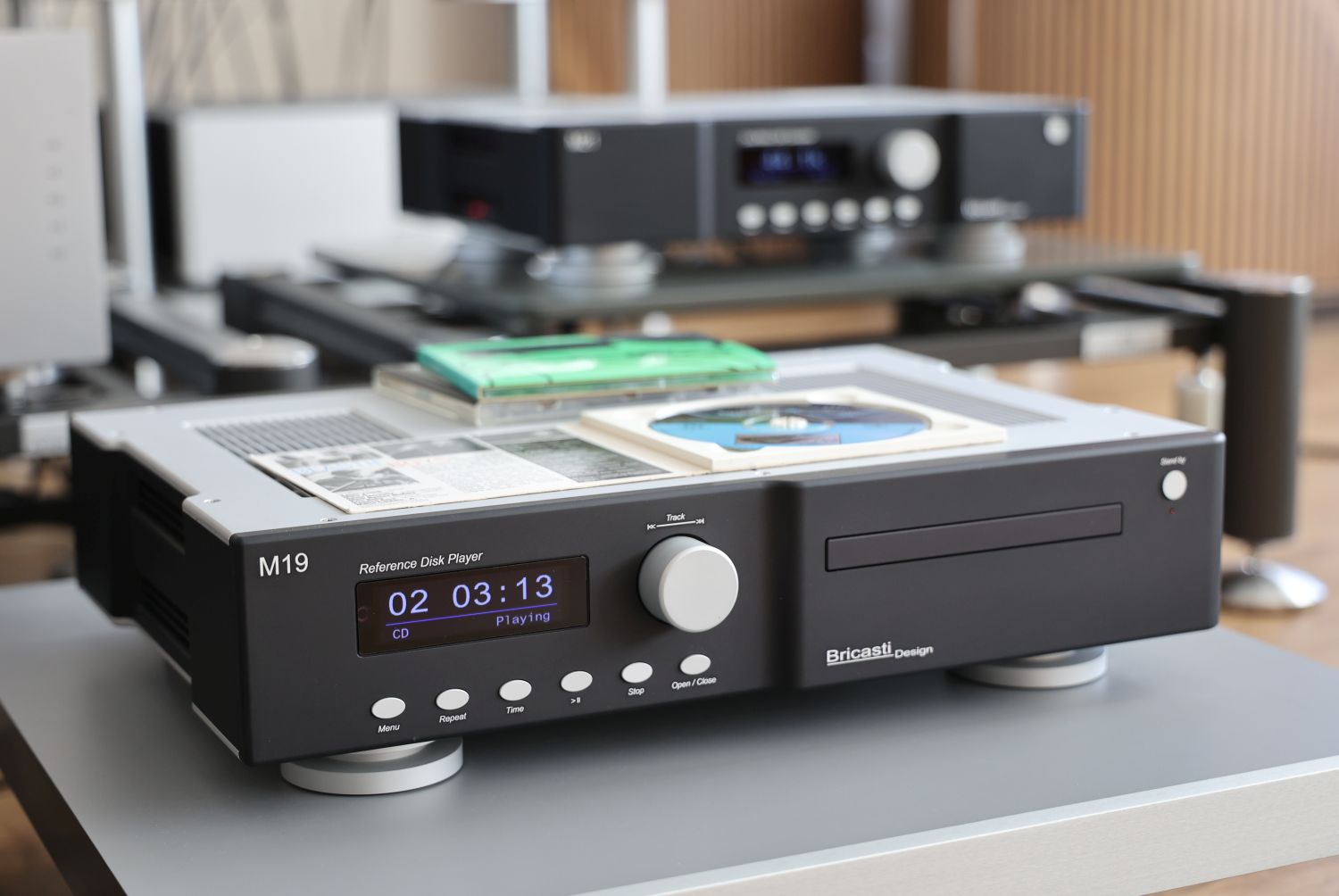
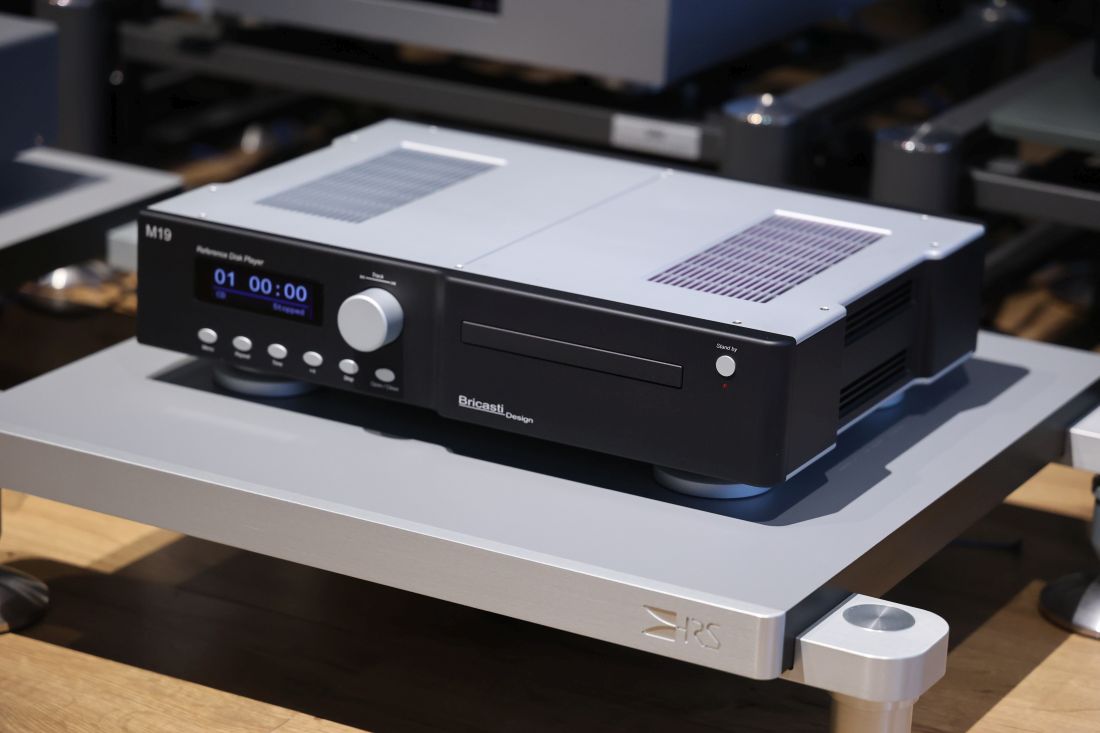
The M19 is an SACD/CD transport designed to be simple to operate and dedicated solely to uncompromised performance. The player is robustly constructed of milled and CNC-machined aluminum sections. All parts begin as solid aluminum blocks, precision-machined to exact tolerances for a perfect fit. These parts are then anodized, and the text and markings are laser-etched for a clean, lasting look.
The player contains two separate linear supplies: one for powering the mechanism and control aspects, and another for the digital audio section. In the rear of the chassis, behind the mechanism, is the digital output section. This provides the system clocking and creation of the AES and S/PDIF outputs, while the I2S signal is passed directly from the drive to the output connector. As an option for the SPDIF output, the M19 can be fitted with a true 75-ohm BNC connector.
The original sample rate is passed; it does not employ any sample rate conversion or up-sampling of the data streams. When playing a SACD and using the AES or SPDIF outputs, DSD playback is via DoP. When using the I2S connection to a Bricasti DAC, DSD transfer is done Natively.
The player’s I2S RJ45 connection carries separate clock and audio signals, providing purer sound, not just for SACD but also for regular Red Book CDs. Although I2S can theoretically work between components from different manufacturers, there is, sadly, no market-wide, agreed-upon pinout for the connector, resulting in hit-or-miss compatibility. As the Bricasti manual notes, there is no standard for I2S apart from the original intended inter-component use on a PCB within an audio component. Thus, the M19’s I2S interface is designed for use with Bricasti products. It is not meant for general use with other products.
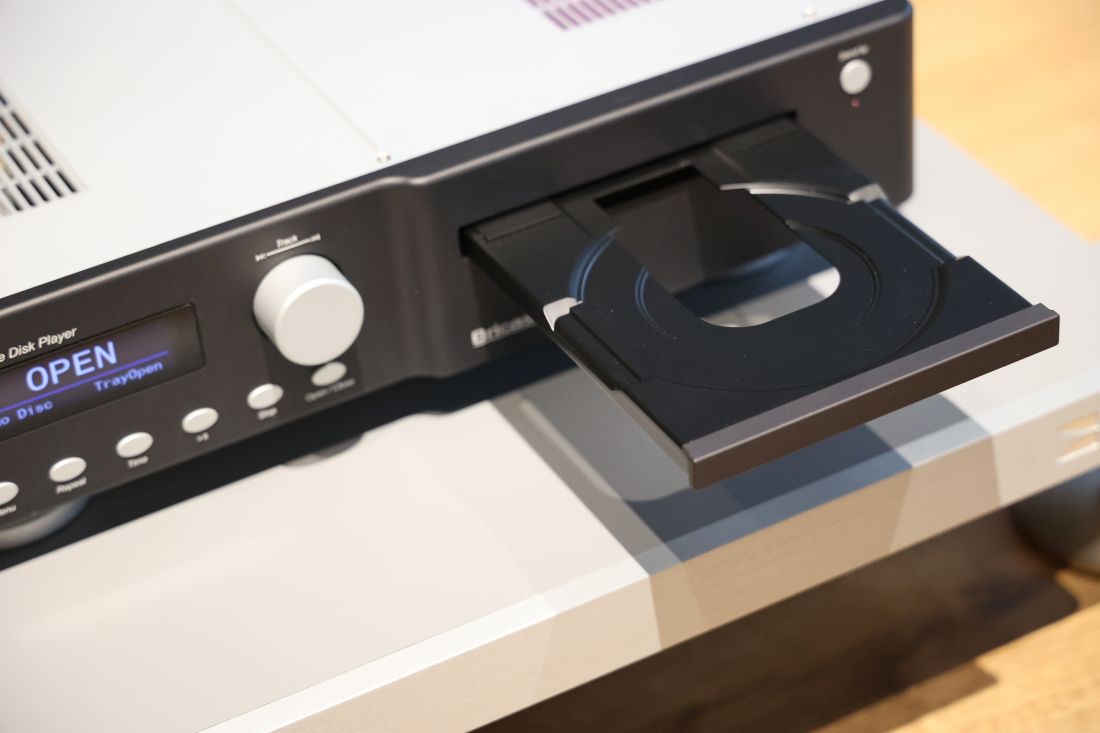
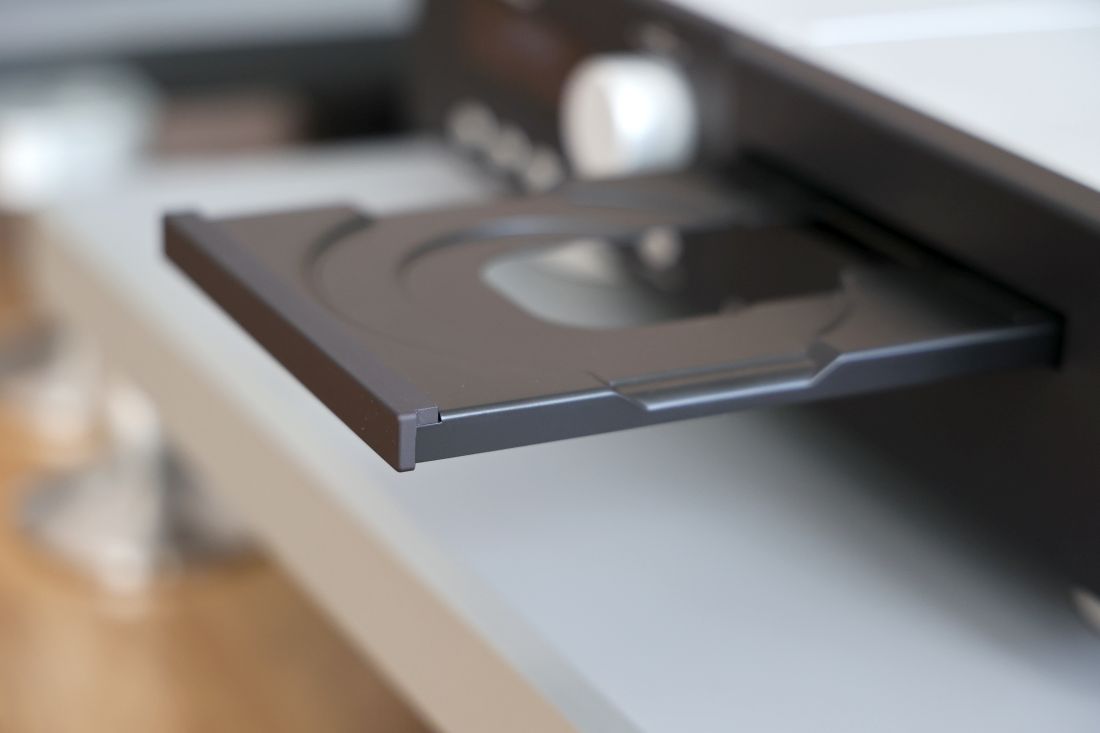
Whenever I use a CD player or a CD transport, I’m always curious about which optical mechanism is used. Nowadays, the surprise element is gone when it comes to SACD mechanisms. Since Teac/Esoteric stopped selling their optical mechanisms to third parties, D&M (Denon & Marantz) remains the sole supplier of SACD mechanisms. This explains why Bricasti, Accuphase, Goldmund, Wadax, CH Precision, Playback Designs, and several other high-end manufacturers use these mechanisms as a basis for their transports. Of course, although CD mechanisms, servo systems, and their associated signal processing ICs can exhibit specific sonic signatures, this does not mean that all players will sound identical. The power supply and overall design also significantly influence the sound, not to mention the implementation of the digital interface. I’ve actually heard players with identical optical mechanisms sound very different.
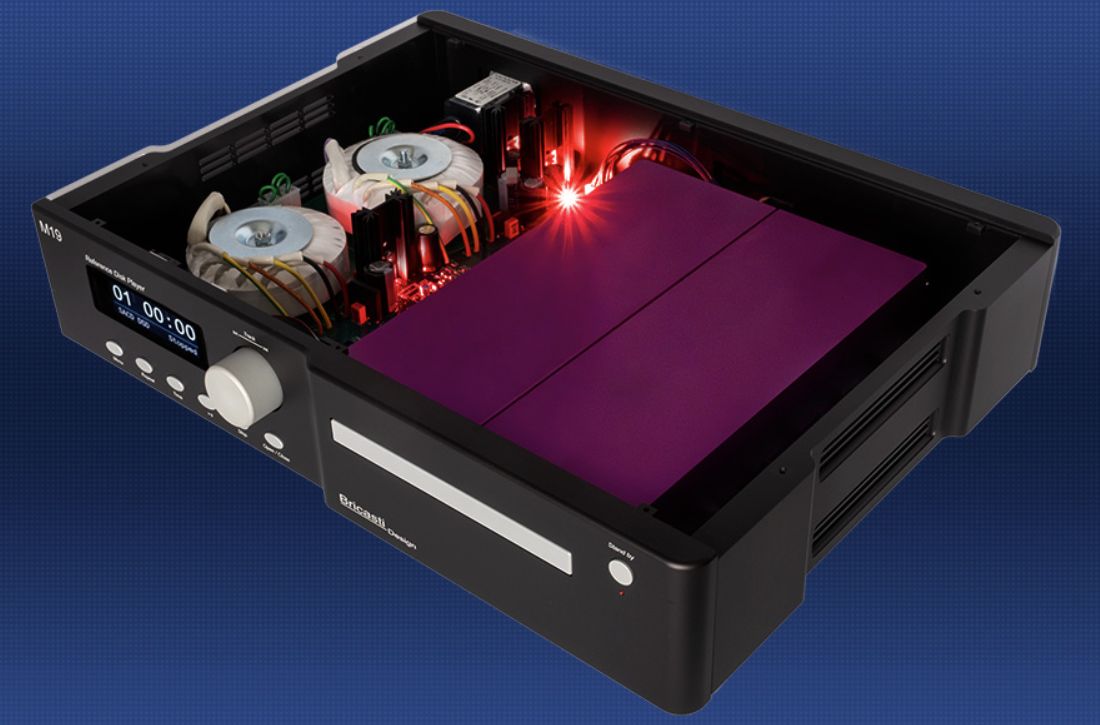
In the M19, the mechanism is internally covered by a heavy, purple-anodized aluminum screen visible through the chassis vents. The disc drawer is attached to steel guides and operates smoothly and quietly, while feeling sturdy.
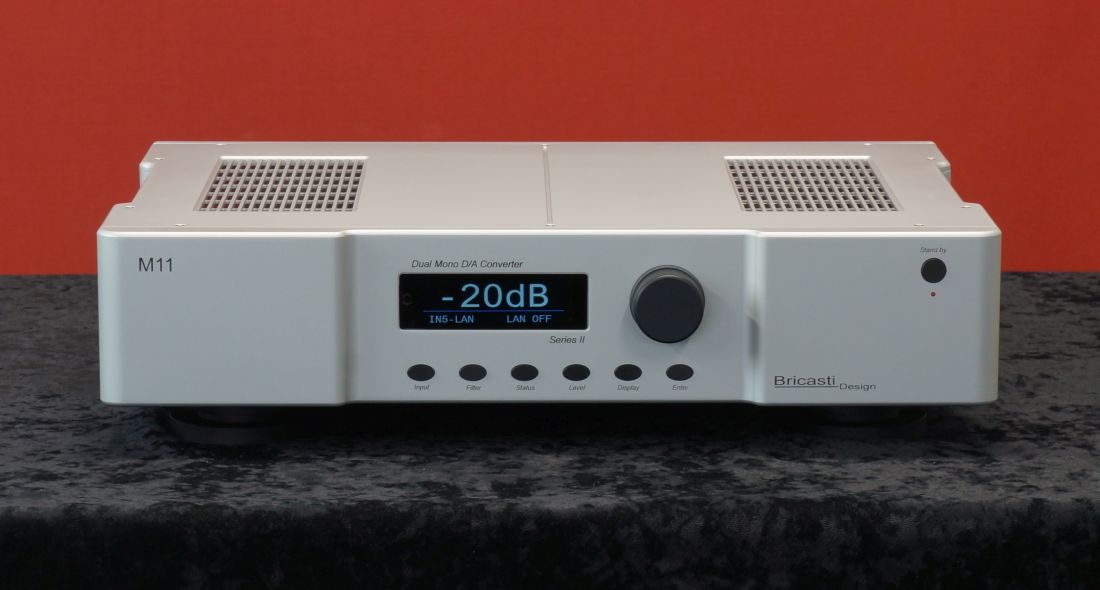
Besides the default black-and-silver anodized version, the M21 and all other Bricasti products are also available in an Argento finish (shown above for the M11 Series 2 DAC), which can be regarded as the inverse of the standard version, with a silver casing and a black dial and buttons. Additionally, you can select silver buttons and choose between light and dark fascia lettering.
Incidentally, the M11 Series 2 DAC shown above is also available as “regular” M11, in which case it has the original 1U flat case design like the M1 DAC. In this case, Series 2″ refers to an upgraded version with bigger power supplies that require more space, thus requiring a taller cabinet than the flatter standard versions.
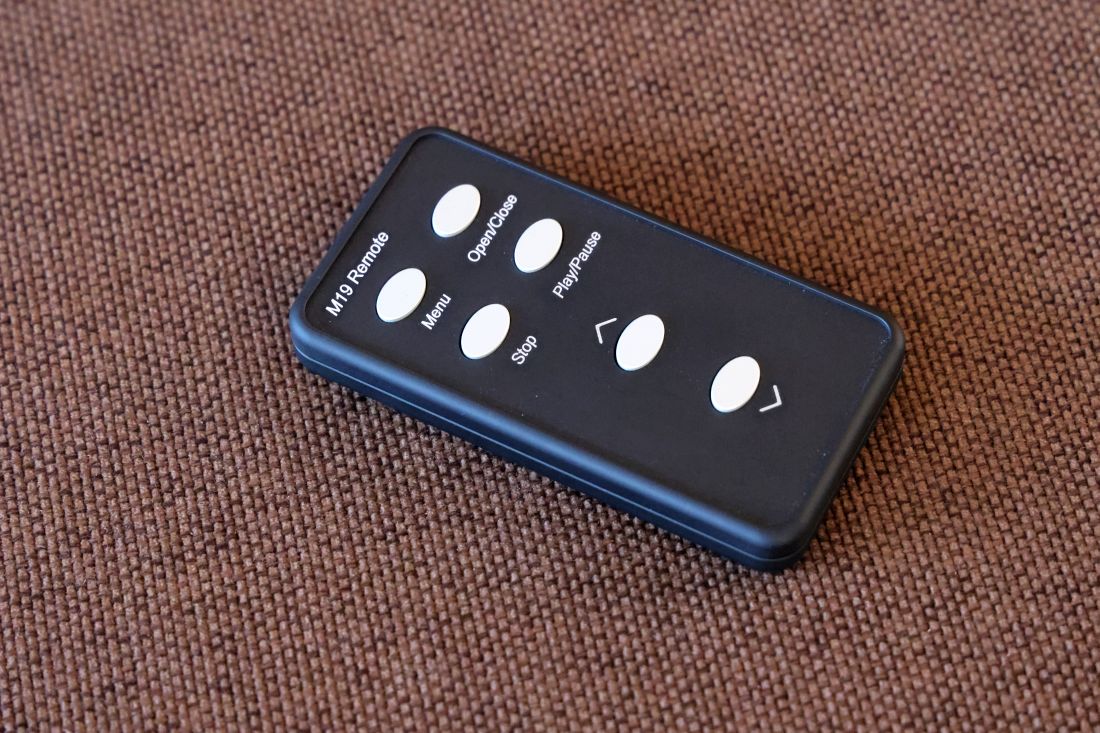
The infrared remote control is made entirely of metal and feels very solid. It provides access to the most commonly used functions of the M19, including CD/SACD layer changing.
The M19 is a puristic, straightforward design, focused on intuitive operation and sound quality. While tracks can be skipped via the remote control or the front-panel rotary dial, there is no Search (Rew/Fwd) function, meaning that you can’t quickly fast forward to, or repeat a particular section within a track. In operation, the M19 is whisper-quiet. Without pressing an ear to the player’s enclosure or watching the display, you can’t tell whether the disc is idle or playing. From the listening position, you cannot hear the disc start or spin, or detect any track-change sounds.
Unlike most multi-format disc players, operational controls do not override the power state. Thus, when the player is powered off, the drawer cannot be opened using the front-panel open button, and the player cannot be operated from the remote. Likewise, pressing the power button while the drawer is open puts the player in standby while keeping the drawer open.
Next: System Context, M21 DAC description, and Listening to the Bricasti Combo

Thanks for the excellent, detailed, insightful review, Christian.
Long live CD
I hope you can write the names of the tracks you use with each review.
Kind regards
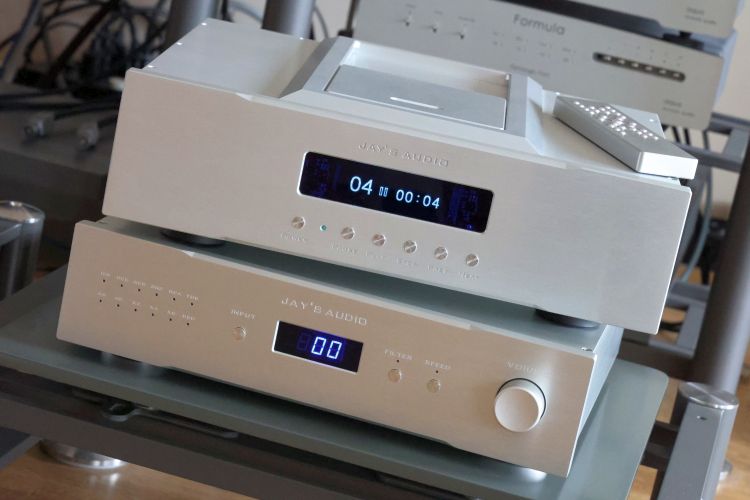
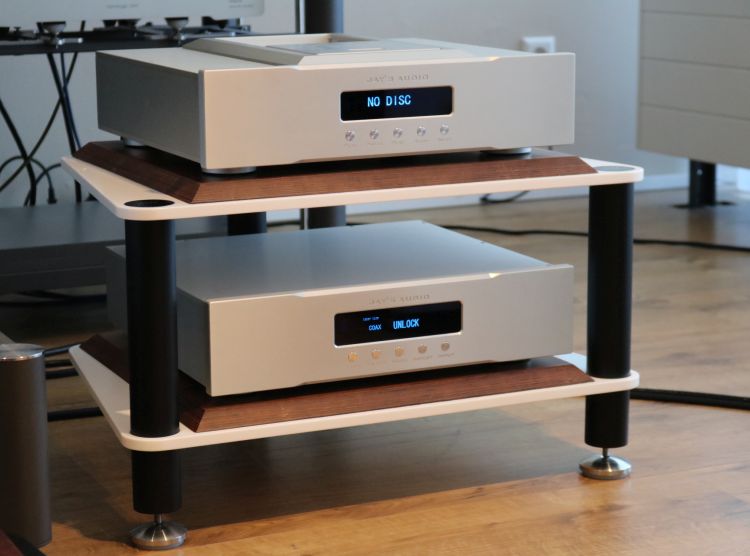
Thanks for reviewing the Bricasti M19. I’m curious to know how you would compare it with the Jay’s Audio CDMk3. .
Kind regards,
Hi Robert, these two transports serve distinct market segments at different performance levels. The Jay’s Audio CDT3-Mk3 offers very good value for money, with a smooth, full-bodied, and more organic sound than most music servers or streamers. However, it does not achieve the Bricasti M19’s high-end performance, particularly in the areas of resolution, transparency, agility, fluidity, delicacy, and air.
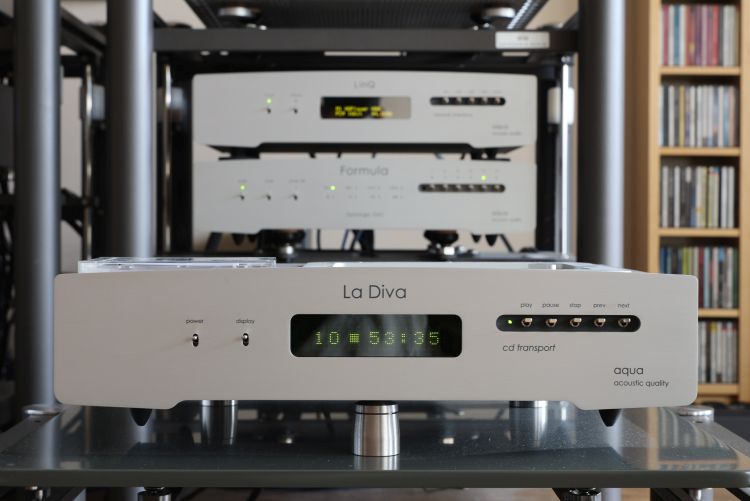
Thanks for your quick , helpful response. After perusing your HFA awards list I was puzzled that the Bricasti M19 was not rated as :”highly recommended” since the Bricasti M19 falls just under the Aqua La Diva which is rated as highly recommended, as is the Jay’s CDT Mk 2, which is further down on the list. This was especially so as your review of the Bricasti CDT was very positive. BTW, I am currently using the Jay’s with other Bricasti equipment. Your thoughts, please? Thank you. Robert.
HFA awards consider the price/performance ratio as well as personal preferences. Although they sound slightly different, I rate the Aqua and the Bricasti similarly highly. As mentioned in the article, the Bricasti loses a few points for not offering seek functionality, which I personally use a lot. Nevertheless, it is an excellent player, and I can still recommend it to those who do not need that functionality.
Thanks again. I did gather that from your review and rating; however I was puzzled by the Bricasti’s not having been “highly recommended,” in contrast to others. Is this due to considerations of price position?
In this case, it is down to the lack of functionality, not its price or sound. Its price is commensurate with its performance and build quality.
Thanks
I just bought a used Onkyo 7000R for 900 euros without shipping.
It’s part of their reference series, which was released in 2011.
And by the way, the modification by Hoer-wege for the c-7030 was very good. It made this budget player more resolving but nothing substantial.
Have you heard it?
Kind regards
hi Christiaan
thanks a lot for you review here. i have the M19 and M21 and connected with the I2s cabel. however I am curious to try different RJ45 cables, and FTA Metis caught my eye when I read your review. can you imagine how they would work together ? does the sound of Final Touch match the Bricasti sound in your imagination ?
best regards
Michael Gravlund
Hi Michael, I think that the Metis will match very nicely, as it offers a similarly fluid and free-flowing sound, without becoming slow or undynamic. With that, it will further reinforce the Bricasti’s sonic balance. I’d recommend keeping any I2S connection short, ideally no longer than 1 meter.
Hi Christiian
Thanks 👍😁
Yes i will only need 80 cm
Now we are talking about Final touch … I could need a power cable for M19
Any thoughts of FTA powercable here ?
I recommend reading the FTA Elara review. If my sonic descriptions appeal to you, then it could be a good candidate indeed.
hi Christiaan
after reading your fine reviews of FTA cables, I have ordered the new ethernet cable Carme and the Elara powercable too. looking forward to hear them with the M19
best regards
Michael Gravlund
Regarding the reviewer: great review, as usual (at least the beginning, as I stopped reading – see hereafter).
Many thanks to keep up the good job!
Regarding the product:
in 2026, releasing an I²S output whose pins cannot be reconfigured as to match with the I²S input of a DAC from ANOTHER brand (and thus offering a broader choice of DAC), is totally beyond my understanding.
This point only made me stop reading the review.
Orfeo
There are some really great products out there but then you see the price and have to question the value proposition. For example, is this transport really worth 8 -9 times the cost of the Onix XST20 SACD transport?
Having owned and tested many CD players and transports, I find that while recent, affordable models can sound quite impressive for the money, none so far match the exceptional performance of the Bricasti. Of course, beyond a certain price point, increasingly smaller improvements demand an ever higher cost increase, but the improvements add up and they do indeed lead to a better product.