• About
    • About HFA
    • HFA Awards
    • Associated Equipment
    • Banners on HFA
    • HFA Analytics Data
    • HFA Audio Setup History
    • HFA Audio Setup Snapshots
    • Sitemap
    • Contact
  • HFA Awards
  • Reviews
    • All Reviews
    • Amplifier
      • All Amplifier Reviews
      • Integrated Amplifier
      • Preamplifier
      • Power Amplifier
      • Phono Preamp
    • Loudspeaker
      • All Loudspeaker Reviews
      • Passive Speaker
      • Active Analog Speaker
      • Active Digital Speaker
    • Digital
      • All Digital Reviews
      • CD Player
      • SPDIF DAC
      • USB DAC
      • Music Server
      • Network Player
      • Digital Recorder
      • Digital Interface
      • Audio Software
    • Turntable and Accessories
      • All Turntable and Accessories Reviews
      • Turntable
      • Tonearm
      • Phono Cartridge
      • Turntable Accessories
    • Cable
      • All Cable Reviews
      • Analog Interlink
      • Phono Interlink
      • Speaker Cable
      • Power Cable
      • Digital Cable
    • Accessories
      • All Accessories Reviews
      • Racks / Stands / Feet
      • Tuning / Tweaks
      • Power Connector
    • Industry Update
  • Insights
    • All Insights
    • Analog Insights
    • Cable Insights
    • Connector Insights
    • Digital Insights
    • Extensionblocks / Filters Insights
    • Generic Insights
    • System Synergy Q&A
  • Specials
  • Show Reports
    • All Show Reports
    • Alkmaar Audio Show
    • Chattelin Audio Systems
    • Dutch Audio Event
    • Enosound
    • HifiDeluxe
    • HifiLive
    • Munich High End
    • XFi
  • Classics
    • All Classics
    • Analog Classics
    • Digital Classics
  • Links
  • About
    • About HFA
    • HFA Awards
    • Associated Equipment
    • Banners on HFA
    • HFA Analytics Data
    • HFA Audio Setup History
    • HFA Audio Setup Snapshots
    • Sitemap
    • Contact
  • HFA Awards
  • Reviews
    • All Reviews
    • Amplifier
      • All Amplifier Reviews
      • Integrated Amplifier
      • Preamplifier
      • Power Amplifier
      • Phono Preamp
    • Loudspeaker
      • All Loudspeaker Reviews
      • Passive Speaker
      • Active Analog Speaker
      • Active Digital Speaker
    • Digital
      • All Digital Reviews
      • CD Player
      • SPDIF DAC
      • USB DAC
      • Music Server
      • Network Player
      • Digital Recorder
      • Digital Interface
      • Audio Software
    • Turntable and Accessories
      • All Turntable and Accessories Reviews
      • Turntable
      • Tonearm
      • Phono Cartridge
      • Turntable Accessories
    • Cable
      • All Cable Reviews
      • Analog Interlink
      • Phono Interlink
      • Speaker Cable
      • Power Cable
      • Digital Cable
    • Accessories
      • All Accessories Reviews
      • Racks / Stands / Feet
      • Tuning / Tweaks
      • Power Connector
    • Industry Update
  • Insights
    • All Insights
    • Analog Insights
    • Cable Insights
    • Connector Insights
    • Digital Insights
    • Extensionblocks / Filters Insights
    • Generic Insights
    • System Synergy Q&A
  • Specials
  • Show Reports
    • All Show Reports
    • Alkmaar Audio Show
    • Chattelin Audio Systems
    • Dutch Audio Event
    • Enosound
    • HifiDeluxe
    • HifiLive
    • Munich High End
    • XFi
  • Classics
    • All Classics
    • Analog Classics
    • Digital Classics
  • Links
scroll down for more
Tuning / Tweaks Reviews

R.T.F.S. Sirrah – Part 2

Christiaan Punter 20 November 2020 10 Comments
  • Facebook
  • Twitter
  • LinkedIn
  • Pinterest
  • Email

Application with dipoles

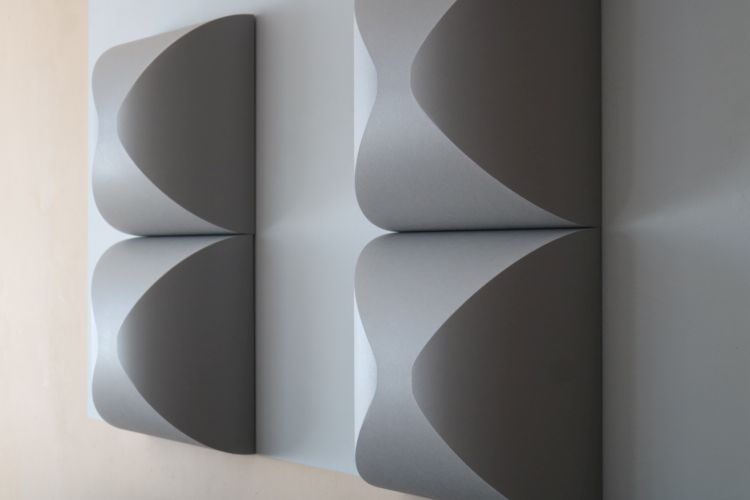
From earlier experience, I already knew that you need to address reflection issues precisely in the right spots which is why the R.T.F.S. Sirrah panel’s 48 x 48 cm format is ideal. When using them directly behind the listening position one needs to take their depth of 23 cm into account but otherwise, they are pretty unobtrusive and in my view actually make for a tasteful work of art. To see how they transform a very empty room, see also part 1 of the SiRRAH review done in audio buddy Jeroen’s setup.

Normally with SiRRAH’s, one starts with two units, one left and one right at the points of the first rearward reflections. When the precise positions have been found you can work your way up using more SiRRAH modules to increase the impact until you get it just right.
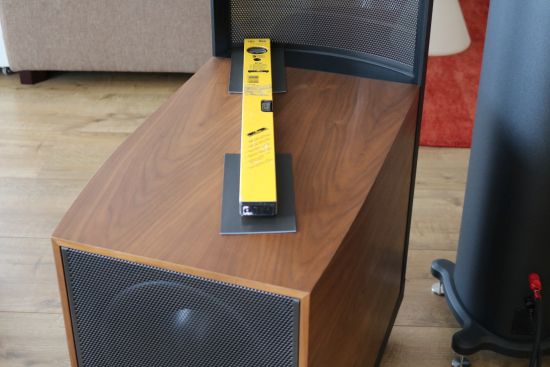
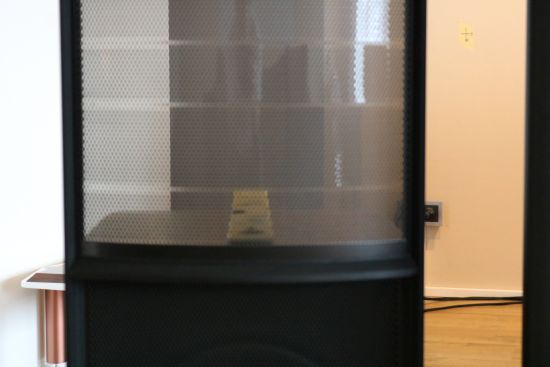
The left speakers’ direct reflection point goes right into the RTFS Big Blocks.

The outer edge of the speaker does aim straight at the bare wall. When standing in that position you can also clearly hear where the reflection stops.

Preparation

I started by finding the first reflection points on the front wall, 3+ meters removed from the speakers’ stator panels. Especially on their rear end, Martin Logans are very beamy, following precisely the arc that the curved stators describe. Thus, it was easy to find the first direct reflection point, and from there, the adjacent sections.
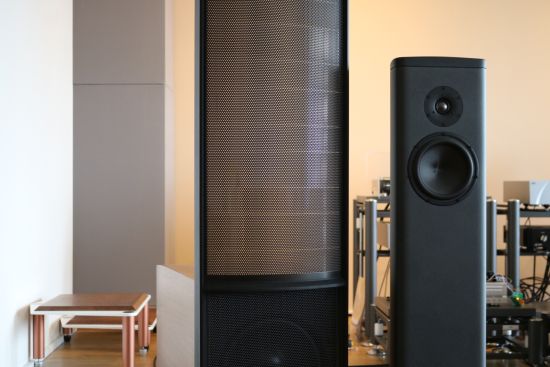
In-between the Big Blocks and the Audio Racks is where the first SiRRAH will be placed.
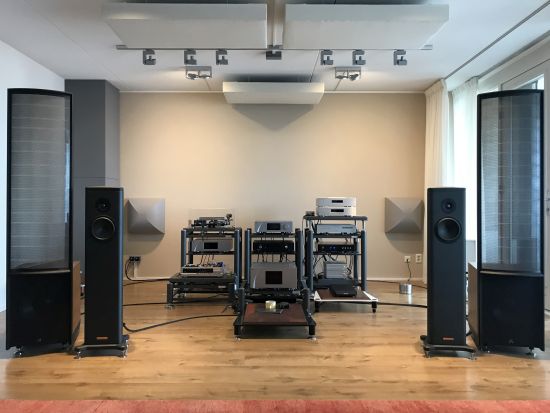
Treating the front wall

Starting with the two most obvious positions behind the Martin Logans’ first rearward reflection points at ear height, the SiRRAHs greatly reduced the flutter echo while adding more clarity to and more distinct layering within the soundstage.
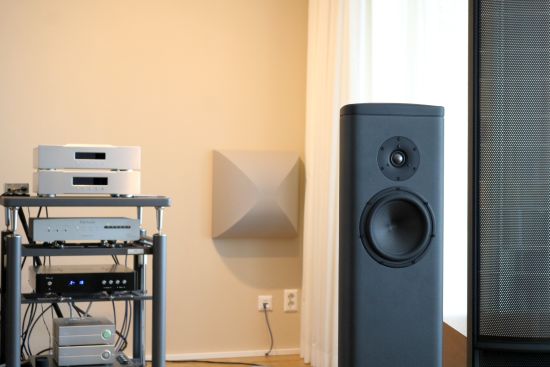
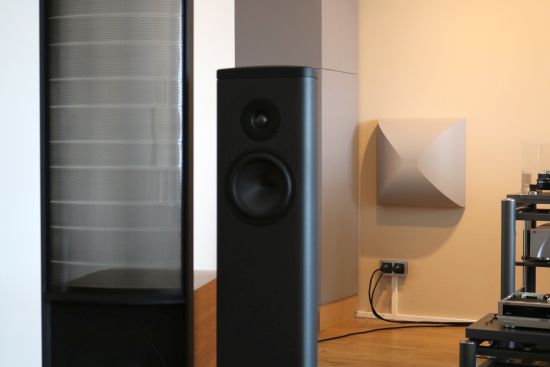
The quick result of the two SiRRAHs in this large space was so impressive that it made me lust for more. After unpacking two more units, I attached them right above the earlier two.
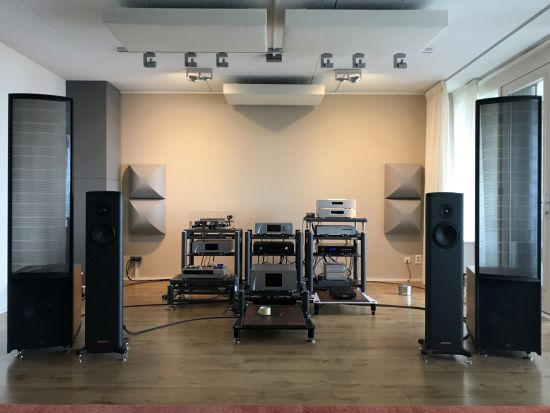
The two extra panels provided a further reduction of overall reflections but it wasn’t quite as drastic as what the first two panels achieved. With the left and right sides so much improved, the remaining reverb that lingered in the center part of the room made it obvious that only the sides of the wall had been treated.
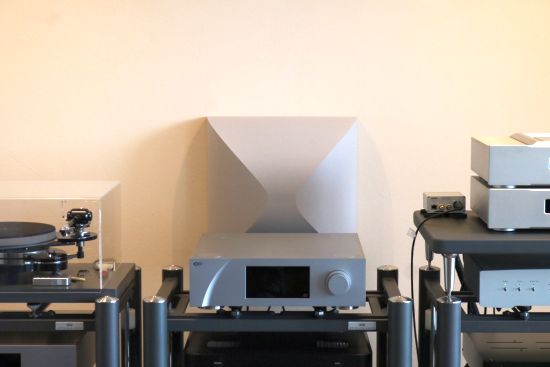
Adding a SiRRAH panel right in the middle of the front wall at the same height as the left and right ones ended up visually half-behind the rack but very clearly reduced the flutter echo. While experimenting with the height, I found that the reflections started just above the highest component in the rack and extended to above the single SiRRAH.

Adding another SiRRAH on top of the center one was the proverbial cherry on the pie, reducing the last remnants of the flutter echo while extending the soundstage further behind the speakers and making it appear more even-handed and more believable. Now, I also started hearing similar benefits as I observed in Jeroen’s setup – more isolated vocals with better focus.
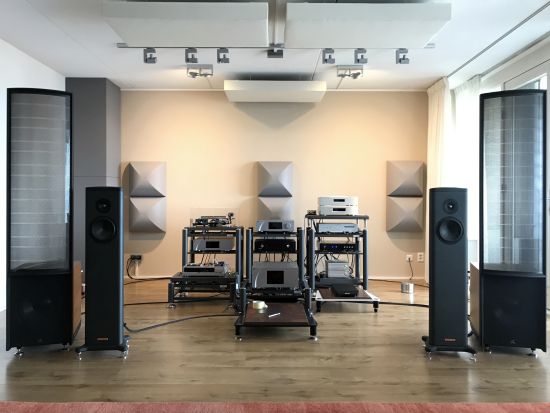
At this point, I entered a super-critical mode. Although the midrange and treble regions were amazingly clear and articulate, I simultaneously felt that the bass transients had become a little rounded. Could I be wrong about the placement of the left and right units behind the speakers? They are more than 3 meters removed from that wall so, theoretically, the rear wall should be an insignificant factor. Yet, I had this flutter echo to deal with.
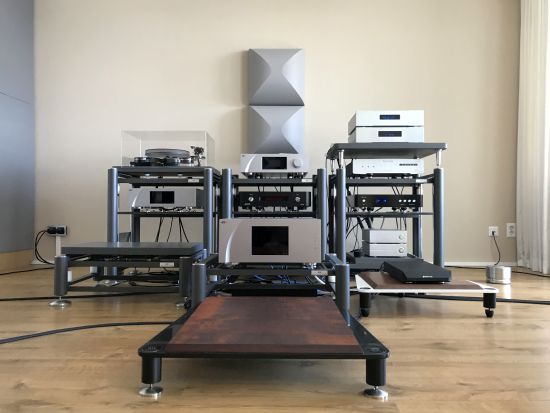
In an effort to re-balance the bass, I removed the four left and right panels while leaving the center ones in position. As hoped, this did indeed remove the roundness in the bass and reinstated the articulation and transient sharpness just the way I like it but it also very audibly brought back some of the flutter echo, this time clearly located in the left and right part of the room.

This led me to conduct some more experiments with the horizontal positions while varying the height as well, made easy by the extra sheets that Farshid so kindly added.

As it stands, the front wall exhibits three main issue areas. But the question that entered my mind was whether these should all be addressed on the front wall. The left and right ones are where the speakers beam rearward while the center position is where the forward-beamed sound ends up after being reflected off the back wall, focusing back onto the middle on the front wall.
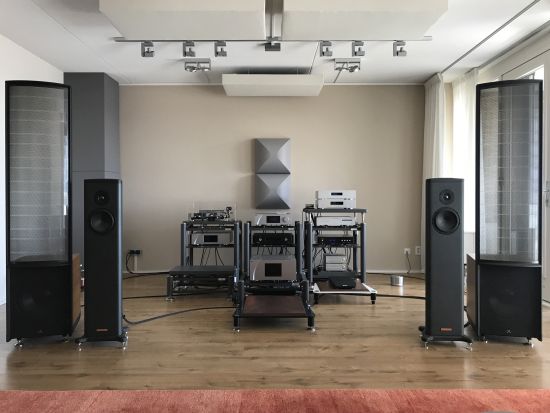
The final arrangement on the front wall

I finally accepted that, while the center two locations offered clear benefits without introducing any unwanted side effects, the left and right locations behind the speakers were just not ideal. Although I had tried to avoid it for the aforementioned reasons, it seemed that the remainder of my reflections had to be taken care of via the rear wall.
Related Posts
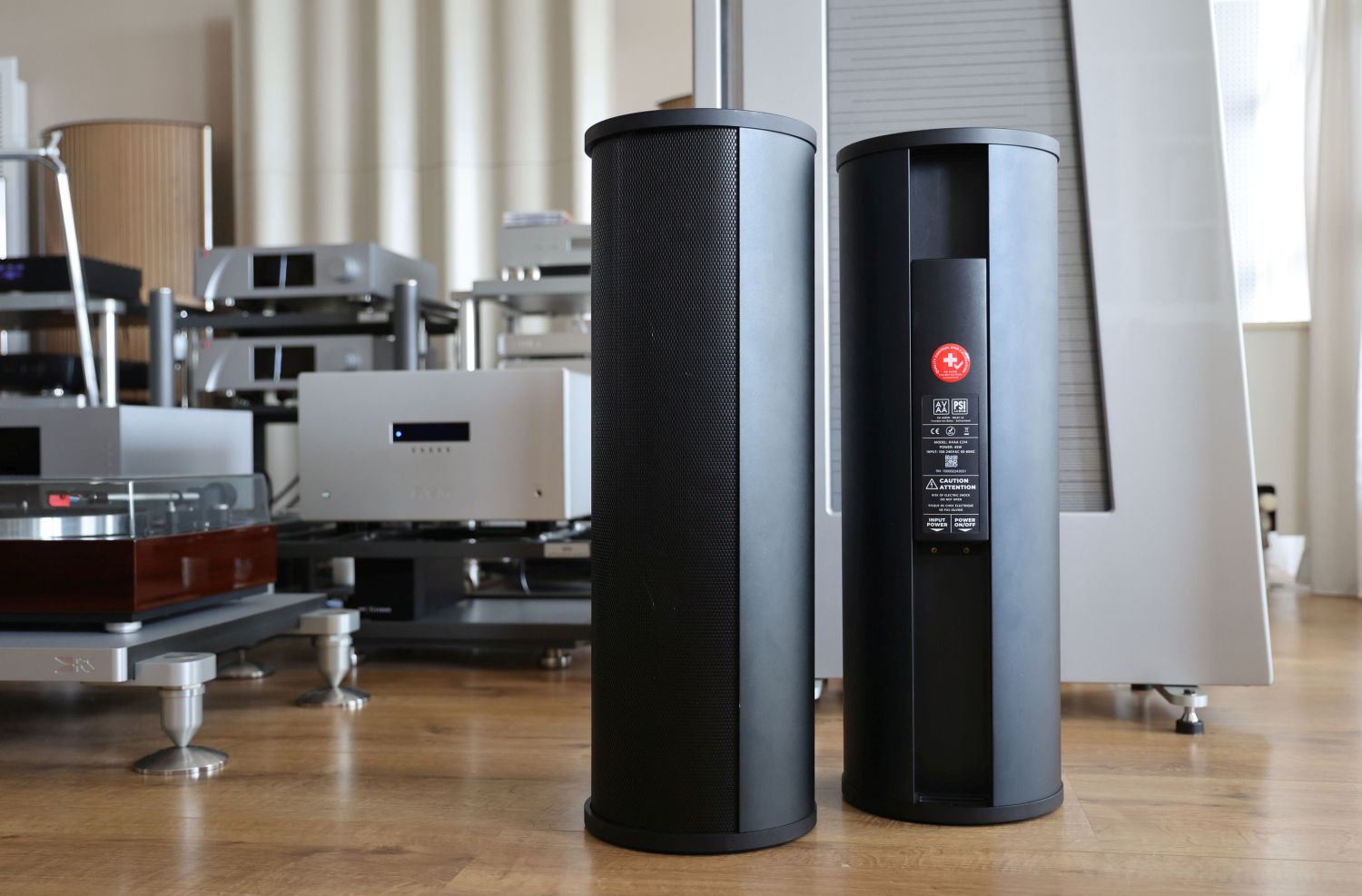
PSI Audio AVAA C214 Active Bass Trap
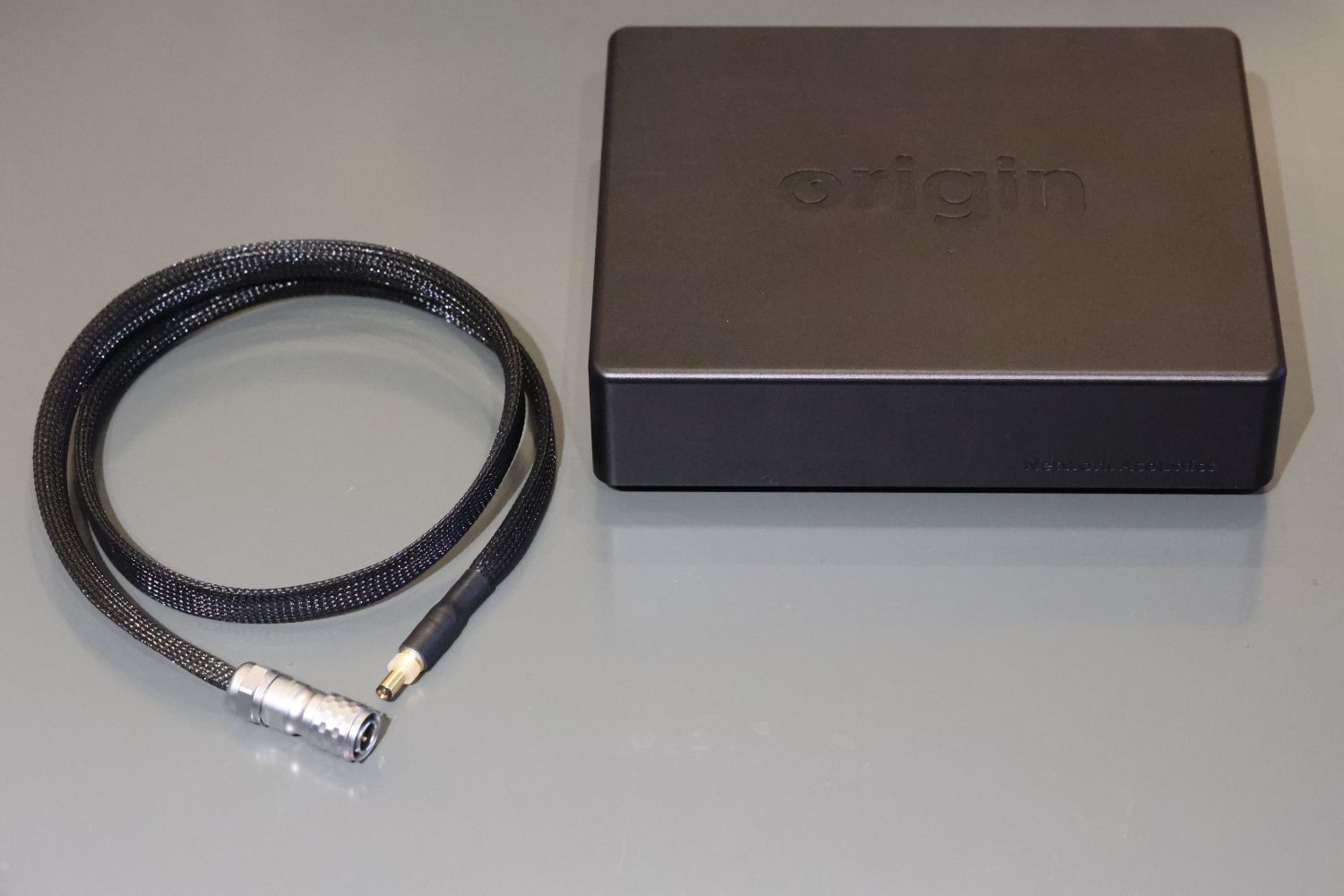
Network Acoustics origin Streaming Power Supply
XACT N1 Network Switch
Silent Angel Bonn N8 Pro and Bonn NX Ethernet Switches and Genesis GX Clock
Network Acoustics tempus
Ansuz PowerSwitch X-TC3 and D3
Ansuz Darkz Resonance Control
Network Acoustics MUON Pro Ethernet Filter
Page 2 of 3 2
AcousticMatters R.T.F.S. Resonator Stockholm
  • Share This:
  • Facebook
  • Twitter
  • LinkedIn
  • Pinterest
  • Email
Christiaan Punter Owner of Hifi-Advice.com

10 Comments

  1. Sean says:
    12 April 2021 at 07:52

    Excellent review! I currently have several GIK bass traps and Alpha Series diffusers in my room. I am very interested in trying the SiRRAH panels. Do they sell them to United States customers?

    Thanks!

    Reply
    1. Christiaan Punter says:
      12 April 2021 at 13:19

      Hi Sean, alas, I cannot help you obtain these products but I’m sure the manufacturer can point you to a reseller.

      Reply
  2. Sean says:
    12 April 2021 at 18:57

    Christiaan,

    I tried to contact the manufacturer today and I have a relative that lives in Berlin attempt to contact them as well with no response. Do you have a reseller in the Netherlands that I can contact to see if they sell to customers in the USA?

    Thanks again!

    Reply
    1. Christiaan Punter says:
      13 April 2021 at 09:43

      The Dutch reseller is Listening Matters but I’m not sure if they’d ship to the USA.

      Reply
  3. Sean says:
    14 April 2021 at 05:03

    Christiaan,

    I used the link you shared for Listening Matters and it was not in English. Is Listening Matters and Acoustic Matters the same company? If so, I sent Acoustic Matters a message through their website and I hope to get a response.

    Lastly, I read your review of the Martin Logan ESL 15A. I have two (2) relatives that have Wilson Audio speakers and I debated on buying a pair of used Wilson’s, Martin Logan’s, B&W, and Pure Audio Project Trio 15 or Quintet 15, but I decided to go with Spatial Audio X5 open baffle speakers. Curious if you ever heard the offerings from Pure Audio Project or Spatial Audio? If not, try to get your hands on a pair for a review. Some say they sound like Maggie’s, but more dynamic. I never heard a pair of Maggie’s, so I don’t have an opinion. I’d like to read your review on the open baffle designs mentioned above.

    Thanks!

    Reply
    1. Christiaan Punter says:
      14 April 2021 at 09:53

      Hi Sean, they are liaised. I’m sure they will get back to you now. I’ve heard many open-baffle dynamic speakers and while they share the kind of freedom from box constraints in a broadly similar way as Magnepans or other foil speakers, they do not sound like one another in any other way. Ribbon bass, midrange and treble are just a very different breed from that of dynamic drivers. There are too many factors to get in here but perhaps the biggest one is bass driver surface. Basically (and intentionally leaving lots of variables undiscussed for now), in an open baffle, you need plenty of it to overcome the acoustic cancellation that occurs naturally between front and rear. With a woofer that is too small, it will need to overcompensate in excursion and that leads to softness, rounded transients and overall slowness.

      Reply
  4. Sean says:
    14 April 2021 at 17:49

    Christiaan,

    You are hitting the nail on the head with the acoustic cancellation you mentioned concerning open baffle designs (OBD) if they are not designed properly or too close to the front wall. Clayton Shaw of Spatial Audio and Ze’ev of Pure Audio Project (PAP) are fully aware of those issues and I think these guys have managed that issue well, at least Spatial Audio. I haven’t heard the PAP speakers yet. OBD speakers need to be about 4 feet off the front wall to turn the listening session into a magic show. My Spatial Audio X5’s are incredible and I’m sure the X3 model are a step up in bass with the built in active 15 inch open baffle subwoofer. My X5’s have a built in 12 inch open baffle subwoofer. There is nothing slow about these speakers at all. If you get an opportunity, give the Spatial Audio a listen and see if they have addressed the things you mentioned. A guy name Ron has a YouTube channel called “New Record Day” and he goes in depth about the Spatial Audio speakers. Check it out at your leisure. There are several YouTube videos with Clayton Shaw interviews, discussing his OBD speakers.

    Thanks and take care!

    Reply
  5. Tom Jakobsen says:
    17 May 2026 at 10:59

    Hello Christiaan

    I had a plan to get 6 psc of Vicoustic Multifuser Wood 64
    so they are “hard” so no absorbtion so they will not make the sound “dull”

    now after reading this im interested in Sirrah
    so like 6 or 8 (even12) of them in center of my frontwall instead of the wood 64

    and 2-4psc Sirrah on my backwall

    plan is also to have 2 vicoustic totem towers

    i know i have to try out different configurations like you did in your test , but i would like your take on it , i have to start somewhere

    room is 32m2 5.15×6.25
    i play on the long direction
    speaker front are 2m from frontwall
    and listening position is not close to backwall also like 2m

    these positions are determined by the room where it got it to sound best

    Reply
    1. Christiaan Punter says:
      18 May 2026 at 10:16

      Hi Tom, The Sirrahs are very effective at eliminating reflections and they improve the clarity and focus. While the Sirrahs are intended primarily as diffusers for addressing reflections, they also function to a lesser extent as absorbers for the midrange and a portion of the upper bass. Three of them on an empty spot on the Media Room TV wall are hugely effective at reducing boominess and hollowness in that room (see the snapshots section). However, although it is often said, in general, that you can’t use too much damping, I find that you can actually go too far for a given situation.The more units you use, the more energy is absorbed, which may or may not be desirable. I found that covering the front wall with four or six Sirrahs reduced the perceived liveliness and expression too much for this room and for my liking. However, experiences with other speakers and in other rooms will absolutely vary. I tested the Sirrahs in three rooms across two different apartments, and I recommend reading all my R.T.F.S. articles so you get a good basic understanding of how they work in different rooms. Compared to VicTotems, with the reflective sides at the front, I find that they retain more midrange and lower treble frequencies than the Sirrahs. But of course, they are more of a HF reflector and LF absorber when used that way. You can also use them as more of an absorber with the soft sides front, but I have not yet experimented with that because my room already has enough damping. In any case, as always, it’s best to dive in to try multiple solutions for yourself. The Sirrahs are really great, but I recommend starting with 2 or 4, test, and decide if you want more. Add them in single pairs and keep listening, don’t add 8 or 12 at the same time, and I also would not recommend placing them on all walls simultaneously. It might work, but it’s much better to approach this step by step so you gain knowledge of what does what. Finally, I found that the best balance is obtained in my room if Sirrahs (or other absorber solutions) are placed at offsets on opposing walls, so, leaving a bit of empty wall in-between, and not having two face one another directly.

      Reply
      1. Tom says:
        18 May 2026 at 13:48

        Hi Christian

        Thanks …

        noted
        and i guess its just to get to work and try it out

        Reply

Your comment Cancel reply

All comments are welcome, but please stay on-topic. First-time comments need manual approval which causes the post to appear a little later. Avoid using links to prevent marking as spam.


Categories

  • Accessories Reviews
  • Active Analog Speakers Reviews
  • Active Digital Speakers Reviews
  • Alkmaar Audio Show
  • Amplifier Reviews
  • Analog Classics
  • Analog Insights
  • Analog Interlink Reviews
  • Analogy Records
  • Apogee Acoustics Company Special
  • Audio Software Reviews
  • Audiophile Insights
  • Cables Insights
  • CD Player Reviews
  • Chattelin Audio Systems
  • Connectors Insights
  • Digital Cable Reviews
  • Digital Classics
  • Digital Insights
  • Digital Interface Reviews
  • Digital Recorder Reviews
  • Digital Reviews
  • Dutch Audio Event
  • Enosound
  • Extensionblocks / Filters Insights
  • Generic Insights
  • HFA Audio Setup History
  • HFA Audio Setup Snapshots
  • HifiDeluxe
  • HifiLive
  • Industry Update
  • Integrated Amplifier Reviews
  • Marantz & Philips Classics
  • Munich High End
  • Music Server Reviews
  • Network Player Reviews
  • Passive Speakers Reviews
  • Phono Cartridge Reviews
  • Phono Interlink Reviews
  • Phono Preamp Reviews
  • Power Amplifier Reviews
  • Power Cable Reviews
  • Power Conditioning
  • Power Connector Reviews
  • Preamplifier Reviews
  • Racks / Stands / Feet Reviews
  • Rhapsody
  • Show Reports
  • SPDIF DAC Reviews
  • Speaker Cable Reviews
  • Specials
  • System Synergy Q&A
  • Tonearm Reviews
  • Tuning / Tweaks Reviews
  • Turntable Accessories Reviews
  • Turntable and Accessories Reviews
  • Turntable Reviews
  • Uncategorized
  • USB DAC Reviews
  • Vienna High End
  • XFi

BRANDS

  • A&B Systems
  • A10 Audio
  • Aavik
  • Acapella
  • Accuphase
  • AcousticMatters
  • Acustica Applicata
  • Admire Audio
  • Aequo Audio
  • AG Lifter
  • Aidas
  • Akiko Audio
  • Analog Domain
  • Analogy Records
  • Analysis Audio
  • Analysis Plus
  • Ansuz
  • Anthem
  • Anti-Cables
  • Antipodes Audio
  • APL
  • Apogee
  • Apogee Acoustics
  • Aqua
  • Arcam
  • Aries Cerat
  • Artesania
  • ASI
  • Astin Trew
  • atm audio
  • A Tube High Fidelity
  • Audeze
  • AudioAanZee
  • Audio Aero
  • Audio Club Premier
  • Audio GD
  • Audiolab
  • Audiolympic
  • Audiomeca
  • Audio Note
  • Audionote
  • Audio Note (UK)
  • Audio Origami
  • Audio Physic
  • AudioQuest
  • Audio Research
  • Audio Synthesis
  • Audio Technica
  • Auer Acoustics
  • Auralic
  • Aurender
  • Aurum Cantus
  • Avalon
  • AvantGarde
  • AVID
  • AVIDHIFI
  • AVM
  • Ayon
  • Ayre Acoustics
  • B&W
  • Bals
  • Bang & Olufsen
  • Behringer
  • Belden
  • Benz
  • Bergmann
  • Black Rhodium
  • Boenicke Audio
  • Bowers & Wilkins
  • Bricasti
  • Bryston
  • Burmester
  • Børresen
  • CAD
  • Cardas
  • Care Orchestra
  • CAT
  • CEC
  • Chord Electronics
  • CH Precision
  • Clarisys Audio
  • Classé
  • Clearaudio
  • Concert Fidelity
  • Conrad Johnson
  • Consonance
  • COS
  • Curious Cables
  • D'Agostino
  • DAD
  • Dali
  • Daniël Hertz
  • Daudio
  • dCS
  • Degritter
  • Denafrips
  • Denon
  • Devialet
  • Devore
  • Diptyque
  • Doepke
  • Driade
  • DS Audio
  • Dynavector
  • Dynavox
  • E&T
  • EC-Designs
  • Echole
  • Elac
  • Electrocompaniet
  • Elijah Audio
  • EMAG
  • EMMLabs
  • Emotiva
  • EMU
  • Enosound
  • Ensemble
  • Esoteric
  • Estelon
  • Euphony
  • Exogal
  • Fadel Art
  • Fezz Audio
  • FIM Gold
  • Final
  • Final Touch Audio
  • Finite Elemente
  • FoilFlex
  • Franco Serblin
  • Furutech
  • Fusion Audio
  • Gauder Akustik
  • Genelec
  • Gigawatt
  • GiK
  • Goldmund
  • Graham Audio
  • Grandinote
  • Grimm Audio
  • Gryphon
  • Gustavson Audio
  • Halcro
  • Hanze Hifi
  • Harman/Kardon
  • Harmonic Resolution Systems
  • Harmonic Technology
  • Harmonix
  • Heaven's Gate
  • Hifi-Tuning
  • HiFi.nl
  • HifiMan
  • High Fidelity Cables
  • Hofa
  • Holo Audio
  • Home Audio Fidelity
  • HRS
  • IeGO
  • Ikigai
  • IMF
  • Isotek
  • Jadis
  • Jay's Audio
  • JCAT
  • Jeff Rowland
  • Jena Labs
  • JMF Audio
  • Jorma Audio
  • Jorma Design
  • Joseph Audio
  • JPLAY
  • JVC
  • Kemp
  • Kharma
  • Kimber
  • KingRex
  • Kinki Studio
  • KlinktBeter
  • Kora
  • Krell
  • Kroma Atelier
  • Kupp
  • LAiV Audio
  • Lampizator
  • Lapp
  • LAST
  • Lector
  • Leema
  • Lejonklou
  • LessLoss
  • Line Magnetic
  • Linn
  • Logitech
  • LOK
  • Loudness War
  • Lumin
  • Luxman
  • M2Tech
  • Mad Scientist
  • Magico
  • Magnan
  • Magnepan
  • Mamba Audio
  • Manley Labs
  • Manunta
  • Marantz
  • Mark Levinson
  • Marten
  • Martin Logan
  • Master
  • Matrix
  • MBL
  • McIntosh
  • Melco
  • Melody
  • Meridian
  • Metrum Acoustics
  • Michell
  • MIT
  • MJ Acoustics
  • Modus Audio
  • Mogami
  • Mola-Mola
  • Monitor Audio
  • Monrio
  • Moon
  • Morel Hifi
  • MP&S
  • Munich High End
  • Musetec
  • Musical Fidelity
  • Mytek
  • Nagaoka
  • Naim
  • Naiu Laboratory
  • Nakamichi
  • NBS
  • Network Acoustics
  • Niels Setup
  • Nordost
  • NuPrime
  • Ohm Audio
  • Oladra
  • Olive
  • Onkyo
  • Onzow
  • Origin Live
  • Ortofon
  • Oyaide
  • Panasonic
  • Paradigm
  • Parasound
  • Pass Labs
  • Peak Consult
  • Philips
  • Pink Faun
  • Pioneer
  • Playback Designs
  • Precision Audio
  • PrimaLuna
  • Proceed
  • Prodigio Audio
  • PS Audio
  • PSI Audio
  • PUUR AVD
  • PUUR hifidelity
  • Pylon Audio
  • Qln
  • Qobuz
  • Quad
  • R.T.F.S.
  • RAAL Requisite
  • Raidho
  • Reference Sounds
  • Reference Tweaks
  • Rega
  • Rein Audio
  • REL
  • Resonator Stockholm
  • Revel
  • Ricable
  • Roon
  • RTFS
  • SAEQ
  • SAT
  • Schiit
  • Seawave Acoustic
  • Sennheiser
  • Shakti
  • Shuguang
  • Shunyata
  • Shure
  • Signal Projects
  • Silent Angel
  • Siltech
  • SME
  • SolidSteel
  • Solid Tech
  • Sonic Frontiers
  • Sonos
  • Sonus Faber
  • Sony
  • Sooloos
  • SOtM
  • Soulution
  • Sound Anchor
  • Sound Lab
  • Spectral
  • Spotify
  • Stack Audio
  • Stealth
  • Stenheim
  • Stillpoints
  • Straight Wire
  • SW1X Audio Design
  • Symo
  • Synergistic Research
  • Synology
  • Synthese
  • T+A
  • Taiko Audio
  • Tascam
  • Teac
  • TechDAS
  • Technics
  • The Chord Company
  • Thorens
  • Transparent Audio
  • Trends
  • Tung Sol
  • Unison Research
  • UpTone Audio
  • VAIC
  • van Damme
  • van den Hul
  • van Medevoort
  • Vermeer Audio
  • Vermouth Audio
  • Vibex
  • Vifa
  • Vincent
  • ViRa High End
  • Viva
  • Vivid Audio
  • VTL
  • Wadax
  • Wadia
  • Wattgate
  • Wattson
  • Way Cables
  • Weiss
  • Western Electric
  • WestminsterLab
  • Widealab
  • Wilson Audio
  • Wilson Benesch
  • Winyl
  • Wires 4 Music
  • Wireworld
  • Wolf von Langa
  • Wooden Bull
  • XACT
  • Xavian
  • xFyro
  • Xindak
  • XLO
  • Yamaha
  • Zanden
  • Zellaton
  • Zesto
  • ZYX

Follow HFA on Social Media

Facebook

LEGAL

Privacy Policy

This site is protected by reCAPTCHA. Google Privacy Policy and Terms of Service apply. All rights reserved © 2026 - hifi-advice.com.
  • Contact
  • Home