Harmonic Resolution Systems (HRS) Additional Base Experiments

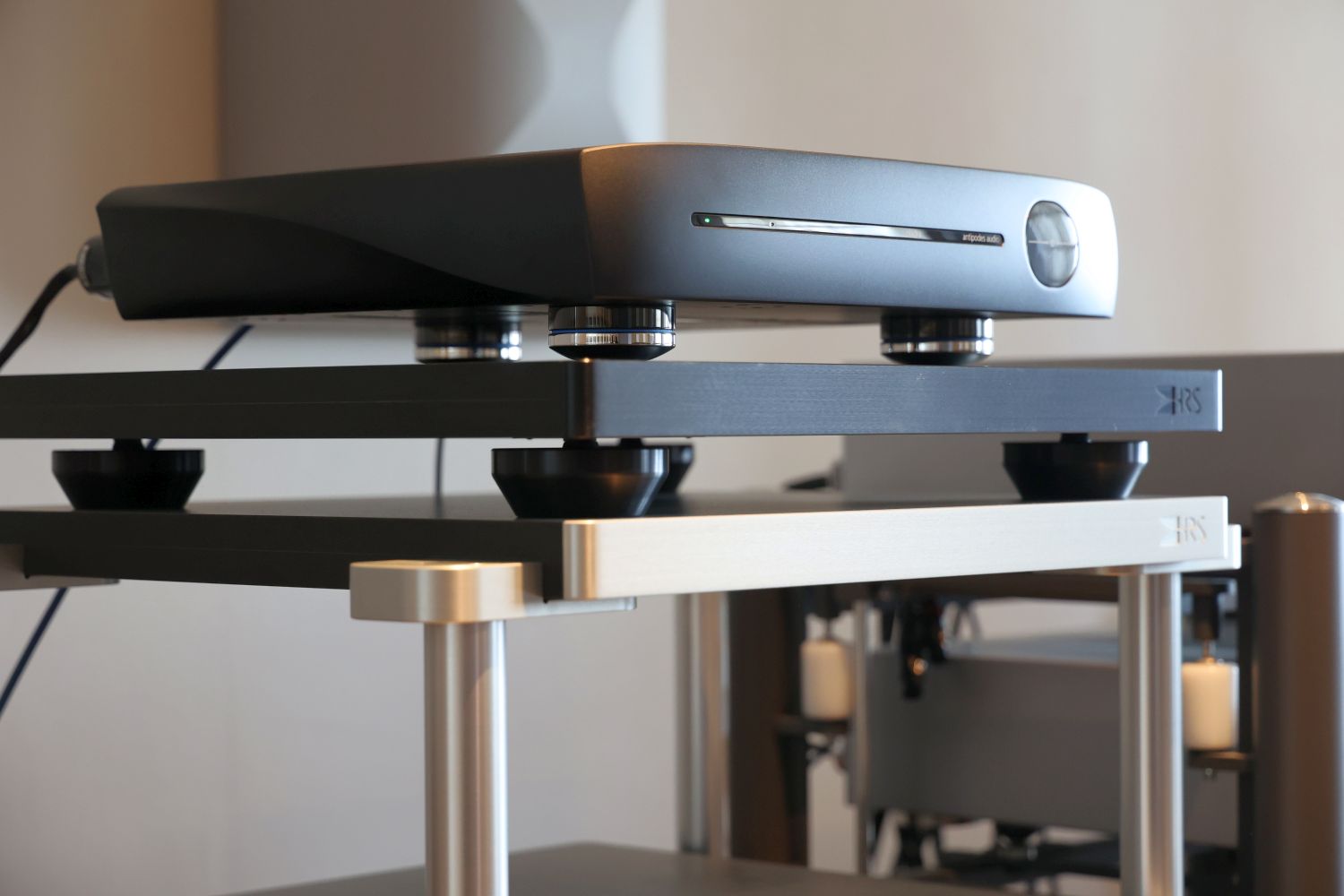
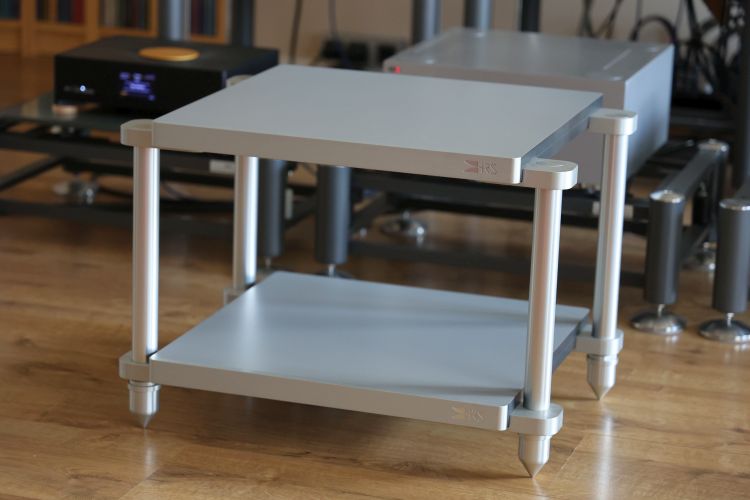
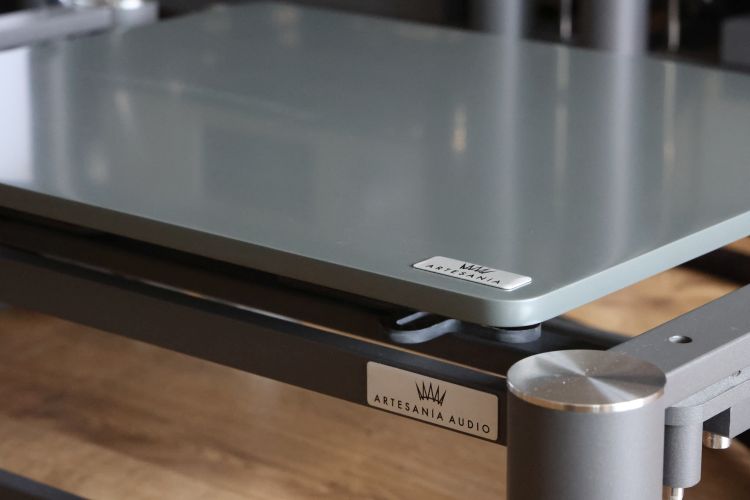
After reviewing the EXR Audio Stand (a two-tier rack), I was so impressed that I added two EXR Audio Stands and two EXR Floor Platforms to my system. A highly appealing aspect of these systems is that their modular nature makes them easily expandable and upgradeable. The EXR rack’s integral Isolation Bases support the audiocomponent directly, and this is how I have been using them all along. However, the system can be further upgraded by adding an extra Isolation Base on top, as shown below.
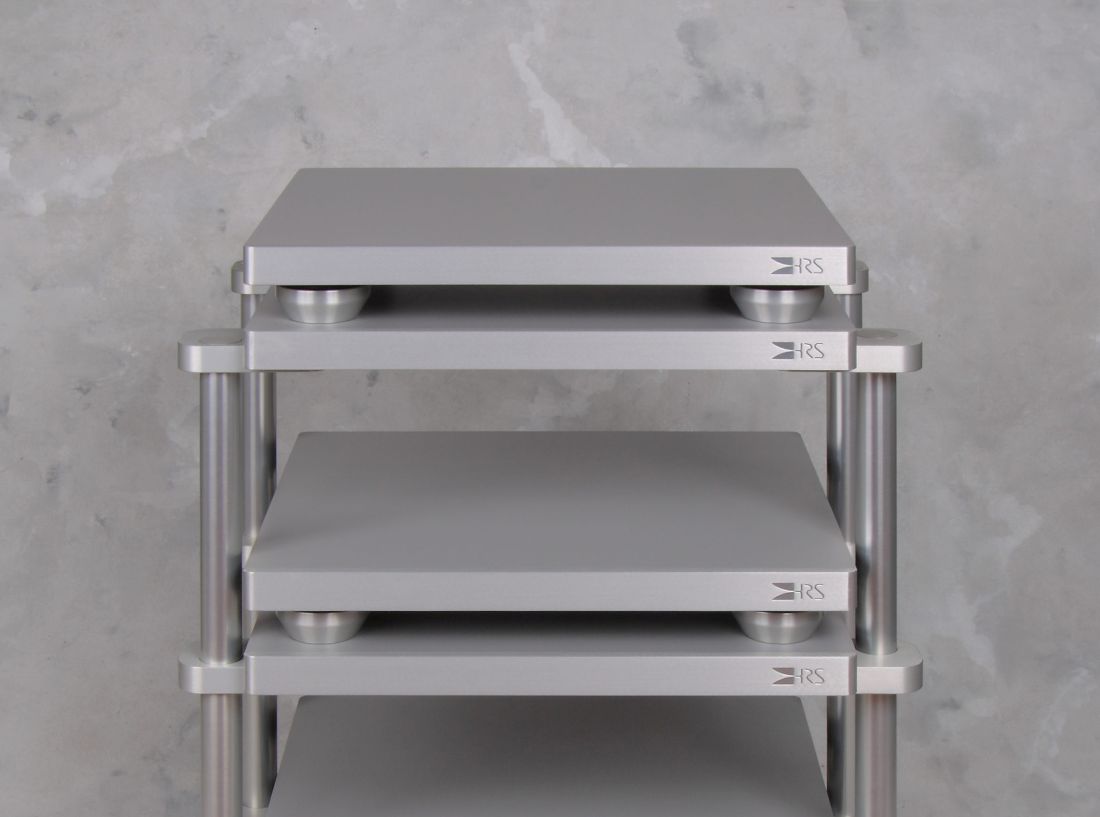
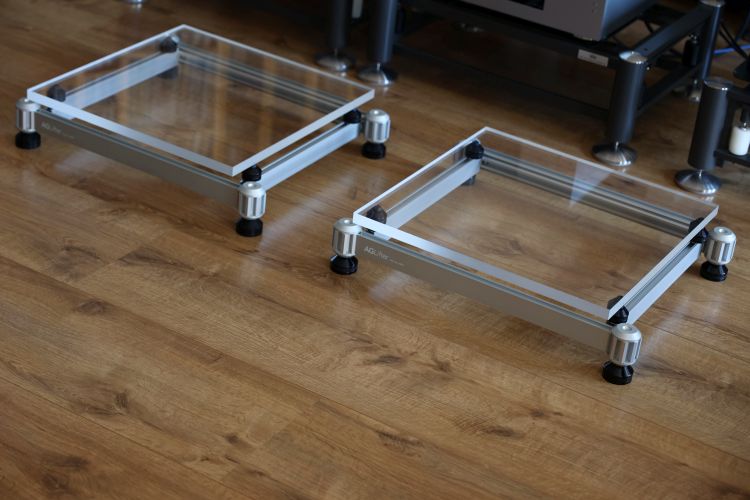
One can add an E1X (shown above), R3X, S3, or the top-of-the-line M3X2 Base, using a range of footers that can be changed at a later date to match the component on top perfectly. Until now, my experience with the HRS Bases has been limited to using them as part of the EXR Audio Stands and Floor Platforms, using their integral aluminum outriggers and large-diameter spiked footers. I always intended to conduct more tests with additional Bases, but so far, I have not gotten around to doing so.
Adding HRS E1 Base to the EXR Audio Stand
Purely coincidentally, long-time audio buddy Meneer Buis dropped by last week with an HRS E1-1921 Base, with the intention of comparing it to my EXR Audio Stands and Floor Platforms. Until that moment, he had not realized that all my EXR products are built around the same Bases, albeit in the later X version. This was the perfect opportunity not only to hear the effect of the Broadband Isolation Footers installed under the E1 and E1X Bases, but also to hear the effect of adding a second base to the HRS Audio Stand. Furthermore, this allowed me to isolate the impact of the Base itself and the effect of combining it with a range of third-party footers.
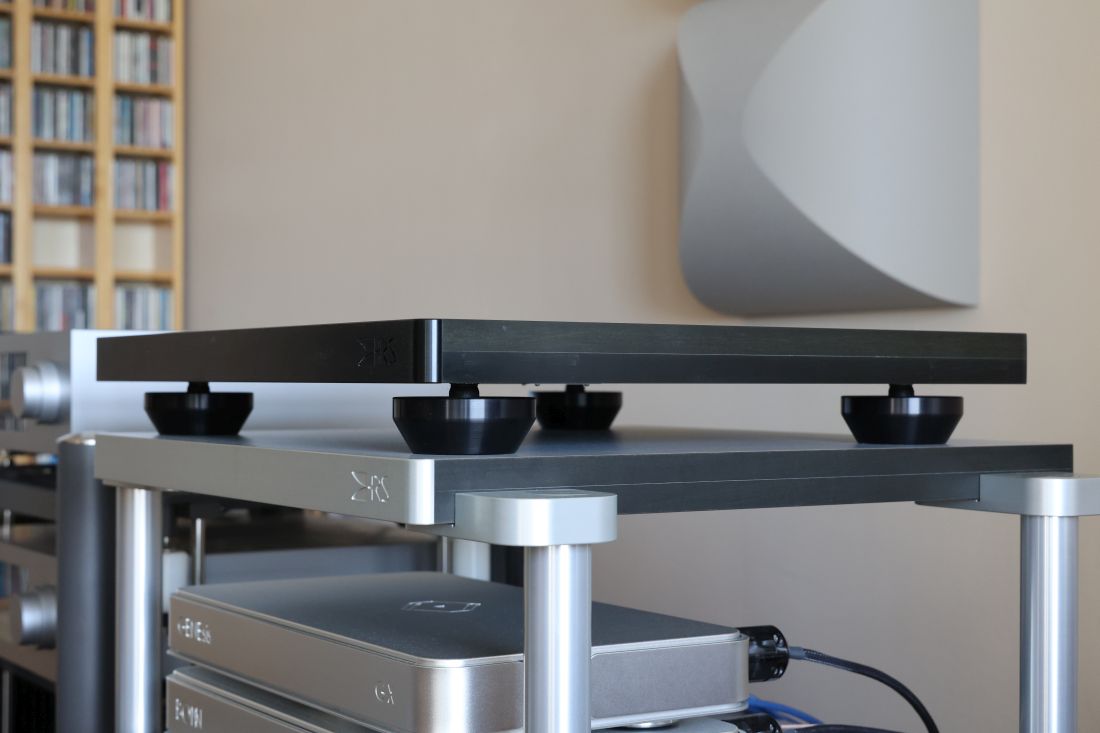
I am unclear about how the E1 and E1X Bases differ. Both versions utilize Constrained Layer Damping via two bonded Resin composite panels. Perhaps it is the formulation of the resin or the glue. In any case, on the surface, they look and feel identical.
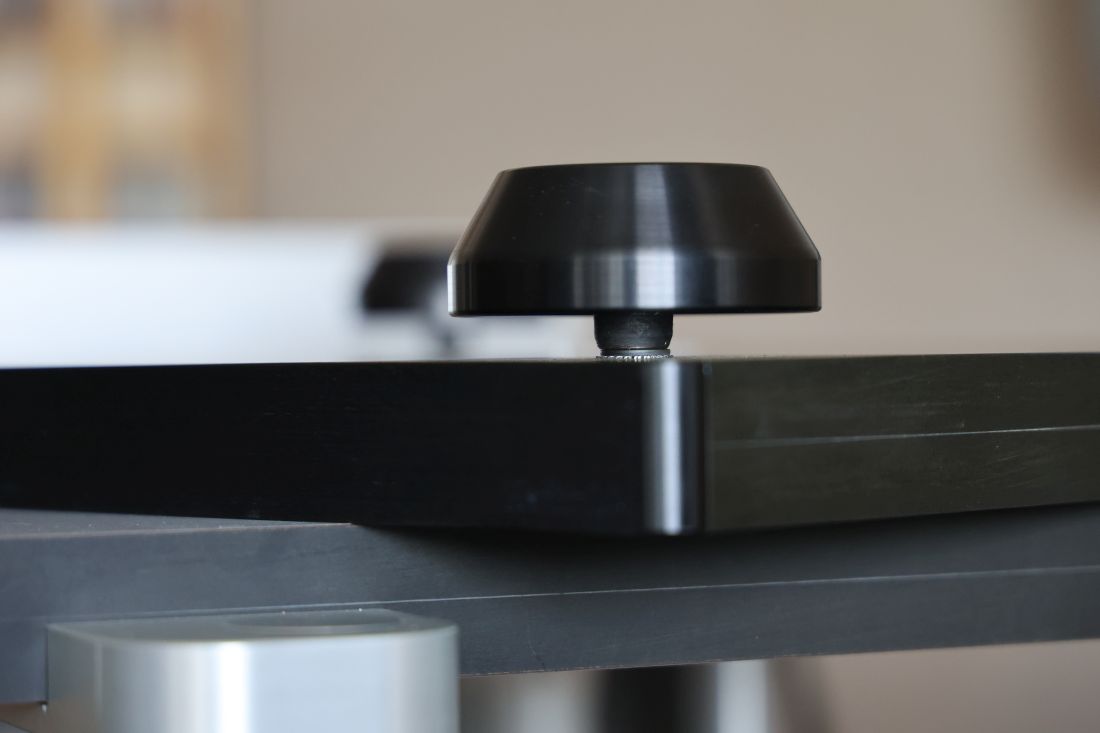
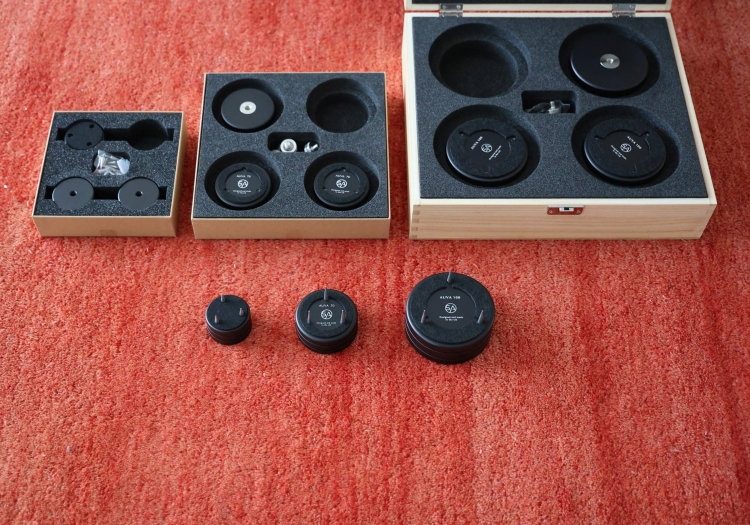
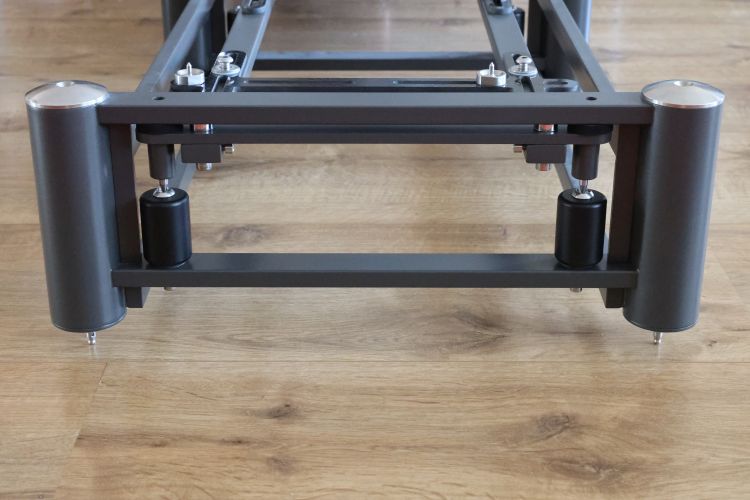
The HRS Broadband Isolation Footers are basically large-diameter hollow metal lids coupled to the Base with a single center screw via a rubber ring. The system operates to some extent similarly to a turntable sub-chassis, or, for a more instructive example, the SME Model 30 Turntable’s system, where the sub-chassis is suspended from rubber bands in all four corners.
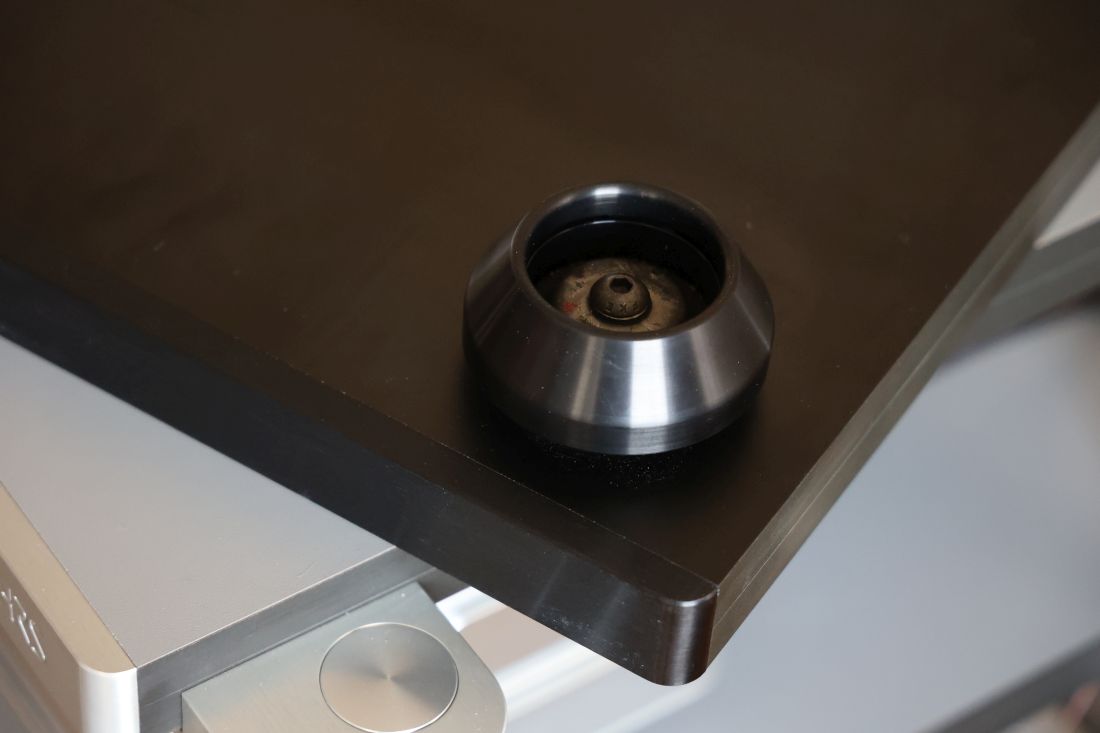
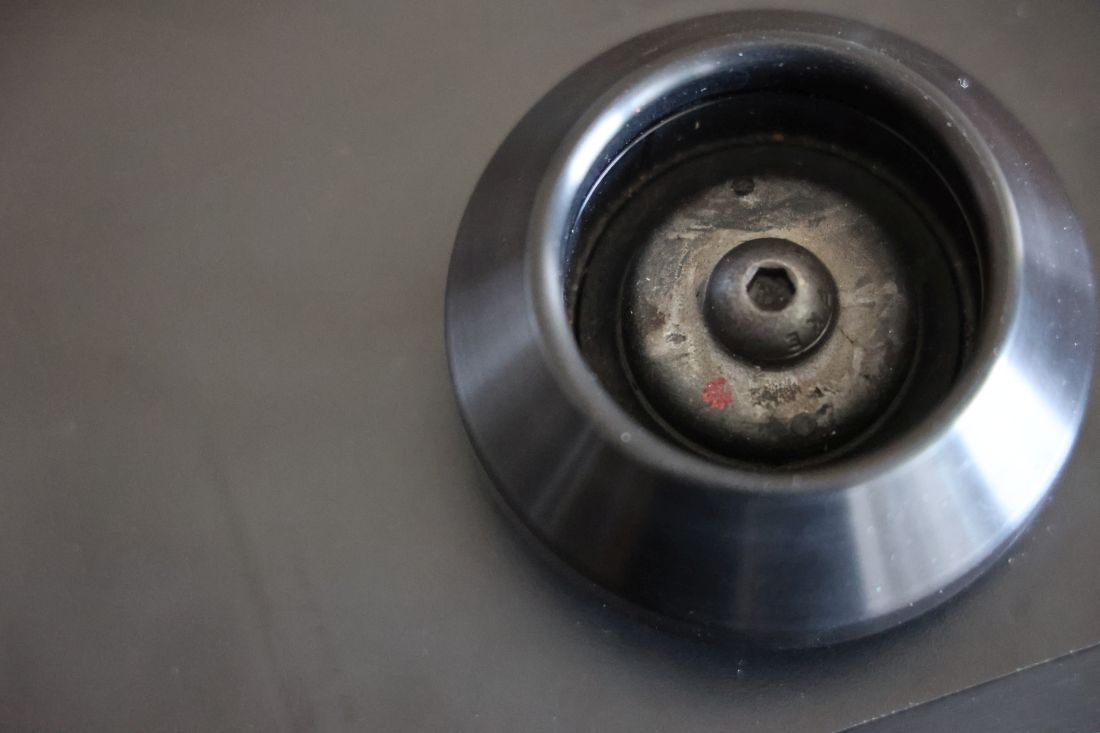
For the system to be effective, the rubber couplers need to be tuned to a specific mass range. In the case of the E1 Base that I have here, the footers have a red dot, indicating that they are compatible with components weighing between 14 kg and 25 kg. There are three weight classes, and the footers can be swapped out for others to accommodate any component weight between 4.5 kg and 79.5 kg. At 20 kilos, the Antipodes Oladra server fits right in. To start, I listened to it placed directly on the EXR Base, as usual. Then, I inserted the E1 Base and listened to the same tracks.
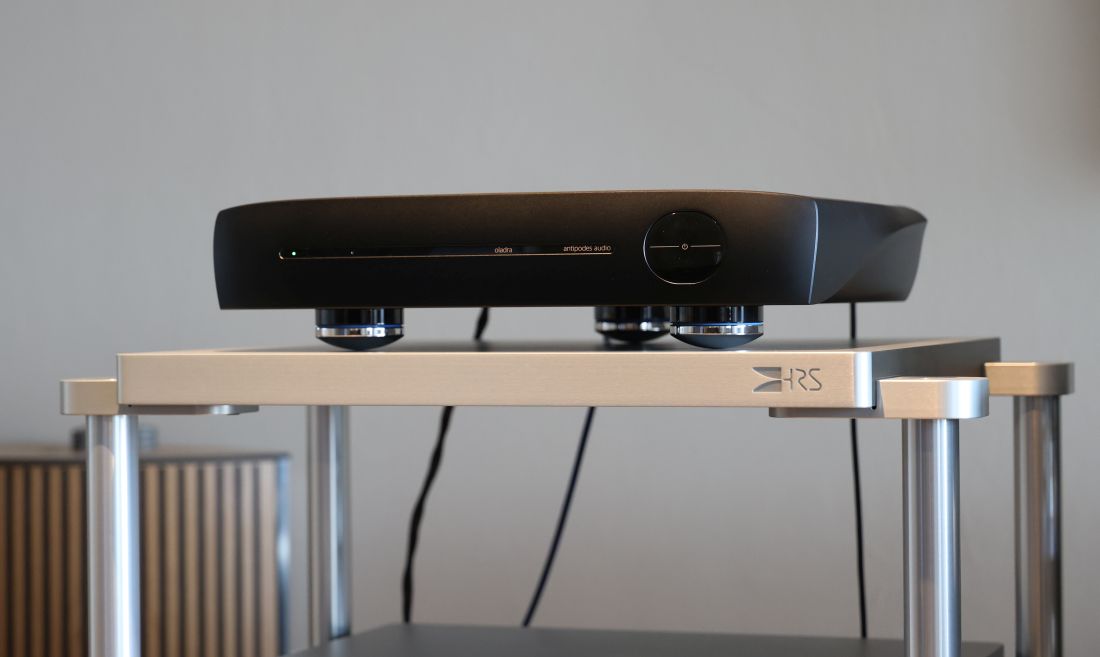
The Oladra always provides a performance that is both sweet and musical as well as detailed and precise. With the Magico S1 MkIIs (that are voluptuous sounding), I prefer its USB output, but with the Apogees (that are more open and explicit), I find it provides the best balance via its reclocked AES/EBU. With either speaker, I still prefer the more precise nature of MinimServer with MPD over Roon on this server.
I am not a fan of compliant coupling in general, as it seems to always come at the expense of bass tightness, speed, transient crispness, and overall expression and excitement. One might argue that additive resonances can artificially enhance the sound, providing a little extra fuel to the perceived dynamic impact. However, in my experience, the inverse is more damaging. Then again, from my experience with the Vortex, Helix, and Nimbus Chassis Noise Reduction footers, I know that HRS applies the material very deliberately.
Next: Listening

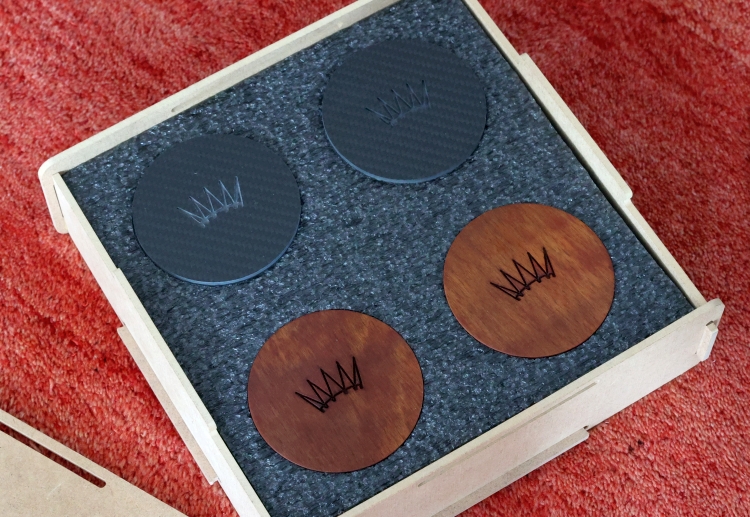

Craft your own isolation solutions with German engineered Novibra vibration isolators by Trelleborg, which offers a rather vast array of solutions for all manner of applications.
Wow, your review is a bunch of non-scientific, nonsensical BS based on a complete ignorance of the science of audio reproduction.
Wow and you are flogging over priced audiophile snake oil. Vibration is vibration and mitigating vibration is not the rocket science requiring super specialized audiophile anti-vibration devices unique *only* to audio that you would have your more gullible readers believe. But hey, there is a sucker born every minute, am I right?
Novibra: Isolating industrial mechanical vibration from 1920 to present day since its origin in Germany, now manufactured in the Czech Republic for the Swiss company Trelleborg. Among the virtually unlimited applications both compression and shear type vibration isolators are utilized, perhaps most pertinent to this discussion:
Sensitive / lightweight equipment, electronics, instrumentation & test cells
Electronic equipment racks and enclosures — to isolate computers, servers, radio TX/RX units, control systems, and other highly sensitive electronics.
Test-cell equipment, measuring instruments, lab equipment, or any other sensitive machinery needing isolation against vibration and shock.
These uses preserve precision, prevent damage to delicate components, and reduce vibrations that might lead to measurement errors or premature failure.
Scientific enough for ya, Mr Science?
Thanks for the review. Is the E1 base pretty much the same as a EXR rack base? If so, I struggle to understand how adding the E1 base will improve the sound of Oladra? Perhaps the difference is mainly due to the E1 base’s footers?
Have you tried using the Vortex footers after adding the E1 base?
Hi Alec, indeed, as far as I can tell, the panel construction is very similar, if not exactly the same, as the E1 is not the latest incarnation. However, HRS does not specify what the update of the E1x entails. In any case, even when stacking two identical platforms, there is still a cumulative effect. The effect of the platform increases, whether better or worse, but it always does something. In this case, I’m indeed inclined to assume that the footers indeed have the greatest impact. However, it should be kept in mind that isolation/decoupling/coupling depends on how two adjacent materials interface. Soft rubber footers naturally have an inherent effect wherever they are used, but they also depend on the properties of the extra panel to obtain a good balance. Alas, I no longer have the Vortex footers.