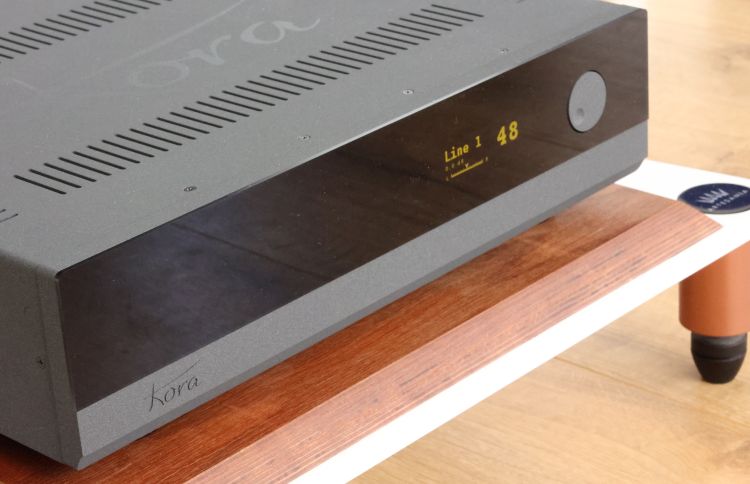
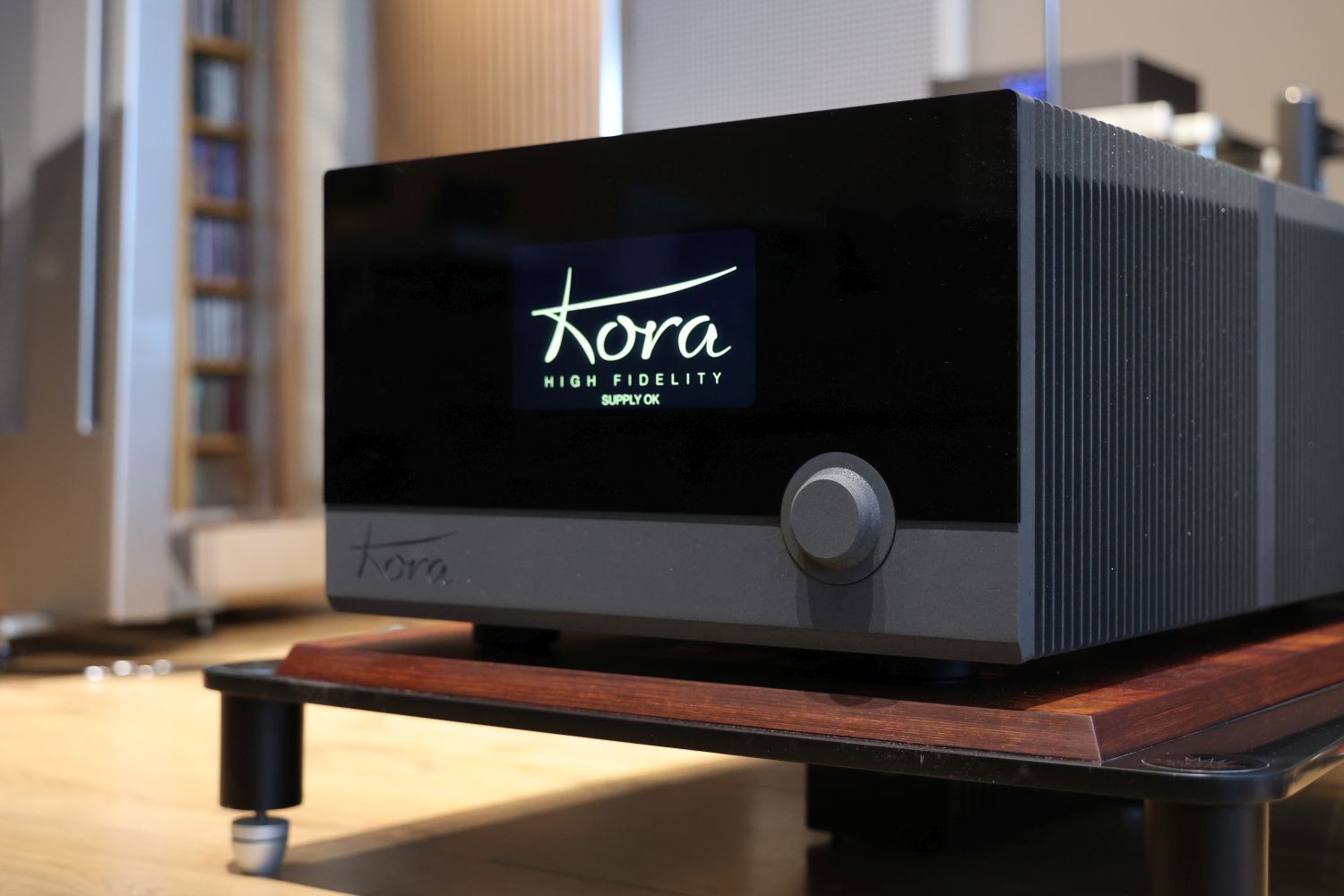
Kora CSA 2120 Square Tube pure Class A Power Amplifier

Review Context
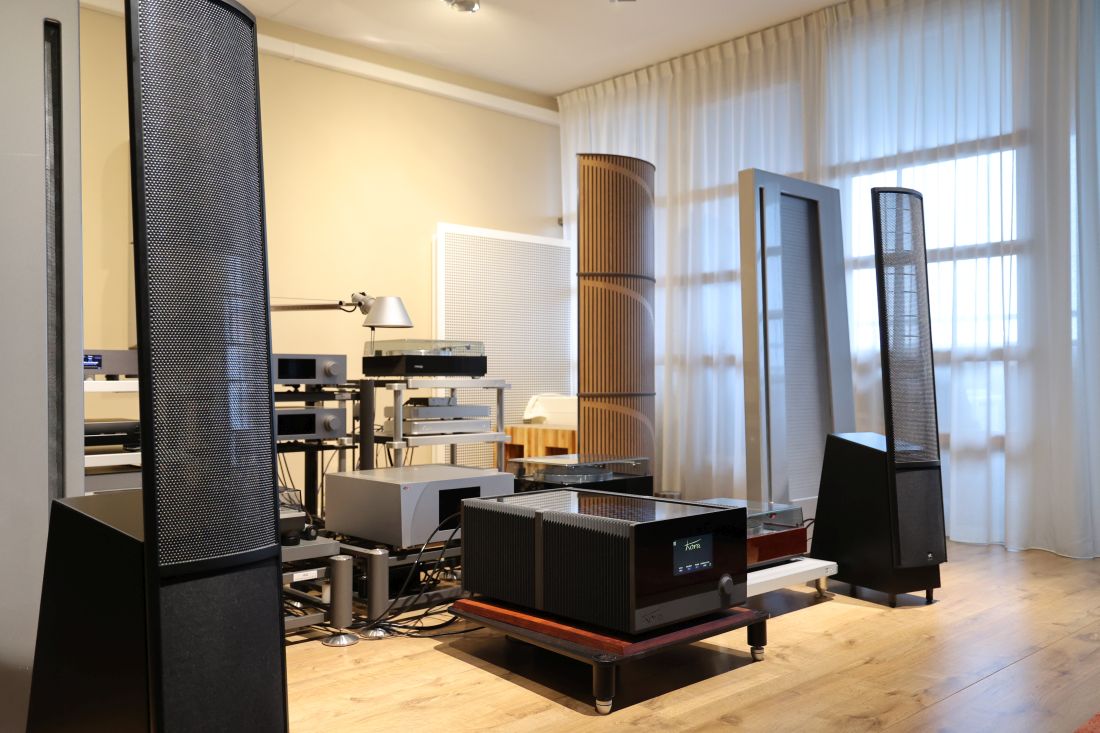
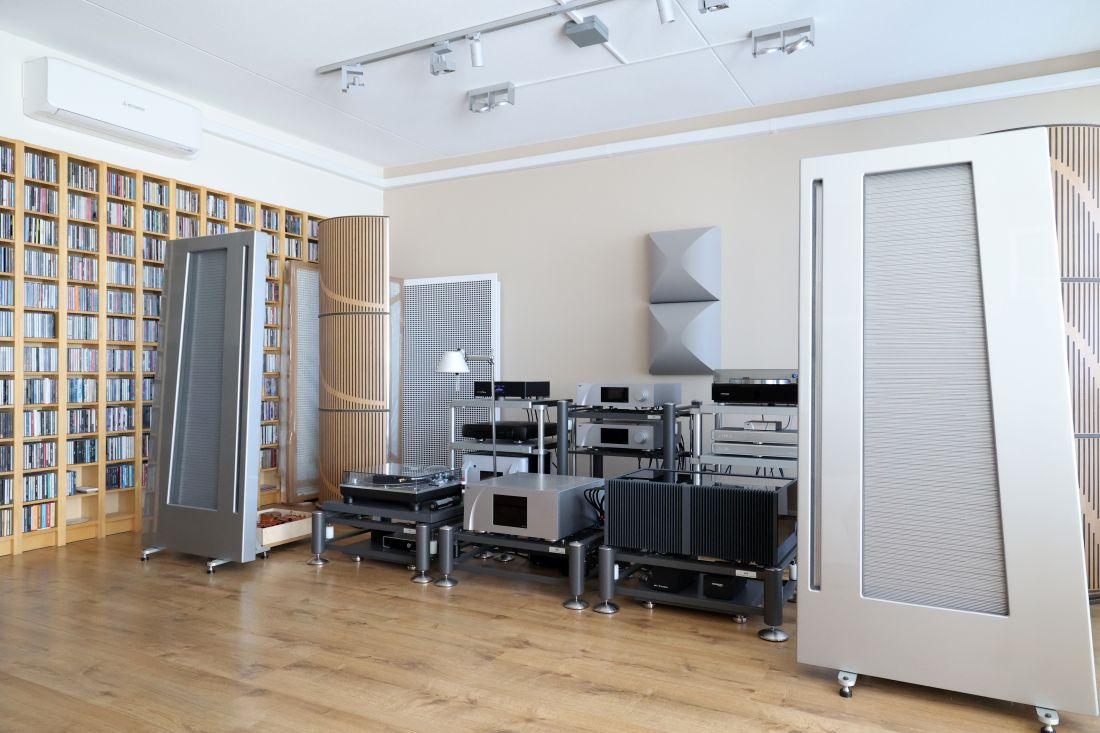
The Kora CSA 2120 was listened to in the main system, with the CH Precision L1 preamplifier, CH Precision A1.5 power amp, and recently refoiled Apogee Duetta Signature speakers. Digital sources are the Antipodes Oladra and Grimm MU1 music servers. All interlinks are Driade Flow Link Reference 808, and the speaker cables are Driade Flow Reference 808. All components are powered by the PS Audio P20 PowerPlant, except for the Kora amp (due to its massive power supply) and, for a fair comparison, the CH A1.5 amp. As extra speaker candidates, I also listened to the Driade Premium Model 9 monitors and MartinLogan ElectroMotion ESLs.
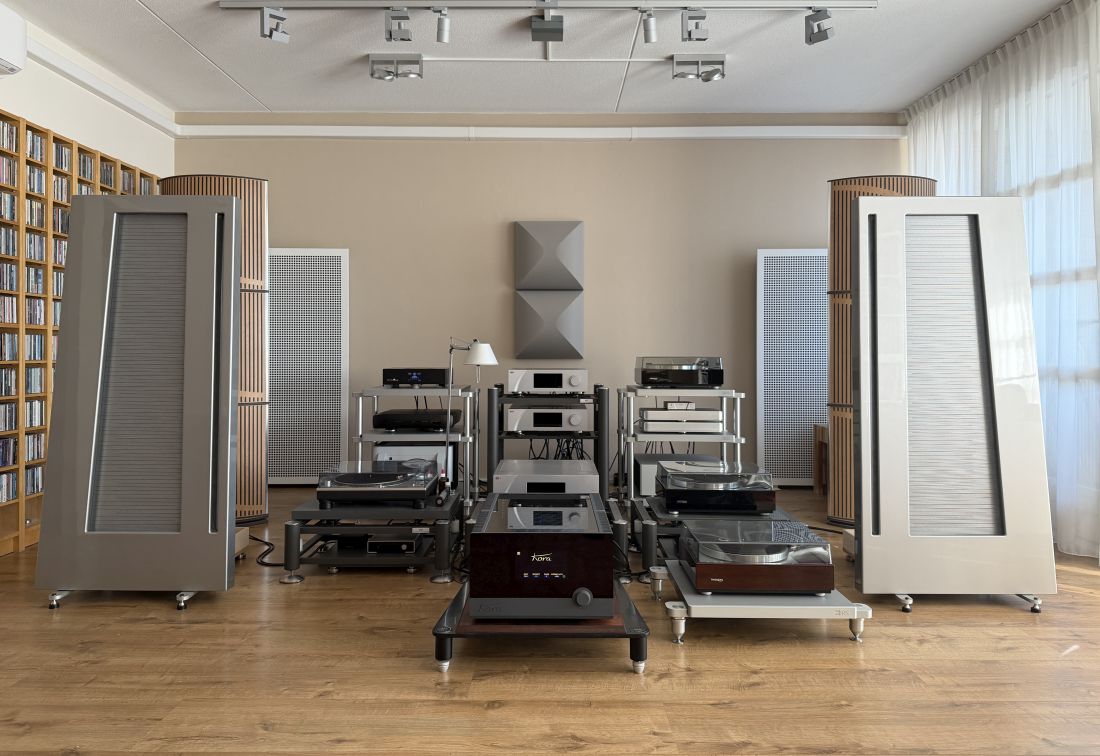
The Kora CSA 2120 will be listened to on two different platforms: the Artesania Organic Line Modular Floor Platform, and the Artesania Aire.
Listening
I will listen to the Kora CSA 2120 using three different speakers. I’ll start with the easy-to-drive Driade Premium Model 9, then move to the hybrid electrostatic Martin Logan ElectroMotion ESL, and finish with the recently refoiled Apogee Duetta Signature magnetostatic ribbon speakers.
Because of its massive power supply and unusual hybrid design, I fully expected the amp to produce something like an audible click or pop from the speakers when powered on. But there was noting of the sort. This amplifier is utterly silent! After a reassuring mechanical click from the power relay, the amplifier emits absolutely nothing. Zilch. Not only is it fully silent from the speakers, but its enclosure is mechanically silent as well. Despite its massive transformers, there is not even the faintest trace of hum. This may seem trivial, but mechanical silence is by no means guaranteed with any component that has one or more large transformers, especially not with big power amplifiers.
For my initial impressions, I will use the amplifier with the recommended Automatic Current control setting. In this mode, the amplifier is set to lower current use and will only switch to high when the volume level requires it. I will investigate the audibility of using High Current later, in the Apogee section.
With Driade monitors
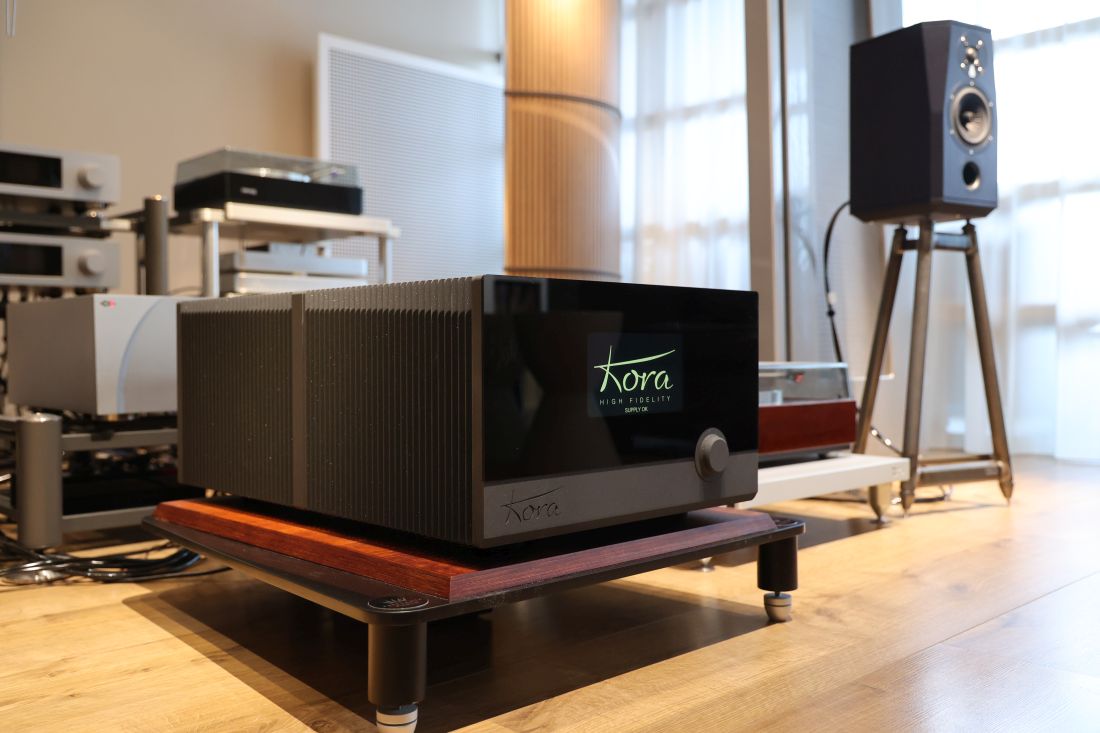
Using an amplifier as powerful as the Kora CSA 2120 for the small Driade Premium Model 9 monitor speakers seems like complete overkill. At 28.000 euros, the amp costs six times as much as these speakers, making it an even less obvious pairing. But, boy, does this combo sound incredible! The Kora proverbially grabs the speakers by the scruff of the neck and bends them to its will. I was astonished at the level of bass solidity and robustness coming from these small Driades, combined with utter tightness and grip, vivid expression, fast transient response, and off-the-scale dynamics, topped off with superb timbral realism.
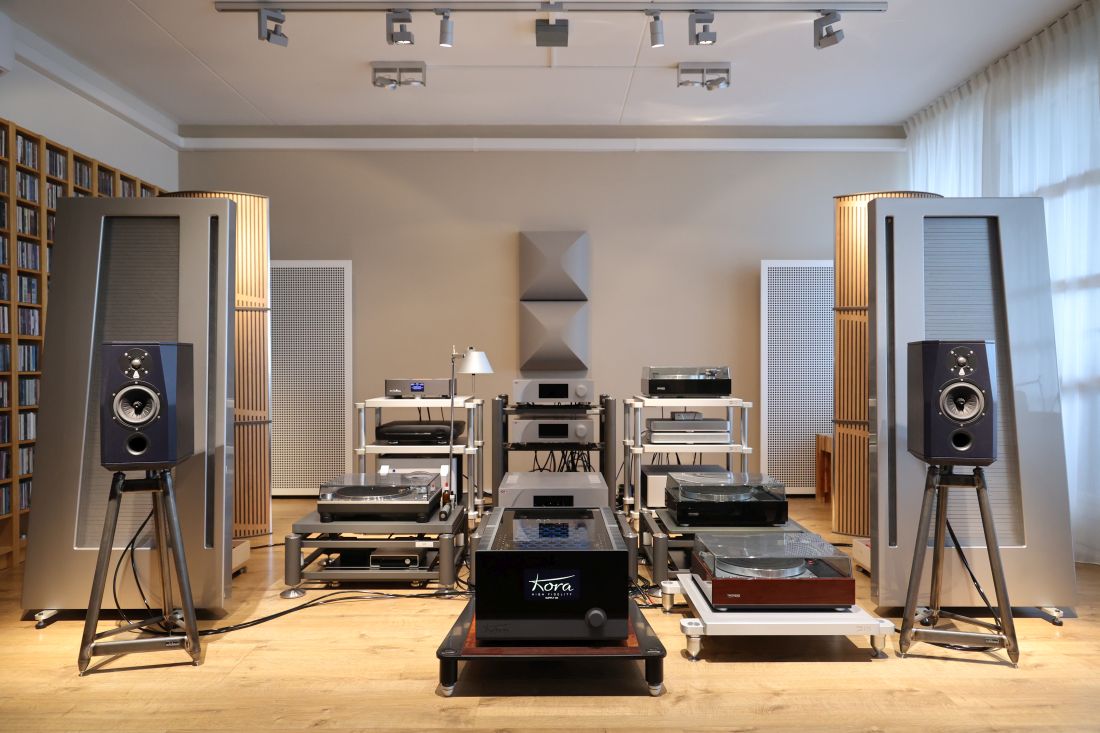
The Kora really plays to the Driades’ strengths and is especially skilled at conveying purity and quick transients, which works extremely well with rhythm-driven music. Particularly percussion, piano, and jazz, come across as very realistic. In this respect, it reminds me of the classic “fast and punchy” Naim amplifiers. Although I have heard the Driades perform better in resolution, refinement, and treble air when powered by the CH Precision A1.5, the Kora’s robustness, energy, and natural tonality draw the attention away from these areas. The overwhelming sensation is the raw energy of the performance being conveyed with captivating coherence and realism.
My plan was to move on to the next speaker pair the same day, but the unlikely setup with these small monitors produced such a captivating rendition that I kept listening to them all afternoon and postponed the speaker change to the next day.
With Martin Logan electrostats
After my positively surprising first experience, I decided to try the MartinLogan ElectroMotion ESLs with this beast of an amp as well. Like the Driade monitors, these Logans are entry-level products for their respective brands and categories, but here too, the Kora made it work fantastically! Kora describes the Class A amplifier as capable of driving virtually any speaker, even capacitive loads (such as electrostatics) or those with a difficult crossover. Well, it clearly shows! Again, the bass was articulate, upbeat, and very well-controlled compared to how I have heard these speakers perform with other amplifiers thus far. This wasn’t just my opinion; a guest who owned the same speakers also remarked on how clean and controlled the bass was, compared to what he was used to from his own EM ESLs.
There is no ambivalence or reticence: the Kora simply is the boss of these speakers! The combination sounds confident and focused, and although the amplifier is always in control, it avoids sounding lean, desaturated, or analytical.
By now, it has also become evident that the big Kora Class A amplifier stays true to the neutral Kora-DNA as I got to know it reviewing the Kora TB140. Like the TB140, the CSA 2120 is not a lush or romantic amplifier, and there is no rose-tinting whatsoever. It sure can sound sweet or warm, but only if the recording is registered as such; it does not add these qualities itself. Even though it is technically a tube amplifier, it does not have the stereotypical tube sound. Not even a little bit. The amplifier simply does not exhibit the typical euphonic colorations or bass thickness associated with typical tube designs. If you want a thick, golden, euphonic sound, this is not the amplifier for you. Simultaneously, while the Kora is much closer to an excellent transistor design than to a typical tube amp, it still infuses the music with an undeniable je-ne-sais-quoi. It just does not have the juiciness or golden glow that one might expect from a Class A- or tube amp. However, this beast offers realism like no other.
For all their airy refinement, Martin Logans (and most other electrostatic speakers) have a slightly synthetic timbre, or maybe I should say they sound less organic or natural than typical dynamic speakers. This quality can be exacerbated or reduced depending on the amplifier used. In this case, while my usual CH A1.5 power amp offers greater refinement and airier treble, which I really love, it does nothing to hide the electrostatic’s flaws. The Kora, by contrast, enhances the speakers’ tonality and timbre, resulting in a more naturally fleshed-out, musically more satisfying sound than with the A1.5, all while avoiding introducing any coloration. It sounds contradictory and is hard to explain, but easy to hear.
While comparing the Kora directly to the CH A1.5 with these speakers, I noticed that the Kora’s bass is not just tight and controlled, but also substantial. It’s beefier, in fact, than that of the CH. If I had been told this was a full-transistor amp rather than a hybrid tube design, I would have believed it immediately.
With Apogee Duetta magnetostats
As mentioned, the CSA 2120 is not the first Kora amplifier that I have reviewed. The first one was the surprisingly affordable TB140, which I found impressively capable, particularly given its price. In fact, I almost bought it for my then-secondary setup. The only aspect I found not entirely ideal about this amp was that it could sound a little lean and slightly gray, and I wondered whether this sonic signature was a consequence of its price point. This planted the seeds of my curiosity about Kora’s larger models, particularly their power amplifiers. As a result, my curiosity was already piqued even before Dennis of Dimex asked me whether I wanted to review the CSA 2120.
Hearing the big Kora Class A CSA 2120 with the Duettas now, I am instantly transported back to those TB140 listening sessions. Sure, the CSA 2120 shares the same design philosophy but improves upon it and neatly addresses my only concerns. Just like the TB140, the big Class A model avoids the typical euphonic tube sound and instead delivers a tight, crisp, controlled, and direct sound. However, the CSA 2120 has a much more robust, full-blooded sound than the TB140. It’s still very, very neutral and certainly not warm or voluptuous, but it is fully matured. Nevertheless, even with such revealing speakers as the Duettas, there is no leanness or lack of body. This amp puts meat on the bones but adds no coloration while providing an earthy, realistic rendition of whatever you play.
As with the other two speakers, there is a commanding level of control with magnificent bass tightness and articulation, but with the very open and direct Apogee Duettas, this can become a little too much. This is where the switchable Current Level comes in!
Next: Automatic Current versus High Current and Conclusion