
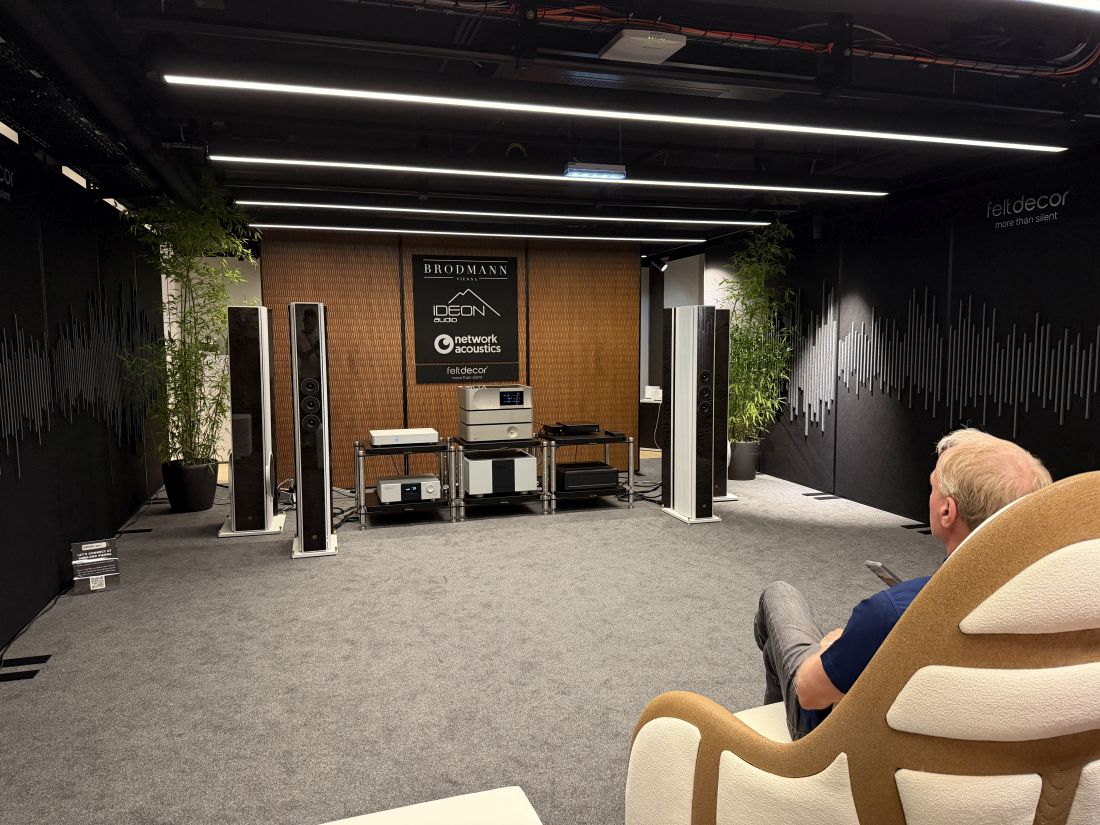
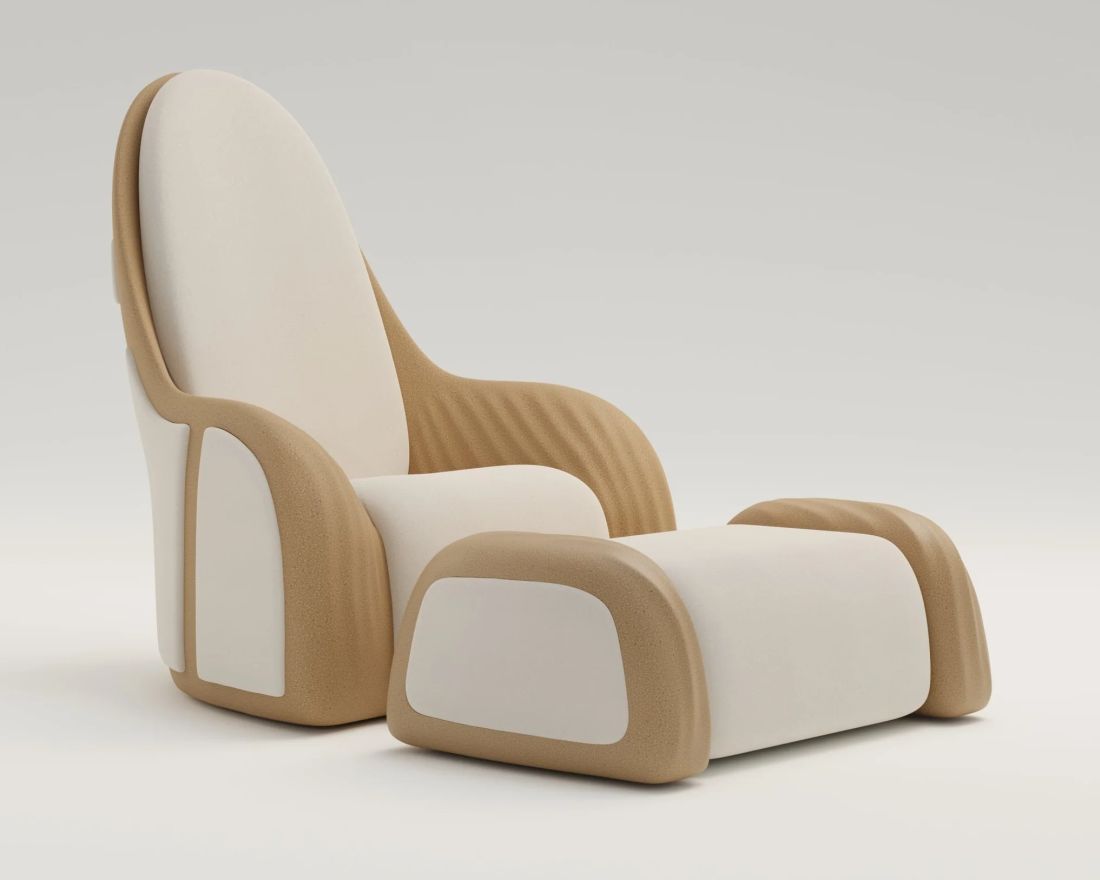
The Brodmann/Ideon system sounded highly accurate and was clearly well adjusted and set up. An interesting eye-catcher was the Oyster Listening Chair. This is the world’s first chair designed as an integrated acoustic component of a sound system, developed in collaboration with Brodmann Acoustics. Its surfaces serve acoustic purposes: interior arms diffuse mid- and high-frequency energy, the tall back blocks rear reflections while maintaining openness, diffusion panels mimic room treatments, curves reduce flutter and filtering, and sloped surfaces minimize standing waves. I have not sat in it, but I find the chair beautiful to look at, and it is most definitely a novel idea. The Oyster Listening Chair requires deep pockets at 18.000 USD.
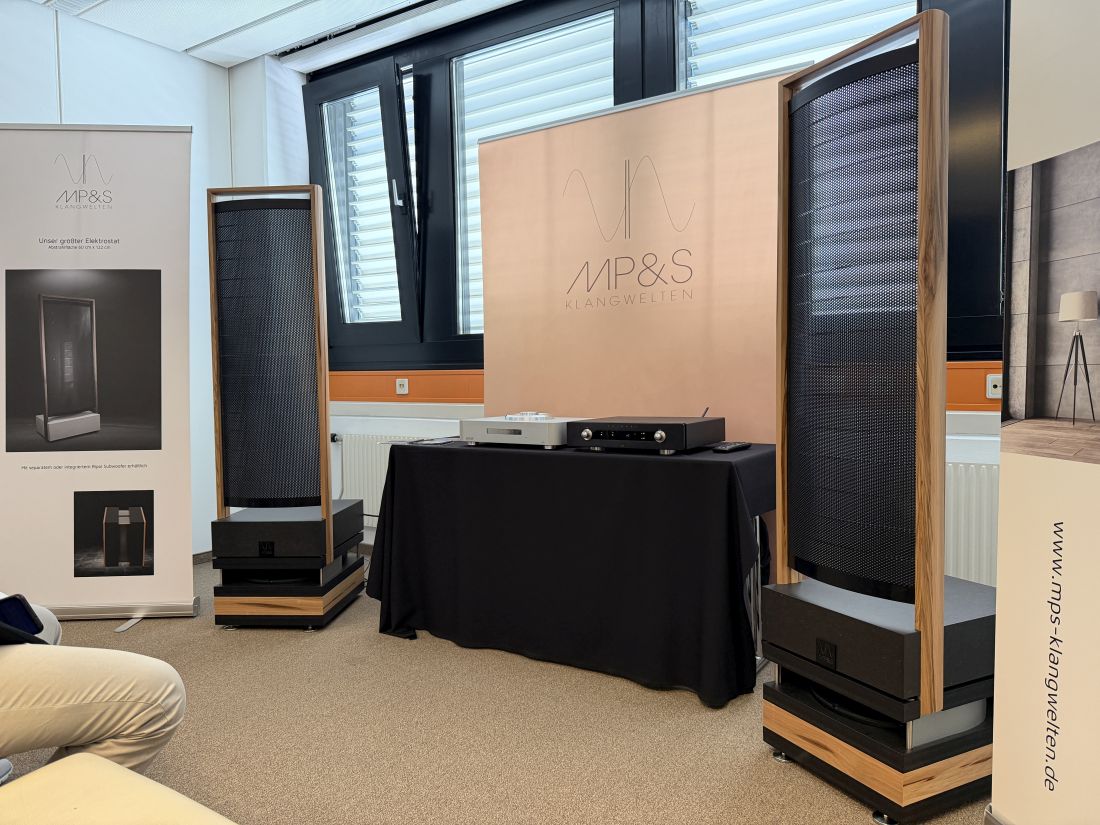
The mps-klangwelten electrostatics sounded delicate, lush, and smooth, less propulsive and forceful than hybrid Martin Logans, but all the more velvety and natural.
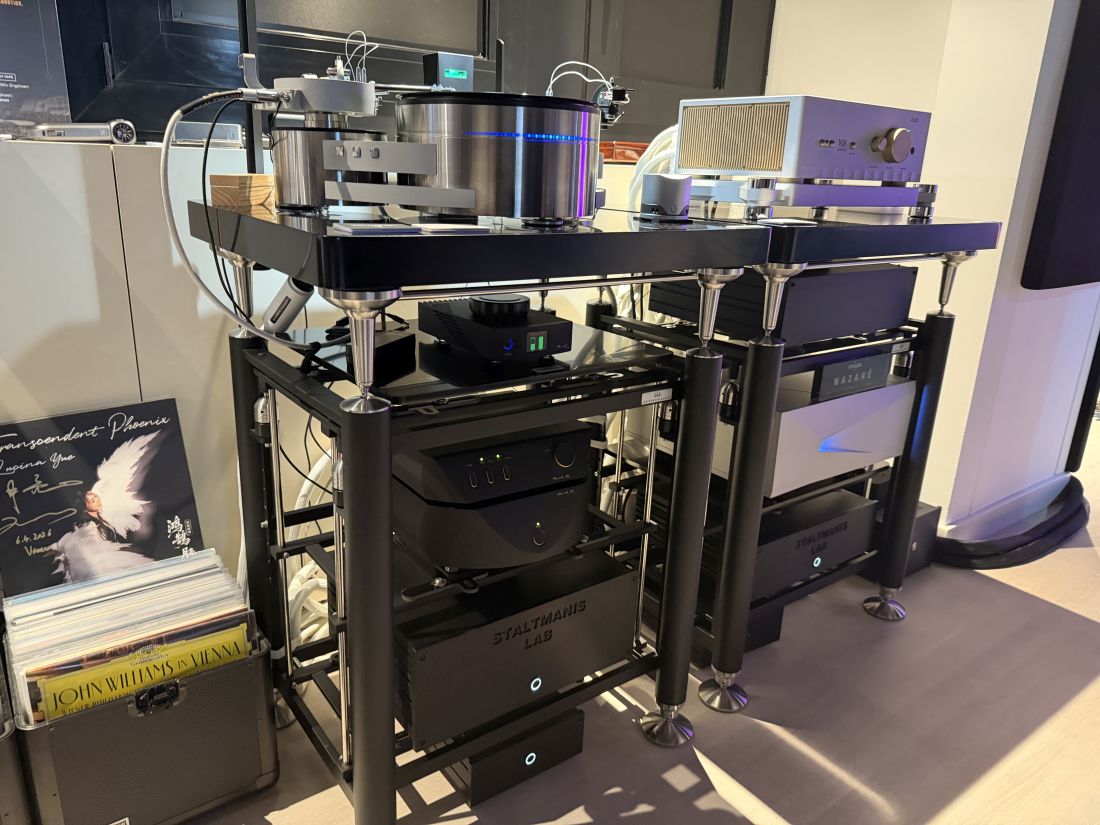
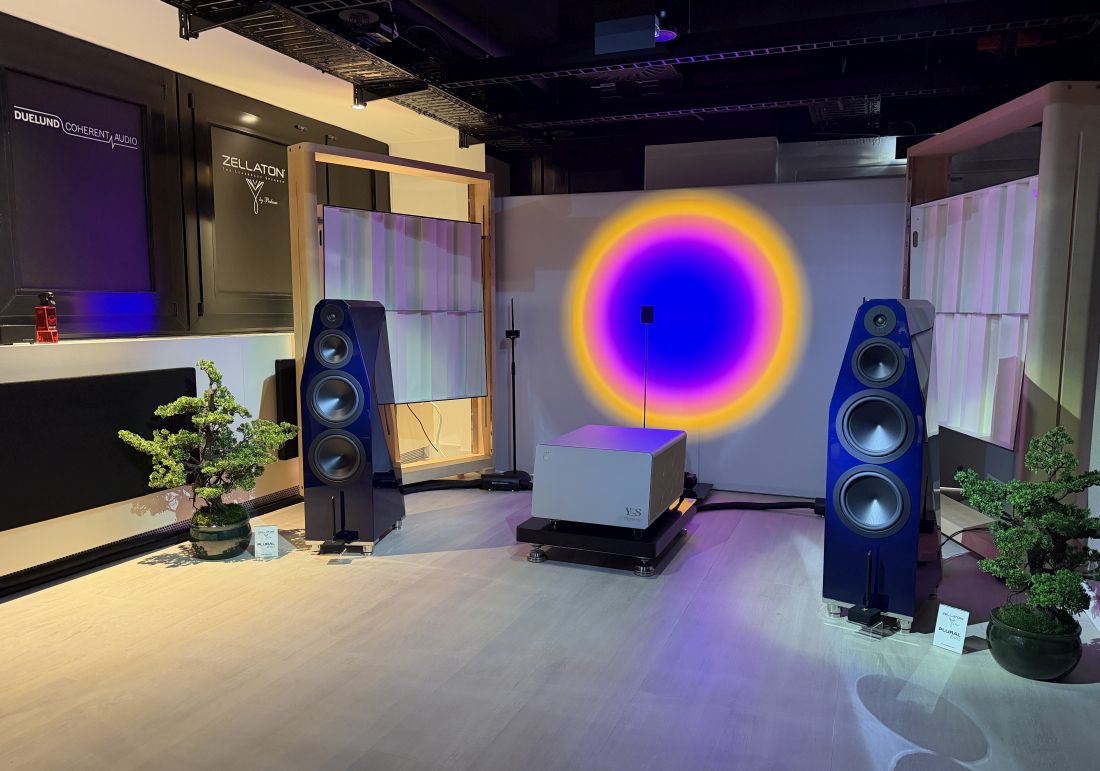
The Zellaton Plural Evo speakers offered an excellent mix of engaging musicality and accuracy. In Munich, I never found the Zellaton’s bass as precise as I prefer, but this time was different! Perhaps it was due to the interesting mix of equipment, and perhaps the room also had a hand in this. In any case, this was one of the clearly better rooms of the show.
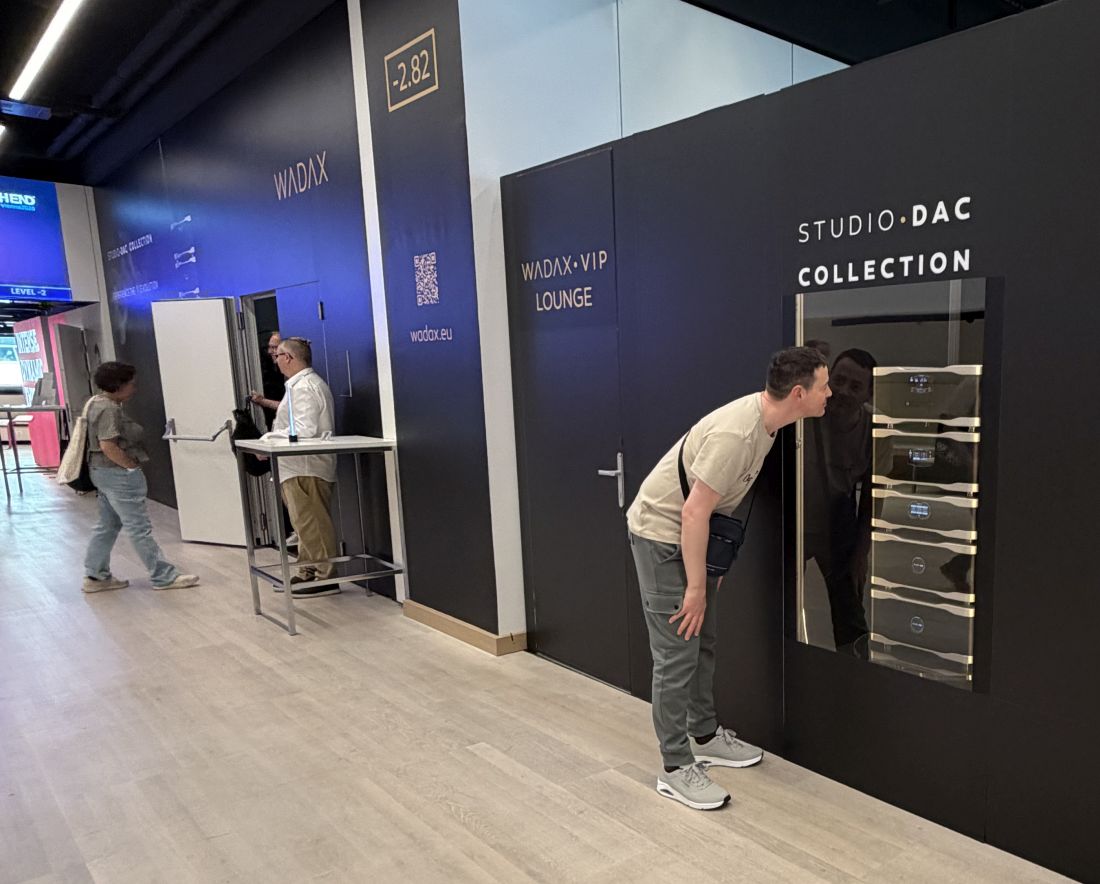
Wadax had a clever viewing box for their components, allowing visitors to inspect them closely while preventing fingerprints, or worse, damage.
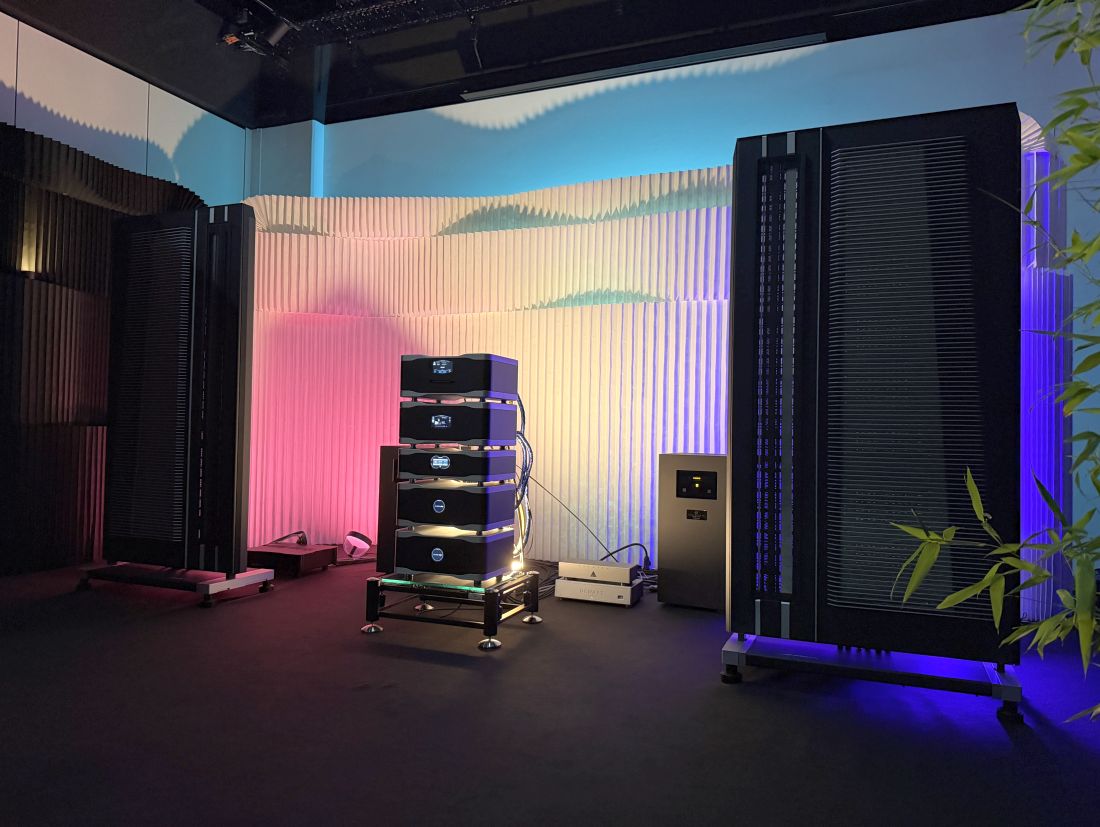
Wadax displayed the new Studio DAC Collection, which extends the concept introduced with the Studio Player Collection by separating the Studio Player architecture into two dedicated components: the Studio DAC and the Studio Transport.
I was eager to hear this system. Sadly, I couldn’t evaluate the sound because the bass-less minimal music made it difficult to draw any conclusions. I visited the room twice on different days, but the experience remained unchanged.
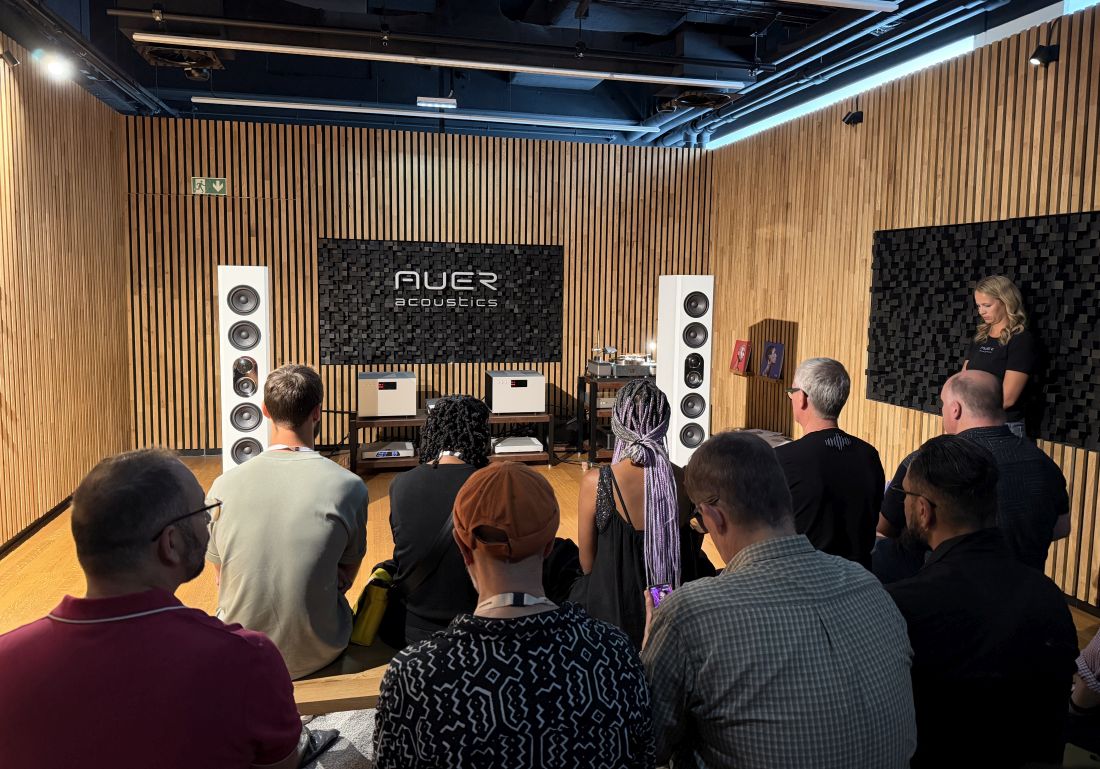
As before in Munich, the Auer room sounded excellent. This is a brand to keep in mind!
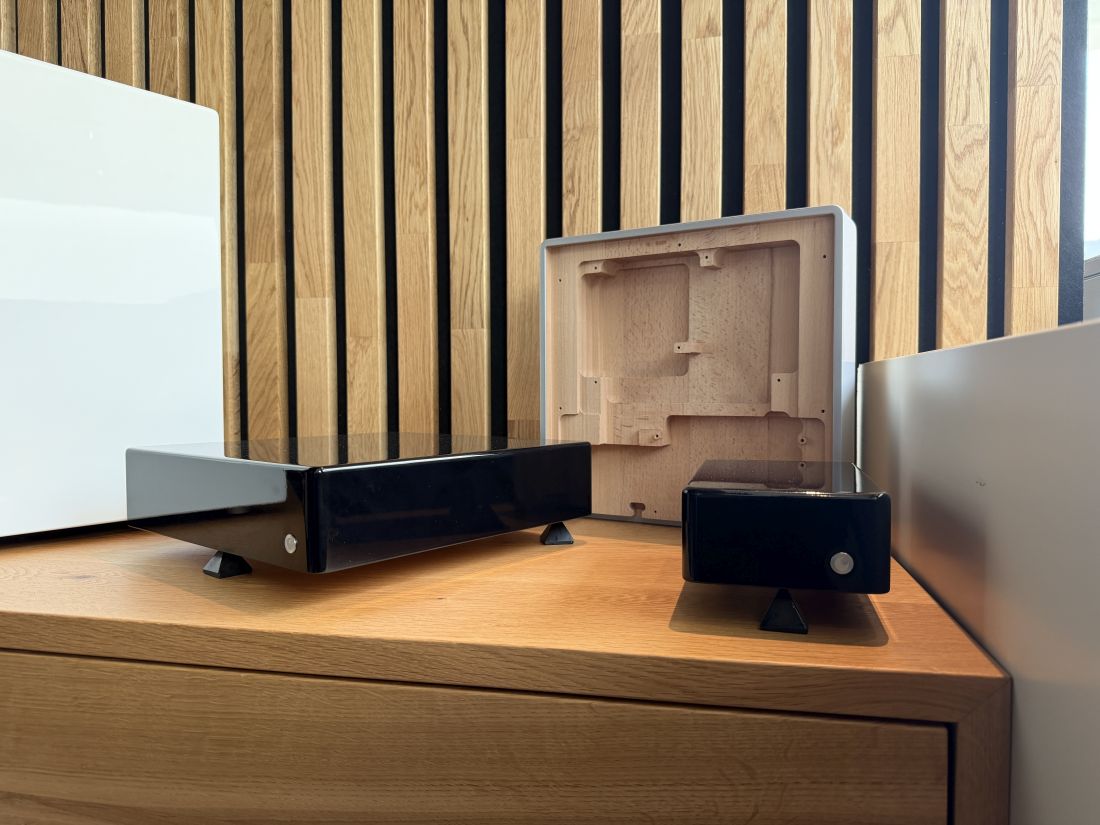
New solid wood enclosures for Network Acoustics products.
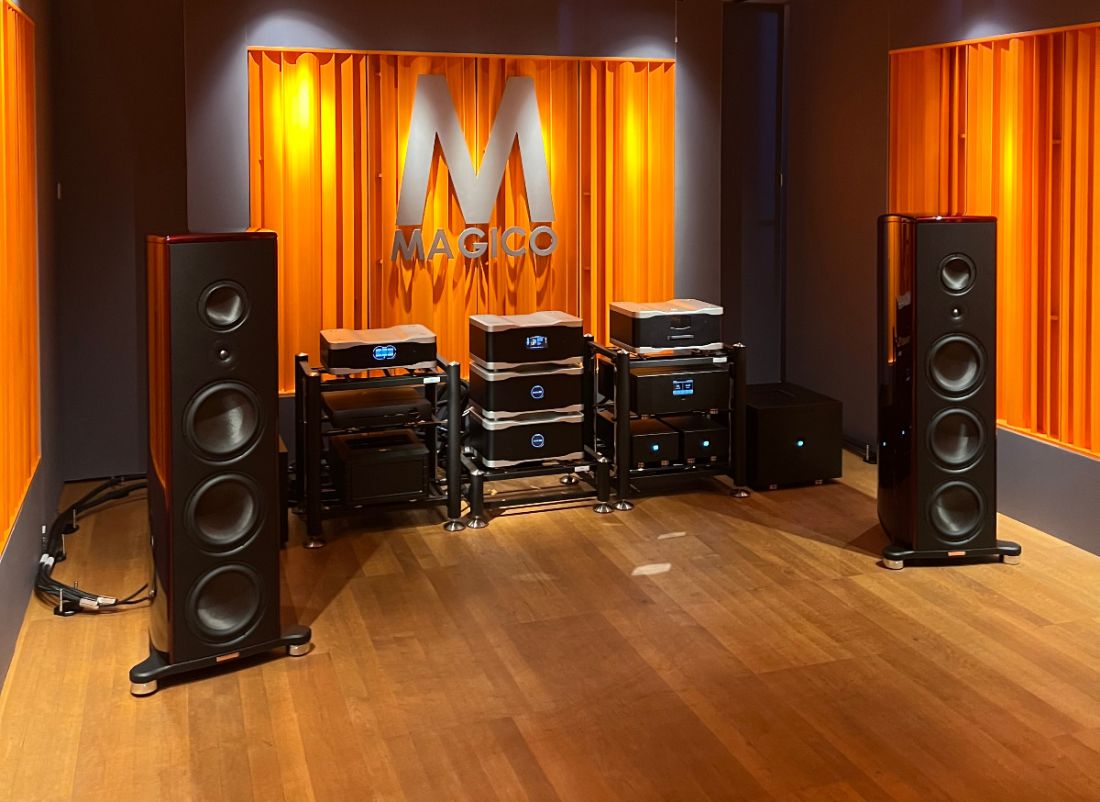
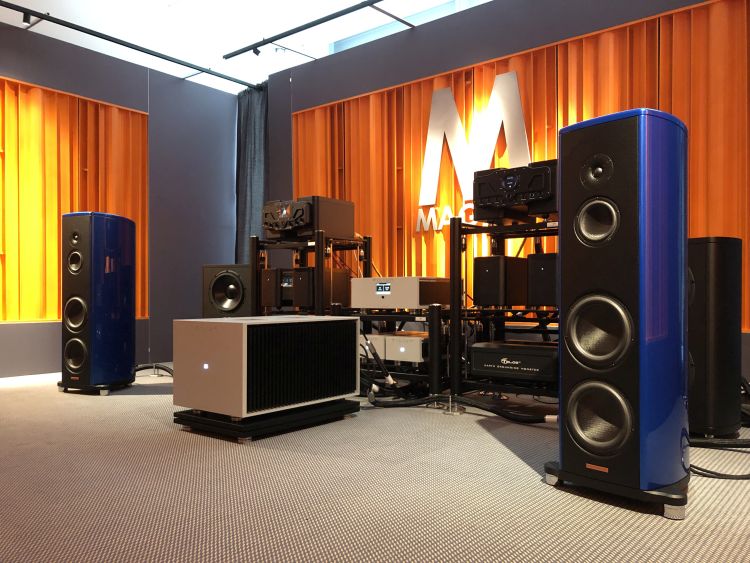
Magico introduced the S7, which sounded beautifully delicate, refined, and natural. I can’t say much more about it as the exhibitor played several tracks in a row with no bass or drums, and when I tried a second time, the room was consistently overcrowded.
The S7 is said to be the most advanced evolution of the highly acclaimed S series. Weighing 174 kg, the S7 features a 28 mm tweeter with a diamond-coated pure beryllium diaphragm from the M-series, with a neodymium motor and FEA-optimized design. The 152 mm midrange driver uses Magico’s Nano-Tec Gen 8 cone, made of an aluminum honeycomb core between carbon fiber layers reinforced with graphene, a lightweight, stiff mix developed with carbon nanotubes and nanographene. The three 10-inch woofers enable a bass response down to 20Hz. The photo is courtesy of Jean François / 1877 Audio.

Many thanks for the report. Just say that the Zellaton speaker that was actually playing is the Plural EVO and not the EVO MAX which is a new, much bigger speaker and was on static display only.
Oops, thanks for spotting that!
Excellent report! I hope you will have an opportunity to report on the Qobuz Connect module for the Aqua Linq. I’m sure many others are as interested as I am.
Hi Jake, I will indeed review the new Qobuz Connect module for the LinQ. Once I received it, I will add it to the ‘Reviews in progress’ section on the front page and on Facebook. After that, you can expect the review in a few weeks.