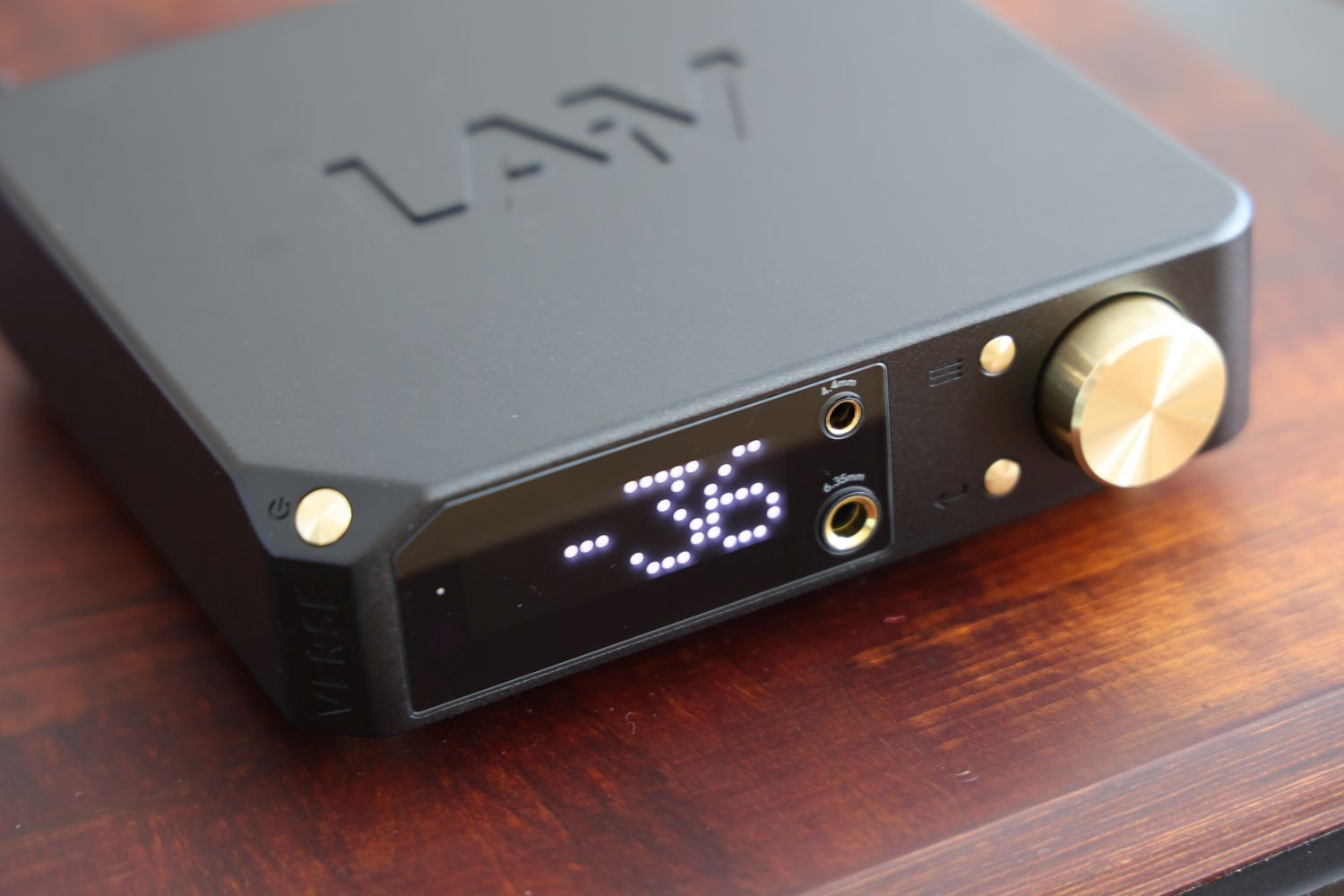
Headphone Listening
As dedicated as I am to listening with loudspeakers, I’m not a huge headphone enthusiast. Nevertheless, I’ve heard headphones across all price ranges, from the cheapest earbuds to mid-range Sennheisers such as the HD-650, to earbuds that outperform mid-range Sennheisers, to high-end planar magnetic headphones such as the Audeze LCD-1 and HifiMan Arya Stealth, and the best I have heard so far, the RAAL Requisite CA-1a. I personally only own a basic pair of Sennheisers, so I asked my good friend NvM, who is most definitely a headphone aficionado, to come over and bring one or more of his high-end headphones. This time, he only brought his HifiMan Arya Stealth, which is both my and his favorite.
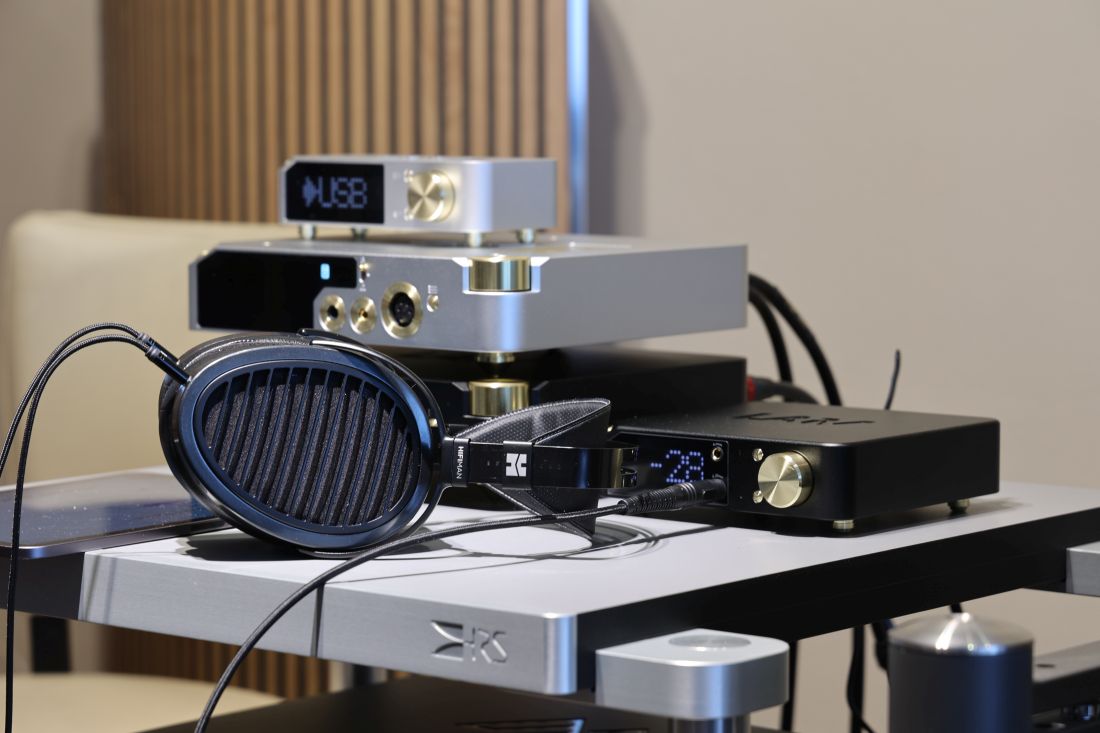
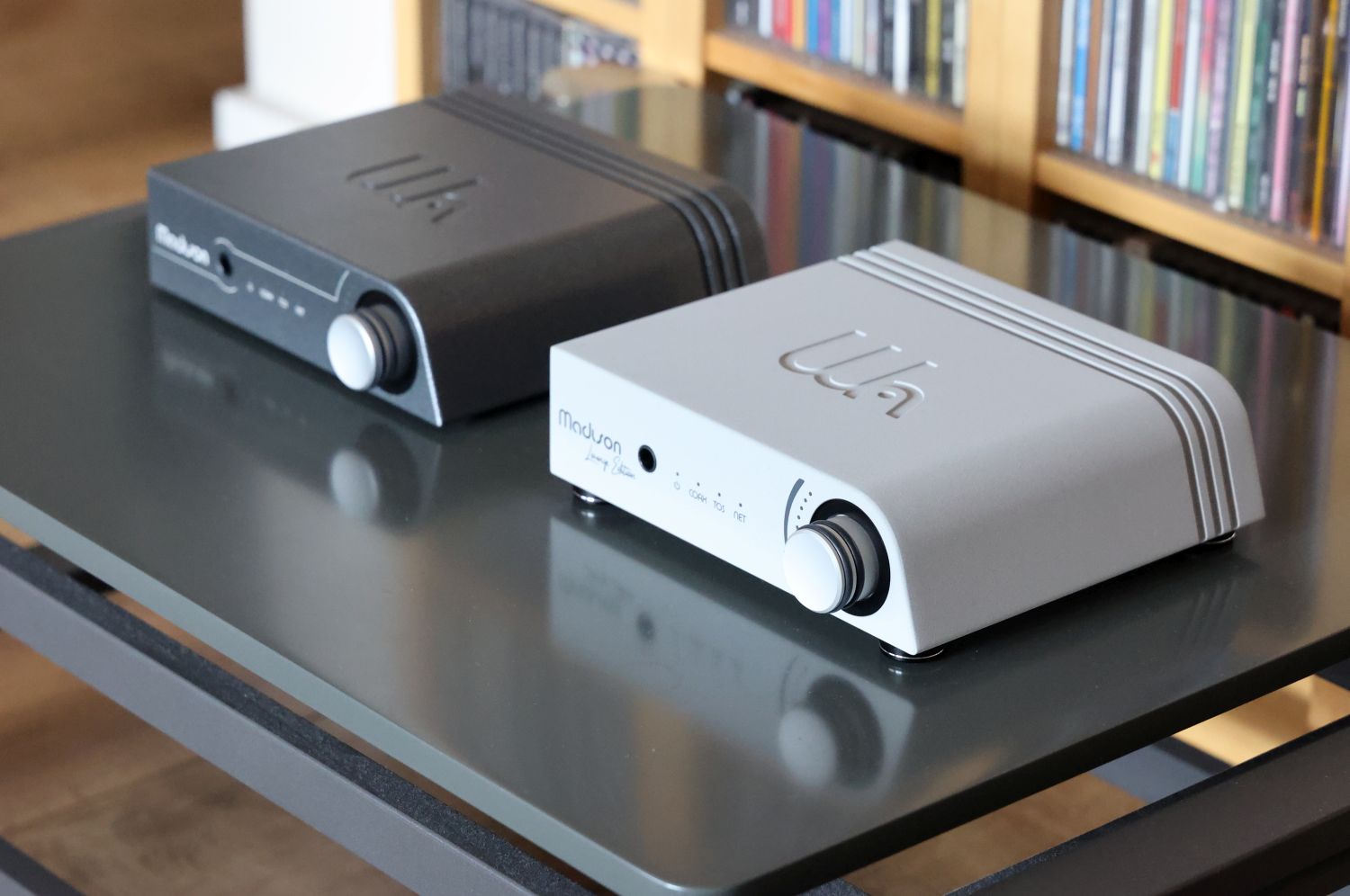
I started listening with the Arya headphones using the stock cable with a standard 6.3 mm connector. With the gain set to Medium in the Verse’s menu, the built-in amplifier clearly has enough power to drive the Arya Stealth well, delivering a transparent, detailed, yet smooth and relaxed sound. The Verse, in its headphone-amp guise, reminds me of the Wattson Madison, though it is not quite as full-bodied, lush, or smooth. The Verse is leaner and feels less powerful in the bass, but in turn, it does have excellent articulation and precision. Does the Verse really offer competition at only a third of the cost? Without a direct comparison, I can’t be sure, but I can say it’s less off than the price difference might suggest. Of course, the Wattson includes a full-fledged streaming endpoint and an app to control all of its functions, which are also great selling points.
When selecting Low gain (the Verse’s default), the music becomes sweeter and more relaxed (more like the Wattson in these regards), but also less upbeat and enthusiastic. The Arya does like a bit of drive, so that makes sense. The Verse’s High gain setting, however, offers an interesting alternative. On the one hand, this setting further increases tightness, transient precision, and expression, which certainly appeals to me, but on the other hand, the extra control also makes it slightly less soothing. Nevertheless, for those who prioritize realism, the greater precision will be compelling.
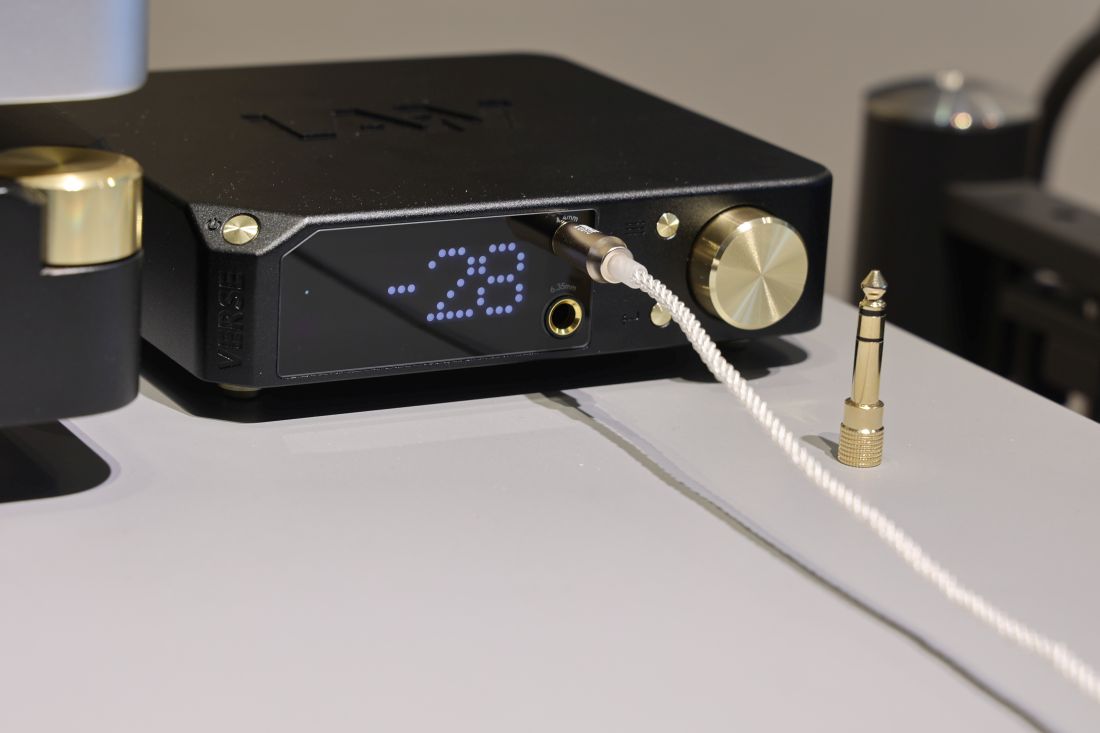
Switching from the Arya’s stock cable to a 4.4 mm balanced variant, the Verse continues to impress me with its even more accurate sound while remaining fluid and refined. However, the extra precision of this cable is a two-edged sword: it goes three steps further than choosing High gain over Medium gain, resulting in a more stringent, analytical delivery. This way, you hear everything in the recording, for better or for worse. But since the Verse has both outputs available, there’s nothing stopping a dedicated headphone fanatic from maintaining different cables and swapping between them as desired.
After this last test using headphones, I must say that the Verse surprised me even more than it did when I used it in my system with the loudspeakers. Honestly, with the Arya Stealth, everything I played was so engaging and satisfying that I wondered whether I truly needed higher-quality sound. Of course, past experiences had already primed me, so I knew that more was possible. But as long as I was not making direct comparisons, I did not feel I was missing anything. Of course, that left me with no choice but to compare it with the best LAiV has to offer.
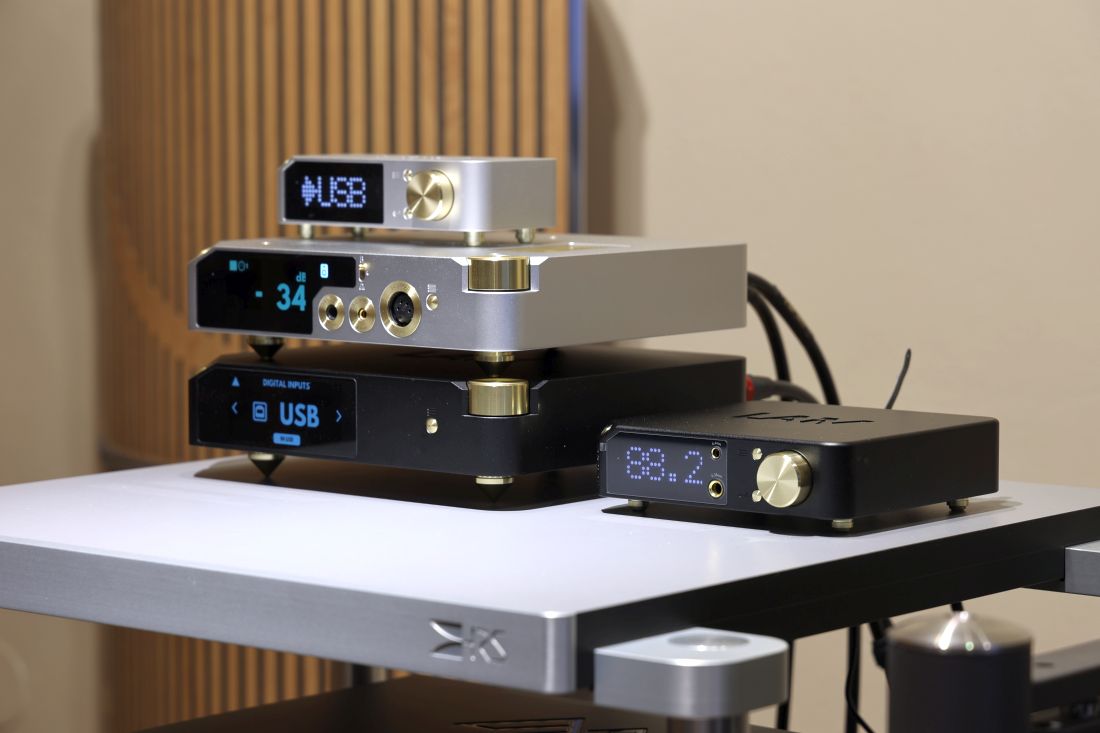
Compared to Harmony DAC and HP2A
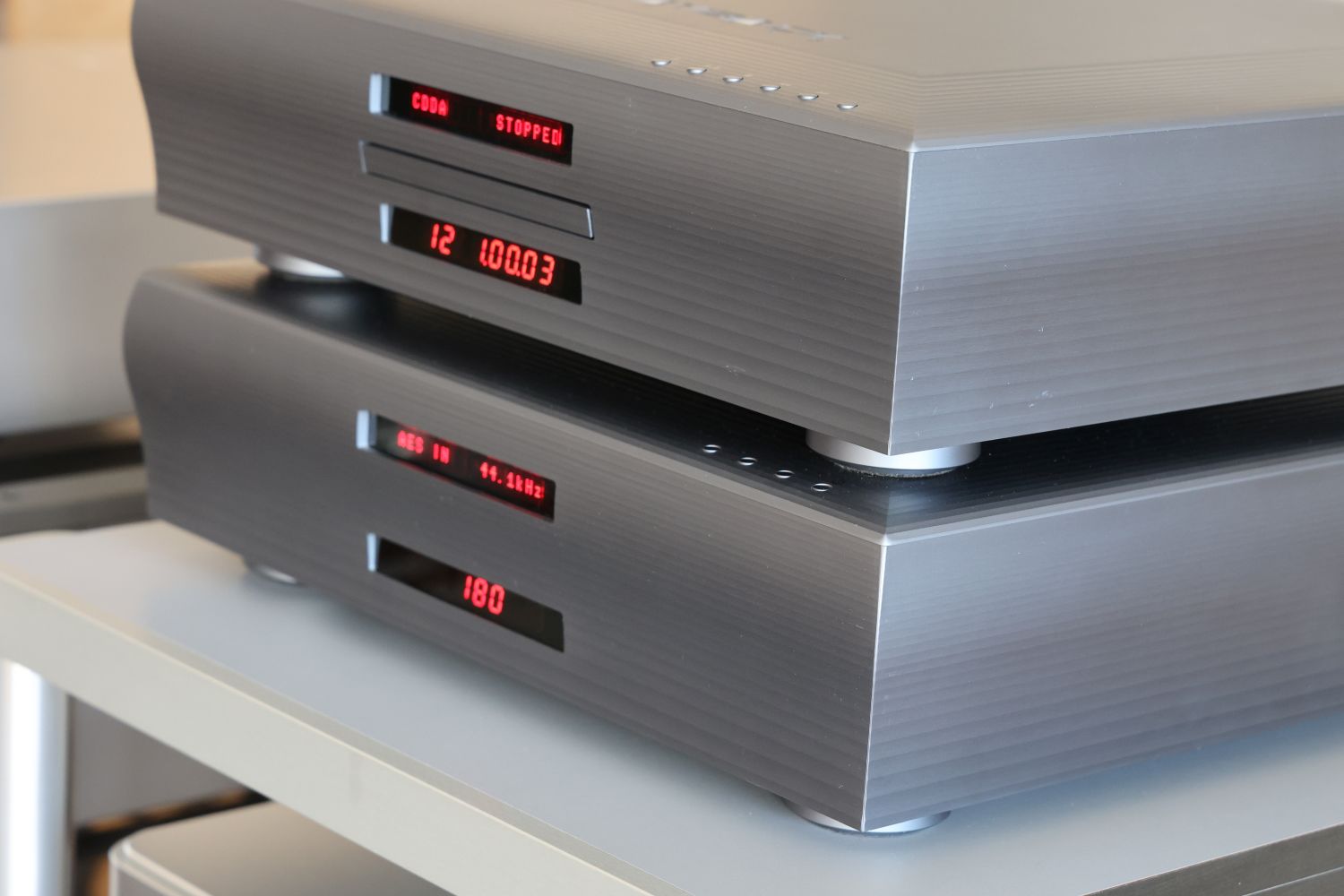
Stepping up to the LAiV Harmony DAC with the HP2A preamplifier quickly proved that there was indeed quite a bit more to be had. Improvements included much more robust bass, increased resolution and precision, better instrument separation, a more realistic timbre, and greater overall conviction. This was definitely more realistic and higher-end, and I sure preferred it. But did the dearer combo also provide a deeper emotional connection? Honestly, not really. But if you want to enjoy deep musicality as well as satisfy your desire for technical precision (as I know I do…), the big stack offers that, and more.
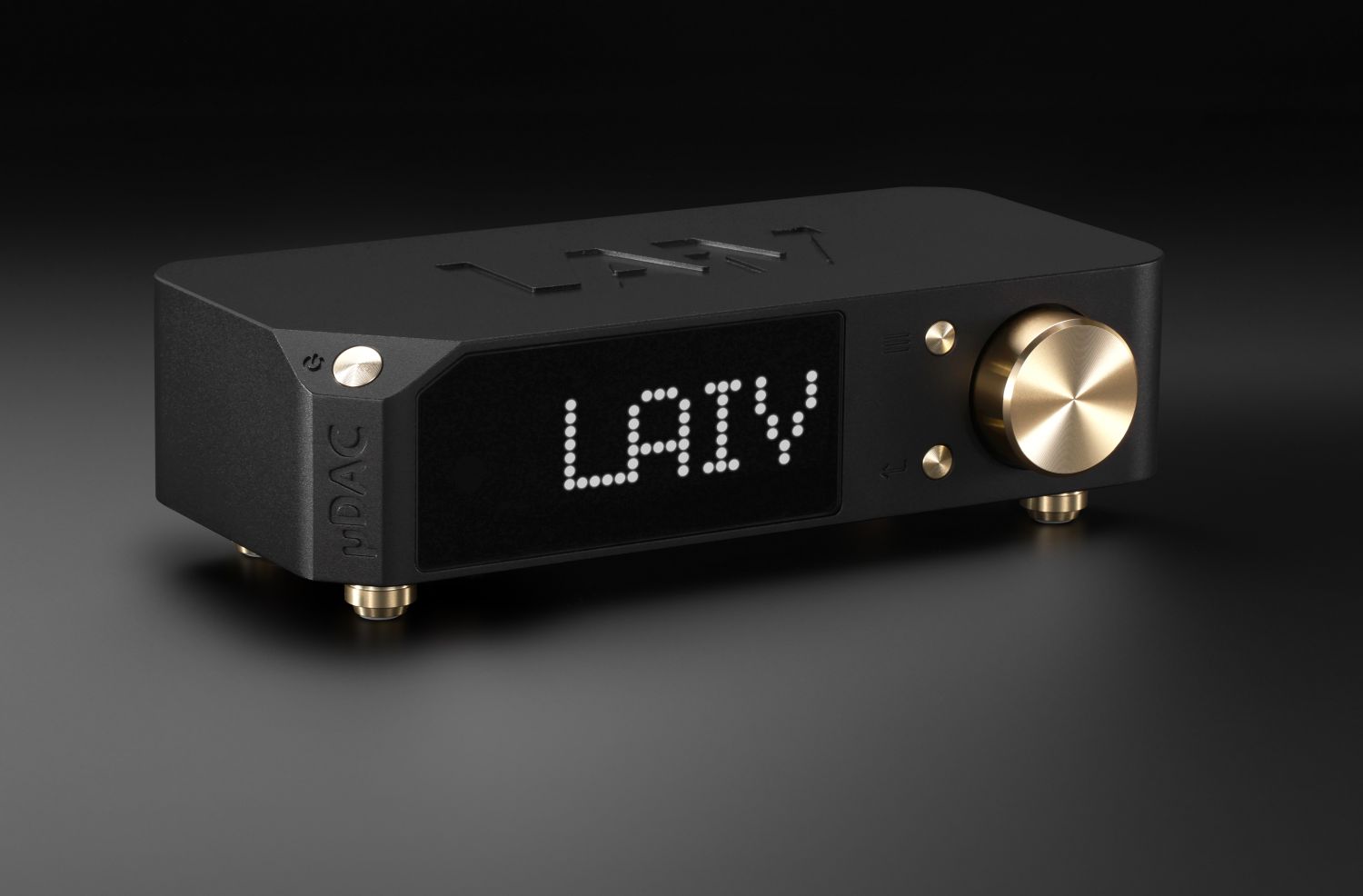
Finally, to complete the comparisons, I connected the uDAC instead of the Harmony DAC. Sure enough, the uDAC and HP2A combo still provides superior sound in many respects, but after hearing the Harmony DAC, it was evident that the uDAC does not reach true high-end levels of refinement and fluidity. And, interestingly, this is what the Verse feels closer to. It’s not as solid and precise, but it does provide a superb balance between liquid fluidity and refinement on the one hand, and precision and control on the other.
Conclusion
The LAiV Verse DAC goes beyond a basic DAC with a proprietary discrete R2R ladder, analog volume control, discrete output preamp, and discrete headphone amplification stage. Whether used as a fixed-volume DAC, as a DAC + preamp feeding a power amp, or as a headphone amp, the Verse delivers a precise and articulate yet fluid, smooth, and refined sound. While it does not quite match the realism and bass authority of LAiV’s higher-end Harmony DAC/HP2A or uDAC/HP2A preamp combinations, it offers greater flexibility and features at a considerably lower price point.
The Verse stands out as a highly capable, flexible, and musically satisfying DAC and headphone amplifier that brings many key LAiV aspects to a more attainable level, with only minor compromises compared to the top-tier models that cost multiples more.

External Links
Manufacturer: LAiV Audio