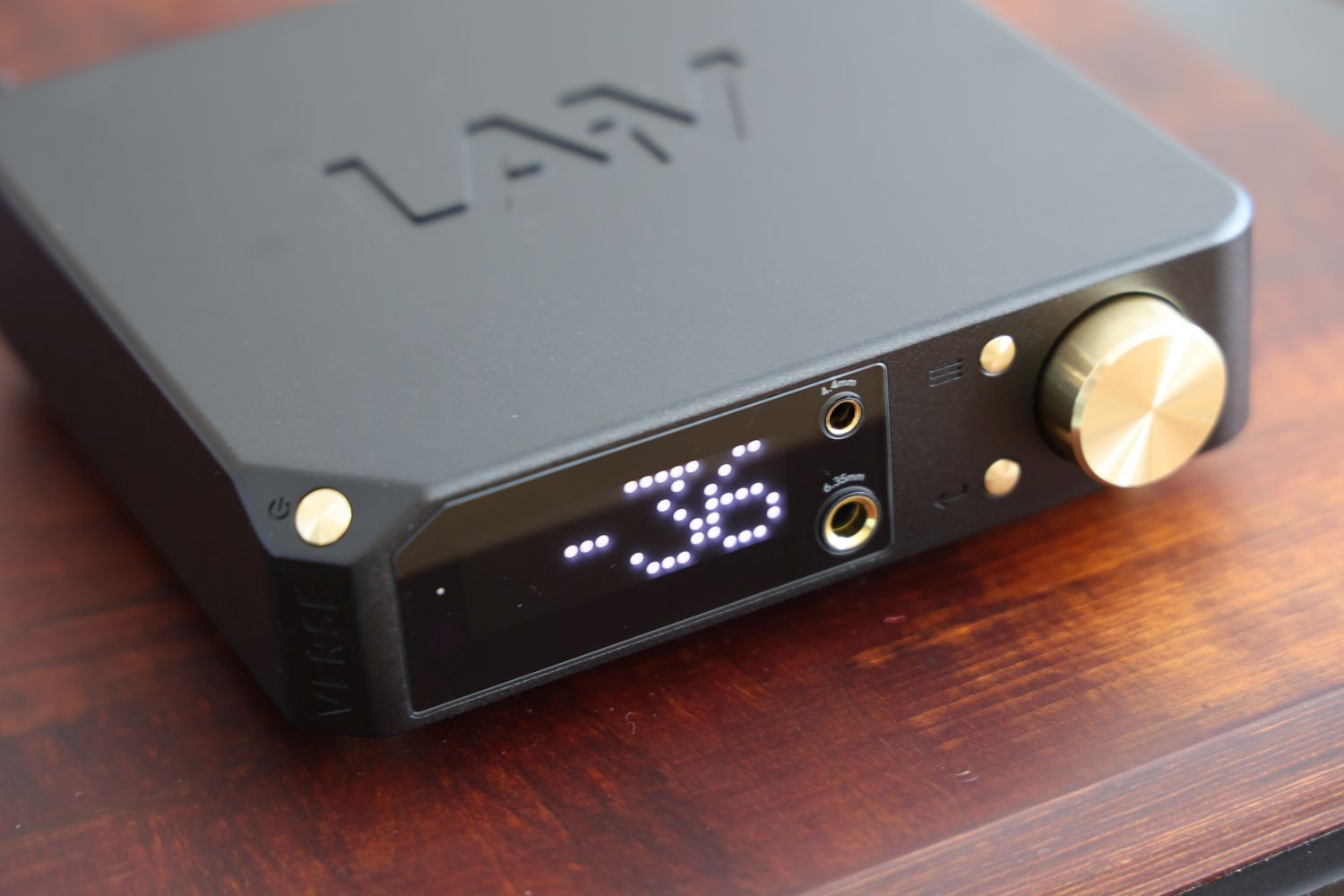
Review sample provided by LAiV Audio
Retail price: USD 849 + VAT (~866 Euro in the EU)
Crescendo Range
The Crescendo series represents LAiV’s new entry lineup, designed to make high-end performance more accessible while staying true to its design DNA and engineering philosophy. The Verse DAC is the first product of the new Crescendo range.
Technical Details
The Verse is designed for listeners who want to experience the essence of LAiV: R2R musicality, discrete engineering, and thoughtful design — without stepping directly into flagship territory. Nevertheless, the manufacturer makes it clear that the Verse is not a simplified product; it is a carefully scaled one that preserves what matters most: musicality, signal integrity, and long-term listening satisfaction.
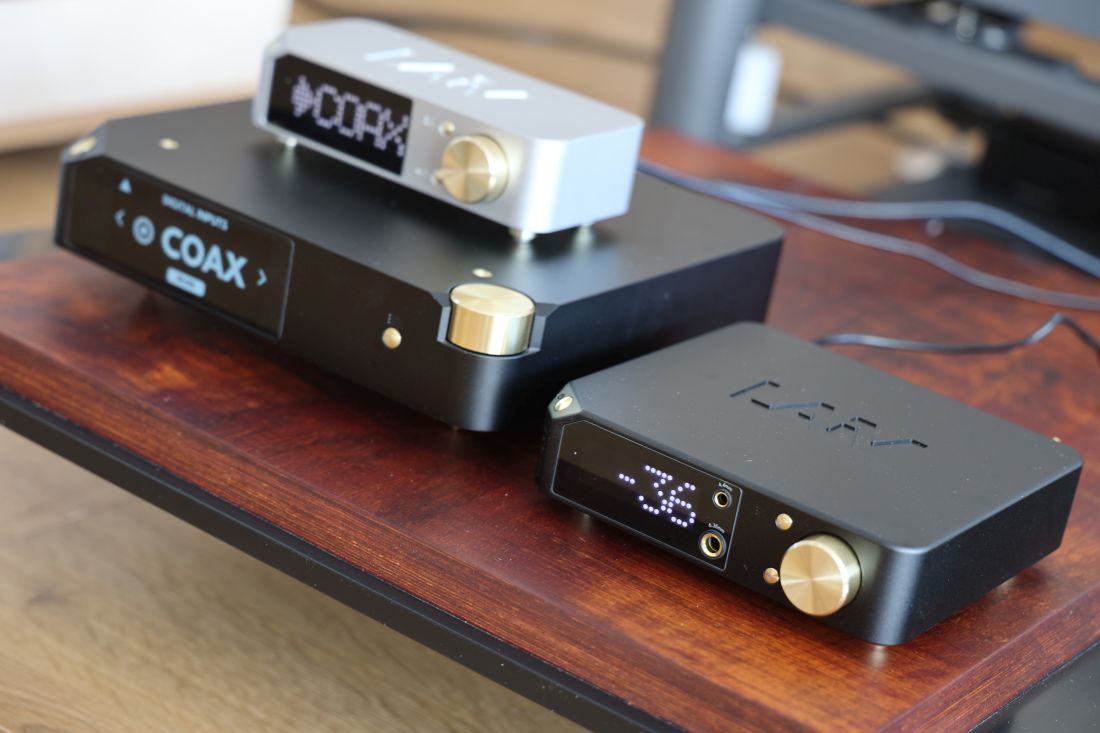
The Verse is more than a DAC. With a discrete-output, buffered preamplifier, analog volume control, and a fully discrete headphone stage, it offers great flexibility to use in personal and loudspeaker-based systems. At its heart is a fully discrete architecture that bridges classic R2R principles with modern usability, flexibility, and future-proofing.
Like all LAiV DACs, the Verse is built around a proprietary discrete R2R ladder DAC. It offers a choice between NOS (no oversampling) and SRC (sample rate conversion) to suit individual needs. Additionally, the DAC supports native 1-bit DSD processing and features a switchable integrated sampling-rate converter, providing full control over PCM and DSD playback behavior. In SRC mode, you can select 1x, 2x, 4x, 8x, or 16x PCM oversampling, and even resample to DSD 64, 128, 256, and 512! Finally, the digital PCM filter can be switched in SRC mode between Sharp and Slow.
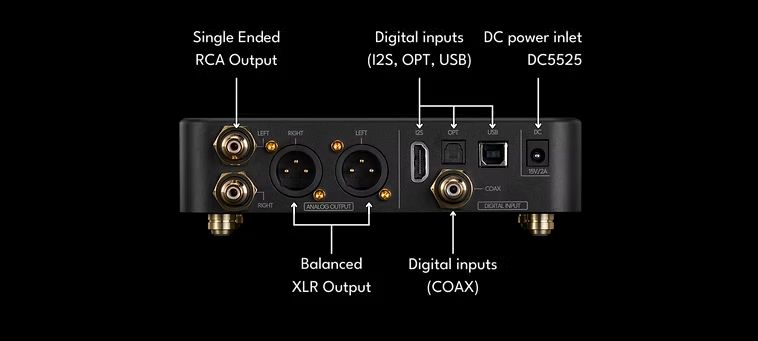
The Verse offers USB, Optical, Coax, and I2S inputs and provides the analog output signal on single-ended RCA and Balanced XLR. The output can be set to Fixed to operate as a pure DAC, or to Variable to enable the built-in analog preamplifier. The headphone amplifier section offers a Balanced 4.4 mm jack, approx. 11 Vrms at ≤ 1100 mW at 5.1 Ω, and a Single-Ended 6.35 mm jack, approx. 5.5 Vrms, at ≤ 290 mW at 2.6 Ω. The headphone section can be enabled separately, and the Verse offers various settings to fine-tune it. I’ll dive deeper into all the possibilities in the listening section further below.
The Verse’s I2S input works out of the box with other LAiV products and is additionally fully configurable to work with all other manufacturers’ products. The Verse goes yet another step further by allowing the user to select the clock source. The DAC can slave to the input clock using its own clock in Local mode (the default for the Verse and normal for S/PDIF and I2S), or be clocked directly by the source clock. When selecting ‘I2S’ for the clock setting, the Verse will automatically switch to the local clock if the I2S clock becomes unstable or incompatible, and switch back once it stabilizes. The Verse will also switch to the local clock when other digital inputs are selected.
The Verse also lets you choose how DSD playback is handled. The DAC can be set to Native for true 1-bit DSD processing without conversion to PCM. In this mode, DSD remains in its original 1-bit form to preserve its natural characteristics. When setting the DSD setting to Multibit, DSD is converted to PCM, which can improve dynamic range and reduce noise. When switching between PCM and 1-bit DSD, a brief DC offset change may occur, which can be heard as a popping sound at the start of playback.
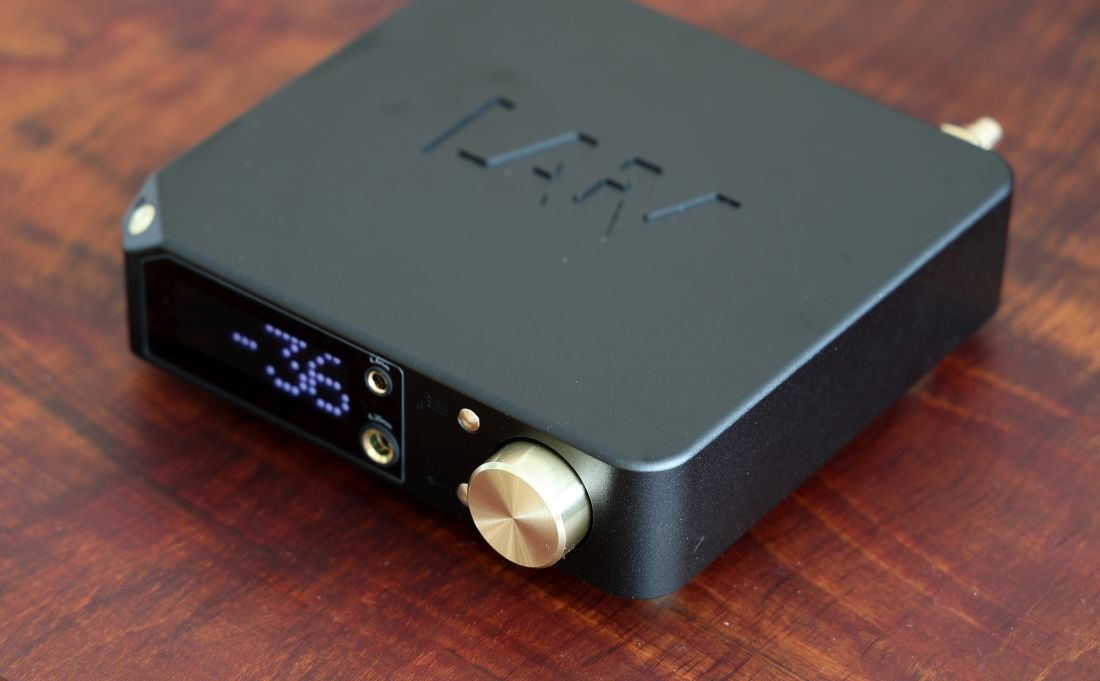
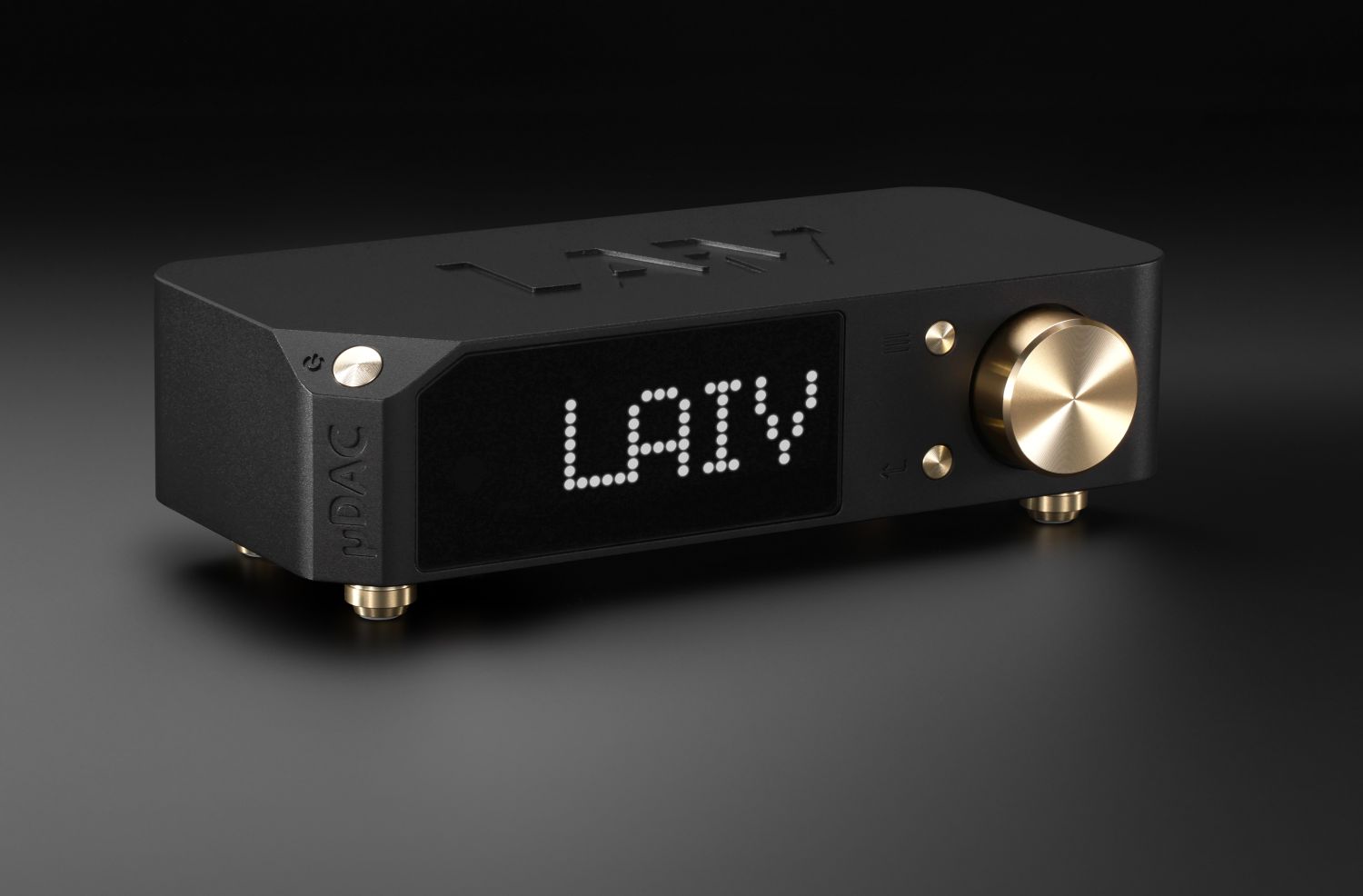
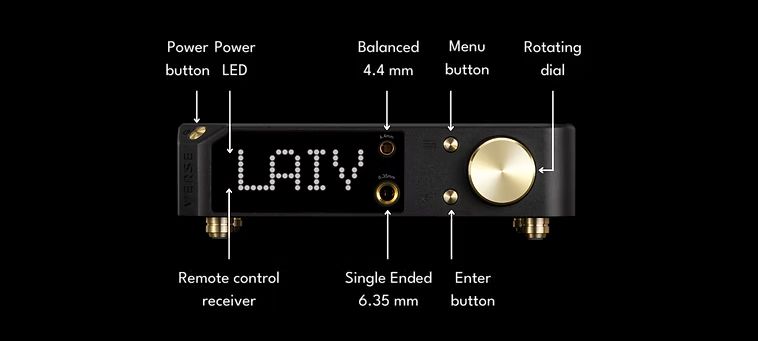
All information and controls can be accessed through the Verse’s front panel’s settings menu button, rotary control, and enter button. The controls on the front panel are similar to those on the IR remote control. All the settings and information are shown on the four-character LED Running Text Display. The display can be set to auto-dim and/or auto-power-off as desired. Since it is LED, there is no risk of burn-in, so it can also be left on indefinitely.
Review Context
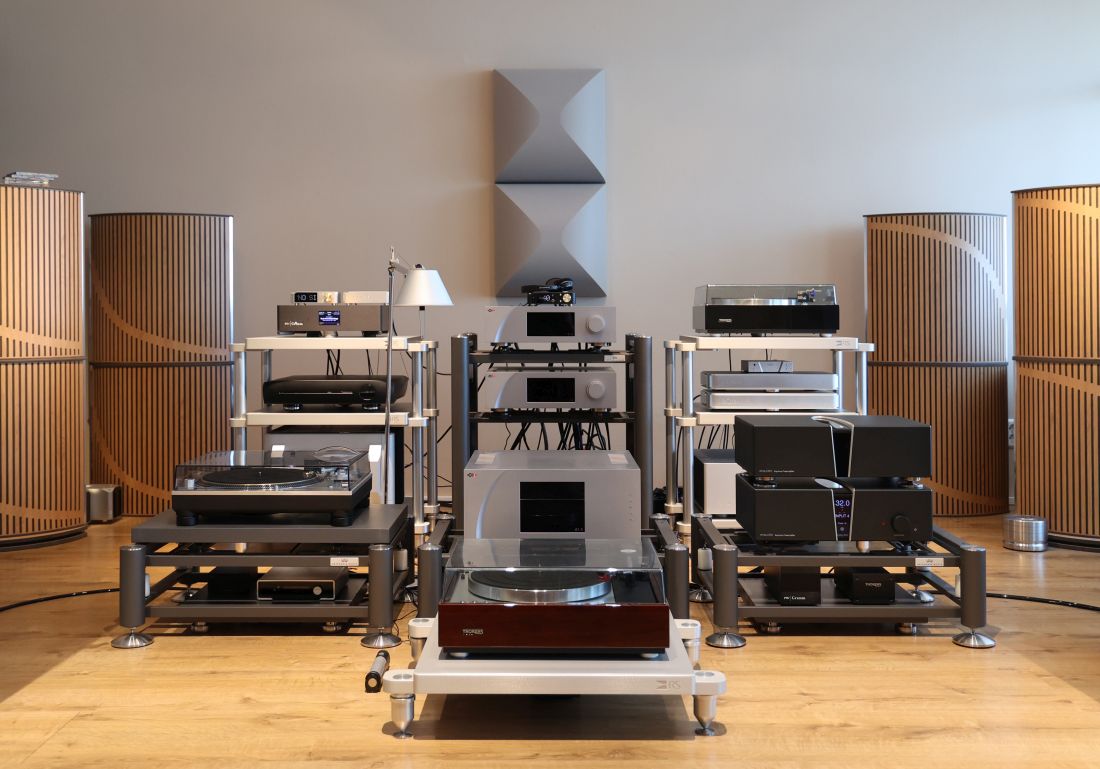
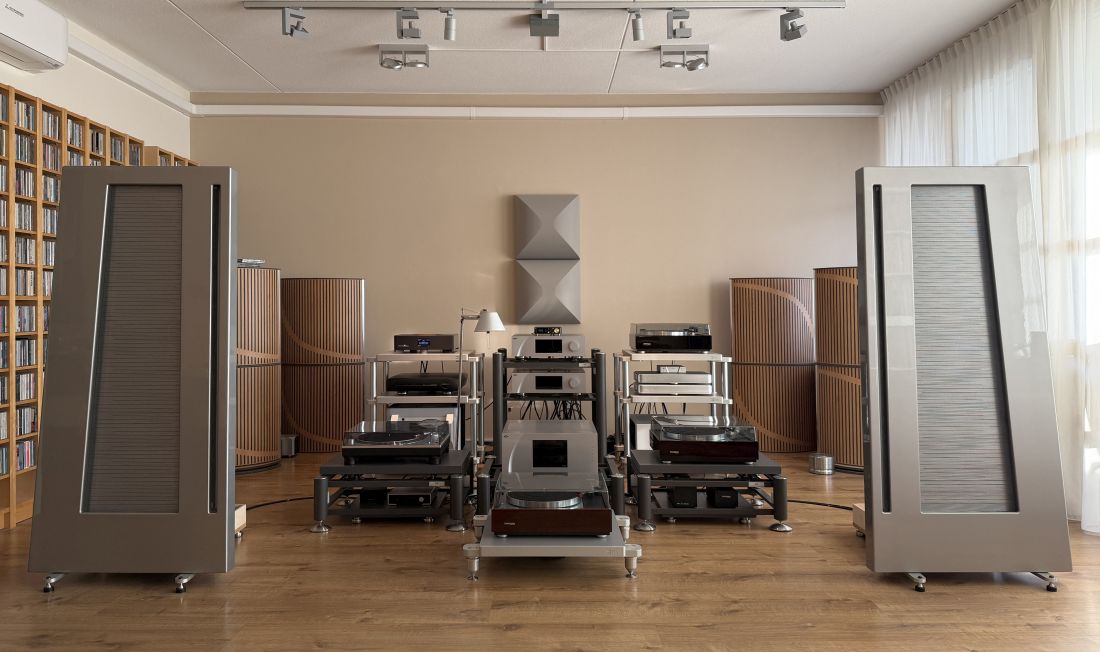
The LAiV Verse DAC was listened to in the main system, comprised of the CH Precision C1.2 DAC, CH Precision L1 preamplifier, and CH Precision A1.5 power amp. Digital sources include the Antipodes Oladra and Grimm MU1 music servers. All interlinks are Driade Flow Link Reference 808, and the speaker cables are Driade Flow Reference 808. Speakers used are the Duetta Signature (recently fitted with new foils). All components (including review components) are powered by the PS Audio P20 PowerPlant.
Listening
Set up in the main system with recently refurbished Apogee Duetta Signature speakers, connected with a coaxial output from the Grimm MU1 server, the Verse makes a great first impression. The bass is well-controlled, upbeat, and articulate, and this level of precision extends across the frequency range. While such properties can sometimes lead to a dry or analytical sound, the Verse maintains a pleasant smoothness and great fluidity, with a delicate, airy treble.
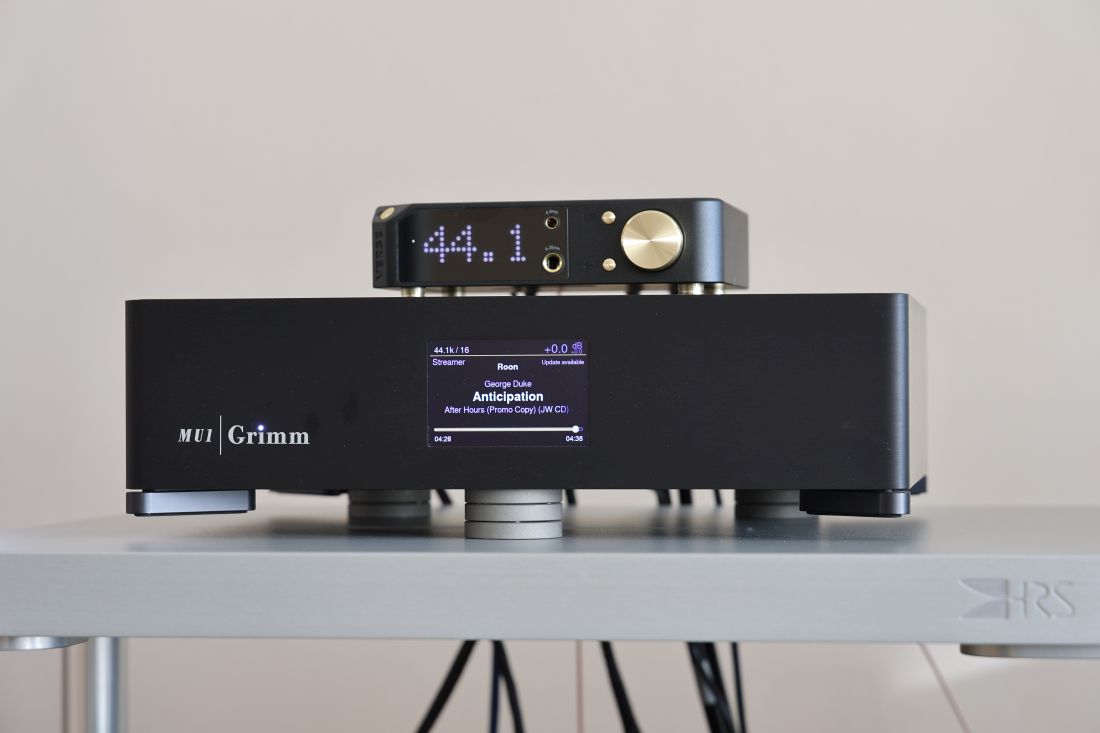
The Verse also includes an I2S input, which typically delivers better performance than S/PDIF. However, not many source components have an I2S output, and neither does the Grimm server. To circumvent this, I used the LAiV uDDC, a digital-to-digital converter that accepts a wide range of inputs (Coax, USB, I2S, and AES/EBU), reclocks the signal, and outputs a clean I2S signal.
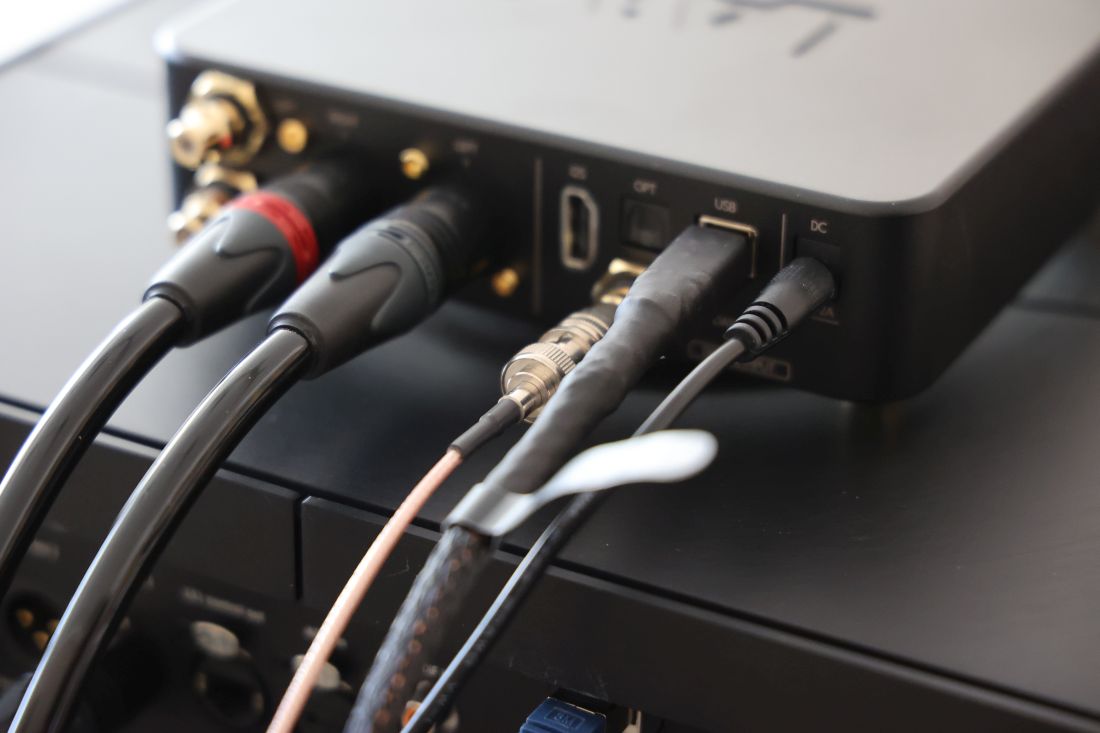
To provide an unprocessed source, I used a direct USB connection from the MU1 to the uDDC. With the uDDC providing a music signal via I2S, as is typical for this format, the sound is even better than with the more traditional formats. Compared with the coax input, the I2S connection further enhances precision, crispness, and expression without introducing drawbacks. Even though the sound is now even more detailed, there is no dryness, which makes it easy to listen to.
Next: I2S, NOS, USB, uDAC, and direct to power amp