• About
    • About HFA
    • HFA Awards
    • Associated Equipment
    • Banners on HFA
    • HFA Analytics Data
    • HFA Audio Setup History
    • HFA Audio Setup Snapshots
    • Sitemap
    • Contact
  • HFA Awards
  • Reviews
    • All Reviews
    • Amplifier
      • All Amplifier Reviews
      • Integrated Amplifier
      • Preamplifier
      • Power Amplifier
      • Phono Preamp
    • Loudspeaker
      • All Loudspeaker Reviews
      • Passive Speaker
      • Active Analog Speaker
      • Active Digital Speaker
    • Digital
      • All Digital Reviews
      • CD Player
      • SPDIF DAC
      • USB DAC
      • Music Server
      • Network Player
      • Digital Recorder
      • Digital Interface
      • Audio Software
    • Turntable and Accessories
      • All Turntable and Accessories Reviews
      • Turntable
      • Tonearm
      • Phono Cartridge
      • Turntable Accessories
    • Cable
      • All Cable Reviews
      • Analog Interlink
      • Phono Interlink
      • Speaker Cable
      • Power Cable
      • Digital Cable
    • Accessories
      • All Accessories Reviews
      • Racks / Stands / Feet
      • Tuning / Tweaks
      • Power Connector
    • Industry Update
  • Insights
    • All Insights
    • Analog Insights
    • Cable Insights
    • Connector Insights
    • Digital Insights
    • Extensionblocks / Filters Insights
    • Generic Insights
    • System Synergy Q&A
  • Specials
  • Show Reports
    • All Show Reports
    • Alkmaar Audio Show
    • Chattelin Audio Systems
    • Dutch Audio Event
    • Enosound
    • HifiDeluxe
    • HifiLive
    • Munich High End
    • XFi
  • Classics
    • All Classics
    • Analog Classics
    • Digital Classics
  • Links
  • About
    • About HFA
    • HFA Awards
    • Associated Equipment
    • Banners on HFA
    • HFA Analytics Data
    • HFA Audio Setup History
    • HFA Audio Setup Snapshots
    • Sitemap
    • Contact
  • HFA Awards
  • Reviews
    • All Reviews
    • Amplifier
      • All Amplifier Reviews
      • Integrated Amplifier
      • Preamplifier
      • Power Amplifier
      • Phono Preamp
    • Loudspeaker
      • All Loudspeaker Reviews
      • Passive Speaker
      • Active Analog Speaker
      • Active Digital Speaker
    • Digital
      • All Digital Reviews
      • CD Player
      • SPDIF DAC
      • USB DAC
      • Music Server
      • Network Player
      • Digital Recorder
      • Digital Interface
      • Audio Software
    • Turntable and Accessories
      • All Turntable and Accessories Reviews
      • Turntable
      • Tonearm
      • Phono Cartridge
      • Turntable Accessories
    • Cable
      • All Cable Reviews
      • Analog Interlink
      • Phono Interlink
      • Speaker Cable
      • Power Cable
      • Digital Cable
    • Accessories
      • All Accessories Reviews
      • Racks / Stands / Feet
      • Tuning / Tweaks
      • Power Connector
    • Industry Update
  • Insights
    • All Insights
    • Analog Insights
    • Cable Insights
    • Connector Insights
    • Digital Insights
    • Extensionblocks / Filters Insights
    • Generic Insights
    • System Synergy Q&A
  • Specials
  • Show Reports
    • All Show Reports
    • Alkmaar Audio Show
    • Chattelin Audio Systems
    • Dutch Audio Event
    • Enosound
    • HifiDeluxe
    • HifiLive
    • Munich High End
    • XFi
  • Classics
    • All Classics
    • Analog Classics
    • Digital Classics
  • Links
scroll down for more
Apogee Acoustics Company Special, Passive Speakers Reviews

Apogee Duetta Signature – Part 2

Christiaan Punter 15 September 2013 No Comments
  • Facebook
  • Twitter
  • LinkedIn
  • Pinterest
  • Email

Crossover comparisons:

– Newly made non-standard crossover
– Original Duetta Reference crossover
– Original DS crossover

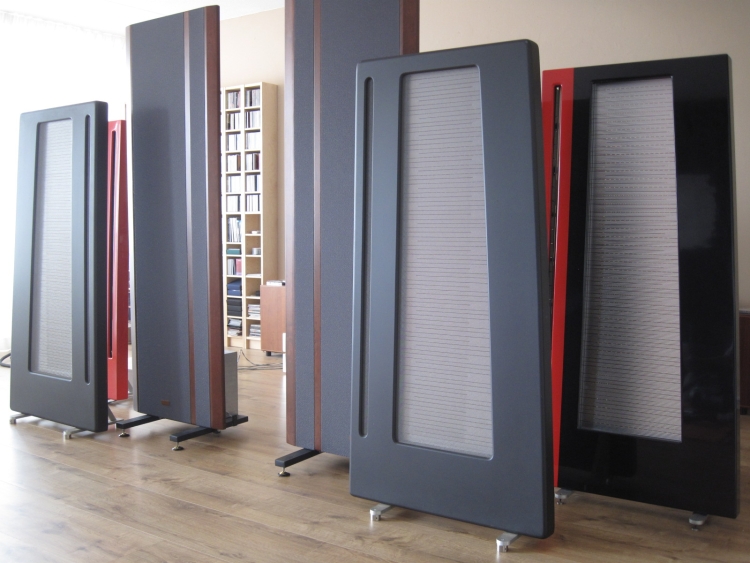
This is the second installment of the multi-part Apogee Duetta Signature assessment.
Part 1 – Part 2 – Part 3

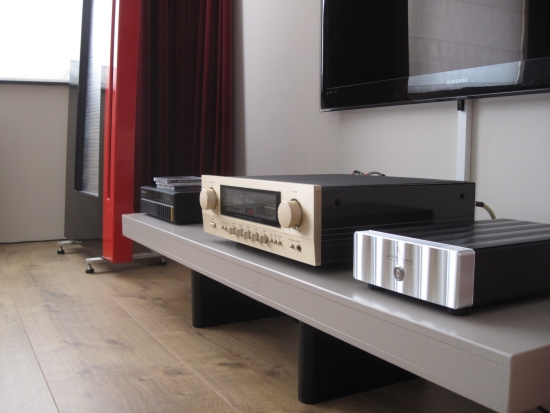
accuphase e260 IMG_6787

accuphase e260 IMG_6638

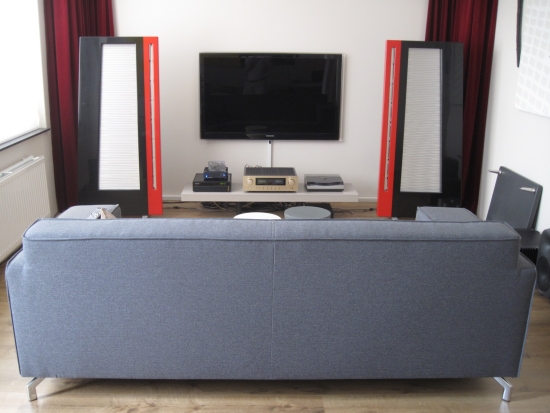
Above: setup used for comparisons.

Background

I’ll start this review by reiterating my conclusion from 2 years ago, slightly modified to reflect my current knowledge:

There’s no way around it and reviewers at the time weren’t wrong: Full Range Apogees really are something special. Most incredible is their bass performance: at once deep, full, dynamic and fast. All three sets of Duetta Signatures produce bass in a fashion that makes visitors wonder if the subs are still on. Second: they’re incredibly dynamic and fast, in a way that makes Magnepans seem overly well-behaved and sleepy. Lastly, their timbre is very, very good. Piano really sounds like the percussion instrument that it is.

The Magnepan MG3.6R, by comparison, often makes piano sound too thin, almost like it is a keyboard and not the real thing. And I’m talking about the Maggies with the aid of two REL Strata II subs. The Magnepans have tight, articulate bass, but there’s no real drive to speak of. There are advocates for both camps, each accusing the other camp’s speaker of having coloration. I think both have valid arguments: yes, the Apogees can sound too hard and even a little metallic in the midrange, depending on circumstances and equipment matching.

And yes, the Magnepans sound restrained and somewhat veiled, compared to Apogees. But they’re both great speakers and the Magnepans have at least one big advantage over Apogee DS, which is their treble, which is quite simply sublime. Apogee DS treble by comparison is less refined and less airy. In the case of the DS with modified crossovers, the treble is even coarser, forward, and a little shouty.

The 2 original pairs had more fluid treble than the refurbished set but were less lively and articulate. The liveliest of the two was still less fluid than the Magnepans and still slightly hot in the treble. The oldest pair was arguably not shouty or hot and actually quite fluid, but also very relaxed. Too relaxed for me.

While it could be argued that perhaps the Maggies sweeten the treble too much and perhaps the original DS’ treble performance is simply honest and revealing what’s on the recording, the refurbished pair definitely had too much treble energy. But that’s because the crossovers are non-standard and have tipped-up treble. On balance though, I find that all Duetta Sigs sound more real than the Magnepans and I simply enjoy them more, and more actively. Music sounds more real to me, more like a live performance, and it grabs me more because of it.

So, while I thoroughly enjoy the Duettas, and the refurbished pair is clearly more live, and life-like than the Magnepans, they can also be pretty harsh throughout the midrange and treble. It is my quest to see what happens if these refurbished speakers are connected to original crossovers.
Apogee_Duettas_550pix IMG_9675

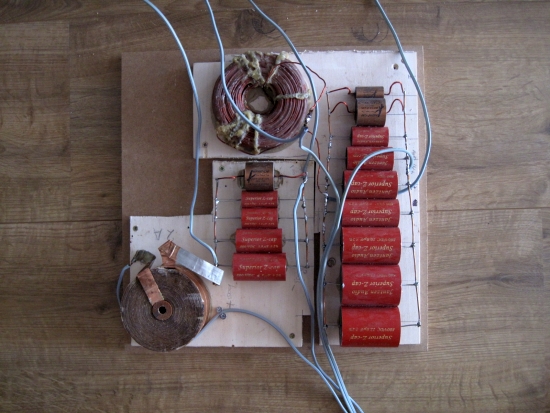
Above: the homemade crossovers with which the Red and Black Duettas were purchased. Quality components and made with care, but deviating from the classic Apogee sound.
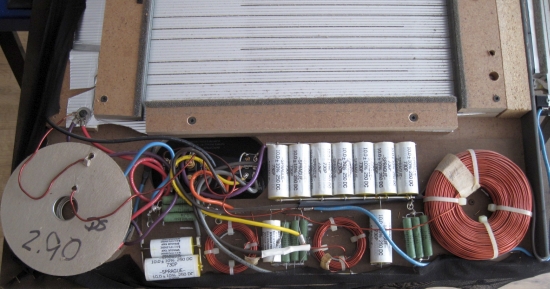
apogee-duetta-crossover-orig_550pix IMG_0341

Above: original Duetta Signature crossover (part of an original pair that I no longer have)
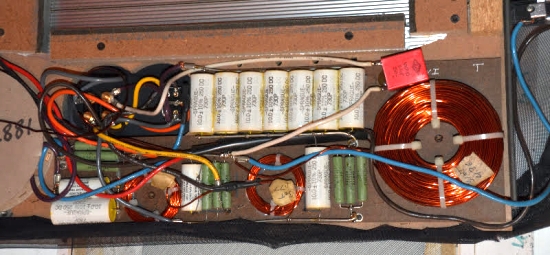
apogee-duetta-REF-crossover_550pix unnamed

Above: original Duetta Reference crossover (still in its donor speaker). The only difference with the regular Duetta Signature crossover is the addition of the square red capacitor visible behind the MRTW coil on the right.
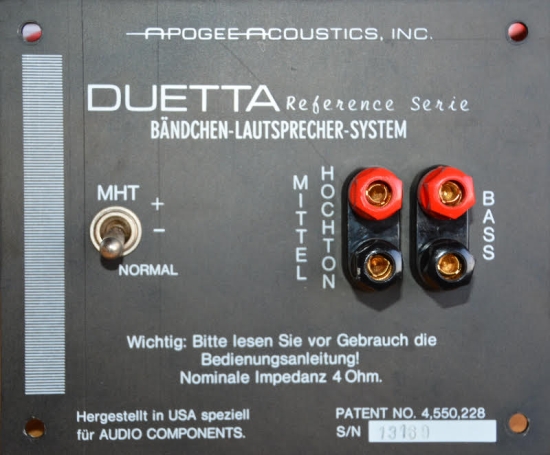
apogee-duetta-REF_550pix binding post

Above: binding post of the Duetta Reference donor speakers. This set was about to be refurbished by Henk van der Hoeven, a Dutch Apogee restorer. The speakers would also receive new crossovers, so the old ones were superfluous.
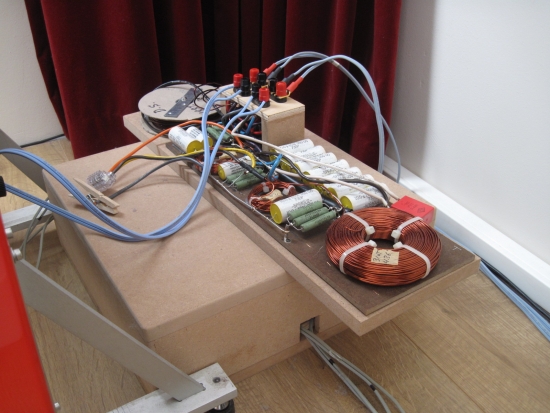
devialet duetta crossover IMG_6797

Above: original Duetta Reference crossover as used for the comparisons

Original Crossovers for JW’s refurbished Duetta Signatures

It’s interesting how sometimes puzzle-pieces just fit together. After I posted the announcement for an upcoming review of a new breed of Apogee-like speakers by the name of Clarisys, the state of JW’s Red ‘n Black Duetta Signatures became an active subject again. Although these speakers have been fitted with new KLM2 bass and MRTW ribbons and have very nice new front covers, their crossovers are homemade and non-standard, and I’ve always found them too forward and brittle in the treble at times.

Although JW’s red ‘n black Duettas have been stored at my place since forever, it seems, they are not my own. I use Divas and am very happy with them lately. JW himself has been using an original pair of DS and is completely happy with them, so the thought of modding the DS’ crossovers was never a very pressing one.

Anyway, when I spoke with Graz and Henk van der Hoeven (official Dutch Apogee restorer) about the upcoming review of the Clarisys speakers, they agreed that the DS needed to be brought up to spec, and Henk was more than happy to help me with this. And so he donated a pair of original crossovers for me to connect to the Red ‘n Black DS.

Interestingly, the original crossovers that Henk provided are not for Duetta Signature, but for Duetta Reference. This is a special version for the German market, complete with terminal back plates with German lettering. Naturally I would have preferred a pair of truly original DS crossovers, but Henk assured me that the only difference was the presence of a single square red capacitor. Just to be sure, JW also carefully checked the schematics and photos of several DS pairs, and concluded that this is indeed correct.
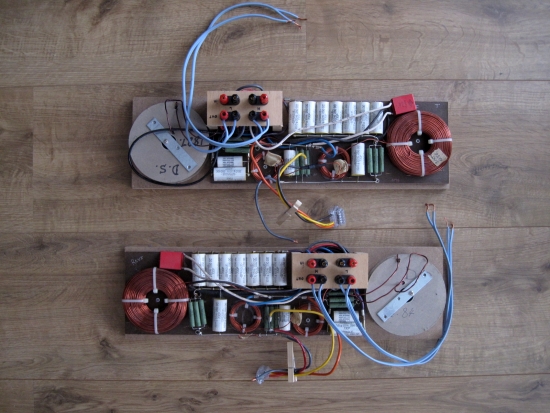
apogee-duetta-ref-crossovers_550pix IMG_8098

Above: originally the crossovers are mostly glued to a thin wood board, but some parts such as the woofer coil and the connectors are screwed to the cabinet. I put all components together on a piece of MDF, together with new connectors that are the same as the originals.

Listening

Using an Accuphase E260 integrated amp, we prepared for a one-on-one listening session. The original crossovers had their switches removed and had been hard-wired in the same configuration as the modified crossovers are: treble in the HI position. Still the original crossover was missing a few components but closer than this I could not get.

First impression switching from the homemade crossovers to the originals is a feeling of much more coherence. Top to bottom all frequencies seem to be more balanced. The sound is also a little thinner, cleaner if you will. Bass has less bold power but still reaches as deep and seems more nimble and articulate. There’s even better low-level detail and longer decay on subtle sounds. Treble, while still hot, is also much more refined and fluid. Already I’m liking the old crossovers. Now switching to treble NORMAL, things get even better with even more coherence and treble loses much of its edge. Still, the treble can be peaky or metallic, and this is something that I do not recognize in the original pairs, nor in my Divas, which also have been fully refurbished.

I have a feeling that either the implementation of the new tweeter foils, or the foils themselves, is not optimal. Mind you, these tweeters were not installed by Henk but by the previous owner. But even if they were installed correctly, they may have deteriorated. And even if Apogee treble tends to become smoother with the years, none of the original pairs I heard had treble like these refurbished ones, which still seem off-balance, even with original crossovers.

In speaking with Graz about this, he recommends going for the latest KLM-5 tweeter models, which he says are much improved. Since these are JW’s speakers, this decision is ultimately his, but I think this will happen at some stage. If it does, I will certainly update this review.

This crossover experiment was sparked by the pending review for Clarisys speakers, but these are still not released. You never know, but I’m not holding my breath anymore. Right now, the original ones, or new models directly from Graz, are the way to go.

Delicate

As mentioned before: be careful when modding a crossover. Sure, you could potentially improve things in certain areas, but the original crossovers are already of very high quality, and chances are that you’re actually degrading the sound, even if you use better, more expensive components. The balance can be quite delicate indeed. One of the first things you lose with mismatched components is cohesion and transparency.

There’s More

After completing this review, 3 years had passed, and at some point I decided to have the latest Graz ribbons installed. The next installment explains how the Duettas perform when entirely optimized by Henk van der Hoeven using Graz’ latest KLM5 MRTW ribbons with new interfaces and wired returns.


Continue Reading

Part 1 – Part 2 – Part 3


Serial Numbers:
DS refurbished pair: 13 185
DR Crossovers: 13 180

Refurbished pair ribbon types for the review so far:
Bass: KLM v2 (2006, KLM construction, v2 pattern)
MRTW: KLM2 (2006)

More Duetta Signature

Extensive Duetta Signature Review – Part 1 (Duettas compared to Magnepans)

Extensive Duetta Signature Review – Part 3 (New Graz KLM5 ribbons)

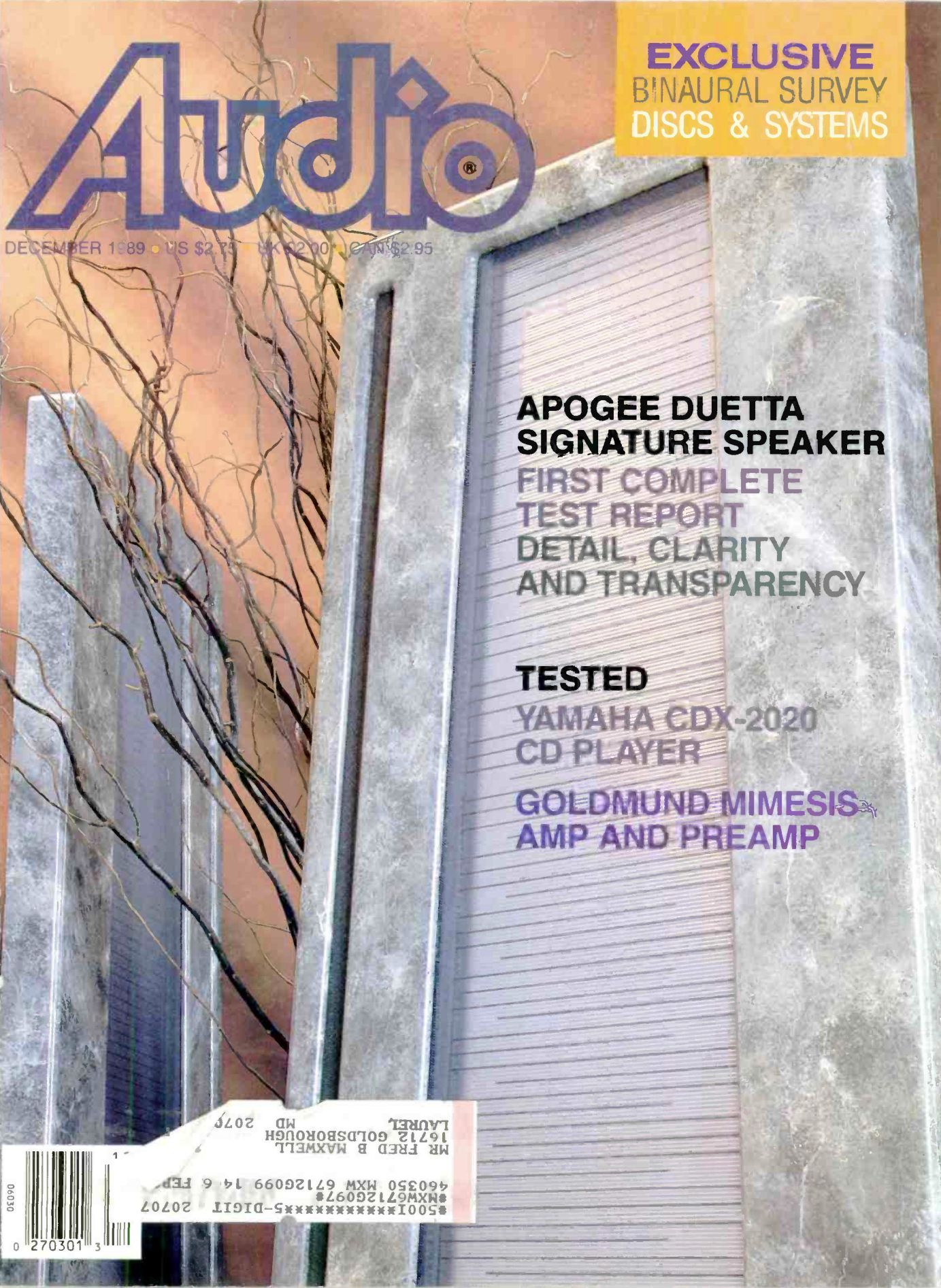
Duetta Signature review 1989 in Audio Magazine (English)

More info

More Apogee

All models overview

Listening Sessions overview

Timeline and History

FAQ

Read Also:

Crossover – passive or active

Speaker Cables – biwire or single wire

Related Posts
Apertura Armonia Evo, Edena Evo, and Adamante
Apogee Duetta Signature – 1989 Review in Audio Magazine
Final Model 15+
Driade Premium Model 9
Velikinac Audio Lab Sirius
Clarisys Audio Minuet Plus
Diptyque DP 140 MkII
Marten Parker Trio
Apogee Acoustics
  • Share This:
  • Facebook
  • Twitter
  • LinkedIn
  • Pinterest
  • Email
Christiaan Punter Owner of Hifi-Advice.com

Your comment Cancel reply

All comments are welcome, but please stay on-topic. First-time comments need manual approval which causes the post to appear a little later. Avoid using links to prevent marking as spam.


Categories

  • Accessories Reviews
  • Active Analog Speakers Reviews
  • Active Digital Speakers Reviews
  • Alkmaar Audio Show
  • Amplifier Reviews
  • Analog Classics
  • Analog Insights
  • Analog Interlink Reviews
  • Analogy Records
  • Apogee Acoustics Company Special
  • Audio Software Reviews
  • Audiophile Insights
  • Cables Insights
  • CD Player Reviews
  • Chattelin Audio Systems
  • Connectors Insights
  • Digital Cable Reviews
  • Digital Classics
  • Digital Insights
  • Digital Interface Reviews
  • Digital Recorder Reviews
  • Digital Reviews
  • Dutch Audio Event
  • Enosound
  • Extensionblocks / Filters Insights
  • Generic Insights
  • HFA Audio Setup History
  • HFA Audio Setup Snapshots
  • HifiDeluxe
  • HifiLive
  • Industry Update
  • Integrated Amplifier Reviews
  • Marantz & Philips Classics
  • Munich High End
  • Music Server Reviews
  • Network Player Reviews
  • Passive Speakers Reviews
  • Phono Cartridge Reviews
  • Phono Interlink Reviews
  • Phono Preamp Reviews
  • Power Amplifier Reviews
  • Power Cable Reviews
  • Power Conditioning
  • Power Connector Reviews
  • Preamplifier Reviews
  • Racks / Stands / Feet Reviews
  • Rhapsody
  • Show Reports
  • SPDIF DAC Reviews
  • Speaker Cable Reviews
  • Specials
  • System Synergy Q&A
  • Tonearm Reviews
  • Tuning / Tweaks Reviews
  • Turntable Accessories Reviews
  • Turntable and Accessories Reviews
  • Turntable Reviews
  • Uncategorized
  • USB DAC Reviews
  • Vienna High End
  • XFi

BRANDS

  • A&B Systems
  • A10 Audio
  • Aavik
  • Acapella
  • Accuphase
  • AcousticMatters
  • Acustica Applicata
  • Admire Audio
  • Aequo Audio
  • AG Lifter
  • Aidas
  • Akiko Audio
  • Analog Domain
  • Analogy Records
  • Analysis Audio
  • Analysis Plus
  • Ansuz
  • Anthem
  • Anti-Cables
  • Antipodes Audio
  • Apertura
  • APL
  • Apogee
  • Apogee Acoustics
  • Aqua
  • Arcam
  • Aries Cerat
  • Artesania
  • ASI
  • Astin Trew
  • atm audio
  • A Tube High Fidelity
  • Audeze
  • AudioAanZee
  • Audio Aero
  • Audio Club Premier
  • Audio GD
  • Audiolab
  • Audiolympic
  • Audiomeca
  • Audio Note
  • Audionote
  • Audio Note (UK)
  • Audio Origami
  • Audio Physic
  • AudioQuest
  • Audio Research
  • Audio Synthesis
  • Audio Technica
  • Auer Acoustics
  • Auralic
  • Aurender
  • Aurum Cantus
  • Avalon
  • AvantGarde
  • AVID
  • AVIDHIFI
  • AVM
  • Ayon
  • Ayre Acoustics
  • B&W
  • Bals
  • Bang & Olufsen
  • Behringer
  • Belden
  • Benz
  • Bergmann
  • Black Rhodium
  • Boenicke Audio
  • Bowers & Wilkins
  • Bricasti
  • Brodmann
  • Bryston
  • Burmester
  • Børresen
  • CAD
  • Cardas
  • Care Orchestra
  • CAT
  • CEC
  • Chord Electronics
  • CH Precision
  • Clarisys Audio
  • Classé
  • Clearaudio
  • Concert Fidelity
  • Conrad Johnson
  • Consonance
  • COS
  • Curious Cables
  • D'Agostino
  • DAD
  • Dali
  • Daniël Hertz
  • Daudio
  • dCS
  • Degritter
  • Denafrips
  • Denon
  • Devialet
  • Devore
  • Diptyque
  • Doepke
  • Driade
  • DS Audio
  • Dynavector
  • Dynavox
  • E&T
  • EC-Designs
  • Echole
  • Elac
  • Electrocompaniet
  • Elijah Audio
  • EMAG
  • EMMLabs
  • Emotiva
  • EMU
  • Enosound
  • Ensemble
  • Esoteric
  • Estelon
  • Euphony
  • Exogal
  • Fadel Art
  • Fezz Audio
  • FIM Gold
  • Final
  • Final Touch Audio
  • Finite Elemente
  • FoilFlex
  • Franco Serblin
  • Furutech
  • Fusion Audio
  • Gauder Akustik
  • Genelec
  • Gigawatt
  • GiK
  • Goldmund
  • Graham Audio
  • Grandinote
  • Grimm Audio
  • Gryphon
  • Gustavson Audio
  • Halcro
  • Hanze Hifi
  • Harman/Kardon
  • Harmonic Resolution Systems
  • Harmonic Technology
  • Harmonix
  • Heaven's Gate
  • Hifi-Tuning
  • HiFi.nl
  • HifiMan
  • High Fidelity Cables
  • Hofa
  • Holo Audio
  • Home Audio Fidelity
  • HRS
  • IeGO
  • Ikigai
  • IMF
  • Isotek
  • Jadis
  • Jay's Audio
  • JCAT
  • Jeff Rowland
  • Jena Labs
  • JMF Audio
  • Jorma Audio
  • Jorma Design
  • Joseph Audio
  • JPLAY
  • JVC
  • Kemp
  • Kharma
  • Kimber
  • KingRex
  • Kinki Studio
  • KlinktBeter
  • Kora
  • Krell
  • Kroma Atelier
  • Kupp
  • LAiV Audio
  • Lampizator
  • Lapp
  • LAST
  • Lector
  • Leema
  • Lejonklou
  • LessLoss
  • Line Magnetic
  • Linn
  • Logitech
  • LOK
  • Loudness War
  • Lumin
  • Luxman
  • M2Tech
  • Mad Scientist
  • Magico
  • Magnan
  • Magnepan
  • Mamba Audio
  • Manley Labs
  • Manunta
  • Marantz
  • Mark Levinson
  • Marten
  • Martin Logan
  • Master
  • Matrix
  • MBL
  • McIntosh
  • Melco
  • Melody
  • Meridian
  • Metrum Acoustics
  • Michell
  • MIT
  • MJ Acoustics
  • Modus Audio
  • Mogami
  • Mola-Mola
  • Monitor Audio
  • Monrio
  • Moon
  • Morel Hifi
  • MP&S-Klangwelten
  • Munich High End
  • Musetec
  • Musical Fidelity
  • Mytek
  • Nagaoka
  • Naim
  • Naiu Laboratory
  • Nakamichi
  • NBS
  • Network Acoustics
  • Niels Setup
  • Nordost
  • NuPrime
  • Ohm Audio
  • Oladra
  • Olive
  • Onkyo
  • Onzow
  • Origin Live
  • Ortofon
  • Oyaide
  • Panasonic
  • Paradigm
  • Parasound
  • Pass Labs
  • Peak Consult
  • Philips
  • Pink Faun
  • Pioneer
  • Playback Designs
  • Precision Audio
  • PrimaLuna
  • Proceed
  • Prodigio Audio
  • PS Audio
  • PSI Audio
  • PUUR AVD
  • PUUR hifidelity
  • Pylon Audio
  • Qln
  • Qobuz
  • Quad
  • R.T.F.S.
  • RAAL Requisite
  • Raidho
  • Reference Sounds
  • Reference Tweaks
  • Rega
  • Rein Audio
  • REL
  • Resonator Stockholm
  • Revel
  • Ricable
  • Roon
  • RTFS
  • SAEQ
  • SAT
  • Schiit
  • Seawave Acoustic
  • Sennheiser
  • Shakti
  • Shuguang
  • Shunyata
  • Shure
  • Signal Projects
  • Silent Angel
  • Siltech
  • SME
  • SolidSteel
  • Solid Tech
  • Sonic Frontiers
  • Sonos
  • Sonus Faber
  • Sony
  • Sooloos
  • SOtM
  • Soulution
  • Sound Anchor
  • Sound Lab
  • Spectral
  • Spotify
  • Stack Audio
  • Stealth
  • Stenheim
  • Stillpoints
  • Straight Wire
  • SW1X Audio Design
  • Symo
  • Synergistic Research
  • Synology
  • Synthese
  • T+A
  • Taiko Audio
  • Tascam
  • Teac
  • TechDAS
  • Technics
  • The Chord Company
  • Thorens
  • Transparent Audio
  • Trends
  • Tung Sol
  • Unison Research
  • UpTone Audio
  • VAIC
  • van Damme
  • van den Hul
  • van Medevoort
  • Vermeer Audio
  • Vermouth Audio
  • Vibex
  • Vifa
  • Vincent
  • ViRa High End
  • Viva
  • Vivid Audio
  • VTL
  • Wadax
  • Wadia
  • Wattgate
  • Wattson
  • Way Cables
  • Weiss
  • Western Electric
  • WestminsterLab
  • Widealab
  • Wilson Audio
  • Wilson Benesch
  • Winyl
  • Wires 4 Music
  • Wireworld
  • Wolf von Langa
  • Wooden Bull
  • XACT
  • Xavian
  • xFyro
  • Xindak
  • XLO
  • Yamaha
  • Zanden
  • Zellaton
  • Zesto
  • ZYX

Follow HFA on Social Media

Facebook

LEGAL

Privacy Policy

This site is protected by reCAPTCHA. Google Privacy Policy and Terms of Service apply. All rights reserved © 2026 - hifi-advice.com.
  • Contact
  • Home