• About
    • About HFA
    • HFA Awards
    • Associated Equipment
    • Banners on HFA
    • HFA Analytics Data
    • HFA Audio Setup History
    • HFA Audio Setup Snapshots
    • Sitemap
    • Contact
  • HFA Awards
  • Reviews
    • All Reviews
    • Amplifier
      • All Amplifier Reviews
      • Integrated Amplifier
      • Preamplifier
      • Power Amplifier
      • Phono Preamp
    • Loudspeaker
      • All Loudspeaker Reviews
      • Passive Speaker
      • Active Analog Speaker
      • Active Digital Speaker
    • Digital
      • All Digital Reviews
      • CD Player
      • SPDIF DAC
      • USB DAC
      • Music Server
      • Network Player
      • Digital Recorder
      • Digital Interface
      • Audio Software
    • Turntable and Accessories
      • All Turntable and Accessories Reviews
      • Turntable
      • Tonearm
      • Phono Cartridge
      • Turntable Accessories
    • Cable
      • All Cable Reviews
      • Analog Interlink
      • Phono Interlink
      • Speaker Cable
      • Power Cable
      • Digital Cable
    • Accessories
      • All Accessories Reviews
      • Racks / Stands / Feet
      • Tuning / Tweaks
      • Power Connector
    • Industry Update
  • Insights
    • All Insights
    • Analog Insights
    • Cable Insights
    • Connector Insights
    • Digital Insights
    • Extensionblocks / Filters Insights
    • Generic Insights
    • System Synergy Q&A
  • Specials
  • Show Reports
    • All Show Reports
    • Alkmaar Audio Show
    • Chattelin Audio Systems
    • Dutch Audio Event
    • Enosound
    • HifiDeluxe
    • HifiLive
    • Munich High End
    • XFi
  • Classics
    • All Classics
    • Analog Classics
    • Digital Classics
  • Links
  • About
    • About HFA
    • HFA Awards
    • Associated Equipment
    • Banners on HFA
    • HFA Analytics Data
    • HFA Audio Setup History
    • HFA Audio Setup Snapshots
    • Sitemap
    • Contact
  • HFA Awards
  • Reviews
    • All Reviews
    • Amplifier
      • All Amplifier Reviews
      • Integrated Amplifier
      • Preamplifier
      • Power Amplifier
      • Phono Preamp
    • Loudspeaker
      • All Loudspeaker Reviews
      • Passive Speaker
      • Active Analog Speaker
      • Active Digital Speaker
    • Digital
      • All Digital Reviews
      • CD Player
      • SPDIF DAC
      • USB DAC
      • Music Server
      • Network Player
      • Digital Recorder
      • Digital Interface
      • Audio Software
    • Turntable and Accessories
      • All Turntable and Accessories Reviews
      • Turntable
      • Tonearm
      • Phono Cartridge
      • Turntable Accessories
    • Cable
      • All Cable Reviews
      • Analog Interlink
      • Phono Interlink
      • Speaker Cable
      • Power Cable
      • Digital Cable
    • Accessories
      • All Accessories Reviews
      • Racks / Stands / Feet
      • Tuning / Tweaks
      • Power Connector
    • Industry Update
  • Insights
    • All Insights
    • Analog Insights
    • Cable Insights
    • Connector Insights
    • Digital Insights
    • Extensionblocks / Filters Insights
    • Generic Insights
    • System Synergy Q&A
  • Specials
  • Show Reports
    • All Show Reports
    • Alkmaar Audio Show
    • Chattelin Audio Systems
    • Dutch Audio Event
    • Enosound
    • HifiDeluxe
    • HifiLive
    • Munich High End
    • XFi
  • Classics
    • All Classics
    • Analog Classics
    • Digital Classics
  • Links
scroll down for more
Tuning / Tweaks Reviews

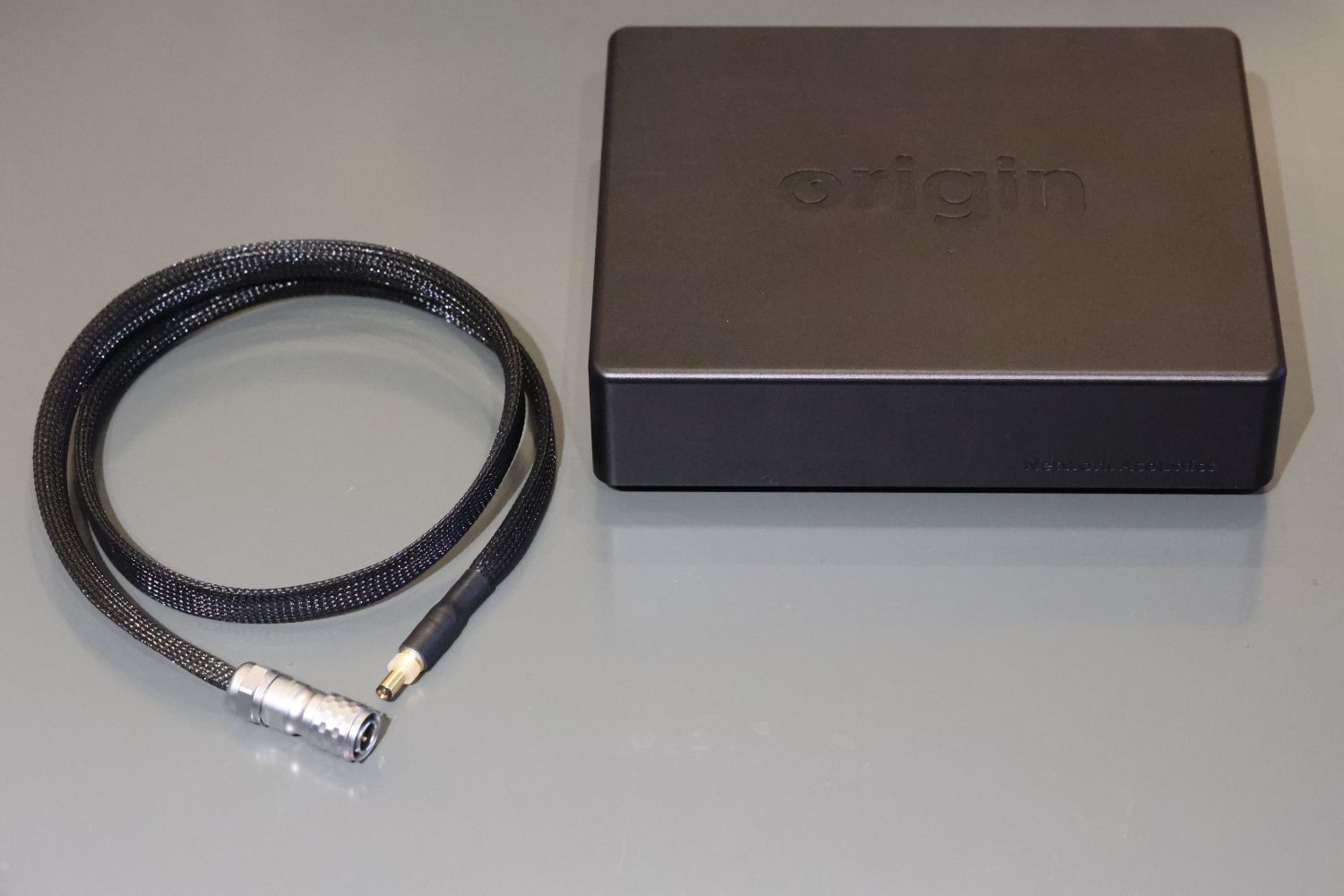
Network Acoustics origin Streaming Power Supply

Christiaan Punter 27 January 2026 No Comments
  • Facebook
  • Twitter
  • LinkedIn
  • Pinterest
  • Email

Review Context

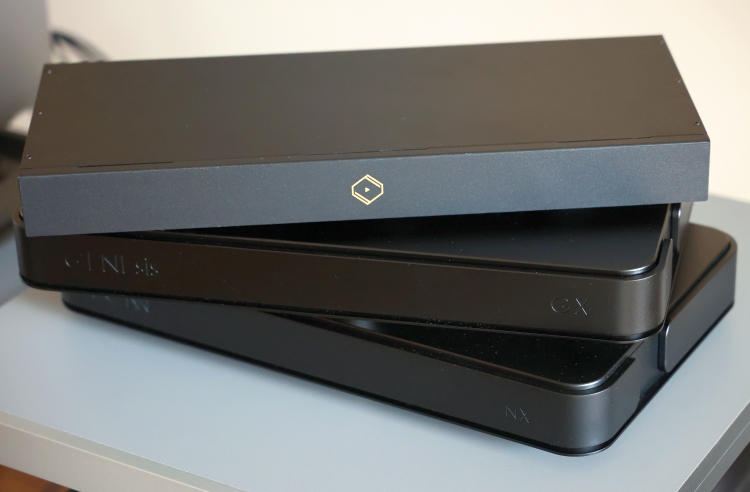
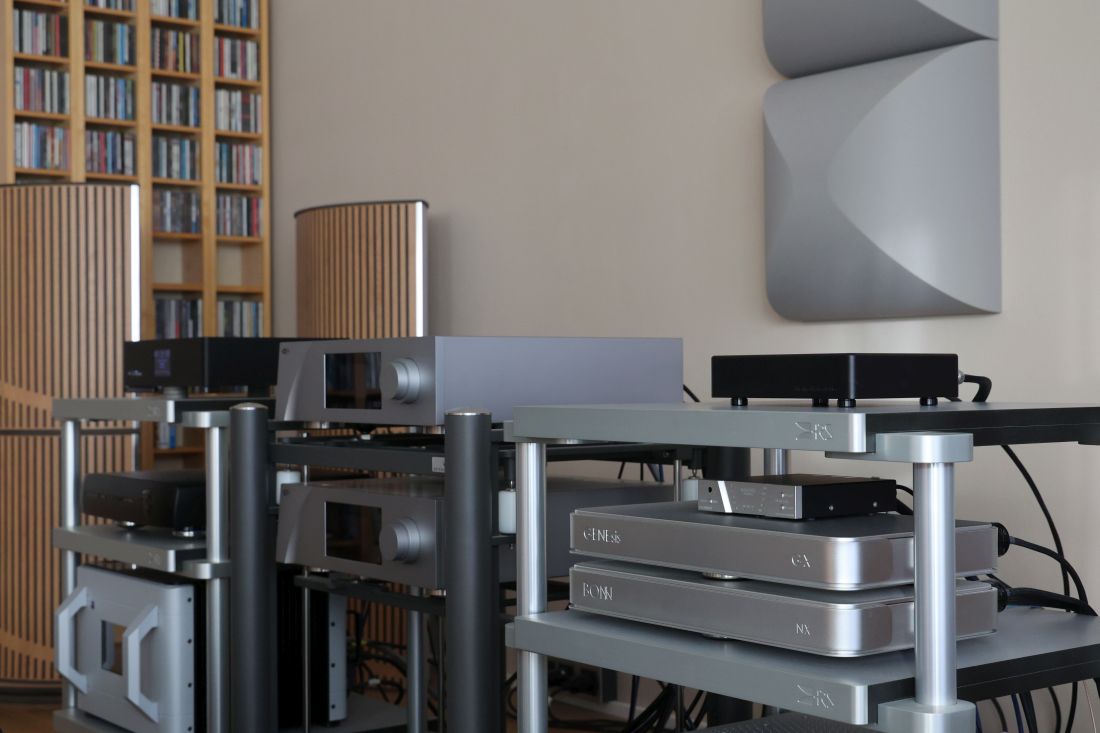
The origin was tested in the main system, where it was connected alternately to my home router and the Silent Angel Bonn NX Switch and Genesis GX Clock combo. As digital sources, I used the Grimm MU1 and Antipodes Oladra music servers. The rest of the system for this review consists of the CH Precision L1 preamplifier, the CH Precision A1.5 power amplifier, and the recently refoiled and refurbished Apogee Duetta Signature loudspeakers.
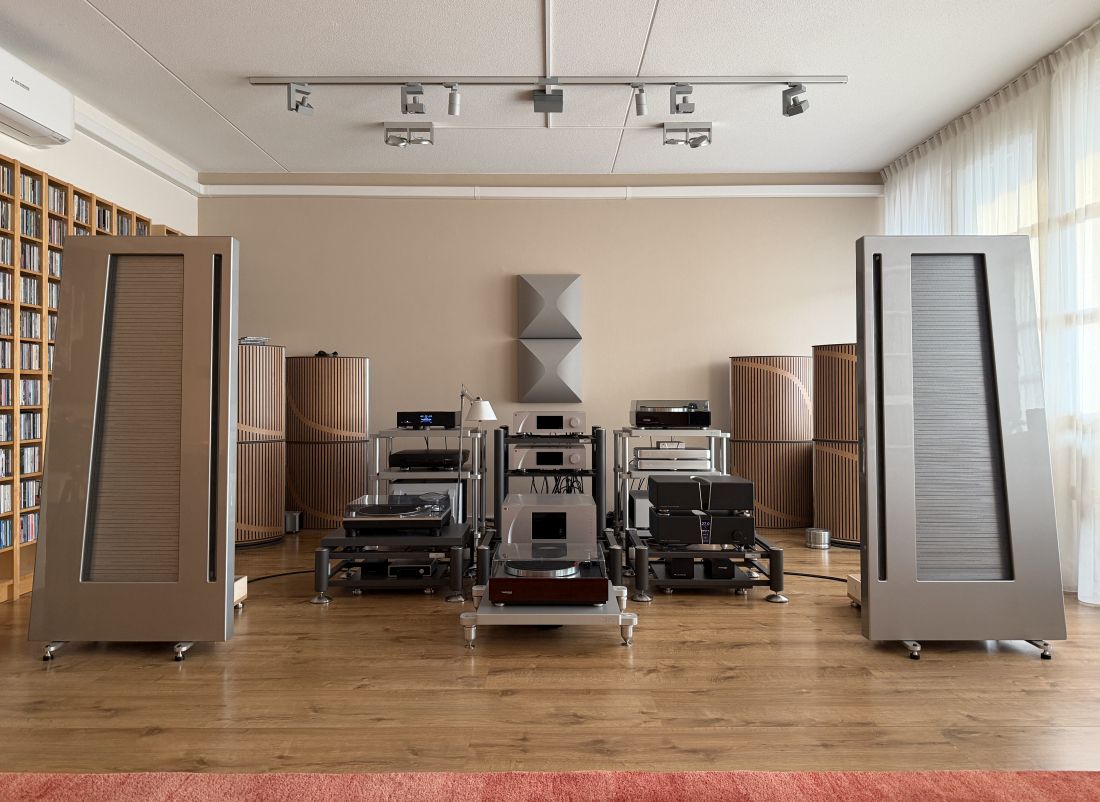
My normal network setup is very simple. The internet signal originates in the utility box, where it enters a standard cable-company-supplied router powered by its supplied wall-wart switched power supply (which I will replace with the origin Hybrid Power Supply as part of this review). A dedicated EM Hub solid-core Cat-6 Ethernet cable runs directly from the router to a wall outlet behind the audio system, where it connects to the Silent Angel Bonn NX Switch (with Genesis clock), which in turn connects to all the audio components using Valueline Cat. 6 Ethernet cables. These cables are nothing fancy, but they are reliable, withstand my frequent swaps, and, very importantly, emerged as the purest and most direct-sounding cables in my tests.
Listening – origin powering router part 1, using Oladra

Starting with the Antipodes Oladra running in MinimServer/MPD mode, I listened to a newly arranged playlist using my usual setup, with the router powered by its supplied simple wall-wart switching power supply. After confirming it all sounded familiar, I connected the origin power supply to the router in the utility box. As a power cable, I used one of my two standard homemade solid-core cables, which I also use for the Silent Angel network gear.

While waiting for the Wi-Fi to come back up, I wondered what I was about to hear. Would the sound become lusher and more liquid, but also lazier and less exciting, as can happen with certain power supplies, compared to typical switched power supplies? Or would the difference perhaps be very subtle? The latter also seemed a plausible outcome, given the presence of the Silent Angel Switch and Clock combo.

Then, I hit play. Holy crap, did I hear that right? I restarted the track a few times to be sure, but the sound was not just more appealing and natural but also more solid in the bass, more rhythmically assured, timbrally more realistic, and more convincing overall. Honestly, this was rather unexpected. When I started these listening tests, I had not yet investigated exactly what kind of power supply the origin uses, and, given its solid build and heavy weight, I initially assumed it was based on a linear design.

I’m accustomed to hash and haze disappearing when going from a typical switched power supply to a high-end power supply, as the high-frequency switching noise is eradicated. But what I normally also expect when moving from a switched power supply to a linear power supply is that the cleaner power comes along with a change in tonality and character. Like any electrical component, linear power supplies introduce their own character, which is almost universally characterized by increased smoothness, fuller tonality, and, alas, reduced pacing, transient snap, and overall immediacy. Not with the origin Hybrid Power Supply!

As a reviewer, I often hear equipment perform well, but not work more synergistically in my system than what I already use. This is only for the best, as it helps prevent me from changing my setup too frequently. However, sometimes I encounter components that fit so perfectly right away that I lose all motivation to remove them again. This is what happened with the origin power supply feeding my router.

Along with the immediate reduction in hash and haze that one might expect from a high-end power supply, the sound was freed of its slight leanness and grayness that had been bothering me a little bit ever since I swapped from the Magicos to the Apogee Duettas. Meanwhile, the bass was now firmer and more propulsive, whilst leaving the pacing fully intact. Moreover, the sound now feels more dynamic thanks to the increased silence between notes, leading to a presentation that is not just calmer but also retains pacing, transient snap, and overall excitement.

With that, I am touching on a sensitive subject. In my book, perceived calmness often has a negative aspect, because more often than not, it affects the spriteliness and energy of a performance, along with a reduction of pace. This did not happen with the origin power supply, and I think it’s clear that its Hybrid nature plays a large role in the achieved results.
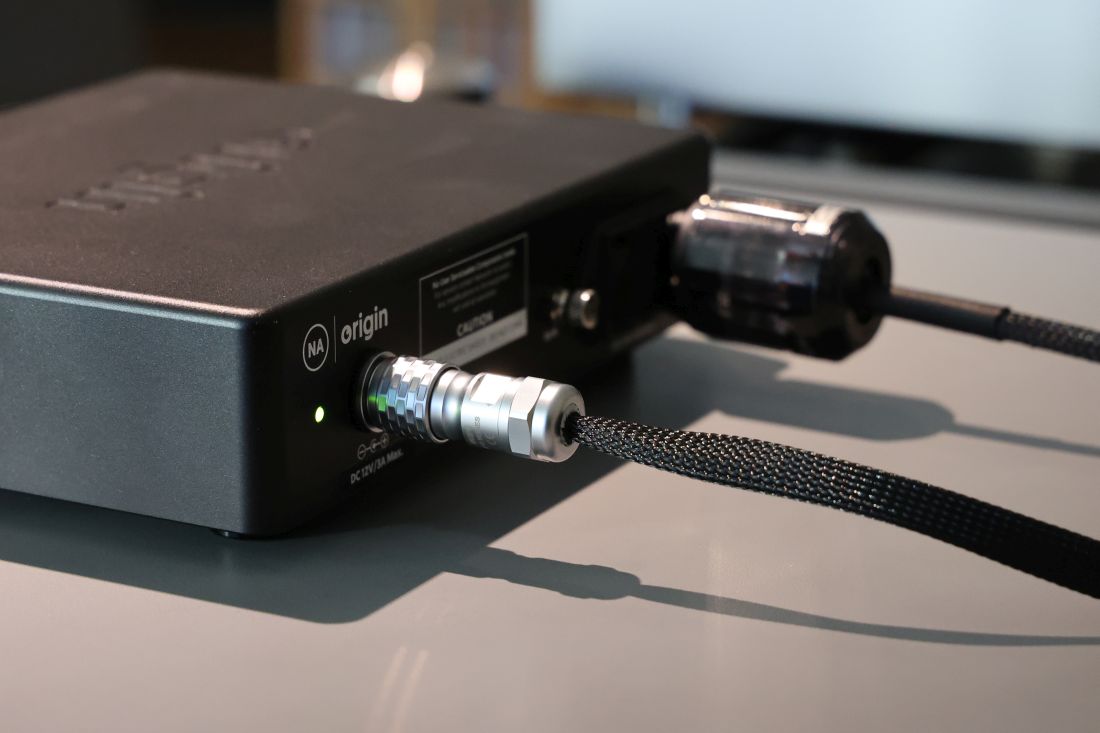
origin powering Router part 2, using Grimm MU1

If the improvement the origin brought was unexpectedly impressive with the Oladra, the effect was even more flabbergasting with the Grimm MU1. Before I share my listening impressions, let me add a bit of information about the streaming formats and how these servers typically compare.

In my experience thus far, Roon and UPnP always sound inherently different. In short, Roon has a fuller, smoother, and more relaxed sound, while UPnP has a tighter, more articulate, and more immediate sound. This difference is also evident between the Grimm running Roon and the Antipodes Oladra running MinimServer and MPD, which is UPnP. As a reviewer, I constantly switch between audio components, but lately I’ve preferred the Oladra for its more precise, expressive performance. Meanwhile, being an Antipodes, the server always avoids sounding thin, lean, or gray, so it achieves, in my opinion, an especially nice balance with UPnP.

The Grimm MU1 is designed to be as neutral as possible, but it gets a bit of character from Roon’s inherent sonic balance. The MU1 still sounds very neutral, especially compared to most other Roon servers, but it is not quite as crisp or expressive as most UPnP servers/streamers, including the Oladra.

This time, when switching from the Oladra to the Grimm, the difference was far smaller than usual. Sure, there was still a difference in character. It would have been absurd if the servers had suddenly sounded identical. However, the typical Roon character was far less evident, and the MU1 now sounded earthier, more vital, and more engaging than it did before. The difference, of course, was that the Router was now powered by the origin power supply. The MU1 was improved in the same areas as the Oladra, but it seems to benefit even more.

Going back to the standard power supply

After listening to the new situation for a few days, I was so certain that it was better that I had to force myself to revert to the standard router power supply. But I had to. Not just to double-check, but also to test the origin with the Silent Angel stack. Reluctantly, I reconnected the router’s standard wall-wart power supply and listened to the same tracks again. Sure enough, the difference between the servers was back to what it was before.

While the music remained upbeat and expressive, it was now paler and thinner, and although I didn’t hear any concrete disruptive influences such as harshness or etch, there was now a constant underlying, bothersome stress-like quality in the sound. It’s the kind of effect that you don’t really hear until it’s gone. This reminds me of my recent experience with the PS Audio PowerPlant: without clean power, it felt as if my brain had to work harder to process the music. Just as it happened during those tests, the sound of my router with its standard power supply makes me want to lower the volume. It’s really something, because I’ve listened with routers using their standard power supplies for more than two decades, but now I don’t want to go back.
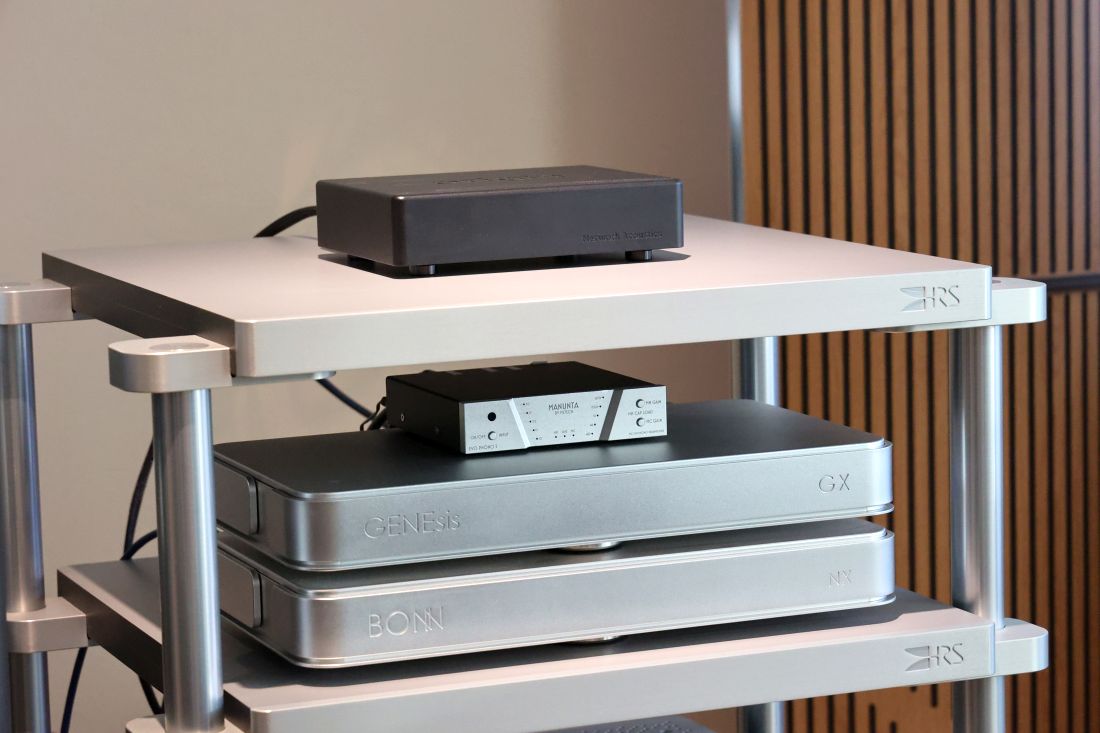
origin with Silent Angel Bonn NX Switch

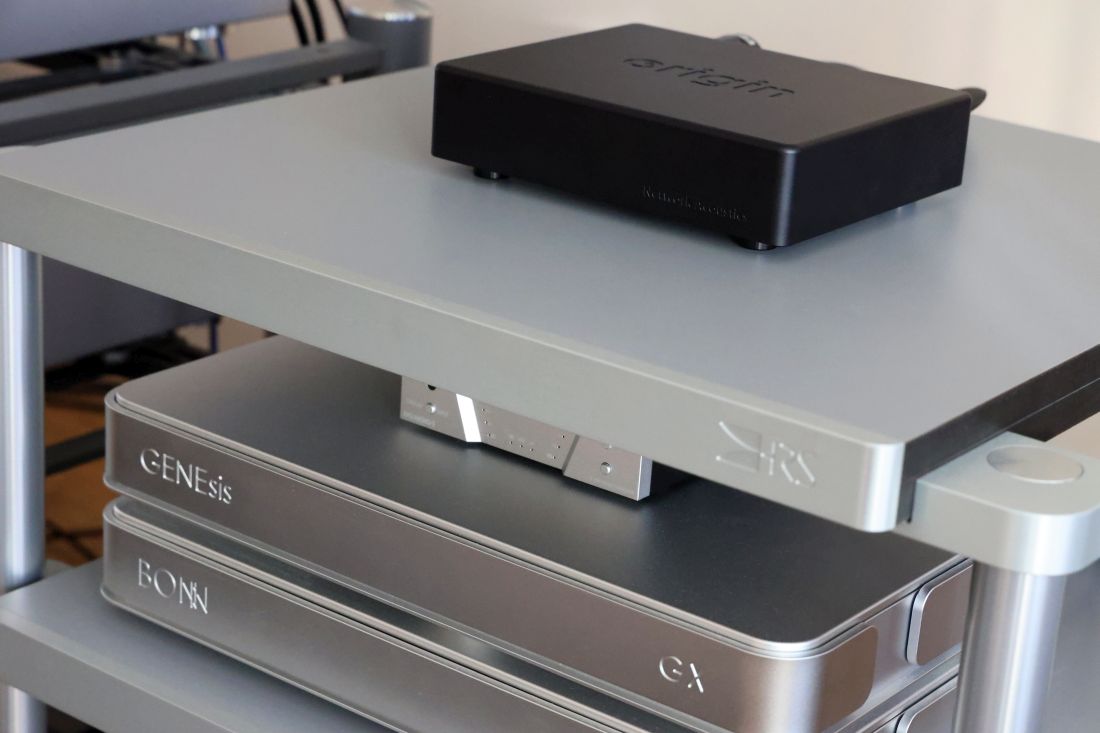
With the router back to standard, powered by its supplied power supply, I connected the origin power supply to the Silent Angel Bonn NX network switch. Naturally, I used the same power cable as before, which is the same type I use for the Silent Angel combo. I initially expected a similar difference to using the origin with the home router, but upon second thought, that oversimplifies things, as it does not account for the quality and sound signature of the existing power supply. As this test confirmed, the origin can have a different impact depending on the component it is used with.

The Silent Angle Switch, when powered by the origin (and with the power cable removed), sounds lusher, more fluid, less edgy, and more organic. This Switch is very bold and energetic, but it can also be a little rough, meaning that the changes work predominantly synergistically. However, in the process, the sound also becomes a little less propulsive and energetic. It’s certainly more polished and more highly refined, but by losing some of the bite and raw energy, it also becomes a bit more polite. It’s a matter of personal preference, but I feel that music sometimes needs a bit of rawness to fully engage me. I’m sure the switch’s internal power supply is carefully designed, and it clearly works well, but I can’t be sure it is actually better or just different in a way that pleases me or fits better with my room and system. But on balance, I prefer the Switch’s built-in power supply, even though it has a slightly “hard” quality and does not achieve the most fluid rendition.
origin with Silent Angel Genesis GX Clock

Next, I wanted to test the origin power supply with the Silent Angel Genesis GX Clock. I know this is controversial, but just as the clock has an annoyingly massive influence on the switch, I’m sure the clock will, in turn, be sensitive to its power supply.

Thus, I reconnected the Bonn NX switch directly to the mains power, and connected the origin power supply to the Genesis GX clock. This was interesting! Powering the clock, the origin achieved a really nice balance, reducing the combo’s hardness and increasing fluidity and naturalness, while retaining most of the inherent energetic expression.

These are certainly interesting results, leading me to recommend trying the origin with a wide array of digital components. Especially those that were supplied with standard supplies will likely benefit massively.

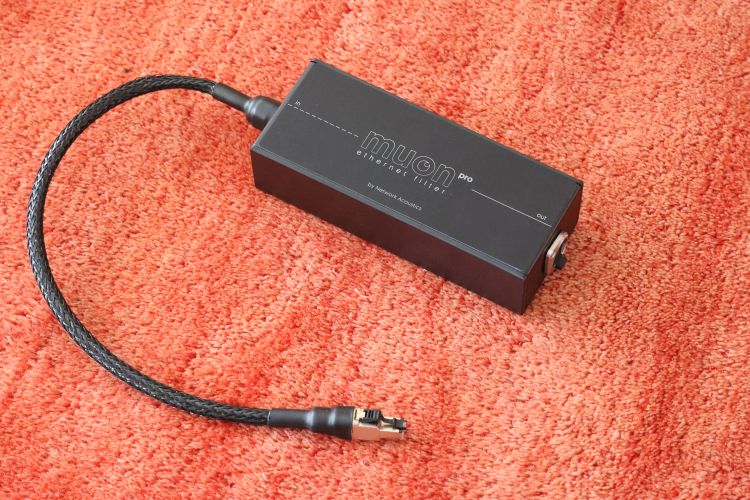
Next: muon Pro Ethernet Filter and Streaming Cable and Conclusion
Related Posts
XACT N1 Network Switch
Silent Angel Bonn N8 Pro and Bonn NX Ethernet Switches and Genesis GX Clock
Network Acoustics tempus
Ansuz PowerSwitch X-TC3 and D3
Ansuz Darkz Resonance Control
Network Acoustics MUON Pro Ethernet Filter
Ansuz Mainz8 D2 and Mainz8 D-TC Power Distributors
Ansuz Sparkz and Sortz
Page 2 of 3 2
Network Acoustics
  • Share This:
  • Facebook
  • Twitter
  • LinkedIn
  • Pinterest
  • Email
Christiaan Punter Owner of Hifi-Advice.com

Your comment Cancel reply

First-time comments need manual approval which causes the post to appear a little later. Avoid using links to prevent marking as spam.


Categories

  • Accessories Reviews
  • Active Analog Speakers Reviews
  • Active Digital Speakers Reviews
  • Alkmaar Audio Show
  • Amplifier Reviews
  • Analog Classics
  • Analog Insights
  • Analog Interlink Reviews
  • Analogy Records
  • Apogee Acoustics Company Special
  • Audio Software Reviews
  • Audiophile Insights
  • Cables Insights
  • CD Player Reviews
  • Chattelin Audio Systems
  • Connectors Insights
  • Digital Cable Reviews
  • Digital Classics
  • Digital Insights
  • Digital Interface Reviews
  • Digital Recorder Reviews
  • Digital Reviews
  • Dutch Audio Event
  • Enosound
  • Extensionblocks / Filters Insights
  • Generic Insights
  • HFA Audio Setup History
  • HFA Audio Setup Snapshots
  • HifiDeluxe
  • HifiLive
  • Industry Update
  • Integrated Amplifier Reviews
  • Marantz & Philips Classics
  • Munich High End
  • Music Server Reviews
  • Network Player Reviews
  • Passive Speakers Reviews
  • Phono Cartridge Reviews
  • Phono Interlink Reviews
  • Phono Preamp Reviews
  • Power Amplifier Reviews
  • Power Cable Reviews
  • Power Conditioning
  • Power Connector Reviews
  • Preamplifier Reviews
  • Racks / Stands / Feet Reviews
  • Rhapsody
  • Show Reports
  • SPDIF DAC Reviews
  • Speaker Cable Reviews
  • Specials
  • System Synergy Q&A
  • Tonearm Reviews
  • Tuning / Tweaks Reviews
  • Turntable Accessories Reviews
  • Turntable and Accessories Reviews
  • Turntable Reviews
  • Uncategorized
  • USB DAC Reviews
  • XFi

BRANDS

  • A&B Systems
  • A10 Audio
  • Aavik
  • Acapella
  • Accuphase
  • AcousticMatters
  • Acustica Applicata
  • Admire Audio
  • Aequo Audio
  • AG Lifter
  • Aidas
  • Akiko Audio
  • Analog Domain
  • Analogy Records
  • Analysis Audio
  • Analysis Plus
  • Ansuz
  • Anthem
  • Anti-Cables
  • Antipodes
  • APL
  • Apogee
  • Apogee Acoustics
  • Aqua
  • Arcam
  • Aries Cerat
  • Artesania
  • ASI
  • Astin Trew
  • atm audio
  • A Tube High Fidelity
  • Audeze
  • AudioAanZee
  • Audio Aero
  • Audio Club Premier
  • Audio GD
  • Audiolab
  • Audiolympic
  • Audiomeca
  • Audio Note
  • Audionote
  • Audio Origami
  • Audio Physic
  • AudioQuest
  • Audio Research
  • Audio Synthesis
  • Audio Technica
  • Auralic
  • Aurender
  • Aurum Cantus
  • Avalon
  • AvantGarde
  • AVID
  • AVIDHIFI
  • Ayon
  • Ayre Acoustics
  • B&W
  • Bals
  • Bang & Olufsen
  • Behringer
  • Belden
  • Benz
  • Bergmann
  • Black Rhodium
  • Boenicke Audio
  • Bowers & Wilkins
  • Bricasti
  • Bryston
  • Burmester
  • Børresen
  • CAD
  • Cardas
  • Care Orchestra
  • CAT
  • CEC
  • Chord Electronics
  • CH Precision
  • Clarisys Audio
  • Classé
  • Clearaudio
  • Concert Fidelity
  • Conrad Johnson
  • Consonance
  • COS
  • Curious Cables
  • D'Agostino
  • DAD
  • Dali
  • Daniël Hertz
  • Daudio
  • dCS
  • Degritter
  • Denafrips
  • Denon
  • Devialet
  • Devore
  • Diptyque
  • Doepke
  • Driade
  • DS Audio
  • Dynavector
  • Dynavox
  • E&T
  • EC-Designs
  • Echole
  • Elac
  • Electrocompaniet
  • Elijah Audio
  • EMAG
  • EMMLabs
  • Emotiva
  • EMU
  • Enosound
  • Ensemble
  • Esoteric
  • Estelon
  • Euphony
  • Exogal
  • Fadel Art
  • Fezz Audio
  • FIM Gold
  • Final
  • Final Touch Audio
  • Finite Elemente
  • FoilFlex
  • Franco Serblin
  • Furutech
  • Fusion Audio
  • Gauder Akustik
  • Genelec
  • Gigawatt
  • GiK
  • Goldmund
  • Graham Audio
  • Grandinote
  • Grimm Audio
  • Gryphon
  • Gustavson Audio
  • Halcro
  • Hanze Hifi
  • Harman/Kardon
  • Harmonic Resolution Systems
  • Harmonic Technology
  • Harmonix
  • Heaven's Gate
  • Hifi-Tuning
  • HiFi.nl
  • HifiMan
  • High Fidelity Cables
  • Hofa
  • Holo Audio
  • Home Audio Fidelity
  • HRS
  • IeGO
  • Ikigai
  • IMF
  • Isotek
  • Jadis
  • Jay's Audio
  • JCAT
  • Jeff Rowland
  • Jena Labs
  • JMF Audio
  • Jorma Audio
  • Jorma Design
  • Joseph Audio
  • JPLAY
  • JVC
  • Kemp
  • Kharma
  • Kimber
  • KingRex
  • Kinki Studio
  • KlinktBeter
  • Kora
  • Krell
  • Kroma Audio
  • Kupp
  • LAiV Audio
  • Lampizator
  • Lapp
  • LAST
  • Lector
  • Leema
  • Lejonklou
  • LessLoss
  • Line Magnetic
  • Linn
  • Logitech
  • LOK
  • Loudness War
  • Lumin
  • Luxman
  • M2Tech
  • Mad Scientist
  • Magico
  • Magnan
  • Magnepan
  • Mamba Audio
  • Manley Labs
  • Manunta
  • Marantz
  • Mark Levinson
  • Marten
  • Martin Logan
  • Master
  • Matrix
  • MBL
  • McIntosh
  • Melco
  • Melody
  • Meridian
  • Metrum Acoustics
  • Michell
  • MIT
  • MJ Acoustics
  • Modus Audio
  • Mogami
  • Mola-Mola
  • Monitor Audio
  • Monrio
  • Moon
  • Morel Hifi
  • Musetec
  • Musical Fidelity
  • Mytek
  • Nagaoka
  • Naim
  • Naiu Laboratory
  • Nakamichi
  • NBS
  • Network Acoustics
  • Niels Setup
  • Nordost
  • NuPrime
  • Ohm Audio
  • Olive
  • Onkyo
  • Onzow
  • Origin Live
  • Ortofon
  • Oyaide
  • Panasonic
  • Paradigm
  • Parasound
  • Pass Labs
  • Philips
  • Pink Faun
  • Pioneer
  • Playback Designs
  • Precision Audio
  • PrimaLuna
  • Proceed
  • PS Audio
  • PUUR AVD
  • PUUR hifidelity
  • Pylon Audio
  • Qln
  • Qobuz
  • Quad
  • R.T.F.S.
  • RAAL Requisite
  • Raidho
  • Reference Sounds
  • Reference Tweaks
  • Rega
  • Rein Audio
  • REL
  • Resonator Stockholm
  • Revel
  • Ricable
  • Roon
  • RTFS
  • SAEQ
  • SAT
  • Schiit
  • Seawave Acoustic
  • Sennheiser
  • Shakti
  • Shuguang
  • Shunyata
  • Shure
  • Signal Projects
  • Silent Angel
  • Siltech
  • SME
  • SolidSteel
  • Solid Tech
  • Sonic Frontiers
  • Sonos
  • Sonus Faber
  • Sony
  • Sooloos
  • SOtM
  • Soulution
  • Sound Anchor
  • Sound Lab
  • Spectral
  • Spotify
  • Stack Audio
  • Stealth
  • Stillpoints
  • Straight Wire
  • SW1X Audio Design
  • Symo
  • Synergistic Research
  • Synology
  • Synthese
  • T+A
  • Taiko Audio
  • Tascam
  • Teac
  • TechDAS
  • Technics
  • The Chord Company
  • Thorens
  • Transparent Audio
  • Trends
  • Tung Sol
  • Unison Research
  • UpTone Audio
  • VAIC
  • van Damme
  • van den Hul
  • van Medevoort
  • Vermeer Audio
  • Vermouth Audio
  • Vibex
  • Vifa
  • Vincent
  • ViRa High End
  • Viva
  • Vivid Audio
  • VTL
  • Wadax
  • Wadia
  • Wattgate
  • Wattson
  • Way Cables
  • Weiss
  • Western Electric
  • WestminsterLab
  • Widealab
  • Wilson Audio
  • Wilson Benesch
  • Winyl
  • Wires 4 Music
  • Wireworld
  • Wolf von Langa
  • Wooden Bull
  • XACT
  • Xavian
  • xFyro
  • Xindak
  • XLO
  • Yamaha
  • Zanden
  • Zesto
  • ZYX

Follow HFA on Social Media

Facebook

LEGAL

Privacy Policy

This site is protected by reCAPTCHA. Google Privacy Policy and Terms of Service apply. All rights reserved © 2026 - hifi-advice.com.
  • Contact
  • Home