Kora CSA 2120 Square Tube pure Class A Power Amplifier

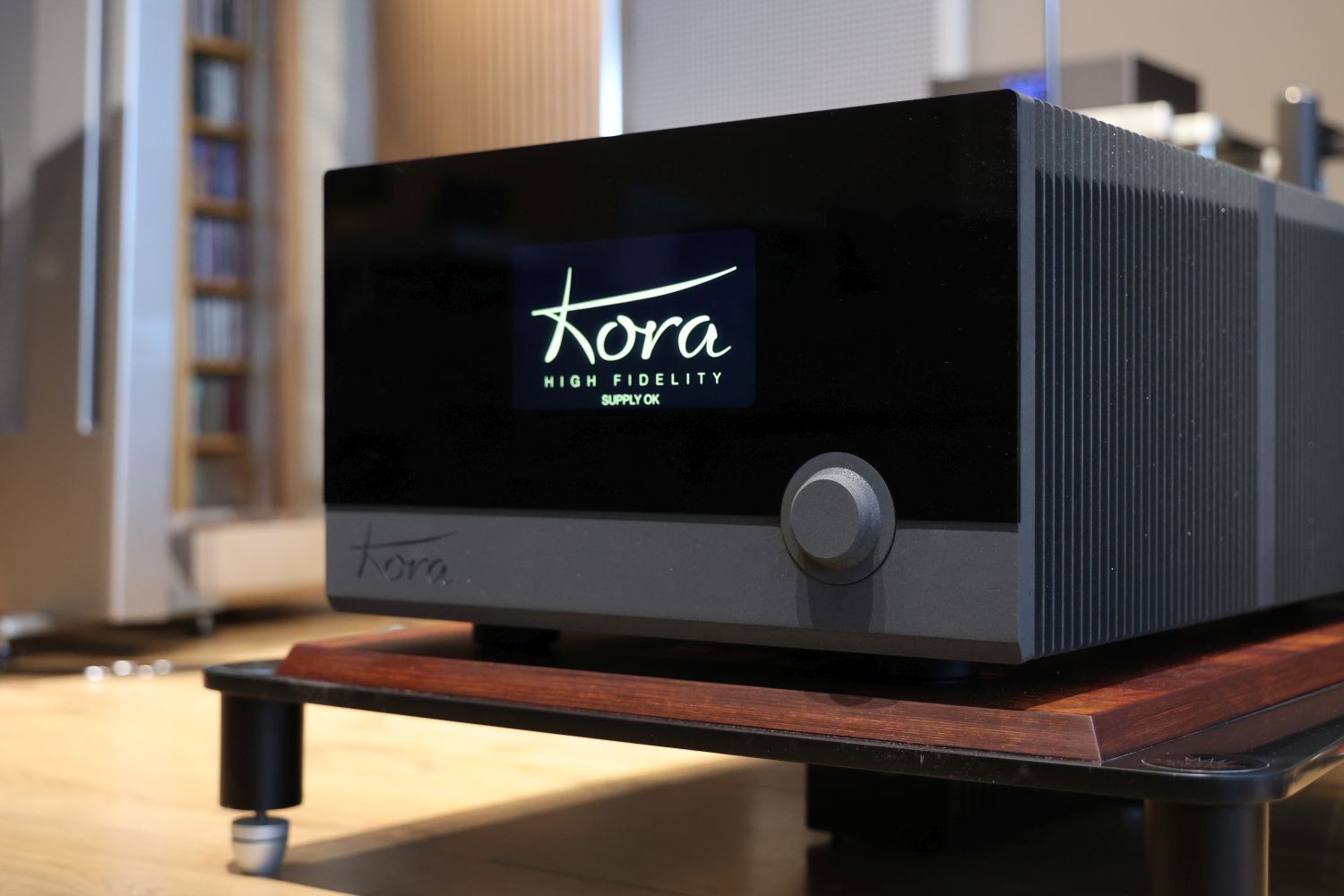
Review samples supplied by Dimex
Benelux retail price including VAT: € 28.199
Kora Class A
Like the entire Kora range, Kora Class A audio amplifiers are powered by SquareTube, a tube/transistor design that provides the unique Kora sound. This is not a traditional tube gain stage combined with a transistor power section, but a fully hybrid system that simultaneously uses vacuum tubes and transistors. In essence, the tubes provide the signal voltage (the actual music signal) while the transistors provide the current (the power).
Whereas Kora’s more modest amplifiers, such as the TB 140, are Class A/B designs, the big Class-A amplifiers combine SquareTube with pure Class A transistor power from a highly filtered linear power supply. The output stage is designed to act as a “current source,” like the anode of a power tube, and it operates in pure Class A. This means that the tubes and transistors always operate in their linear zone. As a result, the infamous crossover distortion is pushed back to the moment the amplifier clips. In other words, it is entirely eliminated in practice.
In a Class A current source, the output-stage components operate in the middle of their specifications. In other words, the two supply voltages are fixed, and with modulation, it is the current through the transistors that varies around the quiescent current. When the signal “rises”, the transistors that ‘push’ will increase their current, and conversely, those that “pull” will reduce theirs by the same amount. It is the difference that is sent to the speakers.
But on average, the amplifier always passes the quiescent current. And so, the resulting power is converted into heat. The power sent to the speaker is subtracted from the power dissipated without a signal. In addition to an unusual effect (the amplifier cools down when asked to deliver a lot of power), under normal circumstances and for low-volume listening, there is no need for a “high” quiescent current.
In practice, therefore, Class A Kora amplifiers operate in two modes: nominal current, which corresponds to the device’s maximum power, and a more economical mode in which the current is reduced by half. Selection between these two currents can be done manually or automatically. The “auto” mode allows the amplifier to operate at a reduced current, but with an automatic switch to high current mode if the signal requires it, for example, fortissimo. The transitions are inaudible.
Operating in pure Class A has another advantage: because the signal comes from 60 output transistors, the power stage is insensitive to current-feedback phenomena, whether imposed by the speaker’s crossovers or by the drivers. The amplifier offers exceptional stability with complex loads, even if they are highly capacitive.
To transfer the audio signal from the SquareTube (voltage) section to the power (current) section, Kora has created a pure-analog voltage-to-current converter without any semiconductors, consisting solely of precision resistors, and ensuring no phase shift.
Class A Range
The Kora Class-A amplifiers are available in four models that look identical from the front panel but differ in depth, weight, and internal configurations. Essentially, you can choose between different power ratings and mono- or stereo configuration. The CSA 270 is a stereo power amp offering 2x 70 Watts; the CSA 1150 is a mono power amp offering 1x 150 Watts; the CSA 2120 (reviewed here) is a stereo power amp offering 2x 120 Watts; and the CSA 1200 is a mono power amp offering 1x 200 Watts.
CSA 2120
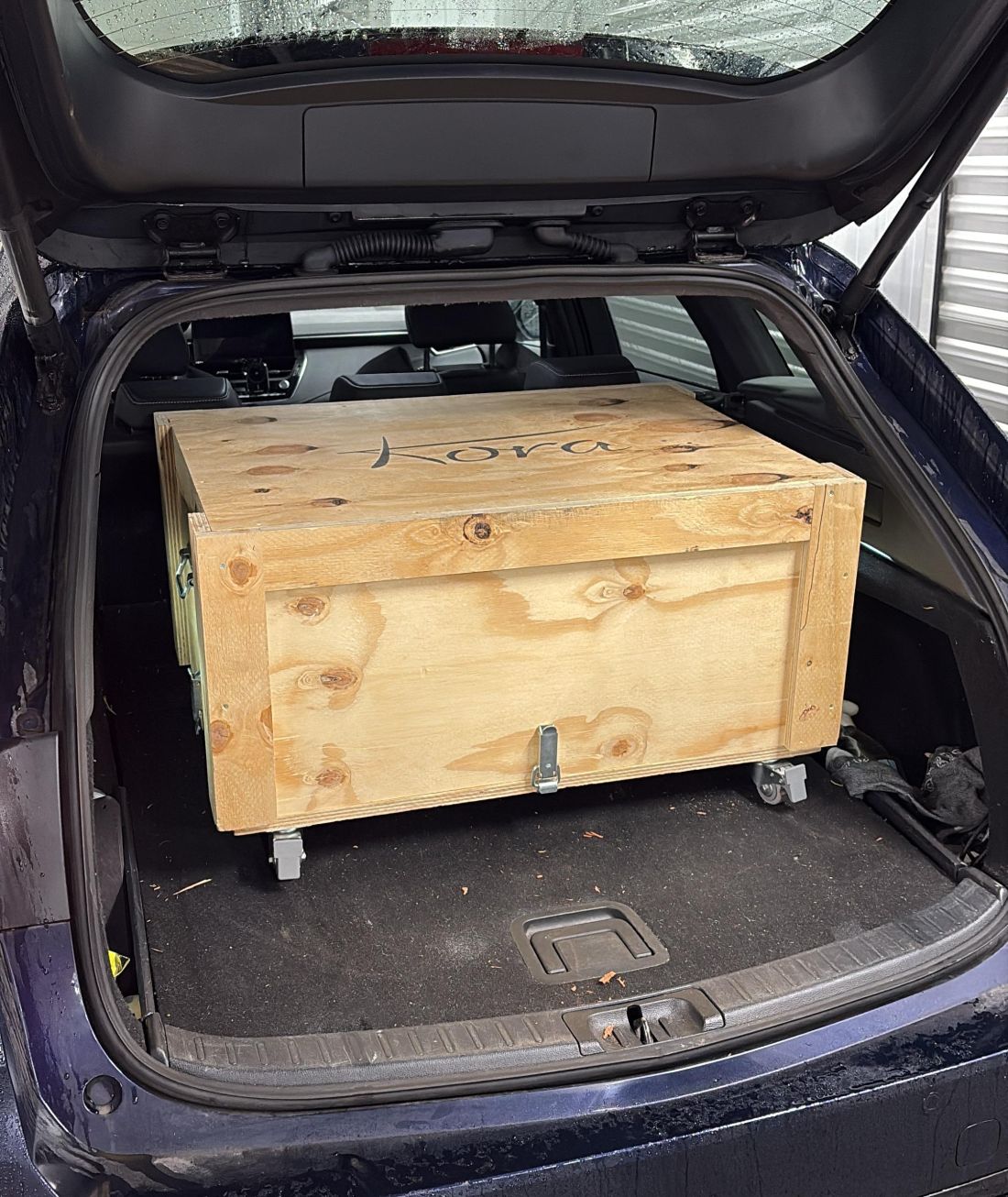
The CSA 2120 is a 2-channel stereo power amplifier delivering 2x 120 Watts. It is housed in a large, very sturdy wooden flight case, which just about still fits in an average European car. The case features lockable wheels, so that it can be easily moved around.
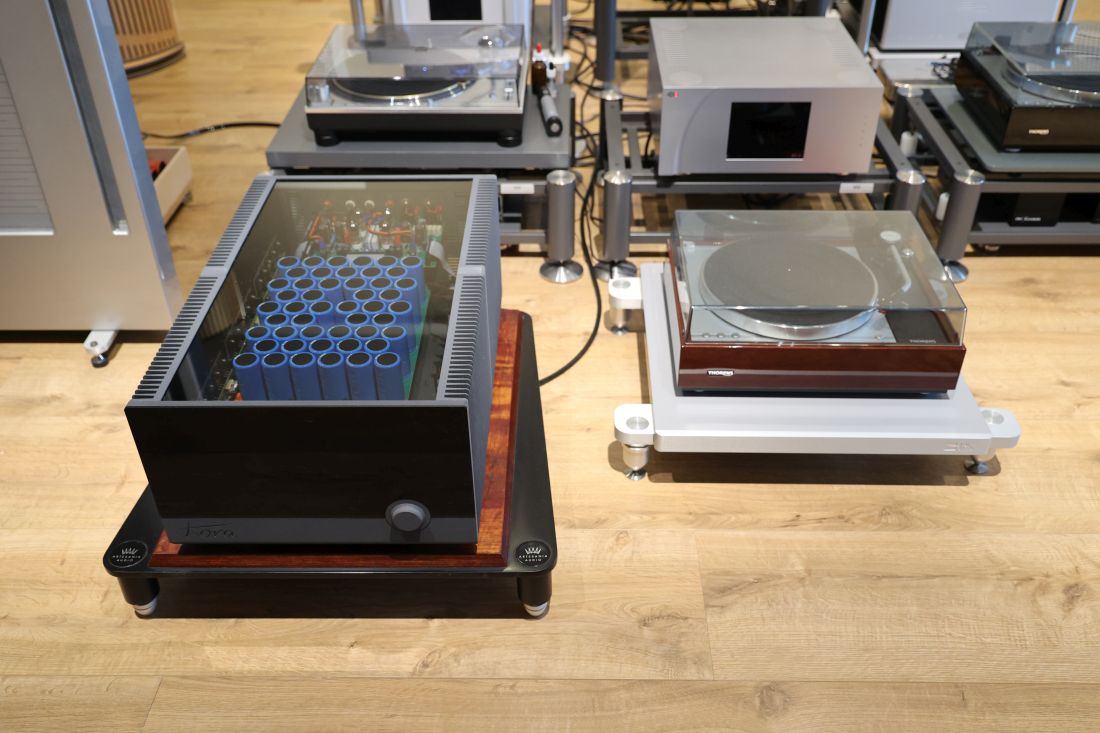
Freed from its flight case, this is still a seriously large amplifier. I mean, look at this beast!
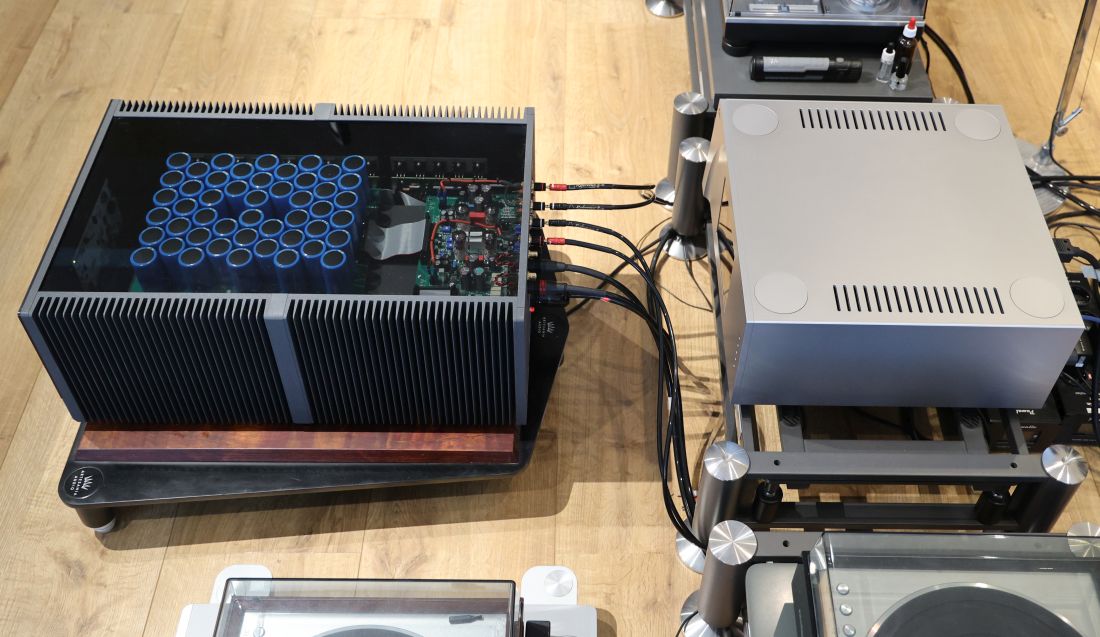
The amplifier can be controlled manually or automatically for certain aspects of its operation. For instance, the amplifier can be set to automatically switch on when a signal is present at the input and switch off when the input is silent. With automatic current control (conceptually similar to Krell’s Plateau Bias), the amplifier switches to high or low current as needed, avoiding unnecessary heat and power consumption. If desired, the current mode can also be set to always low or always high. In standby, the amp consumes less than 15 Watts, and when idling, it consumes 280 Watts.
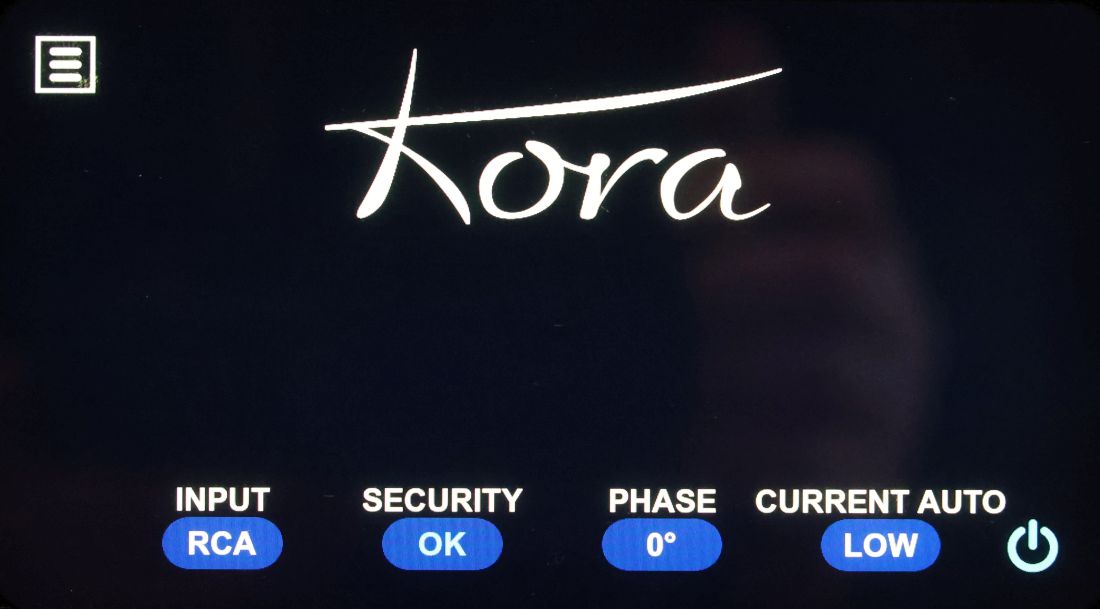
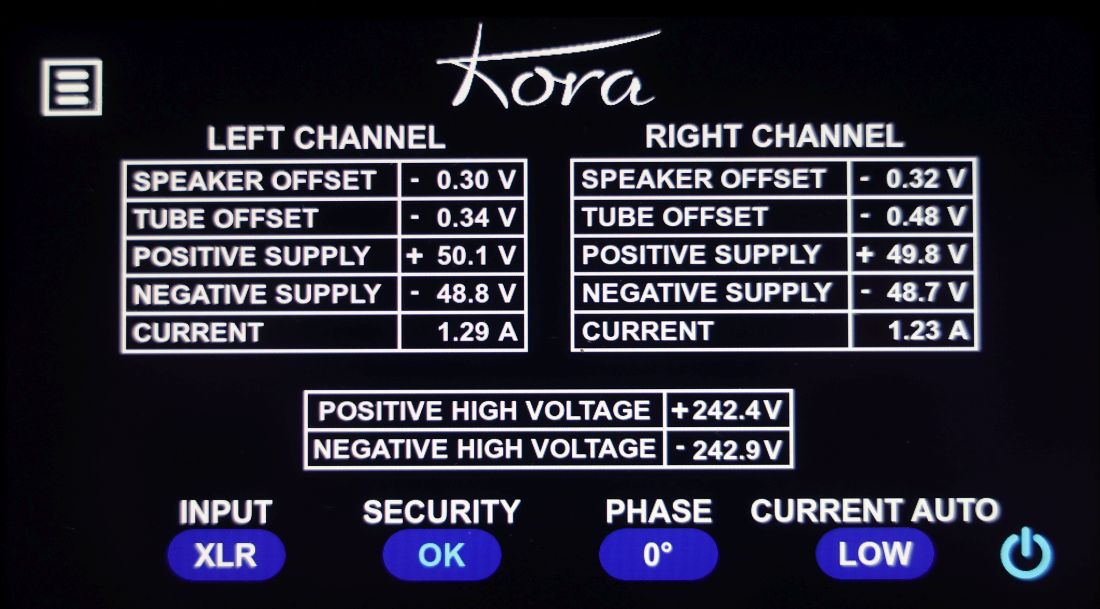
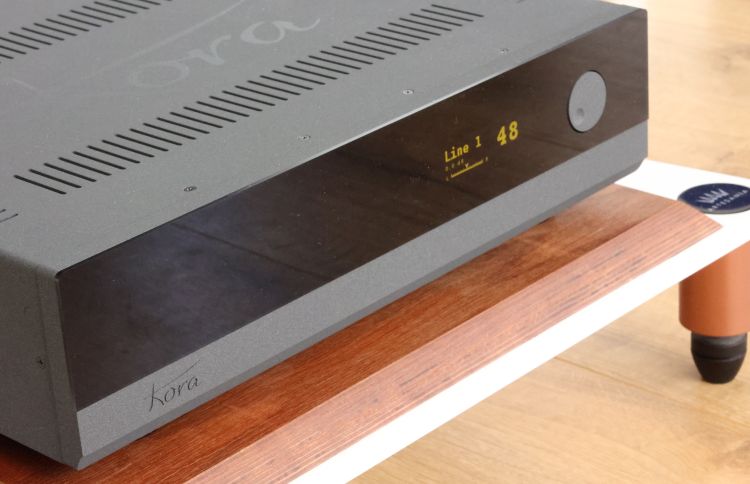
The front panel has two physical elements: a display and a button. The display features several screens that display the amplifier’s status. Standby status, heating status, a welcome message, operating status, a goodbye message, and shutdown status. If desired, the screen can also be turned off.
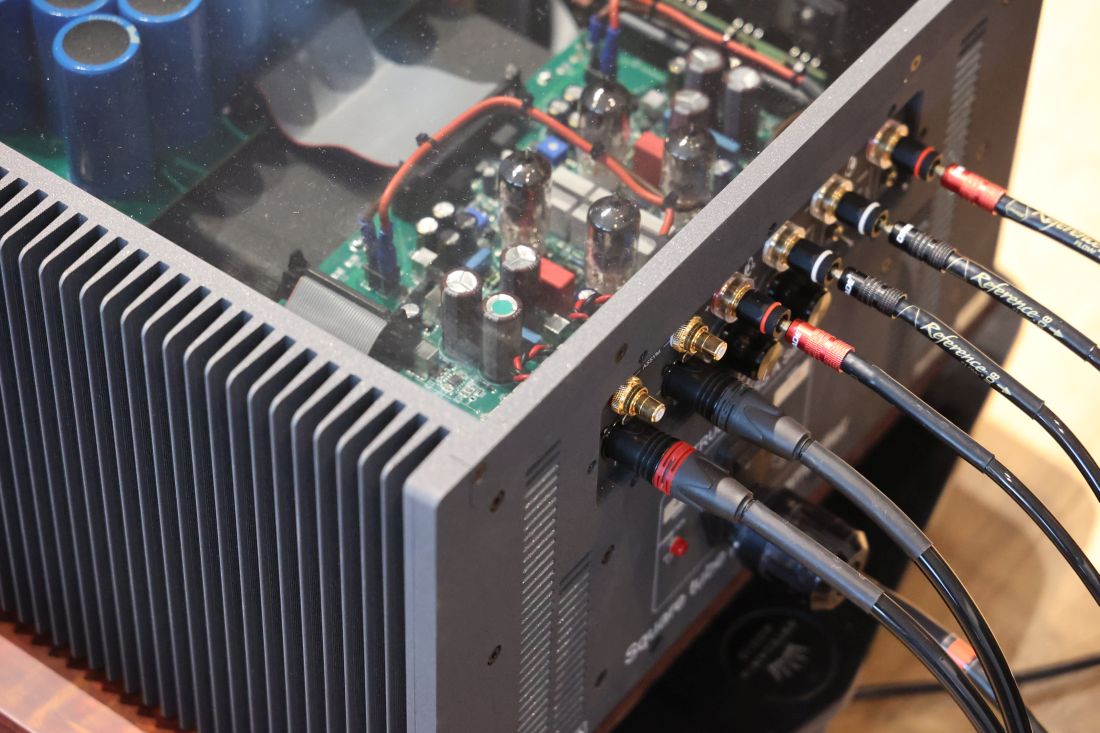
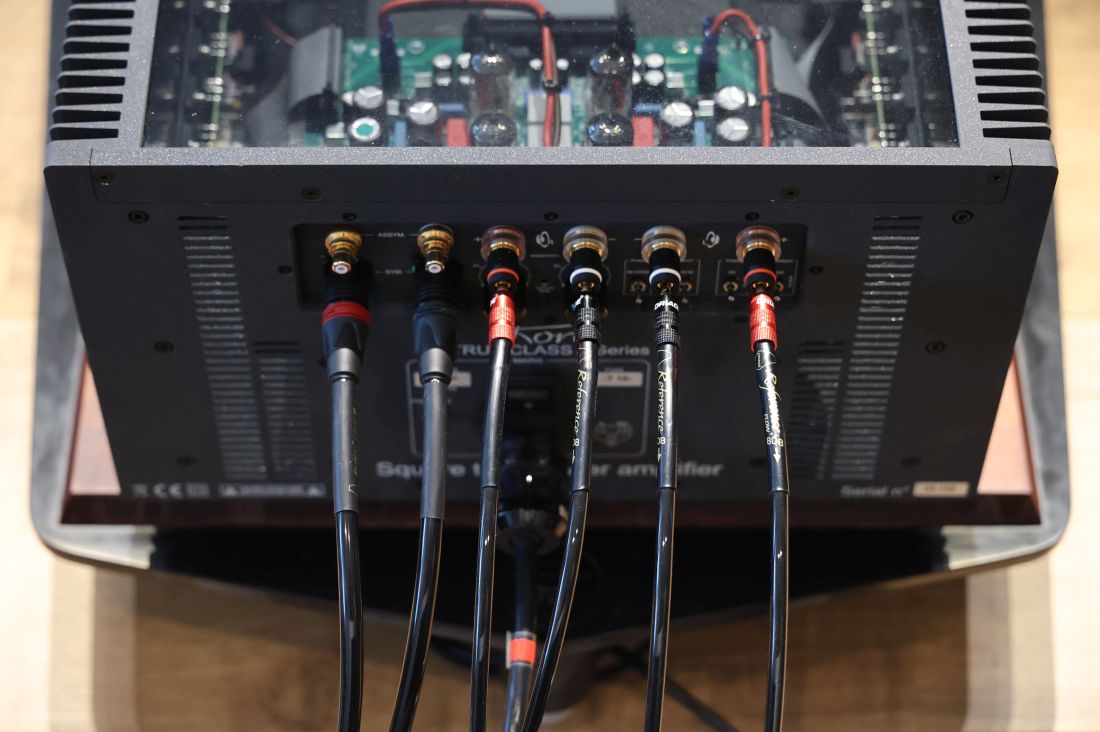
Around the back, there are RCA and XLR inputs, independent variable-gain potentiometers for Left and Right, and switches for Phase, Input, Auto-Power, and Current settings.
Next: Review Context and Listening